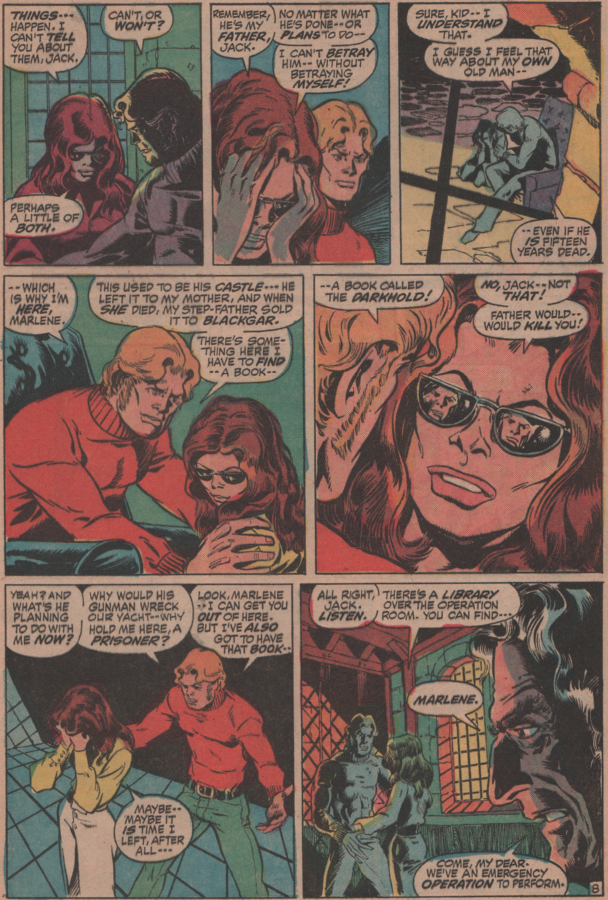
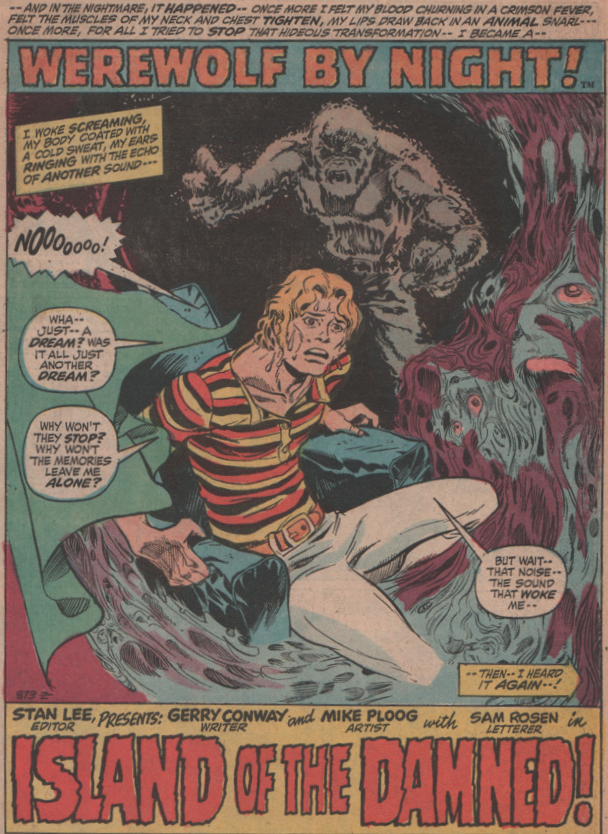
Marvel Spotlight 4, 1972 “Island of the Damned!”

During the 1970s, there were a few different things that were hot commodities. In comics, one of them for sure was horror. Vampires, monsters, demons, mummies, witches, and of course, werewolves! In 1972, Marvel decided to create their own werewolf character that would be not only a creature of destruction, but one of tragedy as well. Jack Russell would turn twenty-one years old, and turn into a werewolf under a full moon from here on out.

Early on, the book centered around Jack trying to figure out why this happened to him. He very quickly realized that a certain book was involved, and that unless he finds The Darkhold, he may never get any answers. In what’s basically a werewolf dropped in the middle of the Island of Dr. Moreau, Jack is confronted by a strange island full of surprises, and by the end of the issue, he’ll be between a rock and a hard place.

In this early second age of horror for Marvel comics, Gerry Conway (writer) is one of the men that was tasked with writing these titles off and on (between his epic Spider-Man run and other superhero titles as well). Not to belittle Conway’s efforts, but Mike Ploog (cover and interior art) was outstanding during this period with his horror work. He had runs on this title/character, Monster of Frankenstein, Man-Thing, and Ghost Rider, and they were all exquisite. The creative team is rounded out by veteran Sam Rosen (letters).

*Note- there was also a lot of input on the early issues of the horror books by Writer/Editor Roy Thomas, and he definitely deserves credit as well.



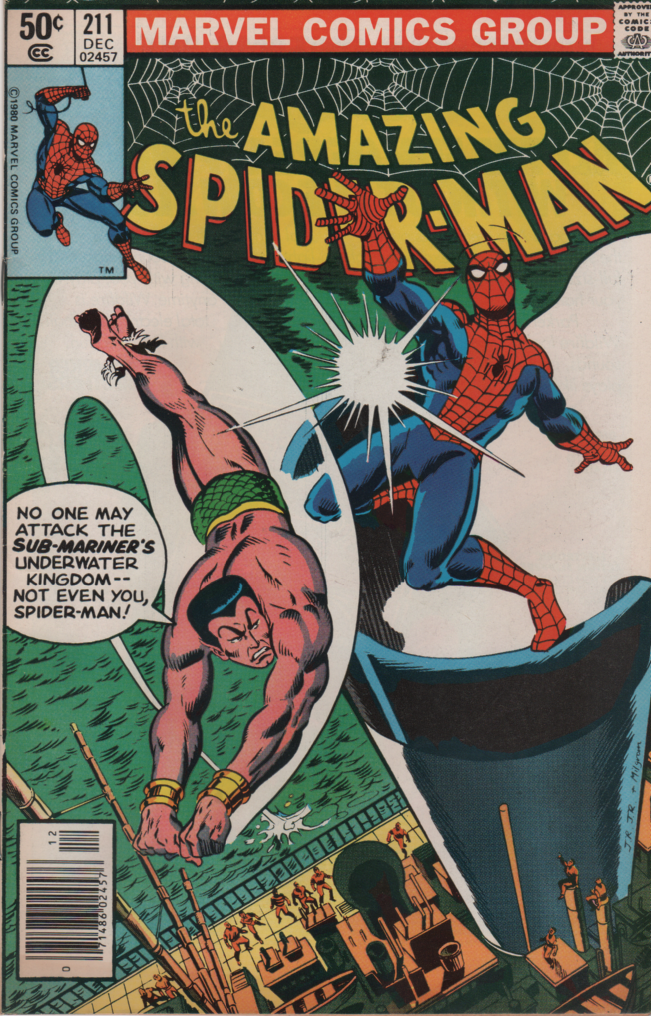
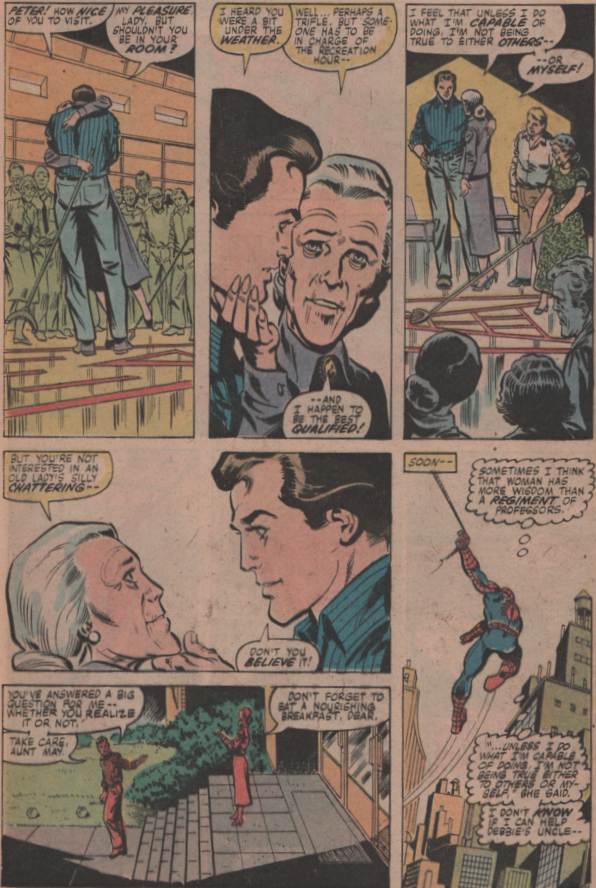
Amazing Spider-Man 211, 1980 “The Spider and the Sea-Scourge!”

Look out, here comes the Spider-Man! By 1980, Spider-Man was already the company darling at Marvel for quite sometime, and rightly so. His title was the best long-term book that was still performing at a high level. Not much of a down time as far as content, other than the issue here or there, it was solid.

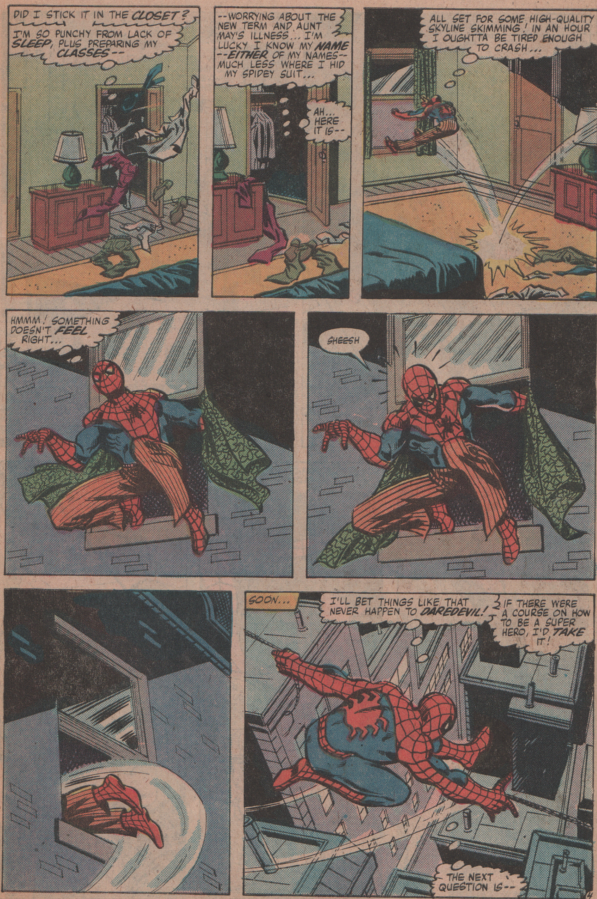
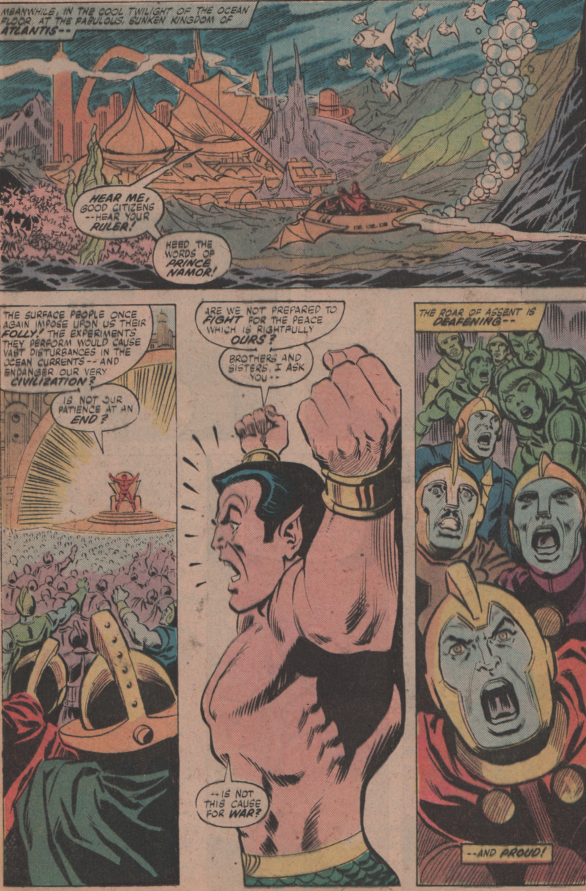
This issue shows a lot of the normal fair in Aunt May, Debra Whitman, ESU, etc., but the big draw of this issue is none other than Namor, The Submariner! He’s peeved at the surface world once again, and is riling up his minions, demanding that they take action! Seeing Subby getting enraged isn’t anything new, but it’s always fun! there’s also a good bit of panel time for Peter Parker, and that is always a welcome sight.

Written by Denny O’Neil, John Romita Jr. pencils, Jim Mooney inks, Jim Novak letters, and a cool cover by JrJr and Al Milgrom!


Thor Annual 6, 1977 “Thunder in the 31st Century!”

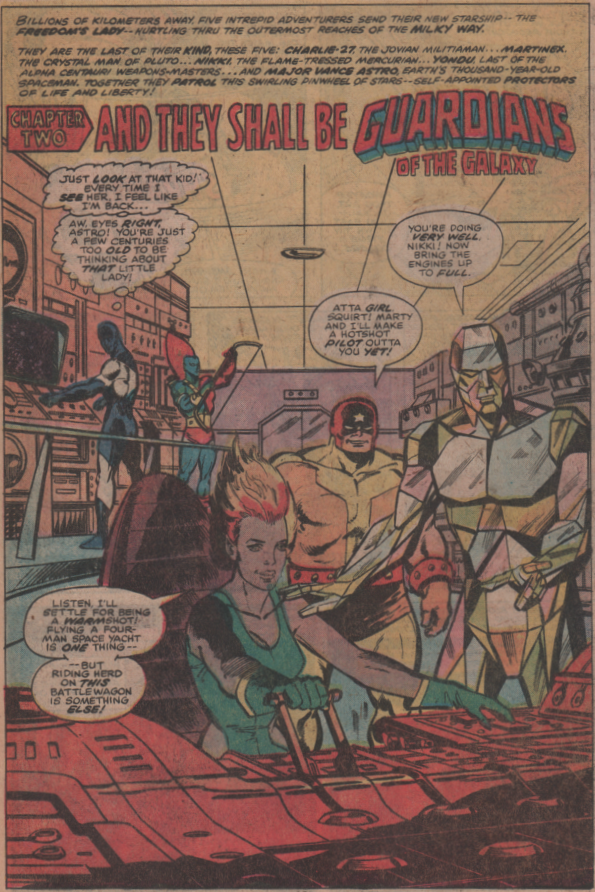
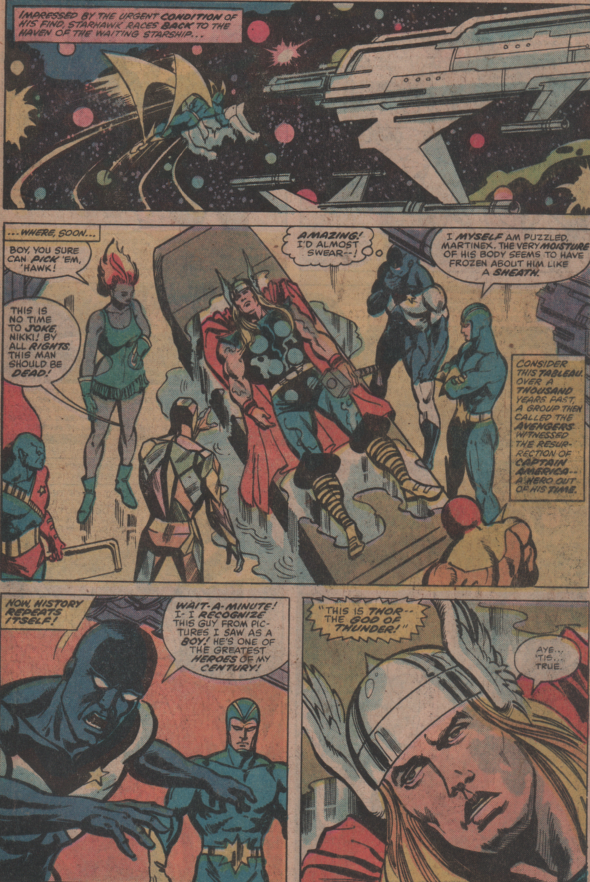
It took me quite a while to obtain this annual, and with the soaring prices of certain back issues, it was no small feat. Especially with the Guardians of the Galaxy craze following the release of the films. Most of this issue has nothing to do with the films of the MCU, but there is one scene that was an obvious steal from the book (I’ll include the page below).

This era for Thor doesn’t get mentioned very often (especially if you exclude me) and it’s a tragedy. The creators that worked on this title in the Bronze Age were great. Sometimes the stories were a little one-note, but sometimes they were epic in scope and took your imagination to new places. It’s widely known that the John Byrne zealots will attack if you don’t revere his FF run, but the Bronze Age is very comparable if you read it thoroughly. Tons of the Asgardian mythos, stand-alone stories, adventures with the Avengers, space travel, etc., you get it all.

This annual is very interesting as it shows Thor getting transported to the future (via an explosion at some nuclear facility…). He ends up drifting through space, and becomes like a frozen rock. He’s then picked up by a band of misfits that call themselves the Guardians of the Galaxy! Small talk ensues, then, they must face Korvac and his Minions of Menace!

The creative team on this one reads like an all-star team from comic books! Co-plotter/Editor Len Wein, co-plotter/scripter Roger Stern, Sal Buscema and Klaus Janson art, Glynis Wein colors, and Joe Rosen letters.


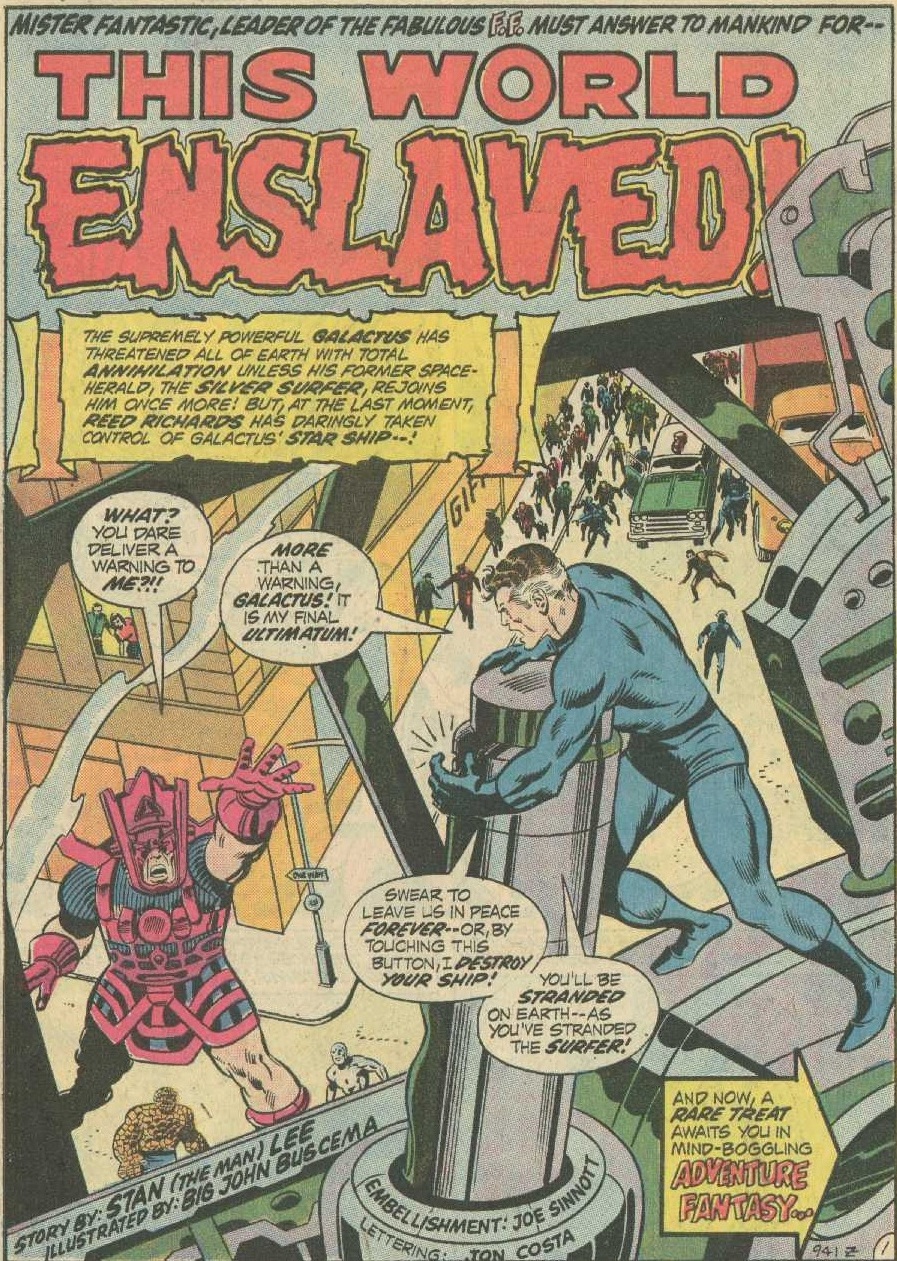
Marvel Treasury Edition 21, 1979 “Behold…Galactus!”

The Treasury Edition is one of the best inventions in comic books. I mean, what could be better, than an oversized comic book? The answer is nothing. When you buy these gigantic books and open them up you get blinded by their awesomeness! Although mostly reprints, the material chosen is top-notch for sure.

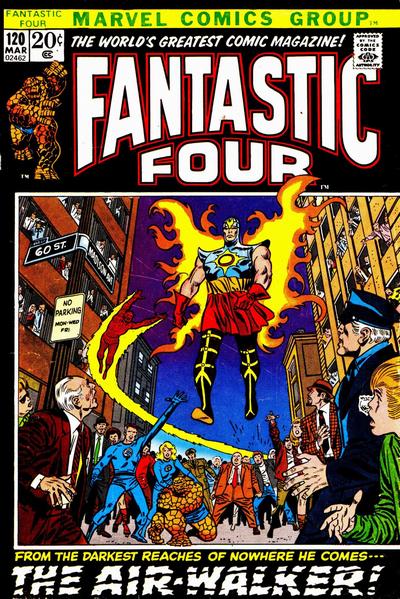
Of course, the Fantastic Four are most famous because of their days during the Jack Kirby/Stan Lee era, as it should be. But honestly, if you venture past that era, you’ll find that the Bronze Age is quite good. Under the guidance of some of that era’s best creators, the team had some run-ins with a myriad of bizarre villains, but also some familiar ones like the Mole Man, the Impossible Man, and most importantly, Galactus!

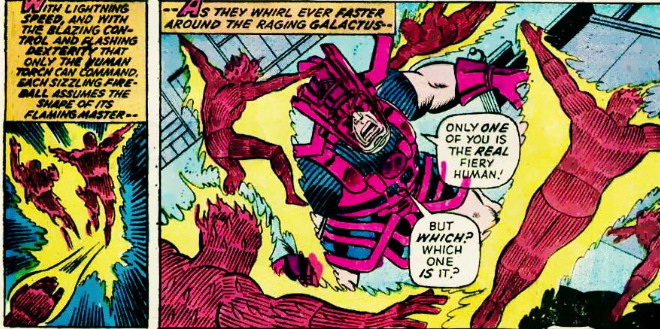
In this oversized tome, the team is beset by gun-toting maniacs, a strange being from the stars with god-like powers, and then the final threat is revealed, and the team stands in awe of Galactus, Devourer of Worlds! Special appearance by the Silver Surfer!

Let it not be said that any era of the FF is greater than the original creators run on the book, but honestly, too much love is given to the John Byrne era and not because it’s bad, but because it causes people to overlook this incredibly underrated work by Stan Lee (writer), ‘Big’ John Buscema (pencils), ‘Joltin’ Joe Sinnott (inks),  Carl Gafford (colors), and Artie Simek, John Costanza, and Sam Rosen (letters). The cover is by Bob Budiansky and Bob McLeod, and they did a great job showing just how imposing the big G is (front and back covers!).

***note- apologies for the quality of the images. I had to use what I could find online because my scanner isn’t big enough to accommodate a Treasury comic book.


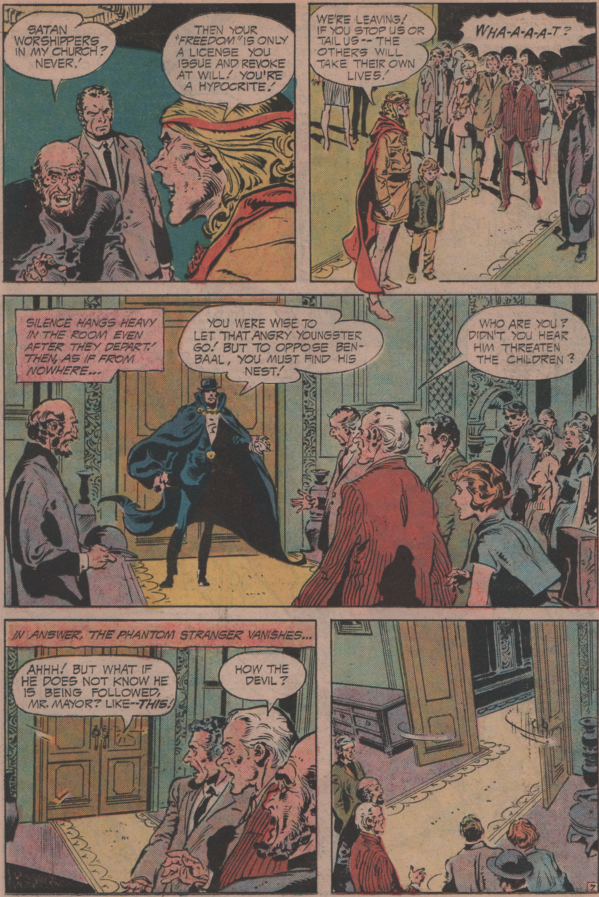
The Phantom Stranger 30, 1974 “The Children’s Crusade!”

The magical and mystical is an area of comic books that should never get boring. With so many ways you can go with the story, characters, and settings, it’s a wealth of creativity. One of the grooviest characters under the DC comics banner is definitely the Phantom Stranger. His history is shrouded in mystery, but his prowess as a magical being is not. Immortality, teleportation (of the highest order), energy blasts, time travel, all sorts of magical spells and even omniscience!

In this particular issue, we see the Phantom Stranger up against a Pied Piper type villain that has a group of youths mesmerized, and worshiping a demonic entity! The kids are completely in his sway and wish only to do his bidding. And although the Phantom Stranger is powerful, he underestimates the power of his enemy, and pays for it dearly. He’s captured and seemingly helpless against these forces of evil! Written by Arnold Drake, art by Gerry Talaoc, and edited by Joe Orlando!

There’s also a back up story featuring the “Spawn of Frankenstein.” This multi-part story ran in the back pages of Phantom Stranger for a few issues (this was the last chapter, it switched over to Black Orchid with the next issue). Honestly, to say it borders on the bizarre is a compliment. I’ve only read a couple of these so I’m not even 100% sure what the end game was for this story line. Writer, Steve Skeates, artist, Bernard Baily.


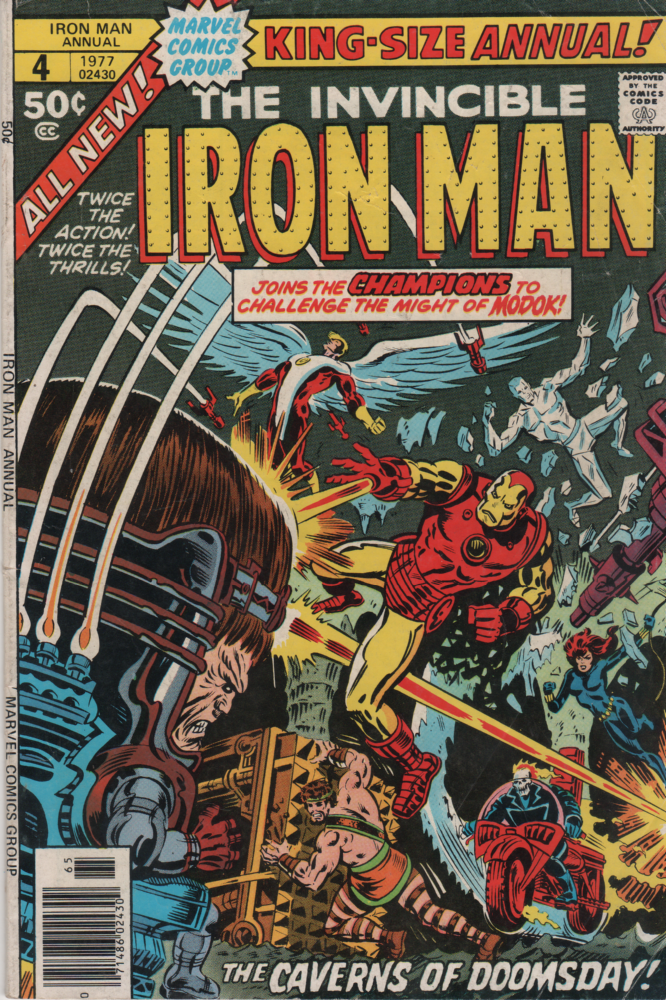
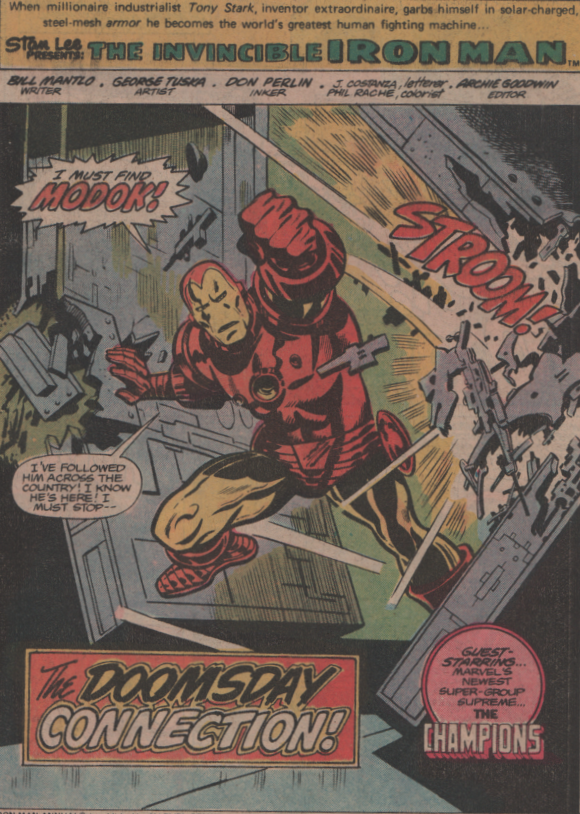
Iron Man Annual 4, 1977 “The Caverns of Doomsday!”

I love kooky villains (as should we all!). One near the top for sure is M.O.D.O.K. (Mental Organism Designed Only for Killing). This character is nothing short of brilliant, and not just because the visual is so unique. His power set, origin, and yes, his look make him an incredibly cool villain. He’s barely used it seems and when he is, it’s usually not to his full potential.

In this issue, we see old Shell-head trying to track down MODOK but not having much success. He then enlists the help of The Champions!  Can they find MODOK and A.I.M., or will time run out for them and the world! Sea monsters, men in Beekeeper outfits, a muscle-bound Friar, and a giant headed, telepathic villain complete with lasers and rockets. Next time you’re diving into the back issue bins, seek this one out! Written by Bill Mantlo, art by George Tuska and Don Perlin, colors by Phil Rachelson, John Costanza on letters, and Archie Goodwin editing!


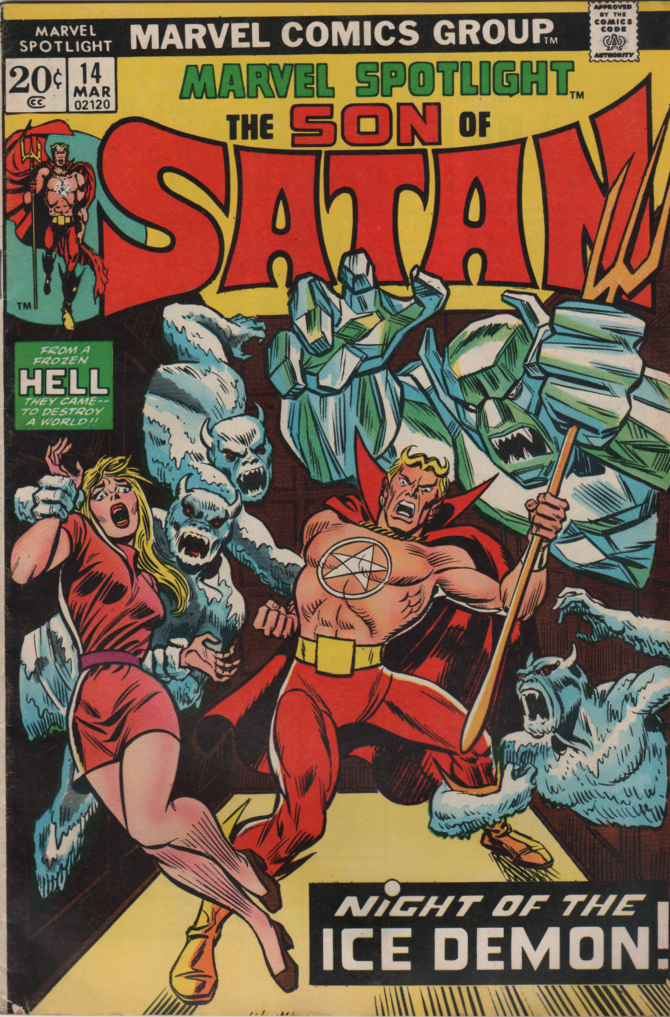
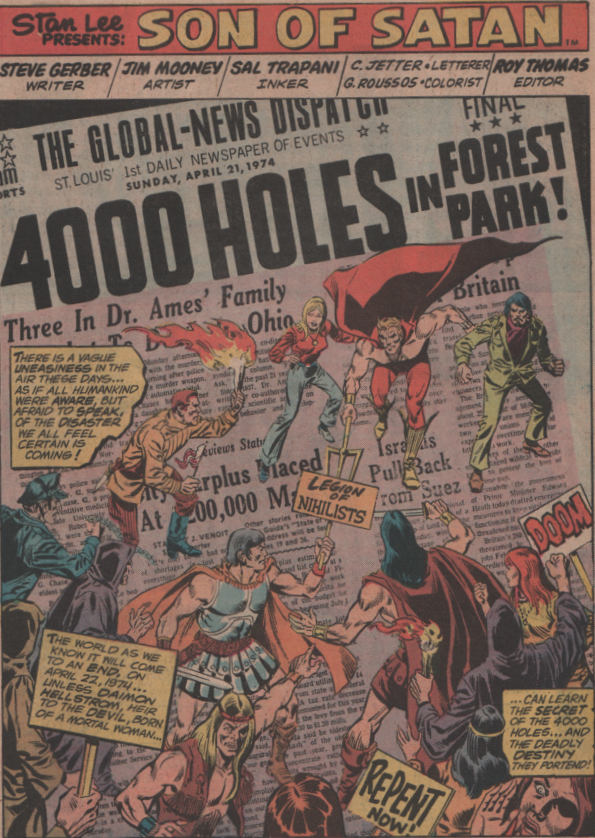
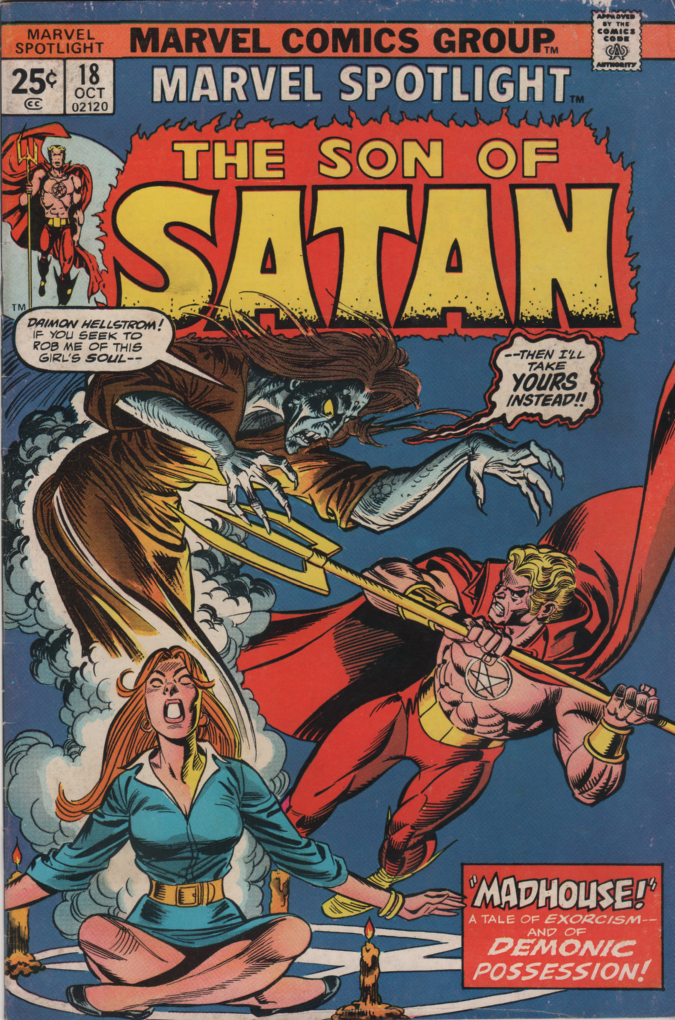
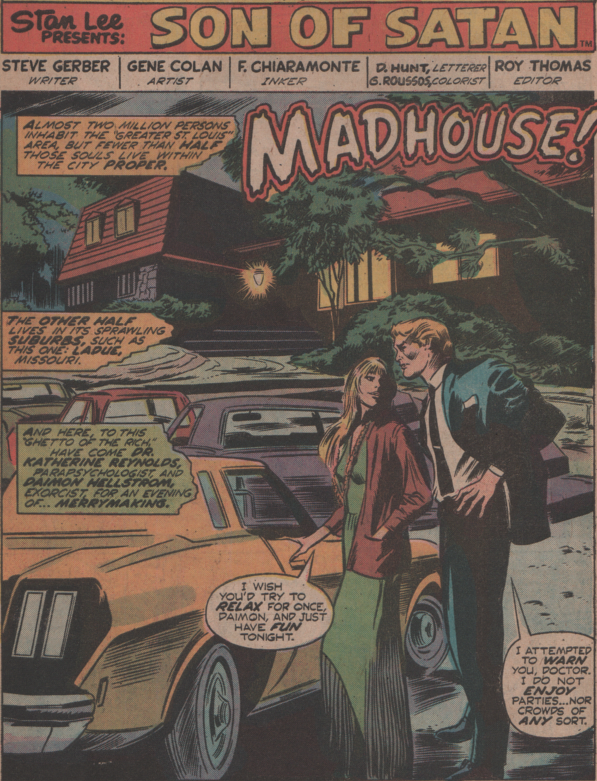
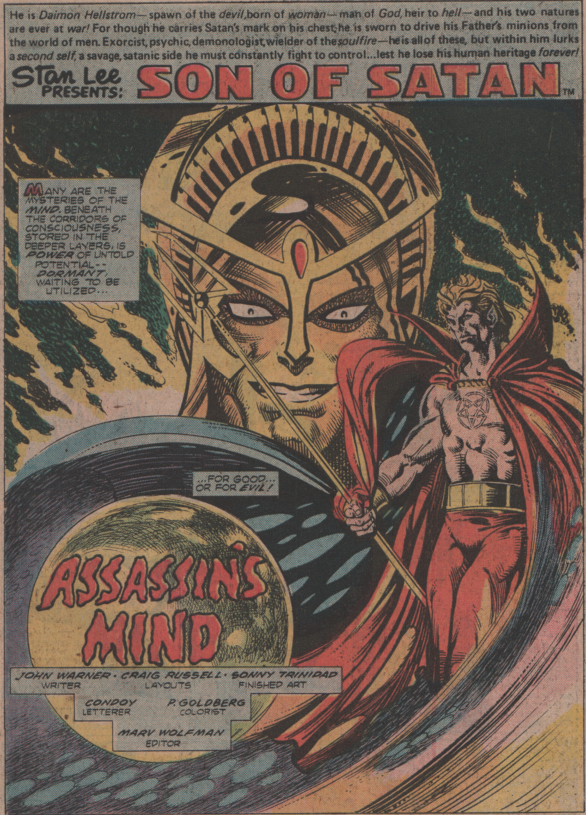
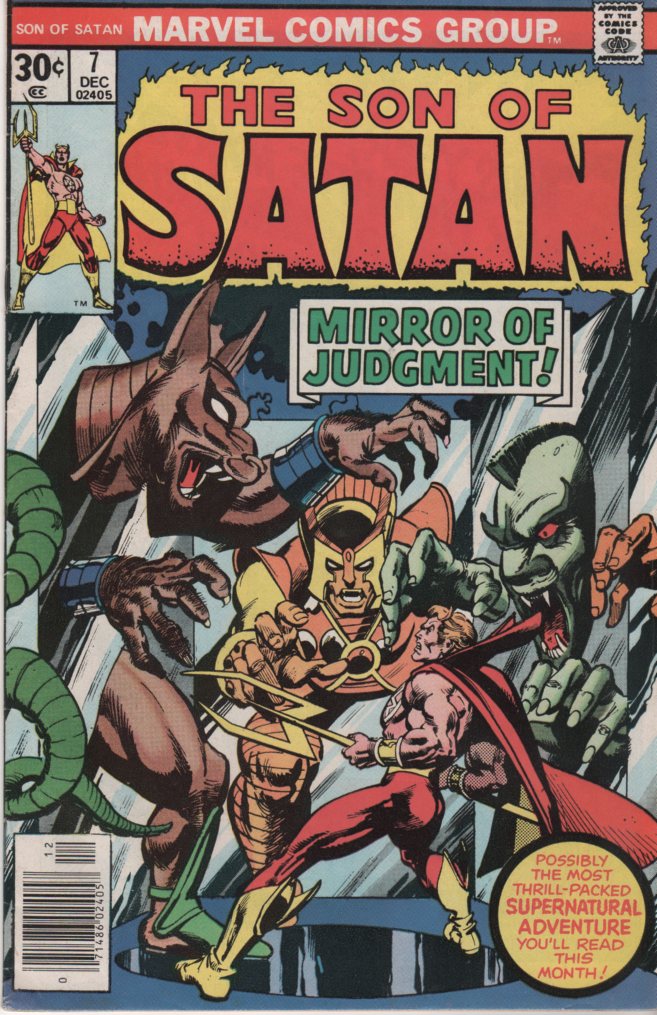
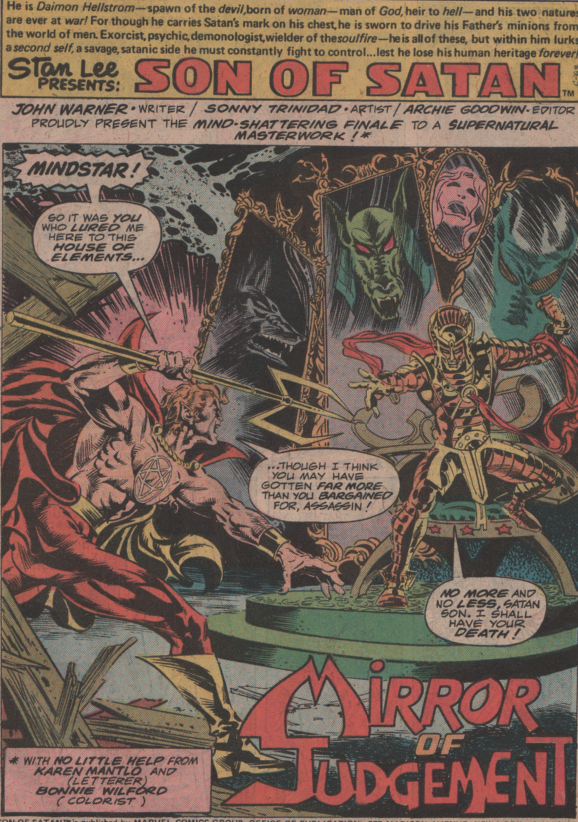
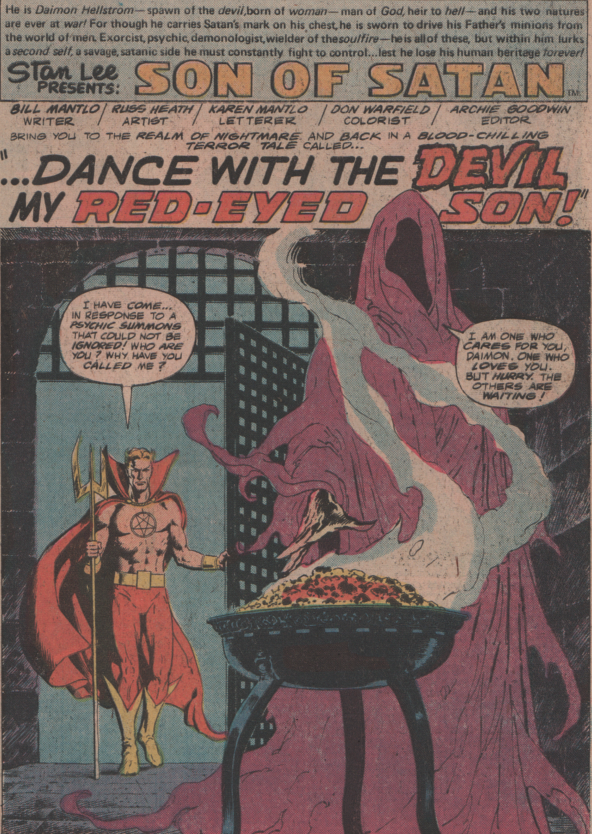
Marvel Comics – The Son of Satan!

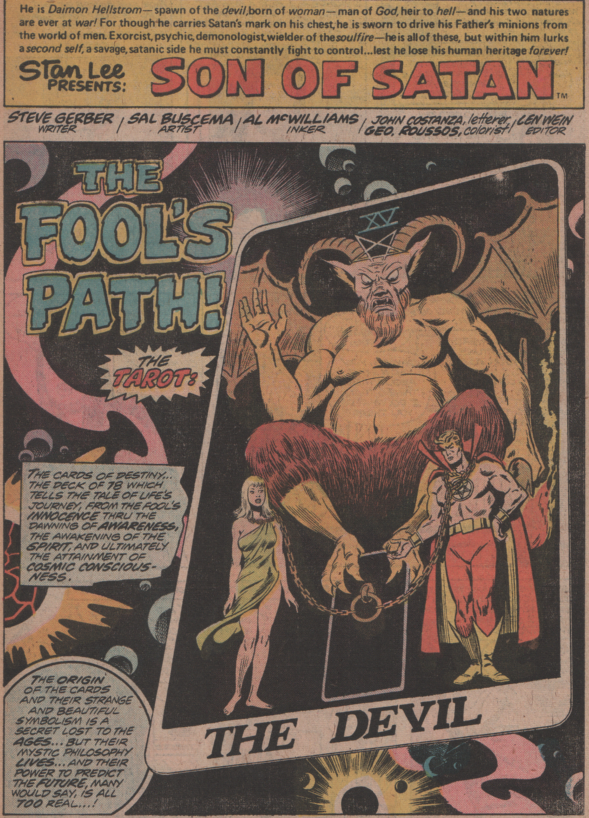
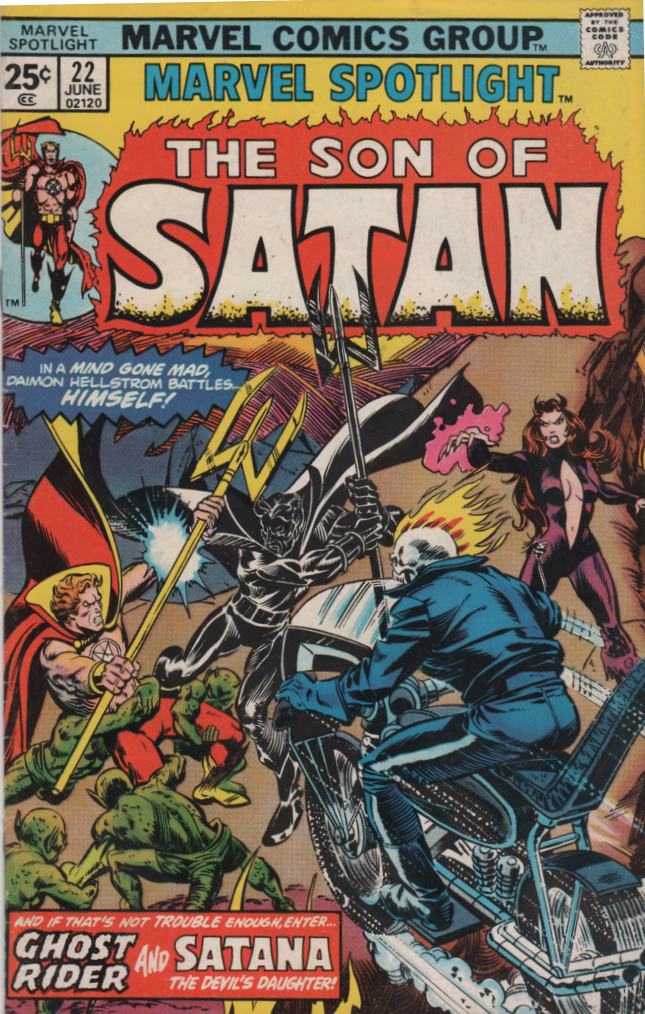
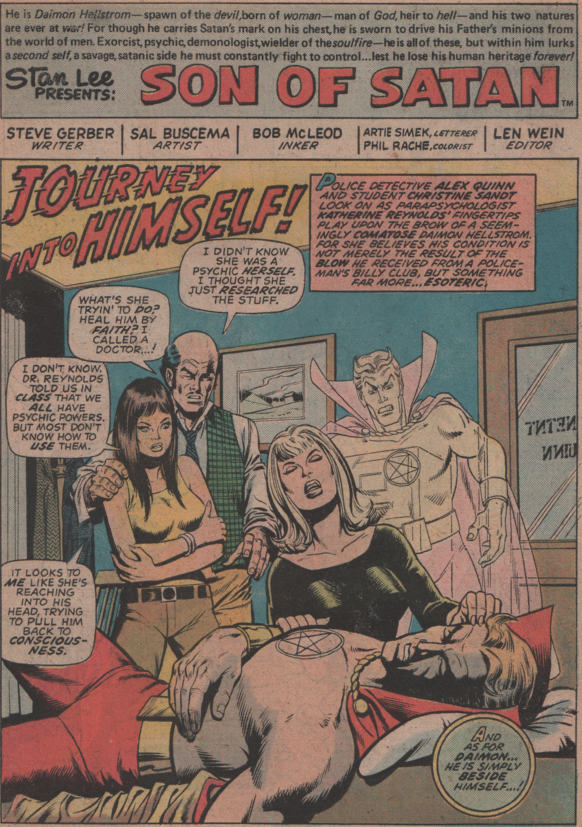
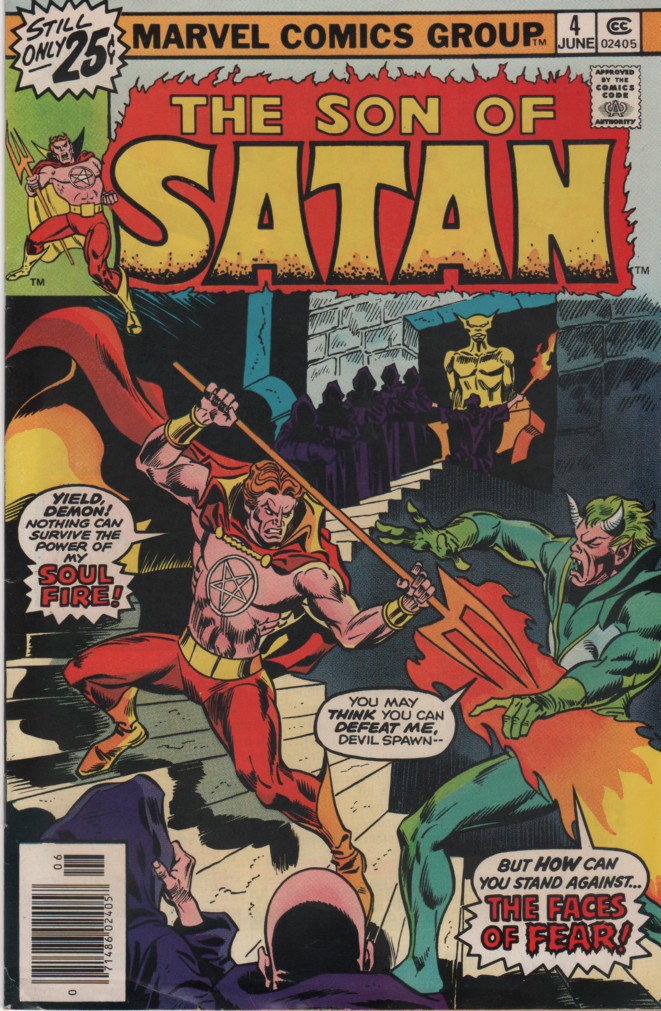
As I close in on finishing off a few different runs of comic book series, one in particular has me jazzed. Marvel’s attempt to popularize a character during the 1970s cult craze was successful as far as lasting power. Daimon Hellstrom has appeared as recently as 2016, and is still a name that carries weight. Definitely more of a fringe or “B” – lister, but he has been in solo books, team books, limited series, and so on. First appearing in the pages of Ghost Rider vol. 1, number one, he quickly transitioned to Marvel Spotlight, then his own solo title until its cancellation with issue number eight.

The fact that Marvel published a title/character with this name and origin back then is wild. Yeah, times they were a changing, as was the comic book code. Still, think about the 1970s and many groups (religious, political, etc.) would’ve been vehemently opposed to this material. Just on face value, it’s understandable, but when you actually read the material, you’ll find out that not only is the lead character a hero, but that good>evil every time. Yes, that can get a little one-note, but as the years go by, Daimon will make some decisions that are questionable, and feel the pain of loss as well. So you do get some variety for sure.

With creators such as Steve Gerber, Sal Buscema, Jim Mooney, Bill Mantlo, Sonny Trinidad, John Warner, Gil Kane, Russ Heath, Sal Trapani, Dave Hunt, Rich Buckler, P. Craig Russell, and so on, these books are nothing short of stellar! The stories varied from super-heroics, to battles with a myriad of demons and demi-gods, and even Satan himself! It is interesting to see how the different creative teams portrayed his demeanor, powers, and actions. Sometimes he was hot-headed, other times he would be cool, calm, and collected. Either way, he’s been a solid character throughout the years that has always been around and kicking up dust (definitely check out his run in The Defenders vol. 1 as well).


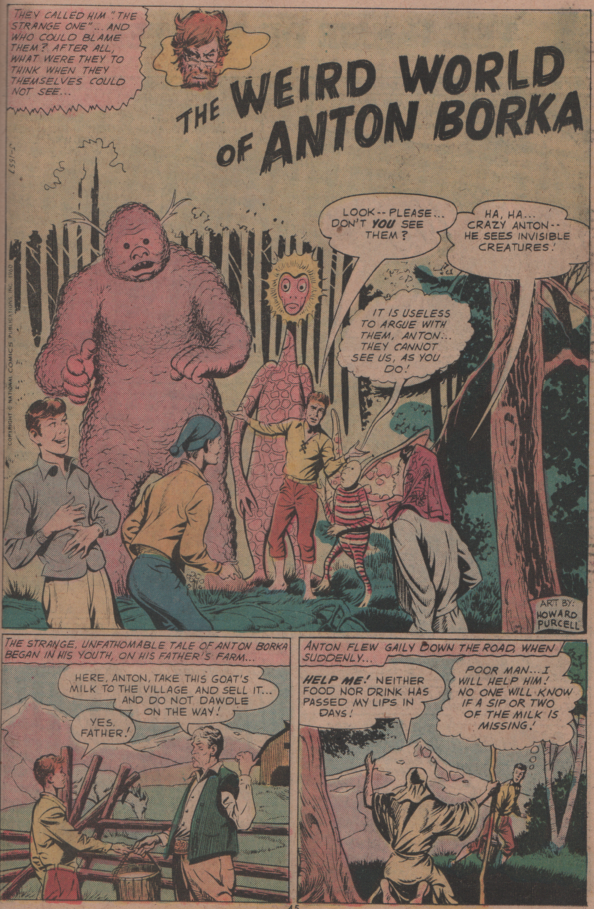
The House of Mystery 224, 1974 “Sheer Fear!” 100 page Spectacular!

Do You Dare Enter the House of Mystery? Yes, I do! Sounds like a marriage proposal. This issue was one of those finds that would make any reader/collector get ecstatic. A good comic isn’t that difficult to find, but a great one that you can find at a bargain is getting more and more difficult as the years pass by.

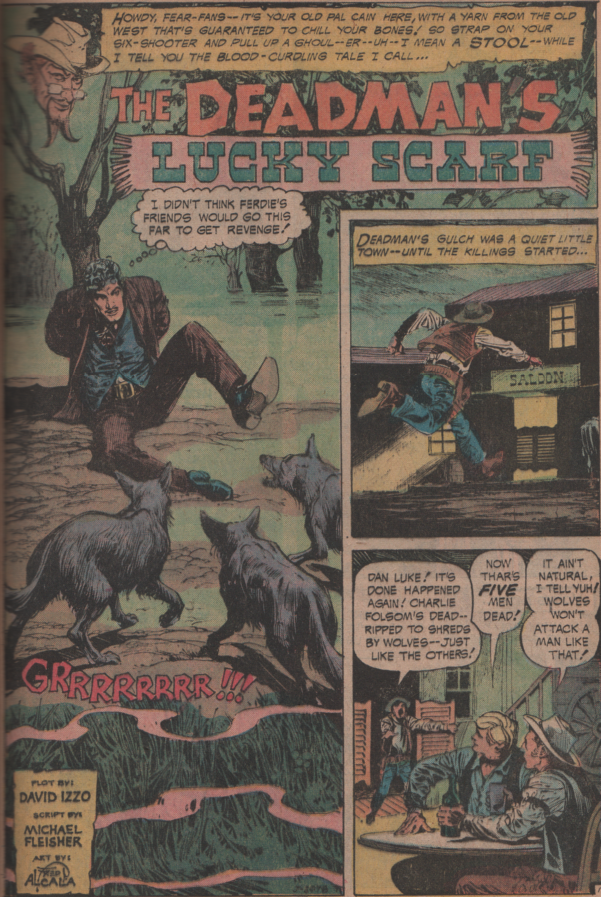
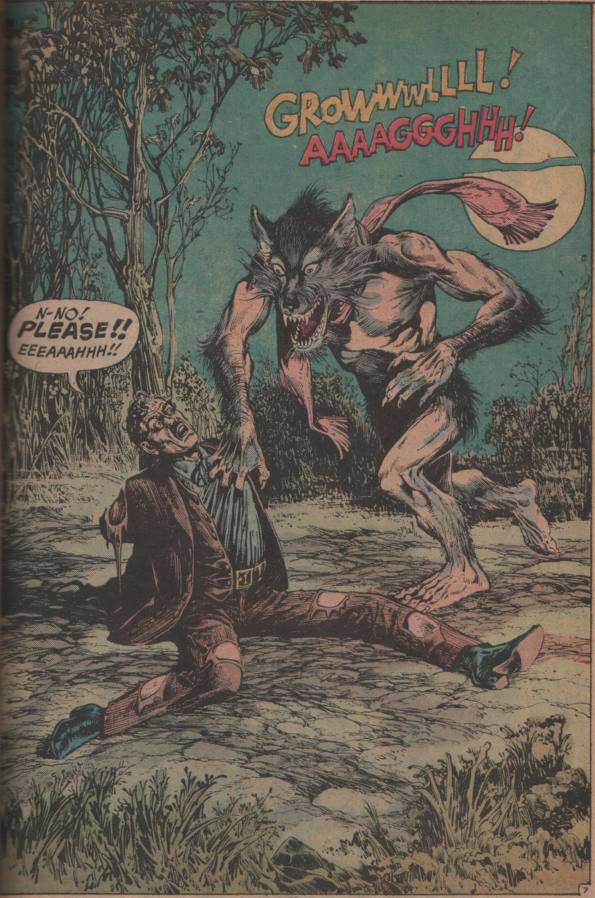
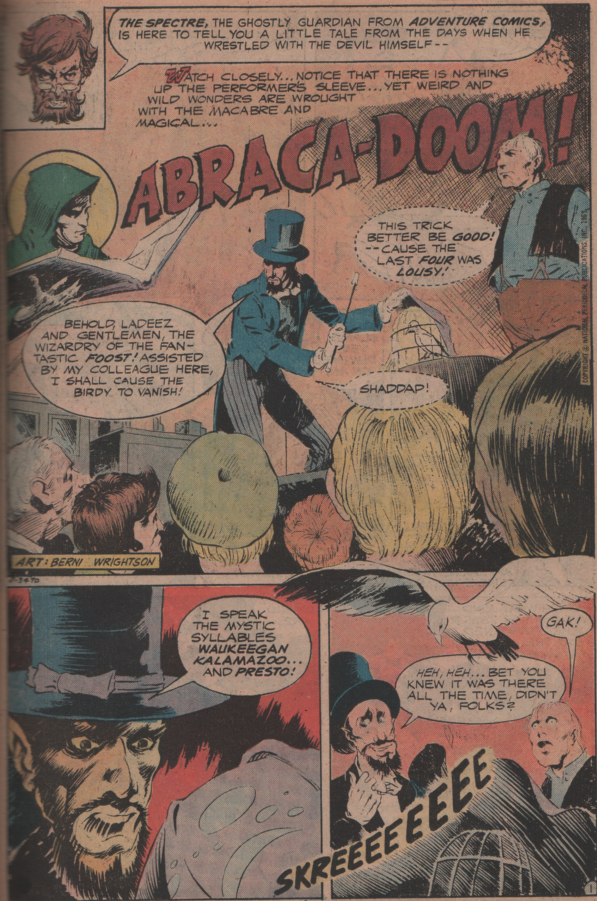
Continuing a look at one of Dc comics’ best horror titles, this one is probably packed with the most talent of any book from that era. This exquisite horror anthology tells tales of a gym rat (Night Stalker in Slim City), a haunted house with an old hag (The House of Endless Years), a western werewolf (The Deadman’s Lucky Scarf), a boy sorcerer (The Reluctant Sorcerer), a magician that meets the Specter and the devil (Abraca-Doom), a problem with the mail (The One and Only Fully Guaranteed Super-Permanent 100%), a time travel tale with unintended consequences (The Gift that Wiped Out Time), a woman who has nightmares (Sheer Fear), A werewolf in Uncle Sam’s army (The Claws of Death), The Phantom Stranger has trouble with some elves (Mystery in Miniature), and finally a story that is picture perfect (Photo Finish).

The credits in this book are a murderers row of creators that are top-notch! Writing credits include- Dave Michelinie, Gerry Conway, Michael Fleisher, Howard Purcell, Denny O’Neil, Marv Wolfman, Sheldon Mayer, George Kashdan, John Broome, and Steve Skeates.

Artists include- Joe Orlando, Frank Robbins, Bill Draut, Alfredo Alcala, Howard Purcell, Berni Wrightson, Dick Dillin (w/Neal Adams inks), Mort Meskin (w/ George Roussos inks), Gerry Talaoc, Alex Niño, Frank Giacoia, and Mike Sekowsky.


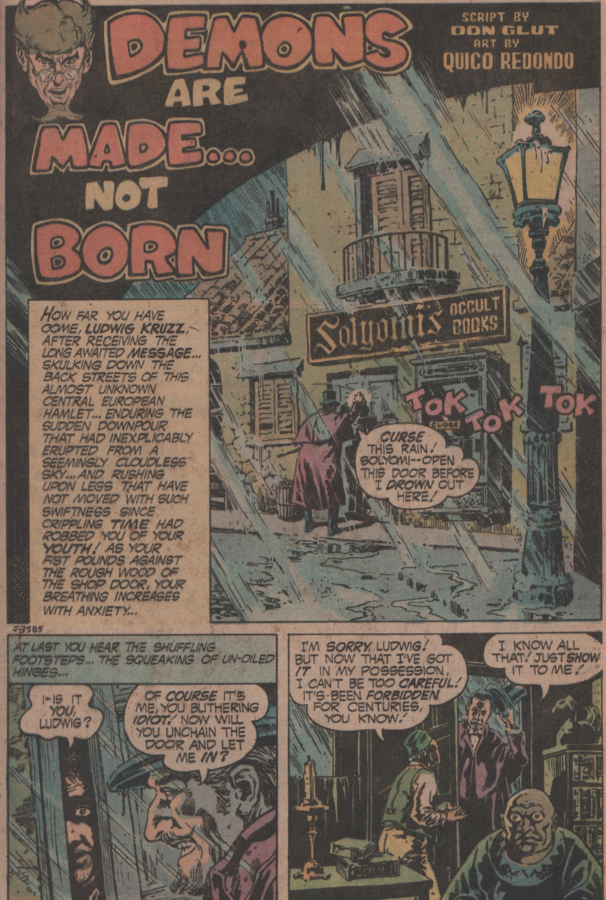
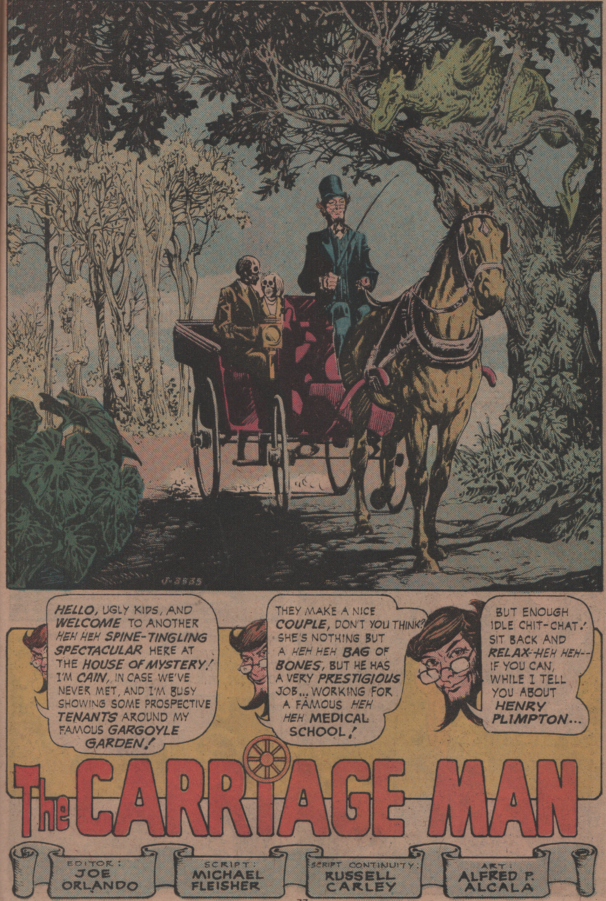
The House of Mystery 227, 1974 “The Carriage Man!”

After being a Marvel Zombie for many moons, I really cranked up buying DC comics over the last few years. Focusing mostly on horror (and the absurd), the 100page issues are where the bargains live! These books are fantastic and are packed full of comic book goodness. With eight stories, this 100 page book brings it with the heat of a demon, or maybe the hair of the werewolf, or…well, you get it.

This issue has a great list of creators that includes- Michael Fleisher, Nestor Redondo, Joe Orlando, Sergio Aragonés, Don Glut, Joe Maneely, Paul Levitz, Alfredo Alcala, and more! Each story has it’s own unique flavor because of the myriad of creators in this one. It also contains one of the best clown stories ever (definitely not as good as “Night of the Laughing Clown” by Steve Gerber though)! Definitely seek out these 100page books, especially the horror titles!


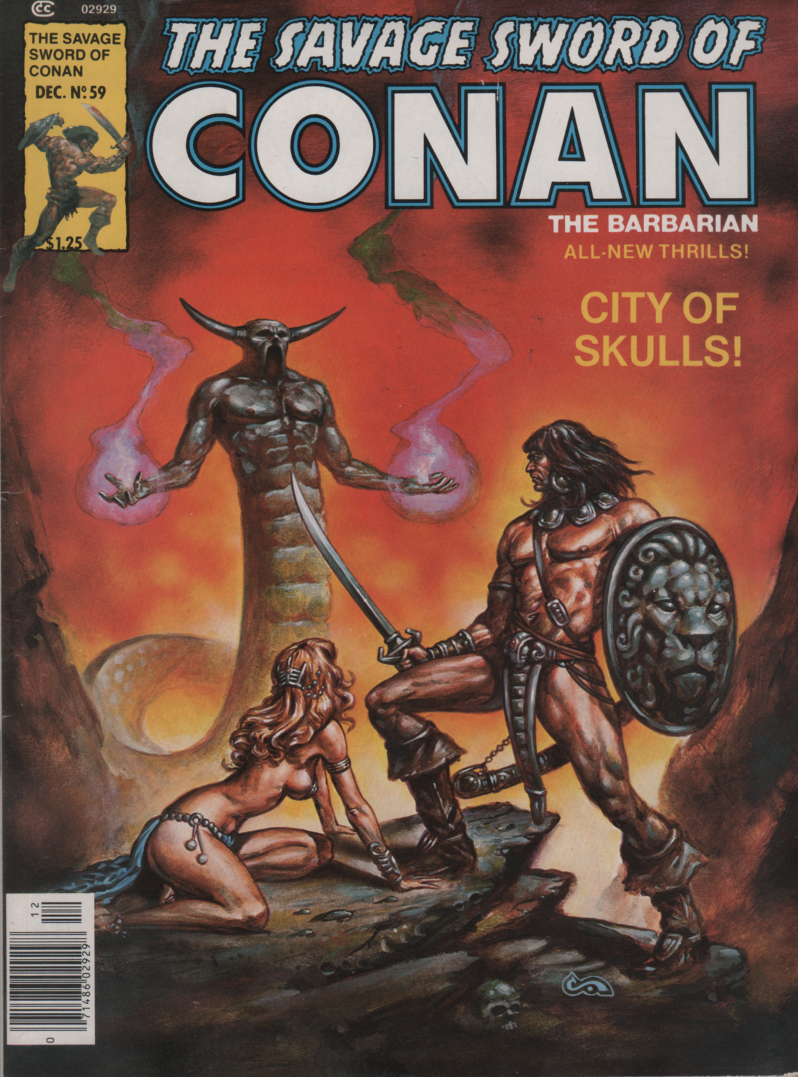
The Savage Sword of Conan 59, 1980 “City of Skulls!”

The black and white magazines from the 1970s are treasures that should be on every comic book collectors list. The artwork is typically phenomenal, and the stories cool as well. One of the best of these without doubt is The Savage Sword of Conan! Each magazine is filled with stories from the barbarian and his adventures. Whether he faces a wizard, a monster, or an army, Conan will prevail!

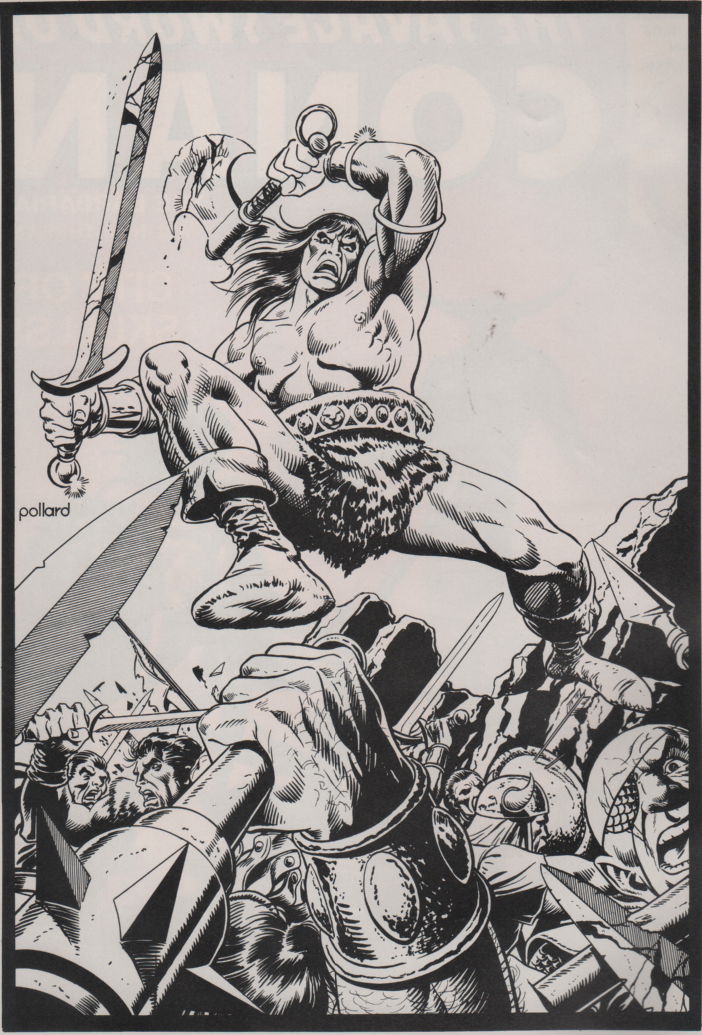
The mags almost always have extras in them as well. In this particular issue, you’ll see a frontispiece by the terribly underrated Keith Pollard and a pin-up by Gene Day! Also, sandwiched between two tales of the Cimmerian, you get a story called “The Kozaks Ride” by Fred Blosser and some illustrations by “Marvel’s finest.” The other two stories were adapted by Roy Thomas!
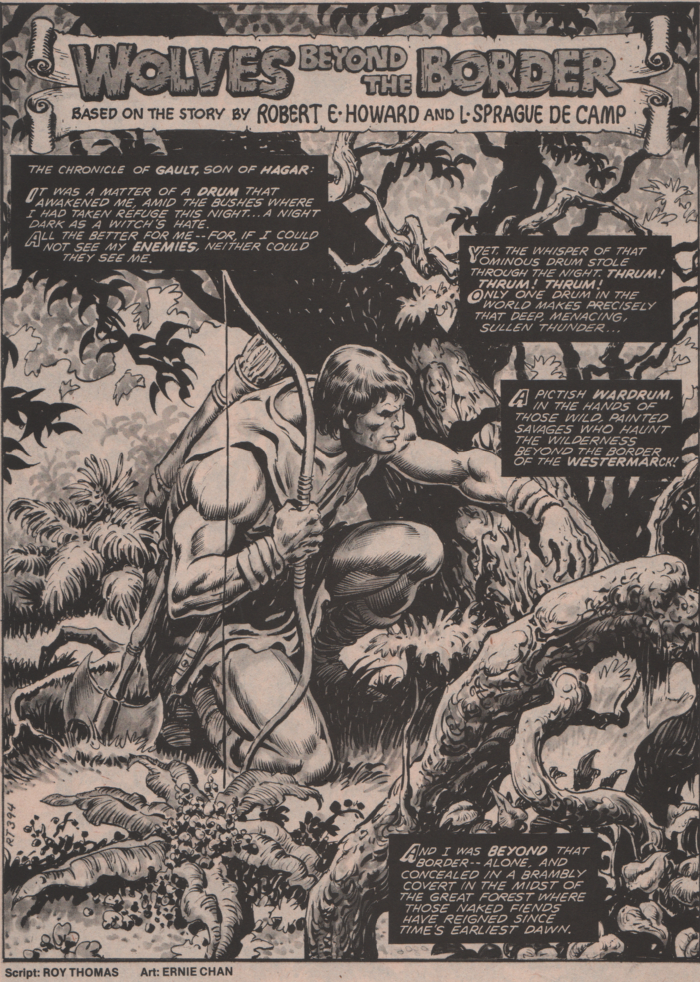
The first tale, “The City of Skulls,” was a story written by L. Sprague de Camp and Lin Carter. These two sci-fi writers have a ton of credits and were obviously huge fans of Robert E. Howard! The artwork is by Mike Vosburg and Alfredo Alcala. The second story, “Wolves Beyond the Border” was written by Robert E. Howard and L. Sprague de Camp.The artwork in this story is by Ernie Chan.

Now, you may be wondering how these other names came to write stories starring everyone’s favorite barbarian. Well, the truth is, many stories were written by others after Howard’s death in 1936. They were either new material using the characters created by Howard or sometimes old material that had not been completed yet by Howard himself. Throw in an incredible painted cover by Clyde Caldwell, and you have a masterpiece of fiction brought to you by Marvel Comics!