Comic Book’s Unsung Heroes: An Interview with- Steven Grant! Part 1

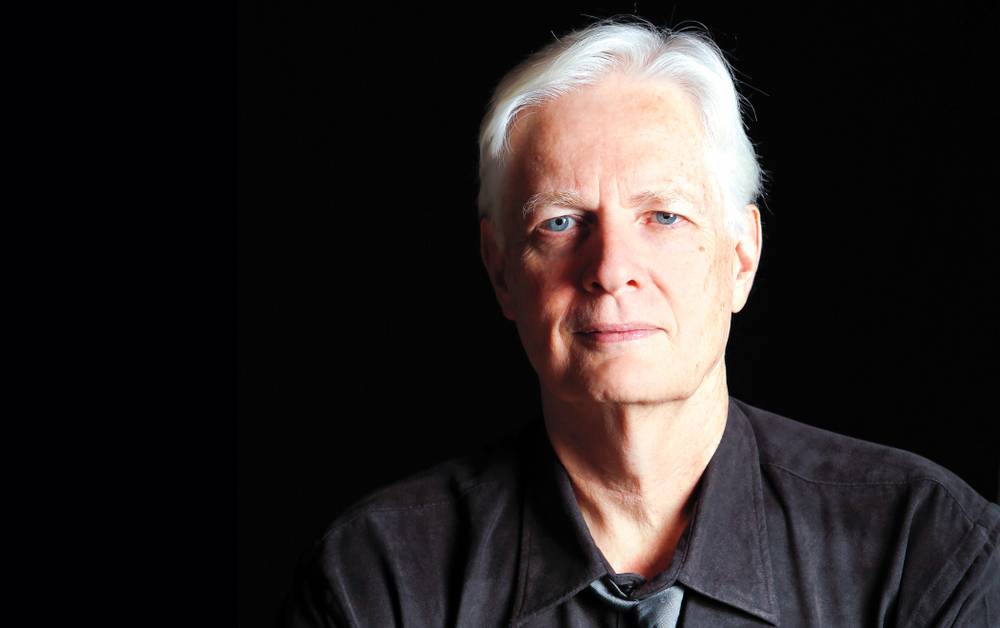
For non-comic book readers that are just into movies or new comic book readers that haven’t yet traversed backwards in time to discover what laid the foundation for what is now, you might not know the name Steven Grant. The hardcore, old fuddy-duddy (you know, like the comic book guy from the Simpsons) types like myself know him for the fill-ins he was constantly asked to do on books like Marvel Team-Up, Marvel Two-in-One, The Avengers, and so on. Or quite possibly his work on The Punisher or a couple of titles at DC comics in the 1990’s. Either way, you need to know his name and his work, because he’s a good guy, and has taken on just about every genre in comics and got the job done!

I had the opportunity (quite frankly I had some dirt on Steven, so he had no choice…just kidding!) to talk with Steven about his career in comics, and beyond! Some of the great relationships he has with other creators, and even working for Jim Steranko! Yep, this guy has done it all, and is still producing work to this day! Get ready, because this one is awesome!
 

grant-1_t1000


   Billy: Can you talk about your early days as a writer, and if the comic book medium was even a thought? Also, if you were a reader in your youth, can you talk about what titles you were hooked on?


Steven: Until my late teens comics were always on my mind. The first one I ever remember seeing was a Dell Lone Ranger – Tom Gill must’ve been the artist – at the barber shop my dad took me too. I was tremendously unimpressed. I was four or five. A couple of years later I was laid out with one of the childhood diseases that put you down for a week – measles, mumps or chicken pox, I forget which one. This was still back when TVs were too big to move from room to room, so my dad decided I could use some entertainment & bought me an All-Star Western, from DC Comics. I think it was #116 Image below, cover by Gil Kane), whichever one had the first adventure of Super-Chief. The book had a lot more long-range influence on me than I knew at the time. It was my first exposure to my all-time favorite comics artist, Gil Kane, who I was much later fortunate enough to work with & become good friends with. Which was really kind of weird, considering I was 7 when I first saw his work.


asw116


But what really influenced me was a full-page house ad for Justice League Of America 5, “When Gravity Went Wild.” It screamed in huge letters JUST IMAGINE! The mightiest heroes of our time, then listed Superman! Batman! Flash! Green Lantern! etc. etc. have banded together… I had never heard of any of them, the whole thing was completely outside any frame of reference I had, but I saw that ad and I HAD to get that book. I remember being on tenterhooks for the remainder of the week, and the instant I was able I got down to the local Rennebohm’s (drugstore), where they sold comics out of a slot machine that was sort of a glass-enclosed spinner rack – this was when comics were still a dime – and the next issue was already out. I bought that instead. It was years before I finally read #5.


It was intriguing. The next comic I bought was maybe the most famous DC Silver Age comic there is, The Flash 123, the one that brought back the Golden Age Flash and introduced the parallel Earth concept that has tortured the DC Universe ever since. But it was cool. Had a brief bought with Superman & Batman after that, in Worlds Finest 130 & an old-school Detective Comics whose number I don’t remember, but found the Julie Schwarz books more interesting. Comics distribution was really iffy, so you could go ages without running across two consecutive issues of a comic then. I got JLA #7 then didn’t see another issue until #12, I think, whichever one introduced Dr. Light (image below). It was all very new & strange. Then I found Green Lantern #9, which introduced the Green Lanterns Of The Universe & maybe the Guardians – it was the first time Hal Jordan goes to Oa – & it was like someone switched the volume up to 11. After that, I pretty much read every Julie Schwartz comic I could get my hands on, and a lot of other DC Comics besides. Oddly, I was particularly fond of Sugar & Spike. Anything Gil or Carmine drew I wanted. JLA, of course. For a superhero fan that was the motherlode.


jla12


I didn’t read Marvel at first. I remember seeing Fantastic Four #10 at a Red Owl supermarket while waiting for my mother to finish shopping. I thought it was ugly as sin (sorry, Kirby fans) & immediately considered Marvel comics second-rate. Until I ran into Amazing Spider-Man with #9, introducing Electro. Besides Ditko’s art being fascinatingly weird in a way I couldn’t get out of my head, Electro starts out as a telephone company lineman. My dad was a telephone company lineman, & even though Electro was the villain there was something oddly vindicating about the confluence. DC Comics were fully of things completely outside my experience but this was like something colliding with my actual life in a way I’d never thought about. I instantly became a huge Ditko fan, but, again, read all the Marvels I could get my hands on.


I read most comics, really. Notable exceptions were Dell Comics, which generally struck me as drab, and Harvey Comics. I didn’t like the Saturday morning cartoons, I didn’t like the comics. I know I read a few romance comics here & there, but not a lot of them. Classics Illustrated generally bored the hell out of me, it was like they went out of their way to avoid being exciting. I was Catholic, so saw a lot of Treasure Chest comics but I don’t remember a damn thing about any of them. Another company desperate to keep your temperature down.


This continued for most of my youth. I read a lot, collected a lot of comics. Green Lantern & Amazing Spider-Man were always the biggest ones for me, but I went through a lot of phases. But from 6 or 7 on, I was reading everything. I’d started reading novels and fairly lengthy non-fiction, stuff not aimed at kids, when I was 6. Comics were just part of the mix. By my early teens I’d fallen into coming up with characters & plots of my own, I was always interested in story mechanics & such even when I didn’t know it, & I did think about writing comics then. By the time I got done with college I wasn’t all that interested anymore. Of course, that’s when I ended up in comics.


The other huge influence was in the late ‘60s, early ‘70s, when underground comix hit. People largely dismiss them as a failure these days, but they forget that prior to the Supreme Court obscenity decision that pretty much shut them down, they were phenomenally successful. Sales on Those Fabulous Furry Freak Brothers by 1970 left Amazing Spider-Man sales in the dust. They were an enormous breath of fresh air: sex, drugs, politics, surrealism, all kinds of material straight comics wouldn’t go near. They forced tons of changes. The Comics Code would never have started crumbling had it not been for the underground books forcing straight comics to try to keep up in the feeble ways open to them. Had the political climate not become extremely hostile to their survival, I believe they’d have put straight comics out of business by the late ‘70s. Prior to them there was already an air of rebellion brewing in comics, a shift from the repetition of corporate comics formula by things like Wally Wood’s Witzend, Gil Kane’s His Name Is… Savage, Ditko’s Mr. A stuff. Material that was near & dear to creators’ hearts. Much more irreverence, in keeping with the rising tide of discontent with many things we were previously expected to just accept about life in America. Around the same time, a number of fanzines like Graphic Story Magazine & Spa Fon shifted from the superhero worship that epitomized ‘60s fandom to a much more critical aesthetic approach I found really bracing. Undergrounds took it all up a few notches. I never lost my interest in corporate comics, but my interests in them shifted from generalities to specifics, to the work of certain writers & artists, & especially to newer concepts & styles that were clearly closer to the talents’ hearts. Once the undergrounds were buried under, the stress on corporate comics was somewhat lifted & they quickly backtracked to things they were more comfortable with, mostly soft superhero comics. By the mid-70s, comics were screamingly bland & programmatic, with a few exceptions. But even then the effects of undergrounds lingered. They spawned the “ground-level” comics like Mike Friedrich’s Star*Reach, & several self-publishing efforts. By the end of the ‘70s, you have things like Eclipse Comics & Dave Sim’s Cerebus eating at the edges of straight comics, & though no one in New York saw them as any kind of threat, their influence was strongly felt on the ‘80s. But the late ‘60s/early ‘70s was an extremely interesting time for comics that’s very hard to explain now. Things were going on very little since has come anywhere near approaching.


Billy: I’d love for you to talk about some of your relationships/influences in the industry throughout the years, specifically guys like Roger Stern, Jim Steranko, Gil Kane, Greg Laroque, Mike Zeck, Warren Ellis, etc.?


Steven: (Roger Stern): Roger & I go back to the mid-‘70s, in Chicago. I grew up in Madison, WI. He grew up in Noblesville IN, near Indianapolis. He’d met Bob Layton, who was publishing a fanzine called CPL at the time. Contemporary Pictorial Literature. C. 1972, a Madison friend named Bruce Ayres (who later founded Capital City Comics, one of the first comics-only shops in the Midwest, which ended up having a big effect on the Midwestern comics scene) & I published a couple of issues of a fanzine called The Vault Of Mindless Fellowship, a line stolen from the Firesign Theater. Basically forgettable & with very little circulation, it somehow got known. Meanwhile, I’d connected with Denis Kitchen & had prepared an underground comic right at the moment the Supreme Court issued the 1973 obscenity ruling that pretty much killed underground commix, because it meant they’d have to fight obscenity lawsuits in every single jurisdiction, an economically prohibitive prospect. In fact, I was in Denis’ Milwaukee office when the ruling came down. Anyway, at the downtown YMCA in Chicago every month, there was a one day Sunday comics convention/swap meet. I went down there with Bruce, who was by then starting up a back issue business, & Roger came up from Indianapolis with Bob. The lynchpin was a Chicago guy named George Breo who was trying to start a publishing company called Windy City Comics. I approached him with the dead Kitchen Sink book. George was getting art from some guy up in the Canadian wilderness named John Byrne, so, in hopes of getting us to create something for him, he hooked me up with John & I corresponded with him for several years. John, as it happened, also contributed to CPL, & told me I should look up Roger at the next show I went to. I did. We hit it off pretty much right away. Bob too. Corresponded with Roger after that too, & started writing for CPL & it’s eventual short-lived sister magazine Charlton Bullseye.


Other CPL contributors like Tony Isabella, Roger Slifer & Duffy Vohland had already made the shift to pro. I think Bob was next, moving to Connecticut as art assistant for both Wally Wood & Dick Giordano. I know he was trying to keep the fanzines going, but realistically one just can’t, short of massive doses of amphetamines. Roger then got hired to be an assistant editor at Marvel & moved to New York. I found this intriguing, not because I especially wanted to write comics at that point – Roger & I mutually agreed I probably did not have the right mindset by that point to write Marvel comics in particular – but because I wanted to get the hell out of Madison. I started going to New York two or three times a year for a week or so, & Roger was kind enough to let me crash on his couch when I did. That’s what you did in those days, because nobody had any money. In April 1978, my then-girlfriend was going to New York over Easter to apply for a job, so I took the opportunity to go with. Fortunately by then Roger, who’d been promoted to editor under the newly born Shooter regime, had moved from Brooklyn to Manhattan, making the prospect a lot more fun. I called Roger to ask if his couch with free. He said, “When do you get here?” I said, “Late Sunday night.” He said, “Be ready to write a Marvel Two-In-One (#52, 1979, image below- cover by Pérez and Sinnott) on Monday morning.” He’d been assigned the book, which was so late he was willing to get stories from anywhere available. Had I at that point been dreaming of writing for Marvel Comics, Marvel Two-In-One wouldn’t have been what I’d been dreaming of. But I thought it would be an interesting experience, so of course I did it. Because – by total coincidence – I shared a named with Moon Knight, I decided to use him (someone else I had NO interest in, name aside) & wanted to narrate it first person. The oddness of it appealed to me. It was passable but that’s the best I’m willing to say about it – my part, not the art – & thought not a lot about it after I did it. Until I got the check. It occurred to me that, even though I got the basest base rate available, it was still more money than I was making otherwise. So I decided maybe I shouldn’t look a gift horse in the mouth.


grantmti152


After moving to New York, though, I ended up crashing on Roger’s couch for eight straight months until I could finally find an apartment. It was a very bad rental market, I couldn’t even get really bad apartments. Eventually it strained our relationship, but Roger was always very gracious about it & there were a lot of ideas we chatted out there that eventually ended up in Marvel Comics. Forgive me if I decline to name any for political reasons. But Roger was always great. I probably owe my career to him more than anyone else, but anyone who hates my work, please don’t hold it against him. Everyone makes mistakes.


Jim Steranko: I wouldn’t really say I have a relationship with Jim. I doubt he knows who I am. I met him exactly twice, once in 1971 at the first con I ever attended, a Seuling July 4th Con. He ran an all-night seminar on writing comics that I eagerly paid $25 for; I think I still have the syllabus from the seminar somewhere. It was very good, but he spoke to me once during it & unfortunately I’d developed raging laryngitis and breathing felt like a flame thrower was burning through my throat, so I couldn’t really answer him & he moved on. He probably thought I was a shy little starstruck fanboy, which probably wasn’t far from the truth anyway. The second time we didn’t speak. It was at some other convention around 4:30AM. I was on my way to my room, the elevator door opened, and Steranko barreled out past me. He didn’t look at me, but he seemed bushed. Does that count as a meeting? But in 1980 he needed someone to take over writing the comics news section in Mediascene (or was it still Comicscene then?) & someone, I never knew who, recommended he contact me. So the phantom phone call came in, & there’s Steranko asking me to work for him. It was like getting a phone call from the President. You just say yes, sir, whatever you need, sir. Of course, as usual, I needed the money too. I did that for half a year or so. He decided to eliminate comics coverage sometime in ’81, but that was okay with me. Writing comics news gets pretty damn boring pretty quickly, & at that point there wasn’t a lot different going on. A couple of years later, things started exploding. I did talk to him on the phone fairly regularly; I ended up being who told him John Lennon had been murdered, & that hit him very hard. But I haven’t spoken to him since. He was always very nice to me, but it was employer-employee. I do regret I couldn’t finesse it into some other gig, but I can honestly say there was a time when Jim Steranko took my calls.


Mike Zeck: I’d say Mike’s probably one of my best friends in comics, but we really didn’t know each other before The Punisher. I’d first pitched that story to Marvel in 1976. It was another convention, over Christmas-New Year’s Week in New York City. Bob Layton found out I was going, & said I should stay with CPL alumnus Duffy Vohland, though I had never met him. Bob set it up. Duffy was immediately welcoming, more than happy to let me stay. He was great. But it came with a condition. He worked in production at Marvel, & he wanted me to pitch comics to Marvel. My interest was low at the time, but he insisted so I said okay. On his advice, I looked for characters I liked that they weren’t doing any specific with at the time, so one day while he was at work I sat in his kitchen typing up proposals for The Punisher, The Black Knight & I forget what the third one was. Marv Wolfman was editor-in-chief at the time – he doesn’t remember this at all, but why should he? – & since it was the dead week where very few people came in, I ended up in his office, again from Duffy’s machinations, the next day. Marv pretty much read them over, then told me they weren’t looking for anything then. It didn’t break my heart. Not sure what I’d have done had he accepted them. Duffy was disappointed, of course. I had a good time at the con & went home.


But I liked the Punisher & Black Knight stories, & when I started working for Marvel a couple of years later I tried pitching them again. The Black Knight, set at the time of the Crusades, I sold to Al Milgrom’s office almost instantly, though it ultimately didn’t see print until Marvel Fanfare #52-54 sometime in the ‘90s, & the intended conclusion to the whole long series pitch saw print in rather masticated form in Avengers 225-6. But the Punisher I couldn’t sell to anyone. No one wanted anything to do with it. I don’t recall whether I’d met Mike or not, but we’d previously worked together on Marvel Team-Up 94 & I really liked his work. It just felt like a good match. He was in demand, being the main artist on Secret Wars. Someone told me he’d finished that & hadn’t taken on any assignments yet, so, since I wasn’t completely unknown to him, I called to ask if he’d be willing to do a Punisher mini-series with me. As it happened, he & inker John Beatty were right at that moment in his TV room discussing what they should do next, & The Punisher had come up just before I called. We talked it over at considerable length & realized that we both pretty much wanted to go in the same direction with the character. At that time editorial policy was pitting the Marvel editorial offices against each other, with the concept they should be rivals with their own talent stables, & having Top Talent in your stable increased your stature with the company. Mike, coming off the company’s biggest book, was one of the Toppest Talents they had at that moment. I know Carl Potts, the editor we took it to, was interested in building an adventure line & had a fondness for the character, but I believe the prospect of Mike in his stable was the irresistible one. Carl still had to champion the series to get it accepted. I know he was told okay, but it was on his head. No one at Marvel besides Carl had any faith in the project.


But Mike & I hit it off. We’ve been good friends ever since, though, since we live on opposite sides of the country we don’t see each other much. We stay in touch, though. I’d like to have done a lot more work with him, but that’s comics. I’m glad for as much as we did. He’s semi-retired now but I’d work with him on anything (cover below by Zeck and Beatty).


grantzeck


Gil Kane: Let me start by saying I grew up idolizing Gil Kane. Everything about his work appealed to me from jump. He was one of the first artists whose name I knew & the first whose work I collected. His famous Alter Ego interview really started me thinking about comics aesthetically, really for the first time. His Name Is… Savage was a huge influence on my approach to The Punisher. When I became friends with Howard Chaykin, it fascinated me that he had been Gil’s assistant & knew him well. But I never met him. Several times Al Milgrom asked me to do stories specifically for Gil to draw, but they always ended up being drawn by someone else. At one point, when I first moved to Los Angeles, I discovered I lived half a block from Gil’s apartment. Several times when I walked past I thought about ringing his doorbell & introducing myself, but I just couldn’t picture how to pull that off without seeming like a stalker. I know I’m not fond of people ringing my doorbell & introducing themselves.


By ’93 it turned out he & I shared a lawyer, Harris Miller, in the days when comics sold well enough that talent could afford a lawyer. Harris put together a deal with Malibu Comics for a creator-owned/creator-controlled (supposedly; it didn’t work out that way) line, Bravura Comics, & Harris, knowing my fondness for Gil’s work, suggested we do a superhero comic together. So I finally met Gil Kane. He was reluctant, at first, until he realized I was not only very conversant with his art but with his commentary. That’s when I stopped being just another pretty face as far as he was concerned. And we very quickly became very good friends. After that we spoke at least once a week for the rest of his life. Again, I’d have liked to have worked with him a lot more, but it was an era where it was very hard to sell anything, when the market was spasming through severe contractions. I still got a lot of stuff I love out of it. He was a fabulous font of behind the scenes stories throughout comics history, & I learned tons from him. I wish I’d kept records of all the stories he told me, but Howard has assured me he did, so maybe there’s a book on the horizon someday. But Gil was wonderful; he was like getting a second father.


Greg LaRocque: I don’t know Greg at all. I never met him that I remember. He’s a guy who ended up drawing a lot of the stories I wrote for Marvel in the early ‘80s, but I almost never knew who’d be drawing stories when I wrote them. It almost never worked that way if you weren’t on a regular book, &, as above, often when you were told someone would be drawing a story someone else ended up drawing it. It was out of my control. The only times I specifically remember being told an artist would be drawing a story & they drew it were two Shroud stories I wrote for Steve Ditko (another dream come true) & a 4 page Moon Knight story for Kevin Nowlan to draw. Other than that… it could’ve been Greg, it could’ve been Sal Buscema, it could’ve been any artist off the street they wanted to try out. Most of the artists I wrote for I never met. Most of the artists I met I never wrote for.


Warren Ellis: I don’t quite remember how I met Warren. I know it was online, probably through Compuserve, which was a big comics community gathering place in the ‘90s, but however it happened one of us dropped an email to the other & we just got along. Warren, of course, was Mr. Online in the ‘90s & a decent chunk of C21D1. I don’t think any comics talent has ever more effectively mobilized the Internet to his advantage, & he did a huge service to comics doing it. He doesn’t get anywhere near enough credit for it.  It has become popular in a lot of circles to crab about him, but Warren’s such a brilliant writer. What appealed to me a lot about his work was how disinterested he was, still is, in creating traditional comics, even while he gleefully & often cold-bloodedly milks comics traditions. Around ’96, we tried to get a line of crime comics off the ground, it was something both of us were very interested in though we had somewhat different approaches, which was fine. The idea was both of us would do two books each. Again, it was during the big contraction, no one wanted to take a risk on crime comics. I only met him in person once, at a San Diego Con, but we stayed in pretty close touch for a long time. Not so much anymore, but we still talk now & then. I still look forward to whatever he produces. He’s one of the very few people whose  work I’ll go out of my way for. He puts on a good show of being a surly bastard, but he’s quite a lovely, generous man. He’ll threaten to have me killed now for saying that.


Howard Chaykin: I met Howard in ’73, I think it was, I believe at a convention in Toronto. He’d recently broken pro with things like Fafhrd & The Grey Mouser & Ironwolf, & was, I thought, the most interesting talent among a large crop flooding in at that time. I was very young, much too ambitious & naïve enough to think all I really needed was big dreams so I approached him out of the blue with the idea of adapting Dashiell Hammett stories into comics. Howard was very enthusiastic about that, had a notion of doing them in the “illustrated story” style pioneered by EC in their dying days, but, of course, I was never able to get permission from the Hammett estate so it was a DOA notion. But he was very friendly, & went on with his career. To his credit, I didn’t see him again for at least a couple of years but when I did he remembered me, & I think the next time I saw him after that was at San Diego in 1978, shortly after I’d made my first Marvel sale but before I moved to NYC, & he treated me like we’d been good pals all our lives. Once I moved to NYC later that year, we started going out for lunch fairly regularly. I will never say a bad word about Howard. He’s great, very quirky sense of humor, & a much more serious guy than he often comes off. No idea, really, why we got along, though I vaguely recall him saying something smart-assed to me & I smart-assed him back & he liked that, but that may be self-aggrandization substituting for memory. I do believe he’s arguably the most underrated influence on comics in the last 35 years; he blazed a LOT of trails. I certainly owe him a lot professionally. First Comics kept me alive for years, & it was Howard’s American Flagg! that really established them; losing him later was a loss, both in public relations & creatively, the company never recovered from. His Black Kiss at Vortex Comics led directly to Badlands, & Badlands became my entry to Dark Horse. There were other things in my career that sort of spun off from Howard’s; how things ended up for me would’ve been a lot different had he not been there. I don’t regret much but one of my professional regrets was that I couldn’t do better with American Flagg! when it descended to me, & while we’re still friendly I regret we haven’t kept in very close touch over the last couple decades, but it was a lot easier when we lived in Manhattan & Los Angeles at the same times. When he’s your friend he’s a great friend, & a challenge to keep up with intellectually. VERY smart guy. From my perspective, Howard’s work deserves all the praise in the world. What I’d really love to see is someone with money giving him carte blanche to produce whatever he wants instead of forcing him to tie into existing stuff the way he has in recent times. Pretty sure he still harbors ideas that can knock our socks off.


Archie Goodwin: Archie was great. I was never all that close to Archie – we didn’t hang out after hours or anything like that – but he was another generous guy, always very happy to let me hang around the Epic offices & kibitz. Had a series I was going to do for Epic but I couldn’t get an artist for it. I knew him a little but started working with him when he decided to introduce various columns into Epic magazine. Someone, I’ve no idea who, suggested me for a column on games. I was woefully ill-equipped & uninspired for it, but, as was frequently the case in those days, I did it because I needed the money. I haven’t read those columns in years but I’m sure they’re mostly gibberish. But I got along with Archie fine. Archie was very funny, very friendly. I wish I could say I was an exception but there were very few people Archie didn’t get along with. Of course I was familiar with his work, from the Warren magazines & his ‘70s DC work, especially Manhunter & the war books. Really, anyone who wants to write comics should study his work; it’s right up there alongside Harvey Kurtzman’s for mastery & precision. I wish my work was half as good as Archie’s. Again, he always liked me & I’ve no idea why but when he went over to DC in the ‘90s he started courting me to write for his books. I’ll say one thing about Archie: I only saw him get mad once. Know how in cartoons a character will get really angry & the sky will suddenly fill with thick black thunderclouds & lightning flashes all around as big booms roar? That’s what it was like. It made you very eager to make sure it was never you he was mad at. In that regard he might have been the single most terrifying person I’ve ever met. Thankfully I never experienced it directly.


Al Milgrom: Al kept me going in the early years. He needed someone who could fill in on any book. I wasn’t the only one but he ended up using me a lot. Again, we didn’t hang out outside the office. Al had a very down-to-earth workingman’s view of the comics process, & I think working for him was very instrumental in me getting it through my head what almost no fan ever wants to believe: corporate comics are about getting the work done. He wasn’t against creativity by any means – he encouraged it where possible – but the job was the job first & a creative outlet where possible. I ended up doing peculiar & interesting things due to him. The Omega thing in The Defenders; I was given that because regular writer Ed Hannigan didn’t want to touch it with a ten foot pole. I’d already done a passable Defenders fill-in that ended up being published years & years later so Al might’ve had more confidence in me than I deserved, or I might’ve just been more disposable. Doesn’t really matter. Marvel had lost the Tarzan license, leaving the last issue, already written by Bill Mantlo & drawn by Sal Buscema, unpublished; Al was told to use it, & had me change it into an issue of Battlestar Galactica that I managed to prod into two issues, the other drawn by then regular artist Walt Simonson, the only time I worked with him. (I have a page from that story framed on my wall.) He brought me in to write a Hulk story for a guy named Joe Barney, a really good artist who worked for Continuity who could’ve been a major player had he done more, to draw for an early issue of Marvel Fanfare. Despite my personal disinterest in the Hulk, that ended up being one of my favorite stories. I have to say that while Al was always very encouraging, he really encouraged me by continuing to give me work. Eventually Marvel weeded out the fill-in issue concept (I used to joke Jim Shooter realized I was writing too many of them) & expanded the editorial staff so Al had far fewer books, all with pretty stable teams, so that professional relationship tapered off, but I’ll always view Al very fondly & I wish him nothing but good. He was the editor who used me when I really needed it.


    Billy: Speaking of the Punisher/Mike Zeck time period, and specifically the angle of the mob and really no established characters save the Kingpin and Jigsaw being in the book. Can you speak of that and the idea of the “Trust?”


grantzeckbeatty


Steven: That all came from my original concept of The Punisher (image above is issue #2 from the 1986 limited series- cover by Zeck and Beatty), from the ’76 pitch. The Punisher is a “real world” character, he just doesn’t fit well into the Marvel Universe. Mike agreed with me, that was one of the points we synced on when we began talking about the character. When it comes down to it, he’s an ordinary guy with a few exceptional skills, he’s not a superhero. So we wanted in the mini to strip him of his corny accoutrements as much as possible. No more war wagon, no more rubber bullets. We felt the reader should feel The Punisher plays for keeps – if he isn’t playing for keeps, he’s just a joke, & the character only works if you don’t perceive him as a joke. (That was the last bit in Return To Big Nothing: “They laugh at the law. But they don’t laugh at me.” At least not for long.) We felt it upped the ante on him if he didn’t have lots of resources; it made him have to be more resourceful. The Trust was a matter of contrast. You see The Punisher going around assassinating figures he tags as detrimental to the workings of society, if you’re in one of those groups that wants to reorganize society to your own preferences & you’re not averse to a little .45 caliber surgery to achieve your ends, you’re likely to start thinking The Punisher’s on your wavelength. Thing is, though, he isn’t. So I introduced The Trust to demonstrate that. Ultimately all organizations are, for good or bad, pursuing political agendas. The Punisher isn’t. He’s fighting a war, & he’s not someone who’s interested in explaining himself or asking permission. He’s not interested in power. He’s not going to take someone’s orders on who to kill or to spare. The way The Punisher stays alive is to trust no one but himself. When he finds corruption he’s going to cut it out, if possible. Anyone else is subject to corruption; anyone else won’t see the world the way he does, they’re just interpreting it, considerably upping the chances they’re getting it wrong. The Trust, in fact, views him as little more than a useful tool to destabilize something they believe they can turn to their advantage. So they were there mainly to reinforce the idea of The Punisher as a solo act, not subject to what would theoretically be very attractive seduction, especially when they can provide him with absolutely everything he’d ever need to prosecute his “war”… except autonomy.


Of course, the instant Marvel “takes back” The Punisher they give him back the War Wagon, and give him a support team…


Funny bit about The Trust. That name was a last minute replacement. They were originally The Order, a bald-faced name to firmly establish what they were all about. Right before I handed in the script, news reports came out about the Feds raiding the… was it Arkansas?… compound of a violent neo-Nazis white supremacist group called… The Order. So I thought it best not to use the name.


As for the Kingpin & Jigsaw. In the prison story, we wanted him to face a character he had an established history with. Problem was… there wasn’t anyone but Jigsaw. Neither Mike nor I had any love for Jigsaw but he was all there was. Once he got out of prison, we couldn’t really ignore the Kingpin, since he was the Marvel Universe epitome of everything he was against, & we had to pay at least lip service to the Greater Marvel World. So, as with the “origin story” in the first issue, we got past that as quickly as possible. Made for a good bit, I thought.


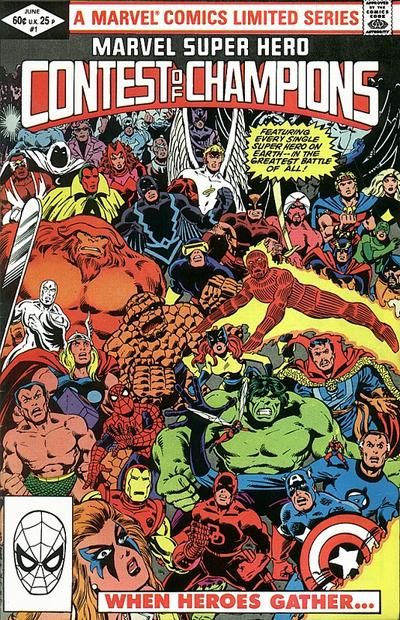
    Billy: You were also a part of Marvel’s first limited series, Contest of Champions! How did that come to pass?
 

grantcoc


Steven: Marvel had decided to do specials that tied in with the 1980 Olympics, a couple of giant format books ala Superman Vs. Spider-Man. The first was for a Hulk/Spider-Man story for the Winter Olympics. Bill Mantlo was the main writer on that but he had so much work he tapped me to co-write it with him. Al may have been behind that too, I forget. The Summer Olympics book was to be a “competition” between all sorts of international Marvel heroes. Bill was tapped to write that too, & again he tapped me, along with Mark Gruenwald, to help him with it. One problem he faced was that the international hero base in Marvel was not that broad. He needed a bunch of new characters created. I came up with the Frenchman Le Peregrine & the Aussie Talisman. I know Mark’s girlfriend came up with Sabra, Mark did Shamrock & the Arabian Knight. I forget what other characters there were. We all sat around Bill’s place for a night concocting Defensor because we had no South Americans, but that character’s conquistador motif always made me cringe; I’m not a South America expert but I doubt that’s an aspect of their history they celebrate overmuch. (Comics have always had something of a blind spot for that sort of cultural nuance.) Mark & I concocted a plot for the story, naïvely deciding it would be great to come up with new combinations rather than the really obvious battles that everyone would expect. That elicited a dull thud from Marvel editorial, & Bill replotted the entire thing & dialogued it all himself. So my real contribution to it, aside from input in the very loose structure of the story, was those two characters, plus finding the name for Defensor. I didn’t really have a lot to do with it, nor did Mark. They brought in John Romita Jr. to draw it, that might’ve been his first major job.


Then Moscow sent troops into Afghanistan. In response Jimmy Carter pulled us out of the Summer Olympics in Moscow. Marvel had to bury the book. A couple of years later Marvel finally decided to dip its toe into mini-series. This was something I’d been lobbying for since I started there, as independent companies had been publishing them & I thought the format was the future of comics, not that anybody listened to me. As Marvel Super-Heroes At The 1980 Summer Olympics or whatever it was called was collecting dust in a drawer, pretty sure it was Jim Shooter who decided to split it into three issues & try out the format with what was ultimately titled Contest Of Champions. Not really to anyone’s surprise – if you saw Marvel mail much of it consisted of people just asking for every character to team with every other character, so CoC must’ve been like dying & going to heaven for a lot of people – it was very successful. Marvel kicked open the mini-series floodgates after that, & it changed the subsequent face of the business. Pretty sure CoC’s success also started Jim thinking toward Secret Wars. I’d love to take credit for it all, but I wasn’t much more than a functionary on the project.


And with that response, part one of the interview will end! Look for part two very soon, as we’ll discuss more Marvel, Steven’s work with DC Comics, Dark Horse Comics, and his boyhood idol, Gil Kane!

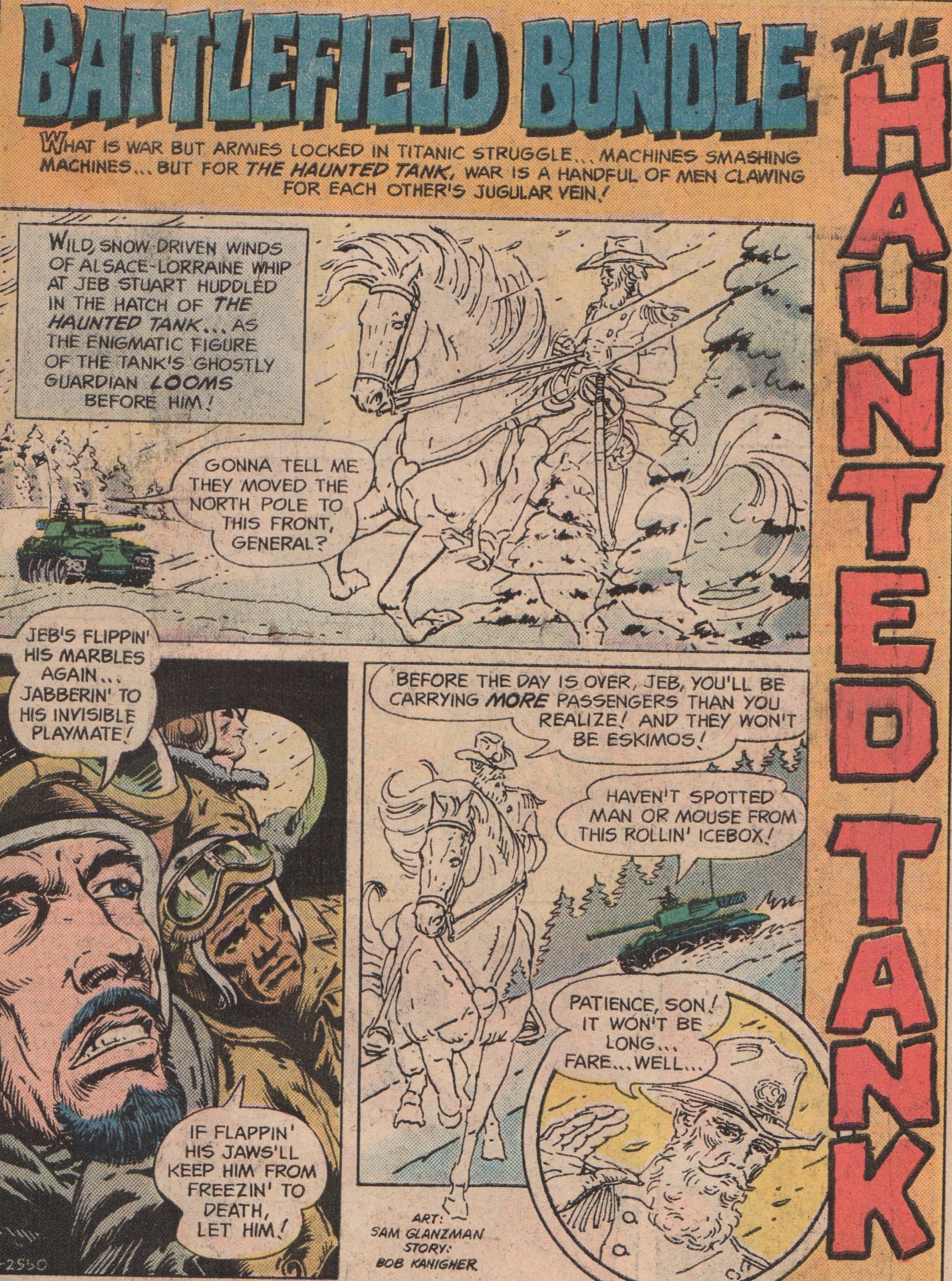


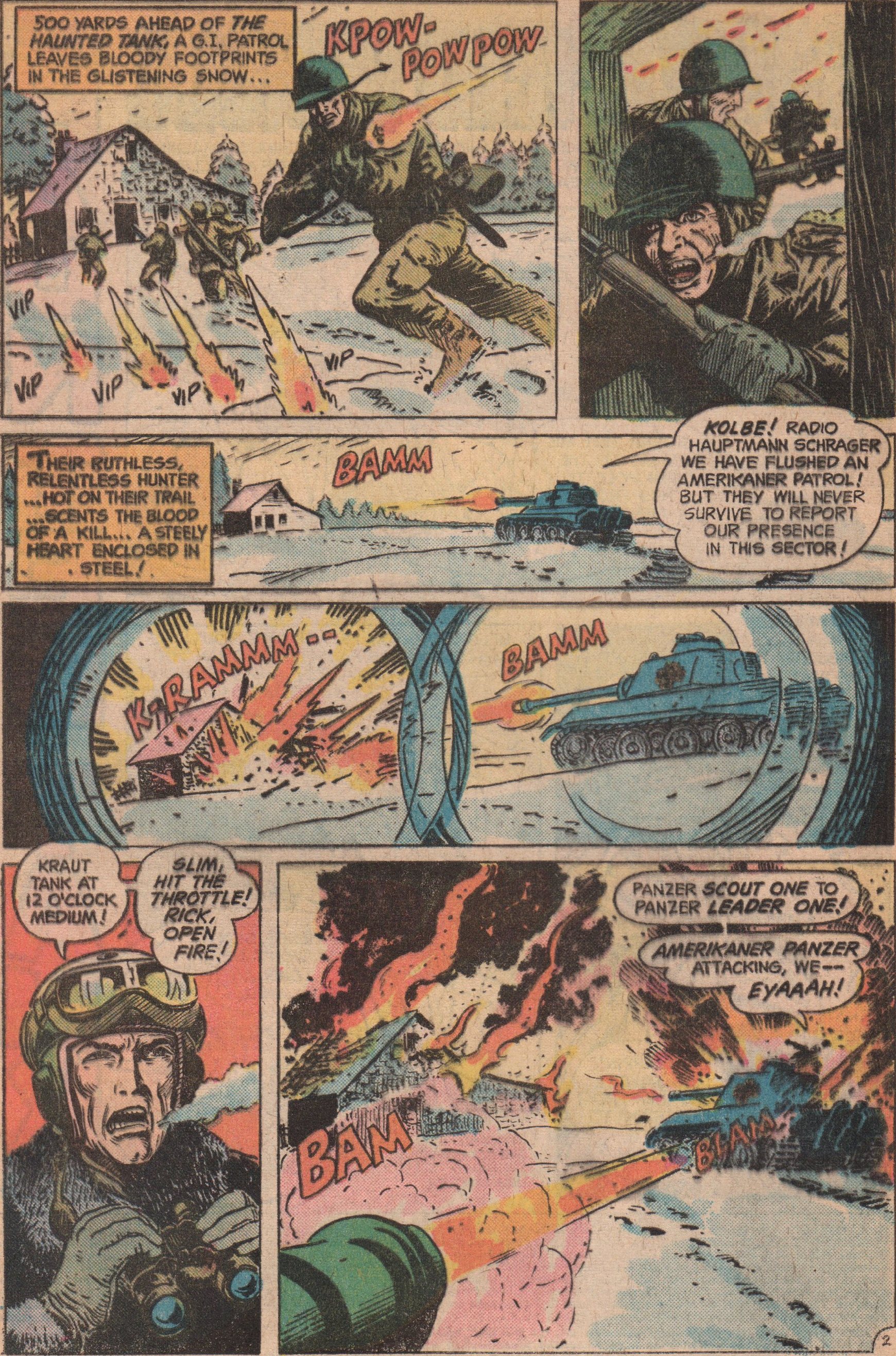
G.I. Combat #184, 1975 “Battlefield Bundle”

After spotlighting a Marvel military comic last time, I figured I’d go with one from DC Comics this time around. The only series that I actually own some of the comics from is G.I. Combat. OK, I think I own one or two issues of Weird War Tales, but that was just different, and not really a war/military comic. In this wacky issue, we see not only a band of brothers fighting against tyranny, but…a baby being born amidst the strife! You can’t help but love a title like…”Battlefield Bundle.”

Reading half a dozen or so issues of this title has really opened my eyes to the great work by Bob Kanigher (writer), and Sam Glanzman (artist) on this title. With Ben Oda lettering, and the fantastic cover by the legendary Joe Kubert, you can’t deny the level of cool with this comic book! A back-up story by Kanigher and artist Ric Estrada, finishes off this must have book!


img123

img125

img126

img127

img128

img129

img130

img131

Comic Book’s Unsung Heroes: An Interview with – Ed Hannigan!

For anyone out there that’s unaware of the great work by Ed Hannigan, there are several areas to turn your attention to. But first, just look at the fact that he wrote, penciled, inked, colored, and was a solid cover artist, too! If you check out his work, not only will you find out that he and Mike Grell created the first Green Arrow ongoing series (after the Longbow Hunters mini-series), he did some iconic covers for Batman, wrote, and also penciled The Defenders, and even wrote and penciled a cover for an issue of Superman! Yes, when you look at the body of work he put out over the years, you have to give the man credit where it’s due!

I had the chance to talk with Ed about a myriad of things he had a hand in over his years in the industry, and believe when I say that he is one of the most candid, and forthcoming people you could ever want to talk to! My personal favorite work of Ed’s, is his run on The Defenders, but I asked about many other topics in comics, so get ready for this one, it’s a doozy! I want to thank Ed for taking the time to indulge my curiosity, and let me in on some of the behind the scenes matter that he experienced!

Ed_Hannigan

Billy: Can you talk a little bit about your early days in comics (i.e. who gave you your start in the big leagues, books you worked on, etc.)?

Ed: Let me just say at the outset that the nature of freelance work, in the early days especially is that it is more compromise than art, and it’s done primarily to pay the bills. I had no illusions that I was creating masterpieces for the ages. I always tried to do the best I could at the time, but everything was done within the constraints of what the higher-ups wanted to see, and meeting the deadline.

Naturally, like everybody else I thought it was just a matter of time before I became the next Kirby or Ditko or Carmine Infantino, but reality quickly took hold and disabused me of such fantasies. But it was a job, the people were great and I felt like I was on my way.

The first person to give me work was Sol Brodsky, Stan’s right-hand man and a great guy. Over the years Sol was a great source of work in various forms, merchandising, etc. In the early 70s when I started hanging around the Marvel office, being a pest, Sol was producing a line of reprints for the British market.

These were even cheaper and cheesier than the usual American comics. They were reprints of the early Marvel books, black and white with a single spot color on some pages. There was Mighty World of Marvel with FF, Spider-Man, Hulk and Daredevil (I think) stories, and later, Spider-Man Weekly with Spidey, Thor and the Avengers. My memory is foggy, so I may have the lineups wrong.

So I needed a letterer to do corrections on the horrible photostats and I volunteered. The stats were truly atrocious, blurry and the smaller published size.

I had to open up the closed As and Ds with white paint (Snowpake) and change the American spellings of some words to their British spellings. I was terrible at it and Sol soon fired me. But he hired me back the same day to apply zip-a-tone screens to the stats. The other zip artist was Klaus Janson and we had a friendly rivalry going.

As time went on I started doing various art chores on the British Books, including designing center spreads and back covers. Tony Isabella was the writer/editor on these. We had some pretty good cover artists, Jim Starlin among them, though many covers were just composites of photostats of the American comics.

I remember the British books fondly, in spite of their cheesiness.

They also started a British Planet of the Apes reprint series and I believe I did my first cover drawings on those with Mike Esposito and Frank Giacoia inking. At the same time Ron Wilson was hired to do the same kind of work.

Somehow I managed to parlay this into cover work on some of the horror type reprint books, and eventually into drawing a Planet of the Apes (black and white) story, written by Doug Moench and inked by Jim Mooney.

Billy: Being both a writer and an artist, can you give some insight on how difficult that is to balance? There are so few who do it well (W. Simonson and Starlin come to mind).

Ed: I was primarily an artist. That’s what I had wanted to do since I was a child. I just fell into writing because my attitude at the time was that I could handle any job that was needed. It was all driven by my need for money and desire to have a career, so I would volunteer for any and every job that happened my way, drawing, writing, designing, coloring, production paste-ups, writing, whatever. At one point or another I did just about every job in the place.

Sol was very helpful there too. He often had little jobs that needed to be done on a very tight deadline. For instance I ended up writing a Dingo boots Spider-Man comic some other writer has turned in but that was rejected by the client. Not very prestigious, but good practice, and it paid a higher than usual rate. I did tons of art and writing jobs like that.

My friend, Dave Kraft was doing similar kinds of writing jobs for Sol and Roy Thomas, who was Editor at the time. So we had a nice little cottage industry going inside Marvel, doing puzzles, posters, coloring books, mini-comics to go in boxes of cereal, products of all kinds.

I don’t think at the time we thought of it as “writing” or “art” in the usual manner — just knocking stuff out to satisfy a client and pay the rent.

Probably my first “writing” was on the British books. We used to do fake letters for the letters pages, because we didn’t get too many real ones. More “professional” work came later as I made friends and connections. Kind of a form of networking, though I didn’t think of it that way at the time. Somehow I managed to snag a Tigra story and some other writing assignments, but I didn’t really think of myself as a writer until much later. I’m not sure anyone else did either.

Billy: In Marvel Premiere, you did probably the most memorable cover to that series (#28- Legion of Monsters- layouts). What was your inspiration for that one?

Ed: Truthfully, I barely remember doing that one at all, so it can’t be that memorable. If I had it to do it today I would make that shadow in the foreground more prominent and ominous, make the monsters more dynamic and aggressive and lose that puzzling car crash in the background. It’s funny what people think of as memorable. I usually see only the flaws and mistakes when I look at my older work.


EdHanniganinterview2

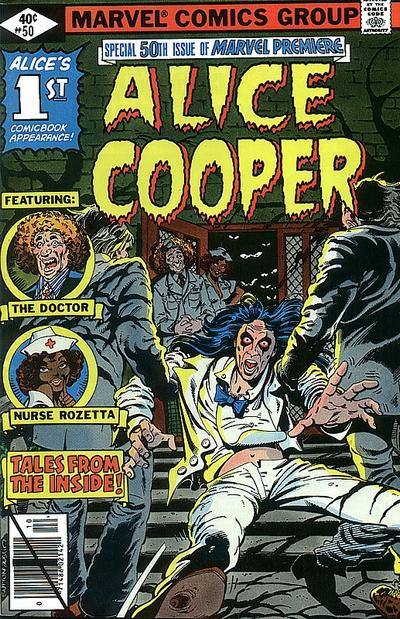
Billy: Keeping with Marvel Premiere, you are credited as a writer on an “Alice Cooper” issue. What was that like?

Ed: Lots of fun. Jim Salicrup, Dave and I were big Alice fans and were hot to get Marvel to do more stuff with rock music and so on. Dave and Jim were behind the Beatles comic and Marvel had done a KISS comic. Paul McCartney had put out feelers to Marvel, and so had David Bowie. The usual Bullpen crowd was not really in tune with the rock scene until later. Alice seemed like a natural with the costumes and outrageous visuals. Not sure how, but we hatched that goofy story based on the hospital album and got Tom Sutton to draw it. It doesn’t make a ton of sense, but it was just fun craziness.

That was also the time Steve Gerber was doing Howard the Duck and we also wanted to do off-the-wall comics like that in addition to straight super-heroes. We also did the Blue Öyster Cult stuff in Defenders. Same mindset.

Billy: And then you had to transition to a great Black Panther story. Was that an editorial decision to go from the two polar opposites?

Ed: No, that was another of those “emergencies” where Jack had quit or left or whatever he did, leaving a lot of unwritten pages in the middle of a story. So I volunteered to script them and continued the story with Jerry Bingham as artist. I believe that was Jerry’s first professional comics work. So it became “my” book and I decided, along with whatever editor was in charge of it to also tie up the loose ends left by Don McGregor when he left the Panther as best I could. That was the Klan stories, etc.

Billy: You wrote a few different titles that were multicultural (Power Man/Power Man & Iron Fist, Black Panther, etc.), were those stories more of Marvel trying to grab onto a zeitgeist of sorts or just a snapshot of the times?

Ed: I don’t think it was anything like that. They wanted successful minority characters of course, but I don’t think doing Black characters was any kind of statement or mission. Maybe at their very inception, before I was involved. But I don’t think they were trying to make any statement. Someone probably thought there was an audience for that kind of stuff. Marvel super heroes are colorful and exotic by definition, so race was the least-most consideration. Cage was a fun character. I wish I could have done him more. But those particular stories were not very challenging and before I hit my stride I was yanked from that book.

After doing the Panther and a couple other things I thought I could pull off the writing thing pretty well and it seemed to me like easier money than drawing. So I ran with it as well as I could. Really, nothing but a big fake out. I was a good speller and knew my grammar. I had read a lot and was always fantasizing stories (still do) so it came naturally. I never took it very seriously. I didn’t have a lot of writer’s angst or anything like that. I knew it was not great literature for the ages, it was entertainment for pre-adolescents fer gawrsh sakes!

Billy: You did a couple of Man-Thing stories and the character seemed to fit your style. Was that a character you wanted to do more of or was it not really your thing?

Ed: I liked to Man-Thing originally because I loved Mike Ploog’s art, and then later because of the interesting things Steve Gerber was doing with the character. And he’s pretty easy to draw, always a consideration. I tried to blend the Ploog/Eisner/Walt Kelly style in with the standard Marvel style. But I didn’t lust after the assignment or anything like that.

Billy: There was a good run where you and Doug Moench collaborated on Kull. What was that like working on a character that had been around since the pulp era, and also working with Doug?

Ed: Well, I always liked Doug. He wrote my first “real” Marvel story, a B&W Planet of the Apes tale called Evolution’s Nightmare, but Kull was kind of a pain. I never felt good about it and I don’t think I did that great of a job. I don’t think I ever got into the character. I enjoyed doing the big double-page spread in the first issue, but after that it became drudgery. Barbarians are just not my thing.

But Doug was very easy to work for. He ,mostly knew what he was going to put in the dialog, left lots of room. etc..Technical stuff. He was always very clear in describing what he wanted.I enjoyed his stories for the most part.

Over the years Doug and I did a number of things, like Catwoman.


Edhanniganinterview3

Billy: The cover you did for Marvel Two-In-One Annual #6, was very different for its time. What was the impetus for that one?

Ed: Just stretching artistic muscles. You get a little tired of the hero charging out at the reader kind of “beauty shot” that’s been done ad nauseum. I wanted to come up with something fresh for Ron Wilson’s American Eagle character, something different from the usual pinup shot. The montage just kind of flowed, I think from noodling around with a cover sketch, and Simonson’s inks made it look like stained glass. One of my favorites.


Edhanniganinterview4


Billy: Can you talk a little bit about your run on Spectacular Spider-Man with writer Bill Mantlo (also about working with him specifically- I’ve heard he is a great guy)?

Ed: I had been drawing Peter Parker for awhile with Roger Stern writing. When they put Mantlo on it he told me he wanted me to continue drawing it, which was fine by me. I had always liked him. He had a bunch of ideas that he told me about, including creating Cloak & Dagger, whom he thought could be developed for a book of their own. I was interested and Bill encouraged me to contribute to their look and attitudes in general.

Bill was quite a character. We were very similar, middle class hippy types. We liked a lot of the same books, music, etc, but politically we were opposites. Bill was very leftwing. He had even gone to Cuba at one time to do farm work and one assumes, receive indoctrination. Even back then, I was a libertarian. So we used to argue politics all the time, but it never became acrimonious. I tolerated his views and he tolerated mine for the most part.

We were never close pals, but we got along pretty well. The only time our differences caused a problem was when Bill wanted to do a gun control story in Spectacular Spider-Man. I was dead set against it. I thought it was bound to turn into a propaganda piece for a certain viewpoint I opposed. I flatly refused to be involved. He said it would be fair and even-handed, but I didn’t think it was appropriate for the audience and I didn’t think Bill could handle it “fairly.” He bought into all the liberal cliches about guns. So I just didn’t draw the book for those couple of issues. Sucked because it broke a string and affected royalty payments, but not a huge deal. I needed a breather to catch up anyway, I was always fighting the deadlines because I worked too slowly.

Bill and I worked on other things, cover designs and such. We also did Sword in the Star, a space opera thing that eventually debuted Rocket Raccoon, I believe, though I didn’t have anything to do with that character.

When Cloak & Dagger finally did get the okay as a title I laid out the entire first issue, based on Bill’s plot. I even penciled a few pages, but something about it didn’t seem right and I asked to be taken off the assignment. I’m not even sure why, exactly, just burnt out I guess. Jim Salicrup eventually published my layouts in Marvel Fanfare. Rick Leonardi picked it up and did an excellent job, I thought.

We sort of lost touch with each other after a while and I didn’t find out about his car accident until months after it happened. We’re still connected in a way. Disney recently bought out all rights to Cloak & Dagger and I worked with Bill’s brother, Michael on the negotiations for the sale.

Billy: Switching to DC for a moment- What was it like going over to the other side of the street (how did it happen)?

Ed: I had been getting impatient and bored with Marvel, Shooter and everything for a while and was not very happy. I had gone through writing Power Man/Iron Fist and Defenders, but i felt like I was spinning my wheels. Dick Giordano was interested in luring me over to DC to do some fresher covers, which they needed, and to do other art and maybe some writing. He kept taking me out to lunch and pretty much wooing me to go over there. I was not exclusively contracted to Marvel so I agreed to do some covers.

This didn’t go over too well with Marvel and I found myself more and more comfortable with DC, and less so with Marvel. Finally I cut the cord and was hired to be DC’s first Cover Editor, in addition to designing and drawing a number of covers and stories.

I also continued to do Merchandising/Special Projects type work, this time for DC. I did Style Guide sketches and cover designs for Mayfair’s line of DC games. Just as at Marvel would just troll the various offices and see if anybody needed an artist. I remember one Christmas Party at the Automat where Dick asked me to design the new Brainiac, which I thought turned out quite good. Unfortunately, I sold that design to them lock, stock and barrel for what seemed a good sum at the time, but really was not much dough. If Brainiac ever gets a big movie role I’ll be kicking myself and calling my lawyer.

DC was very different from Marvel. They seemed more serious and corporate, with had regular Editorial Meetings and such. I found myself handling scheduling and overseeing all the covers, which was a lot of work and became quite stressful. Eventually I had to get out of the offices and work at home.But, it was fun and I stuck with DC for years until the “meltdown.”

I wanted a regular gig and Mike Grell asked me to draw the new Green Arrow book, following his Longbow Hunters, which had been very successful. And with Dick Giordano and Frank Mc Laughlin and of course, Grell writing. It sold quite well at first, becoming one of DC’s top sellers. I managed to squeeze in a couple of other stories and a lot of covers, both drawing and designing for other artists.

My wife, Heidi and I were living on the Upper West Side, way up by Columbia University. We were quite comfortable, but things were changing. The building we lived in was converted to co-ops by a new owner and we were enticed into “buying” our apartment, which was rather large by NYC standards. But the city was getting dirtier, more dangerous and too expensive. We had started talking about moving out and having kids. The old biological clock thing.

For a couple of summers had rented a small house in the Berkshires with some friends that we would use on the weekends in the summer. It was close to Stockbridge, MA and the Tanglewood Festival. We loved buying a picnic dinner, some wine and listening to the Boston Symphony on the lawn under the stars. It was lots nicer than the hot, stinky city and we started thinking of moving there.

I had grown up in Massachusetts and my wife had gone to college in Vermont, so New England was attractive to us. Unfortunately we couldn’t find anything near affordable in Connecticut or Massachusetts. So we looked further north.

At about the same time I had been approached to do the new Batman Series, Legends of the Dark Knight, and we decided to make a move for real. We “sold” the co-op in the bizarre New York real estate fashion, for a nice profit and started looking in earnest for a place in the country. My wife was pregnant, so it became a matter of urgency. We rented a miserable apartment in Brattleboro, VT, temporarily as our base of operations. I was waiting and waiting for Denny O’Neil to produce the Batman script. I ended up Drawing a Green Arrow/Question Annual in the meantime. The thing is, I had a contract guaranteeing me a certain amount of work, so I always had a source of income, but I wanted to get on with the Batman stuff.

We finally got disgusted looking for a house in Vermont and started looking in New Hampshire. Not too much room left in New England. We finally did find a house we really liked and made an offer, lined up finances, yadda yadda, but the owner insisted on too much money and the deal finally fell through (He ended up selling the I have to do something. for substantially less than our offer.) Very discouraging. I was still waiting for Batman and Heidi was more pregnant than ever.

Just when it looked like we would never find a place. My wife found this house and brought me out to see it. At first, viewed from the street I hated it. It looked tiny, but she said, it goes back a lot and the upstairs has three bedrooms. Upstairs? It looked from the front to be a one story Cape, but it had a shed dormer in the back making it much larger than it had looked. And it had five acres, mostly woods. Excellent. So we bought it.

Finally the LOTDK script materialized. So I worked on that in my new studio, my daughter, Jeannie was born and the rest is history! The first winter we had zero furniture. The house had electric heat that we never used except in he baby’s room, and there was a big ugly wood stove in the living room that you had to watch like a hawk because the chimney pipe would get so hot it would glow.

But I labored away and by the following summer the first royalty check arrived. I was stunned– it was much more than I had anticipated. We were able to buy furniture and have the electric heat ripped out and a new oil heat system put in.

After the success of LOTDK I figured I was a star and it would be smooth sailing from now on. After a long vacation spent watching my baby daughter grow, I pitched my own project, SKULL. & BONES to DC. the premise was a Batman/Zorro type hero operating in the Soviet Union, fighting the government. I wrote, penciled and inked it all myself and almost had a nervous breakdown as a result. Suffice to say, it bombed.

I was still under contract to DC, so I was still owed work, though times were getting tough both for us and the comics biz. I pitched another idea, League of Justice, an Elseworld series that I was hoping to get 12 issues out of. They only let me do three deluxe sized issued, so I had to shoehorn it into the two books and it’s barely coherent. After that I did an Aquaman Annual, but things were looking grim. When my contract was up, blam!

When things went south I wasn’t worried until I made some calls to see about renewing the contract. To my amazement they were not going to renew. My contract had guaranteed me a certain amount of work but now that was kaput!

So I was unemployed. DC wouldn’t even take my calls and Marvel was on the skids. A lot of comics pros were out of work. We had had our second child, Ryan by then. It was rough. I was eating into my IRA. I got a tiny amount of work from Jim Salicrup at Topps doing covers for Mars Attacks. My wife took a couple of horrible jobs, one a night job doing phone sales. Eventually she landed a job at PC Connection in Keene selling computers and peripherals/ Finally at a Parents’ Day thing at the school my daughter’s teacher introduced me to the father of one of the other students. It was a Brit named Ray Guest who worked as an artist at a company just over the border in Massachusetts, Channing L. Bete. They publish informational booklets and things covering a huge variety of topics, medical, safety, educational, etc. I actually had already sent them an application, but Ray convinced me to come in and apply in person. I did, showed samples, took a drawing test, had a couple of interviews and was hired! My first assignment:”About Genital Warts!”

It was a great second career. They trained me on the Macintosh in Quark, Macromedia Freehand and Photoshop and tons of professional procedures, press checks and the like. In a lot of ways it was like comics all over. Talented people. Everyone was a fan. My boss even turned out to be a guy from Marvel Comics, Marcus McLaurin! That lasted a good nine years, during which time I was diagnosed with Multiple Sclerosis. Bete was very successful for a while, then not so much. They had a RIF (reduction in force) which I survived, then a couple years later another RIF and along with 20% of the company I was laid off. The MS was getting bad so I applied for Disability (early Social Security) and here I am today.


Edhanniganinterview5

Billy: I’d love for you to expound on your work there on Batman and Green Arrow (the people you worked with, writers, editors, and also the characters themselves as far as what you wanted to do with them)?

I already touched on Batman and Green Arrow a little. I really enjoyed working on GA. Grell’s scripts were very straightforward and uncluttered. He pretty much let me do what I wanted. He had a lot of action in his stories and unlike many writers, he didn’t pack in tons of nonsensical prose and melodrama.

Legends of he Dark Knight was a followup to Miller and Mazzuchelli’s Batman Year One, and I tried to be consistent artistically with Mazzuchelli’s work. That was probably a mistake. I would have been better off doing my own thing, maybe a bit like the old Peter Parkers. In retrospect I think I did a competent job, but it doesn’t dazzle. It looks rather ordinary to me, which is odd considering that it sold far more than anything else I’ve ever done!
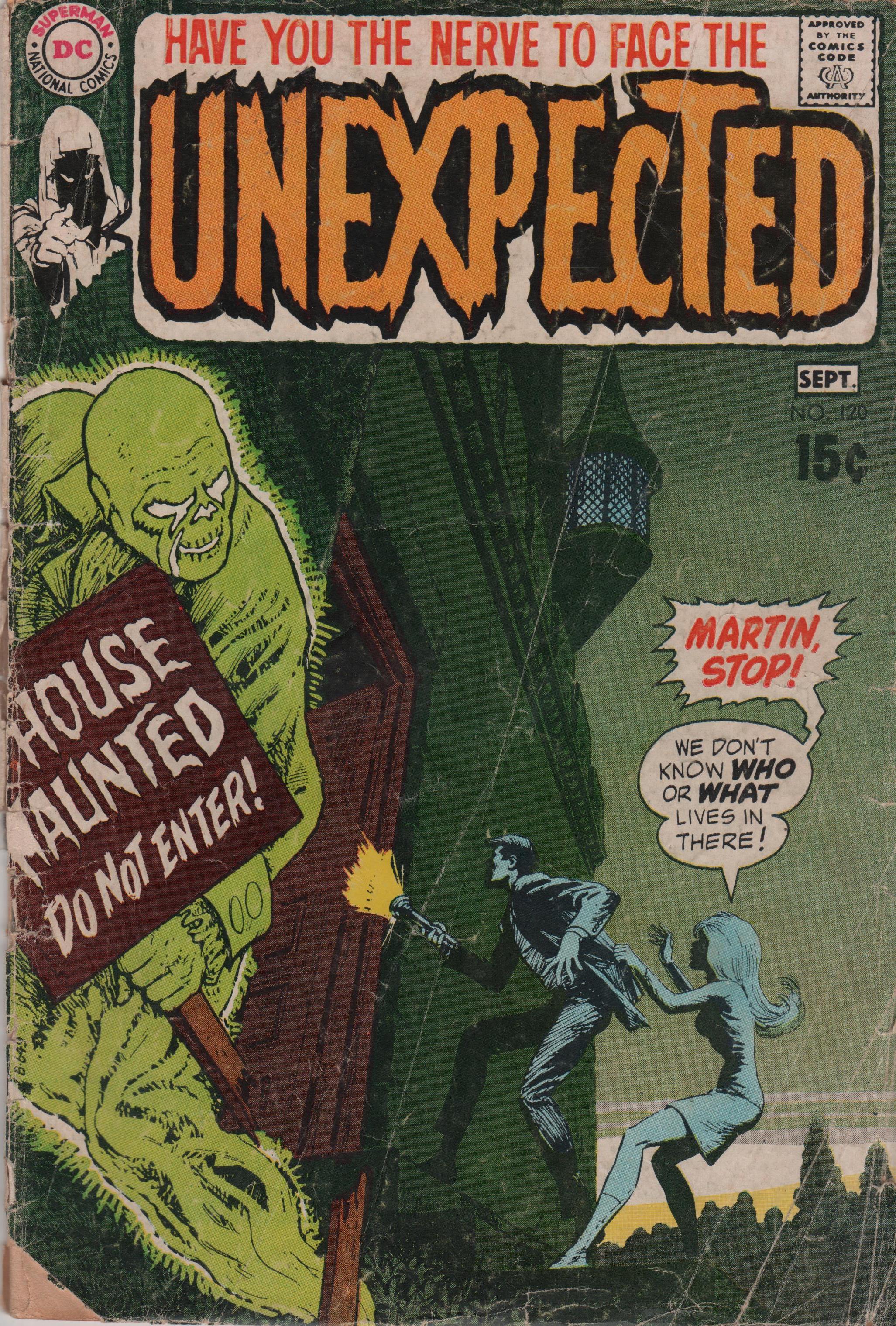
The story itself was also a bit too much on the ordinary side, in my opinion. No big dramatic moment, no paradigm shift or huge revelation. It’s easy to criticize, as I know well from writing myself, but I think it could have used more pizzazz. I am not a big fan of Native American mysticism, either, which strikes me as hokey. But what can you do? Somebody probably considers it the best story ever.

Billy: You’ve done a ton of covers in your career. That being said, do you have some favorites or more specifically issues that you still have till this day?

Ed: I still love the first Cloak & Dagger Spectacular Spider-Man cover (#64) and their second appearance (#69) and the next one (#70) as well. I like most of the covers in that run. The Hawkeye/Ant Man Avengers cover is a fave, Captain America #235 with Daredevil flying the biplane is a good one too.

Batman #362, 370, 373 are pretty good. I like Micronauts #46, in fact I like all the Micronauts covers I drew. I also like Supergirl #13, which is an homage to the Superman TV show, some of the World’s Finest covers, Wonder Woman #300.

And there were those Handbook of the Marvel Universe cover, Mark Guenwald’s brainchild.

The thing is some of my favorites are covers by other artists that I did the sketch for, like Action #538 (Curt Swan), Wonder Woman #329 (Garcia Lopez). and many covers drawn by Gene Colan I don’t know, I could go on and on…

Billy: OK, now on to the Defenders…The book seemed tailor-made for most of its creators (Englehart, Gerber, Buscema, Wein, You, Perlin, Dematteis, etc.), as either a superhero book or a wacky ‘team out of place’, kind of book. What was the angle you wanted to hit on with that specific title?

Ed: I never liked superhero team comics, so I guess the idea of a non-team appealed to me. I had my own agenda for the Defenders that was not the standard kind of book. For instance, when Nighthawk got in trouble with the IRS and ended up in prison people were asking me how he was going to get out.

Thing is, I had no intention of ever getting him out. Fair or not, he was toast!

My secret plan was to get rid of all the male characters by one means or another and gradually turn the Defenders into an all female group. I wasn’t going to announce it or tell anyone, one day people would just say, “Hey, this has been an all girl group for the last ten issues!” And I succeeded for an issue and a half.

I was also interested in the relationship between Valkyrie and Hellcat. One thing Dave and I agreed on was that Hellcat was the star of the book in some ways. She put on a ditzy persona but more often than not she figured out how to defeat the villain or whatever. I think she was the most interesting character in the book.

The other thing I wanted to do was odd standalone stories that didn’t depend on the rest of the Marvel Universe or its messy continuity. Hence stories like the Quiet Riot, which was based on an old movie I don’t remember the name of or the Tunnelworld saga.

Billy: You wrote and penciled the book at the same time for a while, using crazy characters like Lunatik, and Mandrill. Why did you use them instead of other villains (not that they didn’t fit the book’s atmosphere, just wondering if it was a personal choice or editorially driven).

Ed: Lunatik was inherited from Dave Kraft and Keith Giffen and was really their baby. I never did understand him, so I was just flailing. Mandrill played into the all female aspect I was going for. He is a hideously ugly guy with power over women. A fanboy dream. I would use him again in a heartbeat! To answer your question, no one ever said, “Use Mandrill” it was more like, “These villains are taken, don’t use them!” So you look around and see who’s available.


Edhanniganinterview6

Billy: Along the lines of crazy issues, can you talk about the issue where the Hulk is riding the whale (Hulk Prince of Whales)?

Ed: I love that issue. I have always liked stories about whales. Moby Dick is one of my favorites. Whales were in the news and I thought, they’re strong, they’re hunted and harassed just like the Hulk — bingo! It just seemed like a natural, and as I said before, we always had to find something for the Hulk to do because of the TV show. Came out pretty good I think.

Billy: Speaking on editors, as that’s still a hot button topic these days…Most of your Marvel work was either Al Milgrom or Jim Shooter. Can you talk about the relationship with those two guys. I’ve heard people either loved or hated Shooter.

Ed: Well, I always liked Al and still do. He had a quality I value greatly in editors — he let me do what I wanted without giving me a lot of grief. Here’s the thing about Defenders, no one cared that much about it, so it didn’t matter what the writers or artists were doing as long as they didn’t scare the horses and as the Hulk was on every cover!

Shooter was odd. Mostly I liked him. He could be your pal or a major pain in the butt. I used to hang out and go bar hopping with him. He did a lot of good for a lot of people. But he had a lot of opinions I thought were dumb and sometimes the controlling fascist showed his face. More than that I won’t say.

I did do work for other editors — Jim Salicrup, Archie Goodwin, Mark Gruenwald, Tom DeFalco and others, and I worked with all of them from time to time designing covers.

Billy: Going back to the Defenders- Can you talk about the very emotional issues you wrote concerning the death of Patsy Walker’s mother?

Ed: Honestly, my memory of that is practically non-existent. I remember Dorothy as an uber stage mom who controlled every aspect of Patsy’s life as a character but had very little to do with her as a real person. I’m sure I was going for something profound, but I’m damned if I can remember what. I’d have to read them again.

I will say that, like any writer I was cannibalizing real people I knew and basing my stories on their personalities and situations, real or imagined. Who Dorothy “was” I have no idea. I’m sure she was based on someone I knew in real life. Not you, Mom.

Billy: Switching gears- What were some of your favorite books to read back then?

Ed: Roy Thomas/John Buscema/Barry Smith Conan, Marv Wolfman/Gene Colan Dracula. Gerber’s stuff, especially Howard the Duck, Miller’s Daredevil and Batman stuff, the usual suspects, Alan Moore, Watchmen, whoever. Animal Man, Herbie, I would go through phases of following a certain artist or writer.

Billy: And finally- Do you still keep in touch with any of your collaborators from those days?

Ed: The ones that aren’t dead. I don’t go to conventions or things like that so I don’t run into anyone.

I keep in touch with some people in comics mostly on Facebook– Irene Vartanoff, Craig Russell, Dave Kraft when he’s not out of his mind, Jim Salicrup, Jerry Bingham, Don Perlin. Graham Nolan whom I didn’t know well back then. Allen Milgrom all the time because we’re still doing work together. I’m FB friends with a number of old comics folks. And there are some I avoid and some who avoid me, but the less said about that the better.

Farewell and Thanks

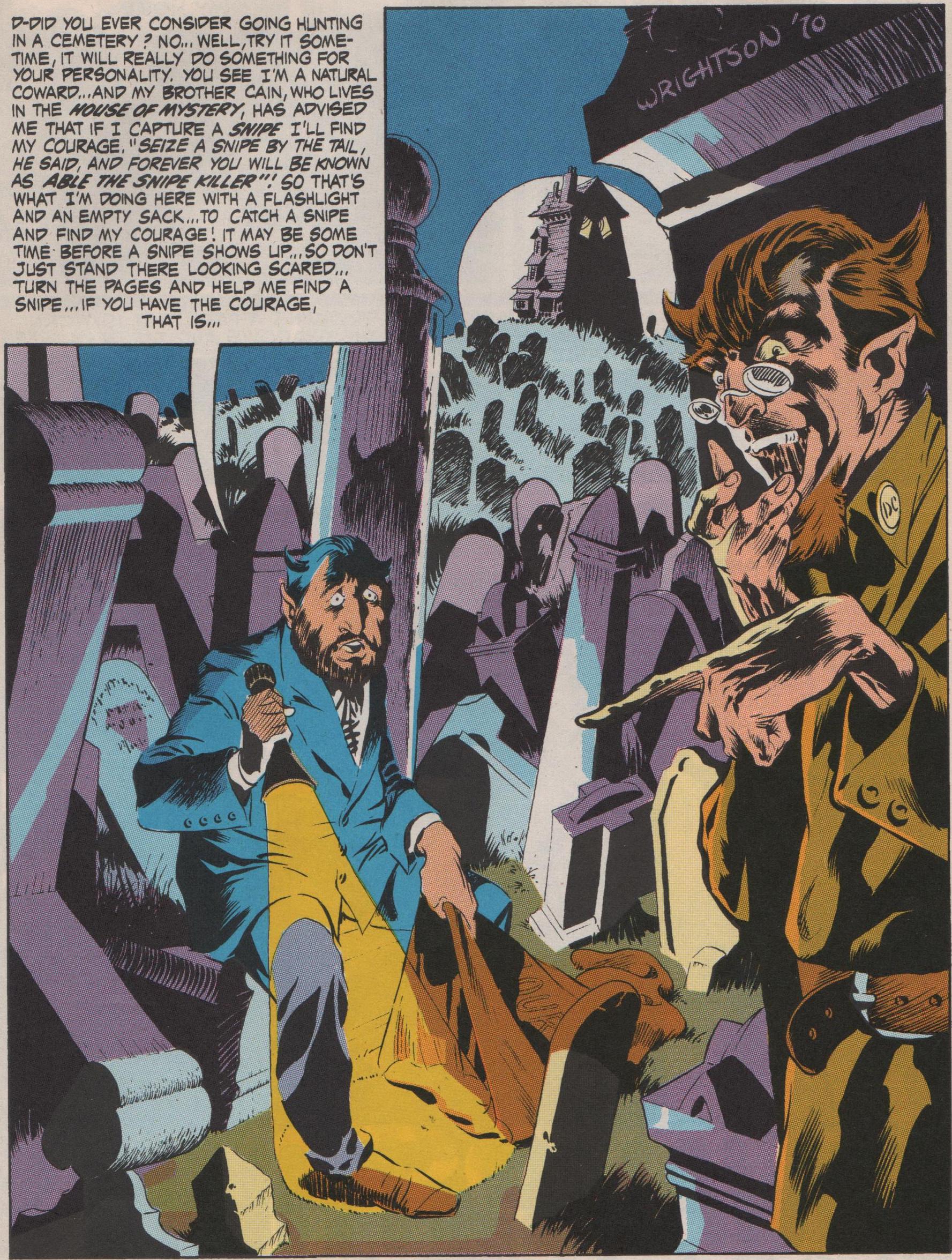
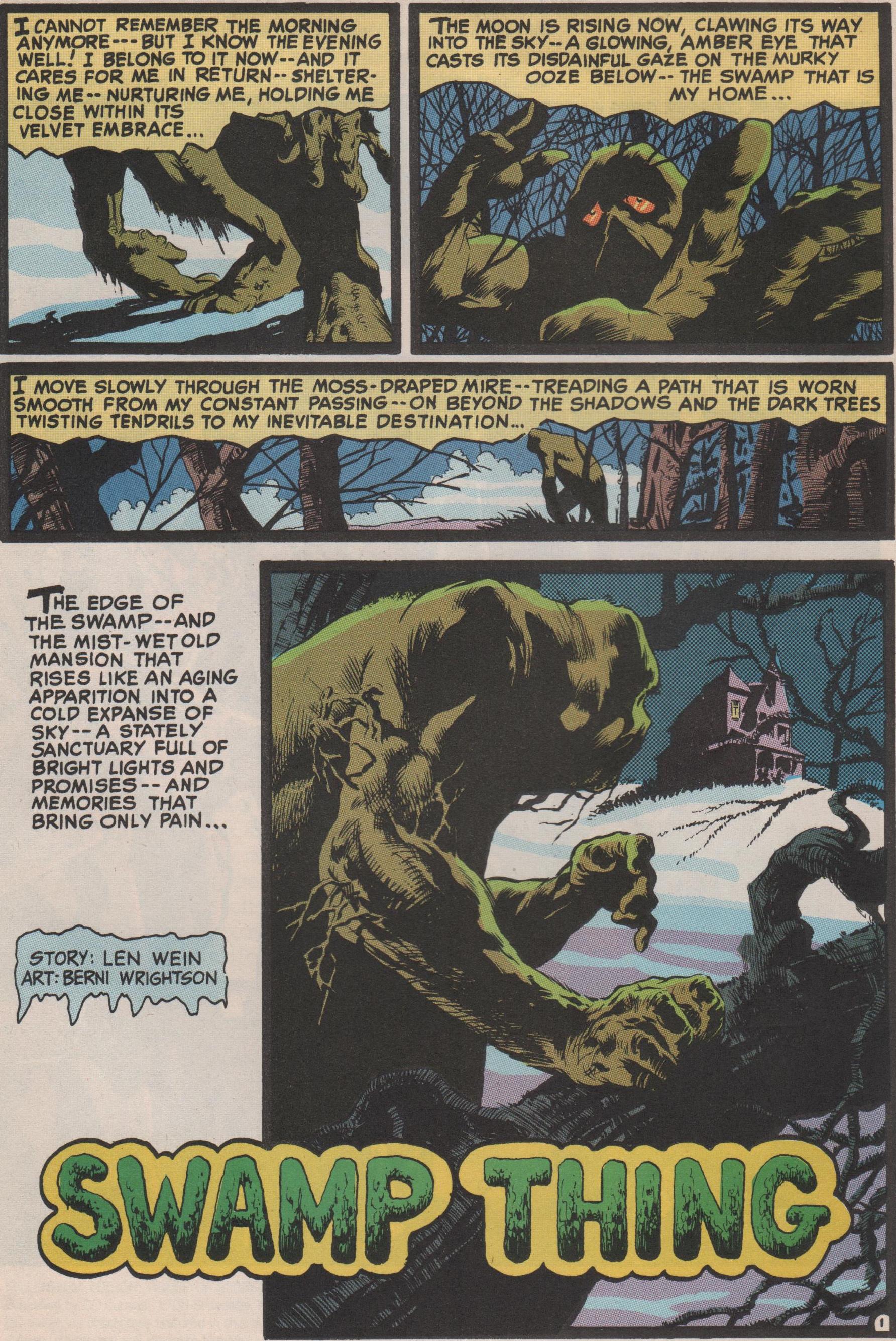
The House of Secrets (Millennium Edition – 2000) #92, 1971 “Swamp Thing”

As a long time Marvel zombie, I thought it would be prudent to broaden my horizons, so about a year ago (I think), I bought something from DC comics. Now, keep in mind, I’ve read some DC in recent years, and didn’t think very much of it, also the word on the street isn’t anything to get excited about either, as far as everything else they’re offering. So, what did I do? I grabbed some Alan Moore “Swamp Thing,” that’s what! I’ll admit, I had some preconceived notions about the book (negative), but they were dashed away in mere minutes. Moore took this character to new heights (from what I’ve read), and the book really opened my eyes to another comic book legend. My next thought was…”OK, but what about the beginnings of this character?” So, not long after reading the Moore run, I found a reprint copy of House of Secrets #92, Swamp Things first appearance. I knew it would be good, just from the creative team, and I wasn’t disappointed. It was a short story, and the issue had some good stories in it as well, featuring creators like Dick Dillin, Alan Weiss, and Tony DeZuniga, just to name a few!

I know the original is pretty high-priced, so grab a copy of the reprint or a trade, this issue is required reading! Story by Len Wein, art (and cover) by Bernie Wrightson, colors by Tatjana Wood, and edited by Joe Orlando! With creators like that involved, you know it’ll be a slam-dunk! One last note, and I’ll get out of here. There is a foreword by Robert Greenberger, and he explains the details of how the idea came about for this specific story. It describes the behind the scenes for this one, and really is a super cool story involving Wein, Wrightson, Louise Simonson, Mike Kaluta, and others. This story is worth the price of admission alone!
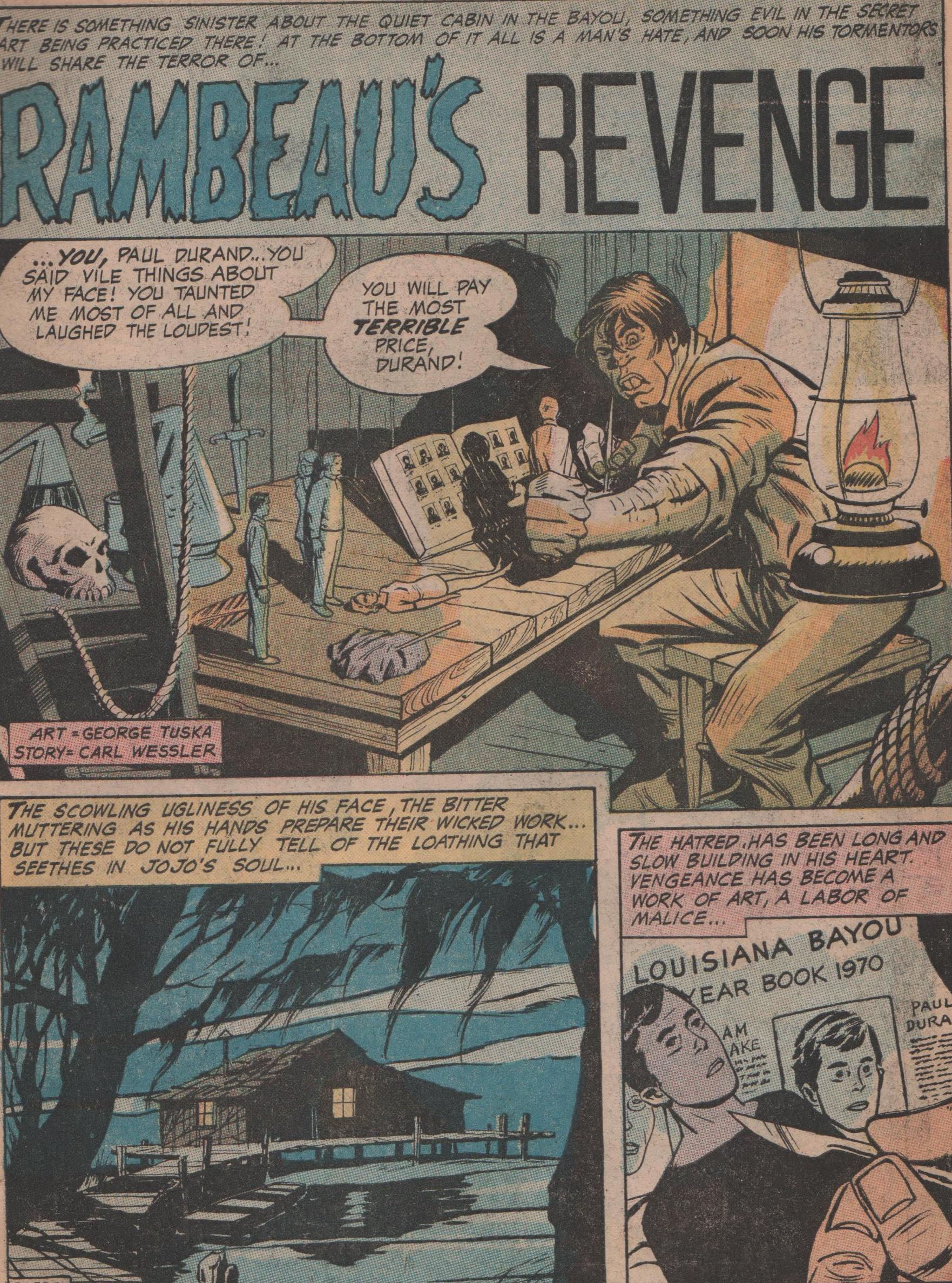
 

Image (11)

Image (12)

Image (13)

Image (14)

Image (15)

Image (16)

Comic Book’s Unsung Heroes: An Interview with – David Michelinie!
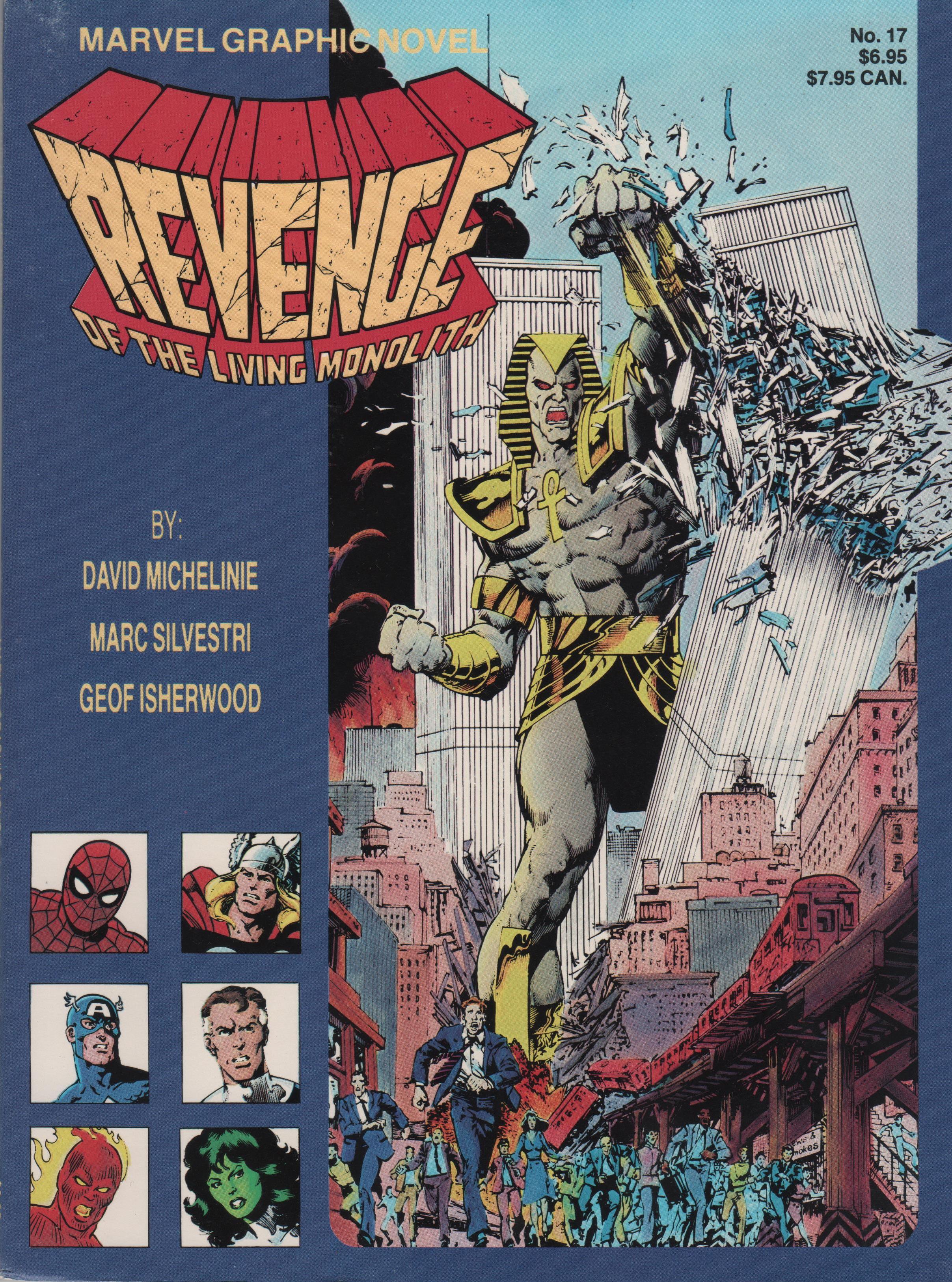
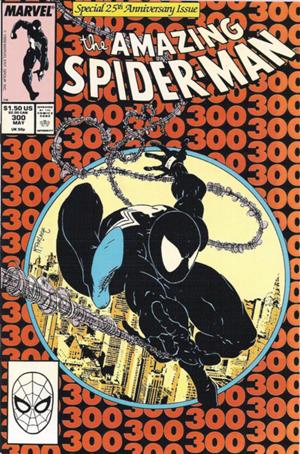
If someone asked you who wrote the Iron Man story “Demon in a Bottle” or the first appearance of Venom in Amazing Spider-Man, would you know? OK, how about the Avengers story “The Yesterday Quest/Nights of Wundagore” or the Marvel Graphic Novel’s “Emperor Doom” and “Revenge of The Living Monolith“? Are you getting the point? Some creators, for one reason or another, get their share of credit or even more than they deserve, and some seem to get very little. David Michelinie is one of those guys that I feel gets nowhere near the credit he deserves. Just look at that list of stories above, and tell me I’m lying.

Michelinie also had a creative hand in the weddings of Superman and Lois Lane and Peter Parker and Mary Jane Watson! So again, I ask, why not give this guy more credit? A quick look at any number of websites shows he has the “street cred”, so let’s stop overlooking a guy that wrote over one hundred Spider-Man stories, Action Comics, Daredevil, Jonah Hex, Swamp Thing, and so on!

I had the awesome opportunity to ask David a few question about his work over the years, and here’s what he had to say!

david_michelinie_pic

       Billy: It seems that you really enjoyed developing the brotherly relationship between Wonder Man and the Beast. Was that something you wanted to stress/drive home with the readers?

David: There’s tremendous pressure, peril, and grief, in the life of a superhero. And this was especially true with Simon Williams, who at the time was uncomfortable and insecure in his role as Wonder Man. So I wanted to lighten things up a bit, and teaming him with the upbeat Beast seemed like a good thing for both of them. Everyone needs a friend.

beast24

     Billy: The revelation of Wanda and Pietro’s lineage was a long time coming, no doubt. Did you guys (You, Gruenwald, Shooter, & Grant) script/write the story as if Django Maximoff was going to be revealed as their father or was it a ruse from the get-go?

David: I really don’t remember much regarding how all that came about. I do know that Mark Gruenwald was a big factor in generating that story line, since he knew a lot more about the Avengers’ background and history than I did.

    Billy: The Avengers title was in a bit of a flux when you came on board, as Jim Shooter had  written the book  for a while, but I think he was transitioning to EIC, correct? Was that why the book was kind of bounced around for a spell before you were the regular writer?

David: I think Jim was reluctant to give up the Avengers- he really cared about that book and enjoyed writing it. But the reality of running a major company while trying to be a full-time writer on the side finally got to him. I scripted several issues using Jim’s plots, and I think that convinced him that I would make an acceptable replacement, so I got the job.

    Billy: Transitioning to your Marvel Graphic Novels (#17 & 27); First, in the forward to MGN #17 “Revenge of the Living Monolith”, you credit Jim Owsley (Christopher Priest) for the concept of the story. It’s obvious that the two of you wanted to move that character (the Monolith) away from being just another cookie-cutter villain, and by the books end, most readers probably feel sorry for him, as opposed to thinking he’s the cold-blooded killer type. Do you feel that as a team, you guys hit the mark as fa r as making it believable? And if there’s anything you could go back and change, would you?

David: Anytime I’m assigned to write a character I try to do something new with them, something that shows a different aspect of their personality or perhaps some event in their past that has factored into their development, but of which the reader is not yet aware. And while it’s true that there are some purely evil people in this world (I’ve worked for some of them!), villains seem much more interesting if there’s something in their history that makes them sympathetic. I think what was presented as Ahmet’s (The Living Monolith) background was believable, but the final judges of that would be the readers. Second answer: Since I don’t have a time machine, I rarely think about going back and changing things.

Image (18)

    Billy: The concept of MGN #27 “Emperor Doom” gives us a tale of a time when Doom was more of a manipulator than he is now. Was that something you thought Doom was more about as a character?

David: I loved writing Dr. Doom. He was brilliant, focused, and determined and thoroughly convinced that he was justified in his deeds and viewpoints. If manipulation was what it took to achieve his goal, then manipulation would be his tool. And he was very, very good at it.

Image (21)


Billy: There’s a very powerful scene in this book (still speaking on Emperor Doom), where Doom proves to the Purple Man that his will can resist his powers of persuasion, and that moment solidified Doom as one of Marvel’s greatest characters. Was that something that was part of the initial script or added later ( I guess what I mean is, was that something you always wanted to do with Doom)?

David: I love that scene (image below); very powerful, very character-defining. And it was indeed part of the original plot. And as much as I’d like to take full credit for it, I honestly don’t remember if it was my idea or something suggested by Jim Shooter in our plot conferences.

Image (22)

   Billy: Speaking on both of those graphic novels, were the artistic teams already in place when you signed on, or was it a process?

David: The plots were completed, and then the art teams were determined. And I have to say that Bob Hall, Marc Silvestri, and Geof Isherwood all did wonderful jobs.

   Billy: Moving on to Spider-Man now; Can you talk about the move to that title as the regular writer, and what it meant to you?

David: I assume you’re talking about “Amazing”, yes? Spider-Man was my favorite superhero of all time, so when Jim Owsley picked me to write Web of Spider-Man it was a genuine thrill. Getting to play with ones favorite character is probably every writers dream, but how often does that dream come true? So when I was switched over to Amazing Spider-Man, the original Spidey title and the book that got me back into reading comics when I was in college, it was very sweet icing on an already delicious cake.

    Billy: You took the symbiote from being a vehicle for Spider-Man, and turned it (basically) into his mortal enemy. Was that decision an editorial thing, or a plan concocted by the creative team (You, Mcfarlane, etc.)?

David: It was actually something that I came up with on my own. Whenever I got a chance to write a new (for me) character, I tried to figure out what makes that character unique and then I exploit it. In Peter Parker’s case, his early warning Spider-sense stood out as something unmatched in the Marvel Universe. It has saved his life countless times by warning him of danger before he could be harmed. So I wondered…what would happen if there was a villain that didn’t trigger that Spider-sense? It had already been established, in the Secret Wars story line, that the alien symbiote which had been Spider-Man’s living costume for a while didn’t activate his Spider-sense. And since Spider-Man had cast the symbiote aside, the creature was likely feeling hurt and angry about that rejection. So attaching the symbiote to a host who shared a similar hatred for the wall-crawler seemed like it would make for an interesting-and very dangerous-spider-foe. My initial origin featured a woman as the host, and I started setting the character up in a couple of teaser scenes in Web of Spider-Man, where both Peter Parker and Spider-Man had been thrown into danger by some mysterious entity that didn’t trigger the spider-sense. Then when I was switched over to Amazing Spider-Man, editor Jim Salicrup suggested introducing a new character in issue #300. He liked my symbiote idea but wanted the host to be a man. So since that really didn’t negate what I wanted to explore – I altered the origin for the plot of Amazing Spider-Man #300, and Venom was born.

    Billy: You basically wrote one hundred issues of Spidey, yet most people seem to never give you the credit you deserve. Does that bother you now or did it then? And if so, how can you turn a blind eye to it and just keep pushing forward?

David: I had the honor- or curse – of working with some very popular artists on that book: Todd McFarlane, Erik Larsen, Mark Bagley. And I think that’s what most people remember about those issues. What they don’t often realize is that while sales rose during Todd’s run, they continued to rise with Erik and got even higher with Mark. And I have to believe that part of that was due to the fact that the characters and stories maintained a consistency: people who bought the books to read them got characters that acted and spoke the same way issue after issue, and the stories maintained a certain level of quality that readers could count on every month. People may not think of that in hindsight, and my work may be less remembered than the art, but those are stories I was very happy with, and I’m proud to have my name on them.

ASM300

    Billy: In issue #298, Todd McFarlane was brought in to pencil on Spidey. Was he someone you knew previously and asked for or did he lobby for the assignment?

David: I had seen some of Todd’s work for DC, but I didn’t know him or anything about him. The editor suggested Todd, I said OK, and magic happened.

    Billy: Can you talk for a bit about working with editor Jim Salicrup? I’ve heard he is one of the nicest guys around the biz.

David: My definition of a good editor is one who pays attention but keeps a loose rein, one who doesn’t try to put his/her own personal stamp on everything that crosses their desk. And Jim was like that. I would give him a synopsis of what I wanted to do over the next 3-4 issues, he’d read it and make suggestions and requests, then he’d pretty much leave me alone to write the plots and scripts. I like to think that was because he trusted me as a writer. But what whatever the reason, it gave me a great deal of freedom and that allowed me to retain my enthusiasm and, I believe, made my work better.

    Billy: With McFarlane’s departure in issue #324, Erik Larsen was brought in for the pencils. It was a seamless move from an artistic standpoint, but was it from a collaborative angle?

David: Not really. Erik hates me and my work, though I have absolutely no idea why. When Jim Salicrup suggested Erik and showed me some of his work, I thought it was a bit cartoony but was distinctive, and a distinctive look was something our readers had become accustomed to with Todd. So I said OK. Then during our run together, Erik wrote a letter to Wizard Magazine in which he called me a “clown” and called my work “stupid”. I later heard from more than one person that he was going around at conventions saying that Marvel didn’t have any good writers – when at the time the only Marvel writer he was working with was me. Like I said, I haven’t a clue as to why Erik has this seething dislike for me, but even if I felt the same way about him or his work I’d never say so in print or in public. But perhaps my idea of professional behavior has become outdated.

     Billy: You had a hand in the two biggest weddings in comic book history (Spider-Man & Superman). Can you talk about what that was like?

David: When asked to write the Spider-Man wedding, I didn’t want to do the usual super-villains-crash-the-ceremony-and-fight-the-super-hero-guests bit. So I came up with a different angle that focused more on the human side of the situation, that dealt with Peter Parker’s worries and self-doubts about whether he was doing the right thing: if he was going to be putting Mary Jane in danger, if he could still be a good husband while running off to fight bad guys all the time, etc. Jim Shooter read it, said he understood what I was trying to do but that this was going to be read by a lot of people who didn’t normally read comics, and he thought Marvel needed a simpler, more standard story that “civilians” could relate to. So I turned the plotting over to him and just scripted over his story. Many years later Jim was quoted in an interview as saying that my original plot was “inappropriate” and “lame”, a quite different-and much harsher-assessment than he’d used when talking to me personally. It was very disappointing, since in the past Jim had been someone who took the high road, who treated individuals with courtesy and respect. But I guess people change. As for the Superman wedding, I was delighted to be a part of it in a small way. I was actually given some pages of a story Curt Swan had drawn many years previously for a story that was never published. I modified that story to fit the wedding continuity and wrote dialogue to match. I’d loved Curt’s Superman stories when I was a kid, and it was a genuine honor to script over his artwork, even if it was a posthumous collaboration.

Spideywedding

Superman_The_Wedding_Album

    Billy: To wrap up, can you give some insight on your early years at DC writing horror stories?

David: In 1973 DC started something they called an apprenticeship program, where they’d hire would-be writers or artists to work at the DC offices while they learned their trade. It didn’t go far (I think the only person they actually hired through that program was Martin Pasko), but I sent in a sample script that, for some reason, ended up on editor Joe Orlando’s slush pile (unsolicited manuscripts). Joe’s assistant at the time, writer Michael Fleisher, read the script and sent me a note saying that I showed promise but they couldn’t work with anyone outside of the immediate New York City area. Two weeks later I had closed out my commercial writing obligations in Kentucky and had moved to New York, where I knocked on DC’s door and said “well, here I am!” I think Joe and Michael were a bit stunned, but they pretty much had to give me a chance. I worked with Michael on my first four scripts for “House of Mystery” and its kindred. Michael was not a subtle critic and actually called some of my work ” a piece of crap” while I sat on the other side of his desk. Severe, yes, but very motivating. Through massive rewriting, and by heeding Michael’s editorial advice, I was ready to work directly with Joe when Michael left his staff position to write the Little Orphan Annie newspaper strip. Michael and I ended up being good friends for many years, and I credit his uncompromising criticism with my eventual ability to write professional comic book stories.

I’d like to thank David for agreeing to be interviewed and for being very candid. Definitely take a look at the body of work that this man has put forth. I think you’ll have a new (or hopefully renewed) appreciation for his contributions to the industry! Once again, thank you David!

Be on the look out for more interviews with other creators from the best comic books in the history of the medium in the near future!

DC Comics – Batman #442 (1989)

You know, I seldom buy a comic book that I don’t intend to eventually collect the entire series. First off, I’m a completest, and secondly, in the grand scheme of things, what’s the point if you don’t intend on reading the entire story? Well, recently I bought Batman #442, which falls into that category, and there were a couple of reasons, but mostly because of the George Perez cover. Yes, it’s the first appearance of Tim Drake as Robin, as well, and actually seems to be a good story too.

Plotters, Marv Wolfman and George Perez, pencils by Jim Aparo (one of the best Batman artists of all time in my humble opinion), inker, Mike DeCarlo, letter, John Costanza, and colorist Adrienne Roy (editor Denny O’Neil), bring this great story with the villain, Two-Face! Tim makes the decision to don the mantle of Robin, as he attempts to save Batman and Nightwing from certain death! Enjoy!


Image (24)

Image (25)

Image (26)

Image (27)

Image (28)

Image (29)

Comics: The 1970’s Horror Explosion! -Finale

As I wind down this look at some of the great horror titles in comics from the best decade of comic books (stop arguing, it is!), I wanted to give a wider variety than what I’ve posted so far in the previous three installments. There definitely must be contributions from Werewolf by Night, Monster of Frankenstein, Son of Satan, and a nod to the great black and white magazines, as well! Let us send this tribute out with a bang, and see books starring the likes of -Steve Gerber (RIP), Mike Ploog, Gil Kane (RIP), Sonny Trinidad (RIP), Billy Graham (RIP), Rico Rival, Don Perlin, Doug Moench, Gerry Conway, Gary Friedrich, Jim Steranko, Don McGregor, Tony Isabella, Jim Aparo (RIP), Carmine Infantino (RIP), Nick Cardy (RIP), Ross Andru (RIP), George Tuska (RIP), and more! Enjoy!


Image

Image (2)

Image (3)

Image (4)

Image (5)

Image (6)

Image (7)

Image (9)

Image (10)

Image (11)

Image (12)

Image (13)

Image (14)

Image (15)

Image (16)

Image (17)

Marvel’s Unsung Heroes! -Ross Andru!

Even though I don’t own a ton of this man’s work, his pencils have always left me looking for more! The late, great, Ross Andru, left an impression on the world of comics, whether you know his pencils from Spider-Man, or his work on DC’s war titles (GI Combat, Our Army at War, etc.), you have to admire his work ethic, and overall positive attitude he brought with him to the drawing table. Often teamed up with long time friend, Mike Esposito, Andru did some really good things for the industry, and deserves to be shown some love right now! So, here’s to you Ross Andru, thanks for the great memories!


Image (15)

Image (16)

Image (17)

Image (18)

Image (20)

Image (19)

Image (21)

Image (22)

Image (23)

Showcase Presents: The Phantom Stranger vol. 2

61DM0aKb84L

In this second volume of greatness, we get to see more of the same from legends like Len Wein, Dick Giordano, Jim Aparo, Arnold Drake, Neal Adams, and Nick Cardy. Appearances by Deadman, Batman & Robin, Cassandra Craft, Tala, Queen of Evil, Black Orchid, and so on. There are a couple of absolute gems in this trade, and the first couple being stories by Paul Levitz (script) in the latter part of this book. A mummy story that is absolutely insane, and then a couple of tales involving everybody’s favorite spirit, Deadman! Those issues have the Phantom Stranger, fighting for the soul of Boston Brand, and all sorts of craziness! The very last issue in the book has the special House of Secrets #150, starring the Phantom Stranger. In this fantastic issue, we see the Phantom Stranger, as he looks into the past, and witnesses a witches coven, a demon possessed man, and his master…a computer?

The other gems I spoke of earlier, are the back up stories “Spawn of Frankenstein”, by Marv Wolfman & Mike Kaluta. In these, you get a great story (derived from Mary Shelly’s works), and of course, great artwork. The last two I’ll speak of, is The Brave and the Bold #89 & 98. This story involving Batman & Robin is truly spooky, full of ghosts, and a must read! The second Brave & Bold (also by Haney & Aparo), shows Batman, as once again he must be aided by the power of the Phantom Stranger, as he’s plagued by demons and devils!

Instead of being repetitive, I’ll just tell you to get out and grab these trades if you’re a Marvel fan that wants to read something new, but don’t know where to start. These first two volumes are cheap, and give you a great look into the DC side of the magic and the macabre! See you next time!

PhantomStrangerBB89

84298_20070510140634_large

PhantomStranger#31

PhantomStranger#33

PhantomStranger#36

PhantomStrangerDCSuper#18


Showcase Presents: The Phantom Stranger vol. 1

PhantomStrangervol1

A new year is upon us, and it will bring my new blog! Comic books are a big part of my life, so, obviously, they’ll be a huge focus. Twice a week, I’ll post my thoughts on a certain story, book, graphic novel, etc. Once or twice a month, I’ll post my thoughts on a classic movie, and that will most certainly be of the  horror or sci-fi genre! Well, that’s it for now, so lets get started!

Showcase#80

I’ve decided to go with one of the more recent titles I picked up with Phantom Stranger vol. 1! Being a huge fan of Dr. Strange, and all things magic/supernatural, it was only fitting that this title gets the inaugural spot in my new blog. I can honestly make a case for this being one of the top ten titles of the 1970’s, and the talent on it backs me up. Names like John Broome, Carmine Infantino, Jim Aparo, Len Wein, Mike Friedrich, and Neal Adams (covers), are just a few of the creators that made this title an incredible book to read.

The first few stories are your typical ghost stories or cult activity tale, but eventually, more macabre stories followed. A great nemesis, in Tala, Queen of Evil, was an on again, off again villain, that often tempted him with her beauty. She popped in and out for quite a while, always using her powers to cause strife, and threatening innocents. Another cool thing about these issues are the stories involving Dr. Thirteen. The doctor is a parapsychologist that is usually seen trying to debunk  paranormal activity. In some cases, he works side by side with the Phantom Stranger, even though he doesn’t always believe what he sees.

PhantomStranger#4

In one particular issue that stood out, the Phantom Stranger came face to face with an Ice Giant, atop of the world itself. Denny O’Neil, Jim Aparo, and Joe Orlando, brought this chilling tale of intrigue, and a monstrosity that towers over everyone! Once again, Tala is involved, and this adds even a crazier dimension to this awesome story. A tale of voodoo, by Mike Sekowsky, and Jim Aparo follows next, and the villain in this one was super creepy, complete with voodoo dolls, drums, and the whole get up!

PhantomStranger#14

A duel with Tannarak, the sorcerer, the Army of Evil, a swamp creature, the Iron Messiah, a waxworks nightmare, ghosts, and the list goes on and on. When you have creators of this magnitude, honestly, it’s a can’t miss. Anyone out there that knows these names, understands how great a book like this is going to be, and if you’re looking for something being new to comics, give it a try. You wont regret it! See you next time!