For anyone out there that’s unaware of the great work by Ed Hannigan, there are several areas to turn your attention to. But first, just look at the fact that he wrote, penciled, inked, colored, and was a solid cover artist, too! If you check out his work, not only will you find out that he and Mike Grell created the first Green Arrow ongoing series (after the Longbow Hunters mini-series), he did some iconic covers for Batman, wrote, and also penciled The Defenders, and even wrote and penciled a cover for an issue of Superman! Yes, when you look at the body of work he put out over the years, you have to give the man credit where it’s due!
I had the chance to talk with Ed about a myriad of things he had a hand in over his years in the industry, and believe when I say that he is one of the most candid, and forthcoming people you could ever want to talk to! My personal favorite work of Ed’s, is his run on The Defenders, but I asked about many other topics in comics, so get ready for this one, it’s a doozy! I want to thank Ed for taking the time to indulge my curiosity, and let me in on some of the behind the scenes matter that he experienced!

Billy: Can you talk a little bit about your early days in comics (i.e. who gave you your start in the big leagues, books you worked on, etc.)?
Ed: Let me just say at the outset that the nature of freelance work, in the early days especially is that it is more compromise than art, and it’s done primarily to pay the bills. I had no illusions that I was creating masterpieces for the ages. I always tried to do the best I could at the time, but everything was done within the constraints of what the higher-ups wanted to see, and meeting the deadline.
Naturally, like everybody else I thought it was just a matter of time before I became the next Kirby or Ditko or Carmine Infantino, but reality quickly took hold and disabused me of such fantasies. But it was a job, the people were great and I felt like I was on my way.
The first person to give me work was Sol Brodsky, Stan’s right-hand man and a great guy. Over the years Sol was a great source of work in various forms, merchandising, etc. In the early 70s when I started hanging around the Marvel office, being a pest, Sol was producing a line of reprints for the British market.
These were even cheaper and cheesier than the usual American comics. They were reprints of the early Marvel books, black and white with a single spot color on some pages. There was Mighty World of Marvel with FF, Spider-Man, Hulk and Daredevil (I think) stories, and later, Spider-Man Weekly with Spidey, Thor and the Avengers. My memory is foggy, so I may have the lineups wrong.
So I needed a letterer to do corrections on the horrible photostats and I volunteered. The stats were truly atrocious, blurry and the smaller published size.
I had to open up the closed As and Ds with white paint (Snowpake) and change the American spellings of some words to their British spellings. I was terrible at it and Sol soon fired me. But he hired me back the same day to apply zip-a-tone screens to the stats. The other zip artist was Klaus Janson and we had a friendly rivalry going.
As time went on I started doing various art chores on the British Books, including designing center spreads and back covers. Tony Isabella was the writer/editor on these. We had some pretty good cover artists, Jim Starlin among them, though many covers were just composites of photostats of the American comics.
I remember the British books fondly, in spite of their cheesiness.
They also started a British Planet of the Apes reprint series and I believe I did my first cover drawings on those with Mike Esposito and Frank Giacoia inking. At the same time Ron Wilson was hired to do the same kind of work.
Somehow I managed to parlay this into cover work on some of the horror type reprint books, and eventually into drawing a Planet of the Apes (black and white) story, written by Doug Moench and inked by Jim Mooney.
Billy: Being both a writer and an artist, can you give some insight on how difficult that is to balance? There are so few who do it well (W. Simonson and Starlin come to mind).
Ed: I was primarily an artist. That’s what I had wanted to do since I was a child. I just fell into writing because my attitude at the time was that I could handle any job that was needed. It was all driven by my need for money and desire to have a career, so I would volunteer for any and every job that happened my way, drawing, writing, designing, coloring, production paste-ups, writing, whatever. At one point or another I did just about every job in the place.
Sol was very helpful there too. He often had little jobs that needed to be done on a very tight deadline. For instance I ended up writing a Dingo boots Spider-Man comic some other writer has turned in but that was rejected by the client. Not very prestigious, but good practice, and it paid a higher than usual rate. I did tons of art and writing jobs like that.
My friend, Dave Kraft was doing similar kinds of writing jobs for Sol and Roy Thomas, who was Editor at the time. So we had a nice little cottage industry going inside Marvel, doing puzzles, posters, coloring books, mini-comics to go in boxes of cereal, products of all kinds.
I don’t think at the time we thought of it as “writing” or “art” in the usual manner — just knocking stuff out to satisfy a client and pay the rent.
Probably my first “writing” was on the British books. We used to do fake letters for the letters pages, because we didn’t get too many real ones. More “professional” work came later as I made friends and connections. Kind of a form of networking, though I didn’t think of it that way at the time. Somehow I managed to snag a Tigra story and some other writing assignments, but I didn’t really think of myself as a writer until much later. I’m not sure anyone else did either.
Billy: In Marvel Premiere, you did probably the most memorable cover to that series (#28- Legion of Monsters- layouts). What was your inspiration for that one?
Ed: Truthfully, I barely remember doing that one at all, so it can’t be that memorable. If I had it to do it today I would make that shadow in the foreground more prominent and ominous, make the monsters more dynamic and aggressive and lose that puzzling car crash in the background. It’s funny what people think of as memorable. I usually see only the flaws and mistakes when I look at my older work.

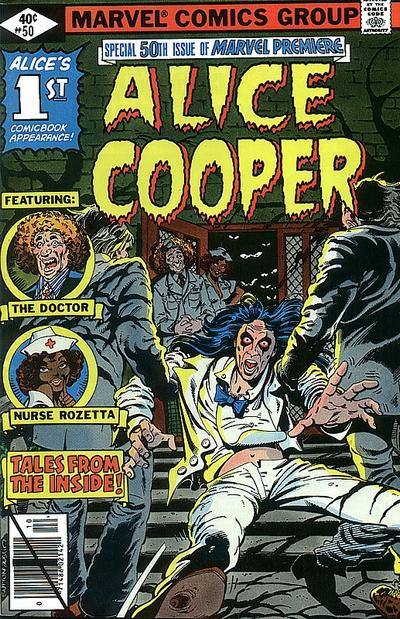
Billy: Keeping with Marvel Premiere, you are credited as a writer on an “Alice Cooper” issue. What was that like?
Ed: Lots of fun. Jim Salicrup, Dave and I were big Alice fans and were hot to get Marvel to do more stuff with rock music and so on. Dave and Jim were behind the Beatles comic and Marvel had done a KISS comic. Paul McCartney had put out feelers to Marvel, and so had David Bowie. The usual Bullpen crowd was not really in tune with the rock scene until later. Alice seemed like a natural with the costumes and outrageous visuals. Not sure how, but we hatched that goofy story based on the hospital album and got Tom Sutton to draw it. It doesn’t make a ton of sense, but it was just fun craziness.
That was also the time Steve Gerber was doing Howard the Duck and we also wanted to do off-the-wall comics like that in addition to straight super-heroes. We also did the Blue Öyster Cult stuff in Defenders. Same mindset.
Billy: And then you had to transition to a great Black Panther story. Was that an editorial decision to go from the two polar opposites?
Ed: No, that was another of those “emergencies” where Jack had quit or left or whatever he did, leaving a lot of unwritten pages in the middle of a story. So I volunteered to script them and continued the story with Jerry Bingham as artist. I believe that was Jerry’s first professional comics work. So it became “my” book and I decided, along with whatever editor was in charge of it to also tie up the loose ends left by Don McGregor when he left the Panther as best I could. That was the Klan stories, etc.
Billy: You wrote a few different titles that were multicultural (Power Man/Power Man & Iron Fist, Black Panther, etc.), were those stories more of Marvel trying to grab onto a zeitgeist of sorts or just a snapshot of the times?
Ed: I don’t think it was anything like that. They wanted successful minority characters of course, but I don’t think doing Black characters was any kind of statement or mission. Maybe at their very inception, before I was involved. But I don’t think they were trying to make any statement. Someone probably thought there was an audience for that kind of stuff. Marvel super heroes are colorful and exotic by definition, so race was the least-most consideration. Cage was a fun character. I wish I could have done him more. But those particular stories were not very challenging and before I hit my stride I was yanked from that book.
After doing the Panther and a couple other things I thought I could pull off the writing thing pretty well and it seemed to me like easier money than drawing. So I ran with it as well as I could. Really, nothing but a big fake out. I was a good speller and knew my grammar. I had read a lot and was always fantasizing stories (still do) so it came naturally. I never took it very seriously. I didn’t have a lot of writer’s angst or anything like that. I knew it was not great literature for the ages, it was entertainment for pre-adolescents fer gawrsh sakes!
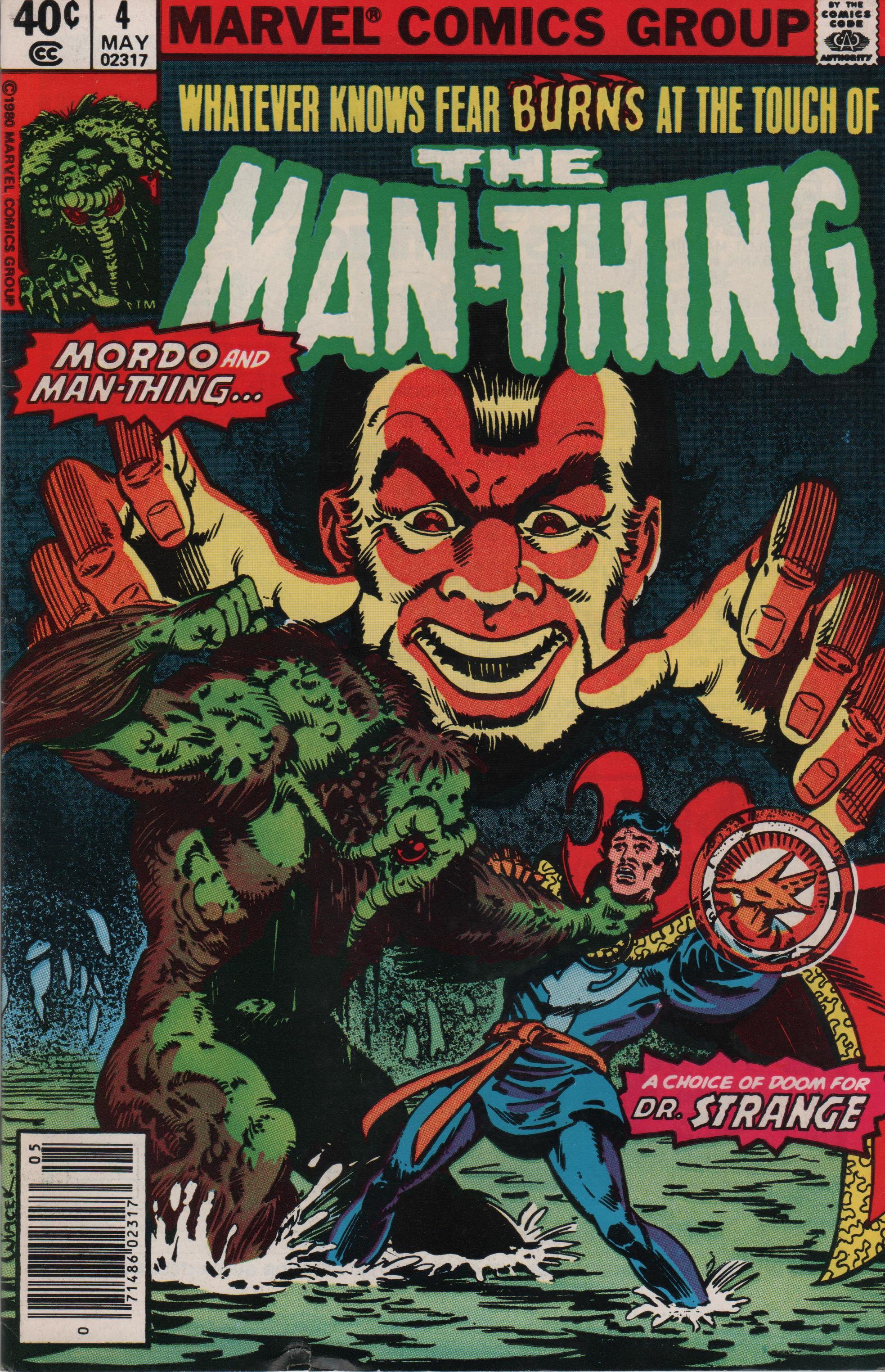
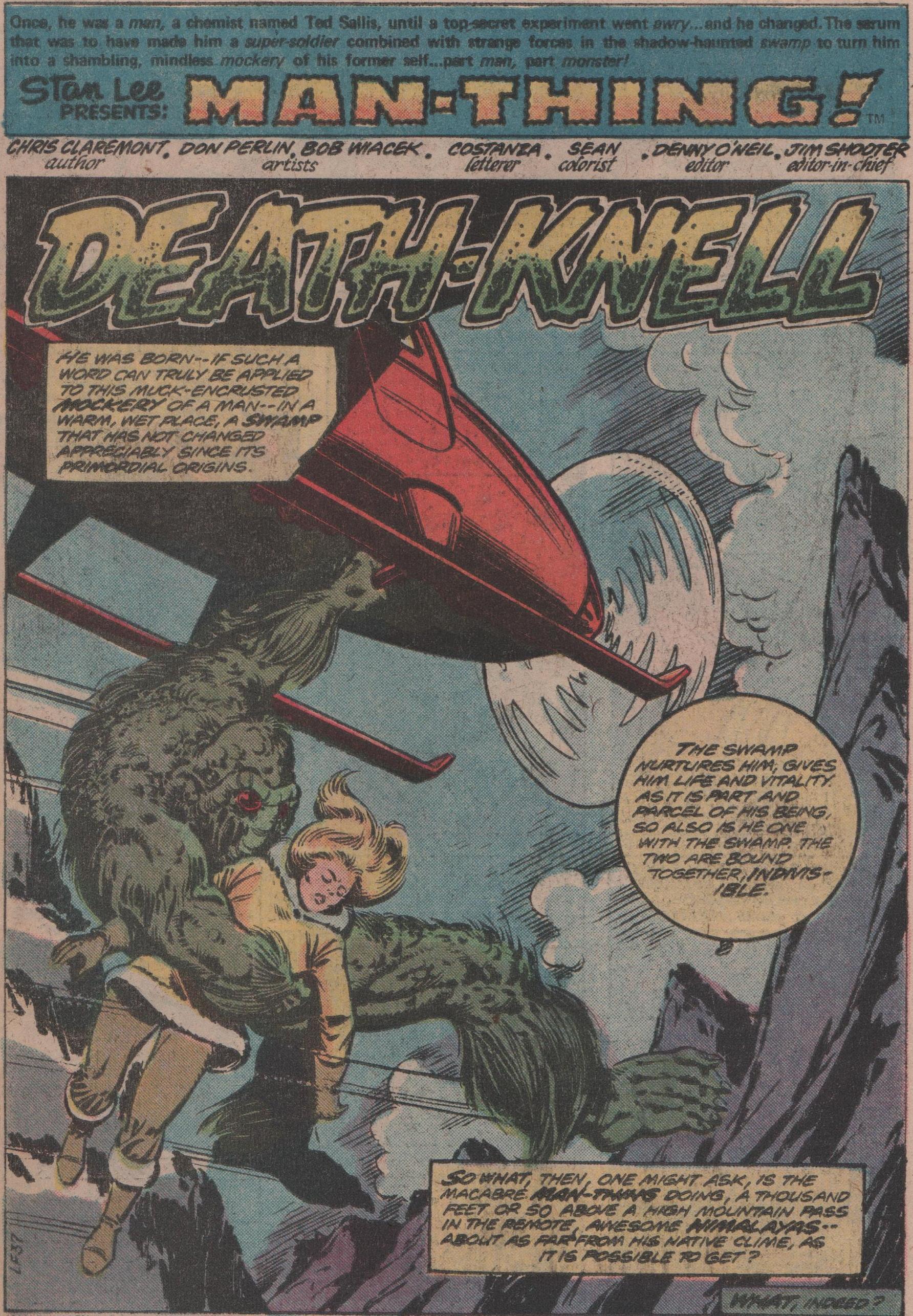
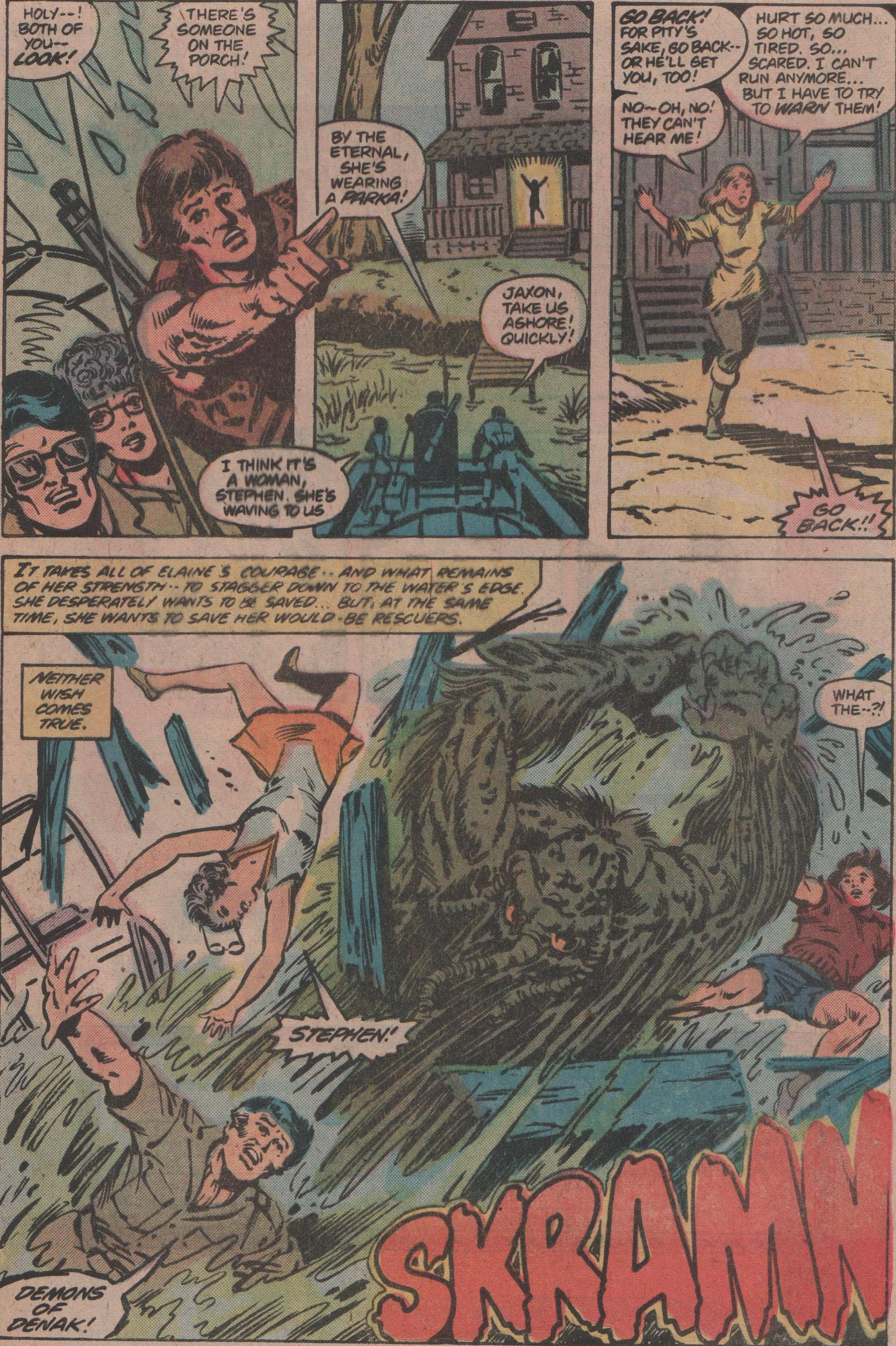
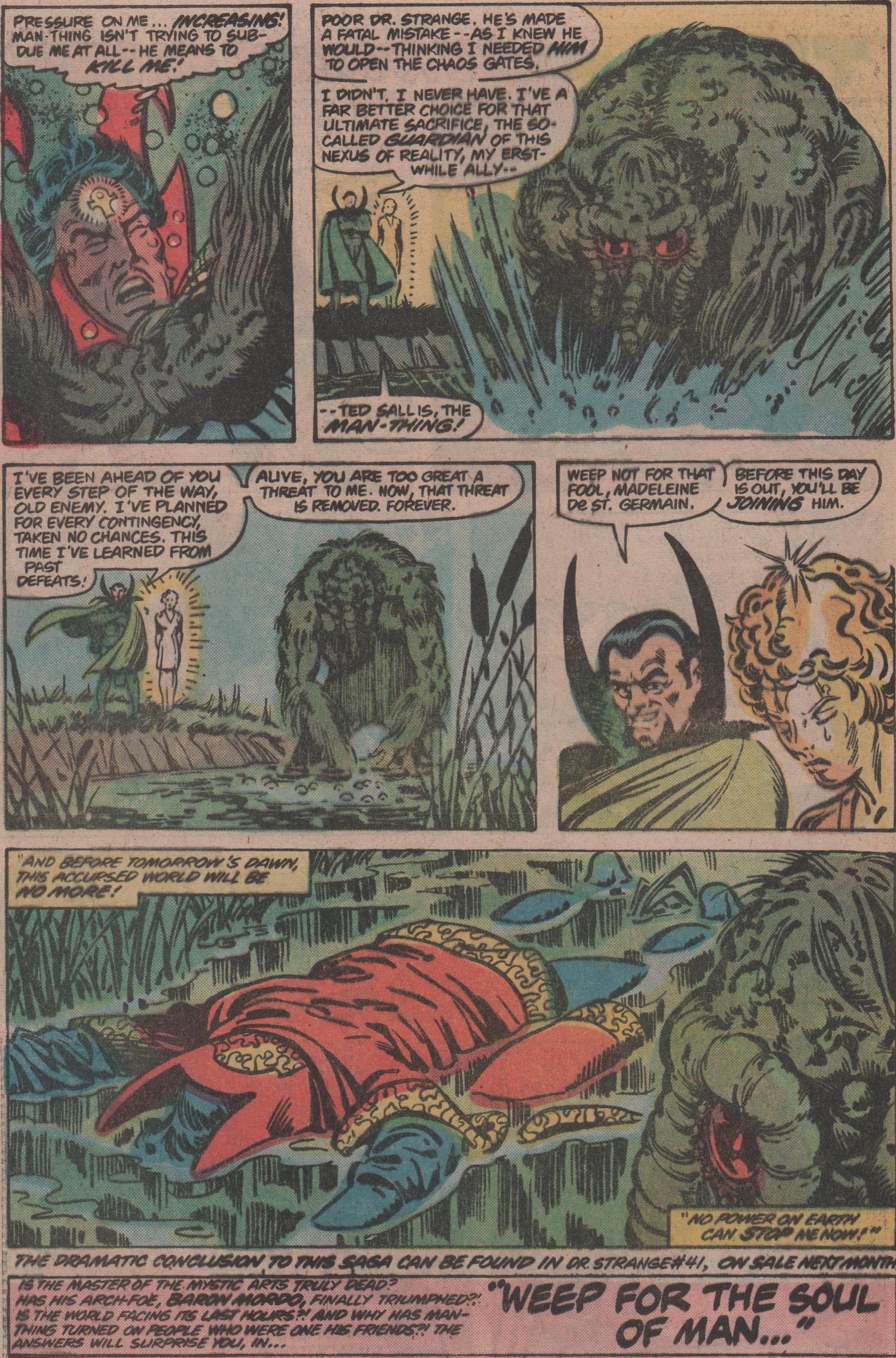
Billy: You did a couple of Man-Thing stories and the character seemed to fit your style. Was that a character you wanted to do more of or was it not really your thing?
Ed: I liked to Man-Thing originally because I loved Mike Ploog’s art, and then later because of the interesting things Steve Gerber was doing with the character. And he’s pretty easy to draw, always a consideration. I tried to blend the Ploog/Eisner/Walt Kelly style in with the standard Marvel style. But I didn’t lust after the assignment or anything like that.
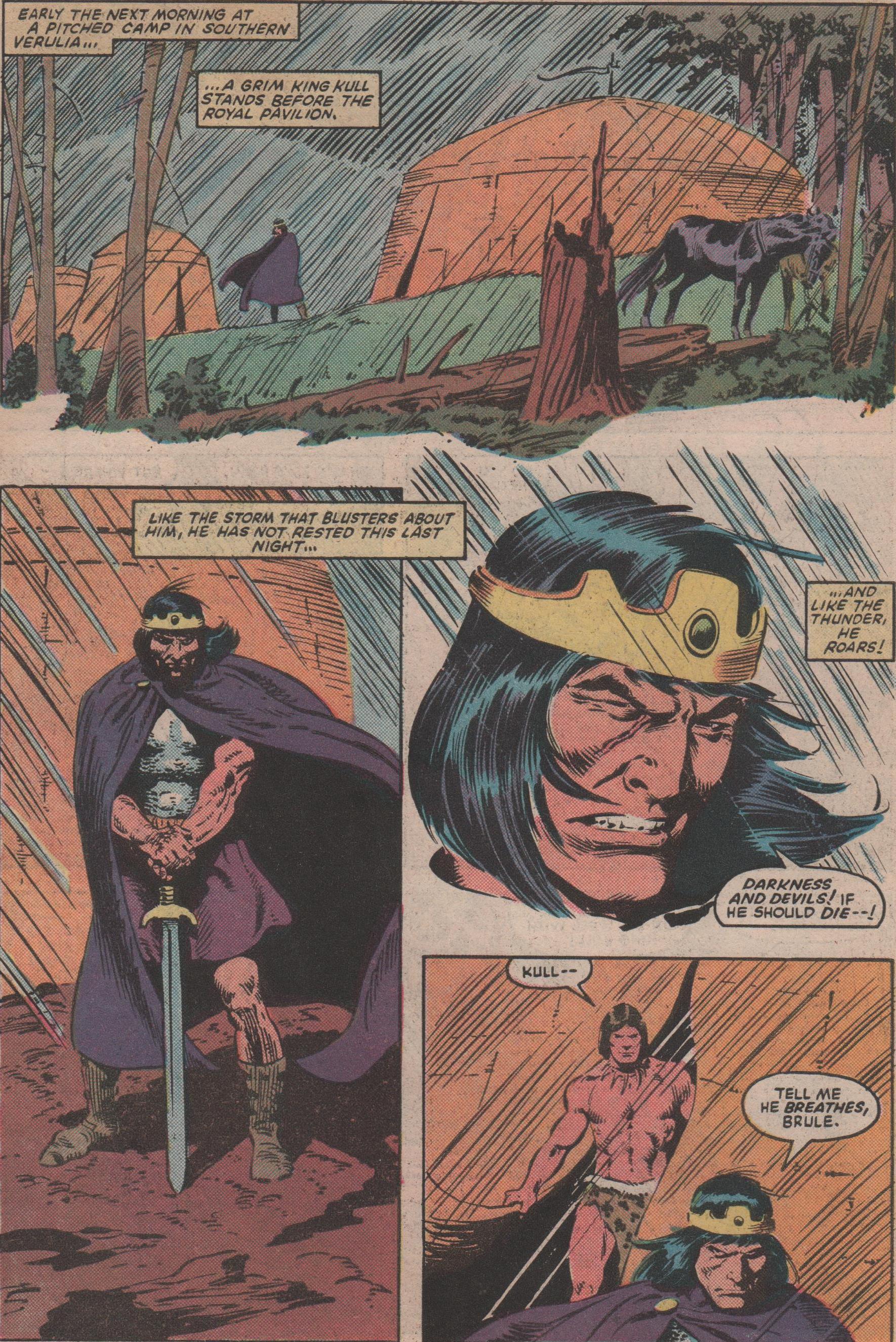
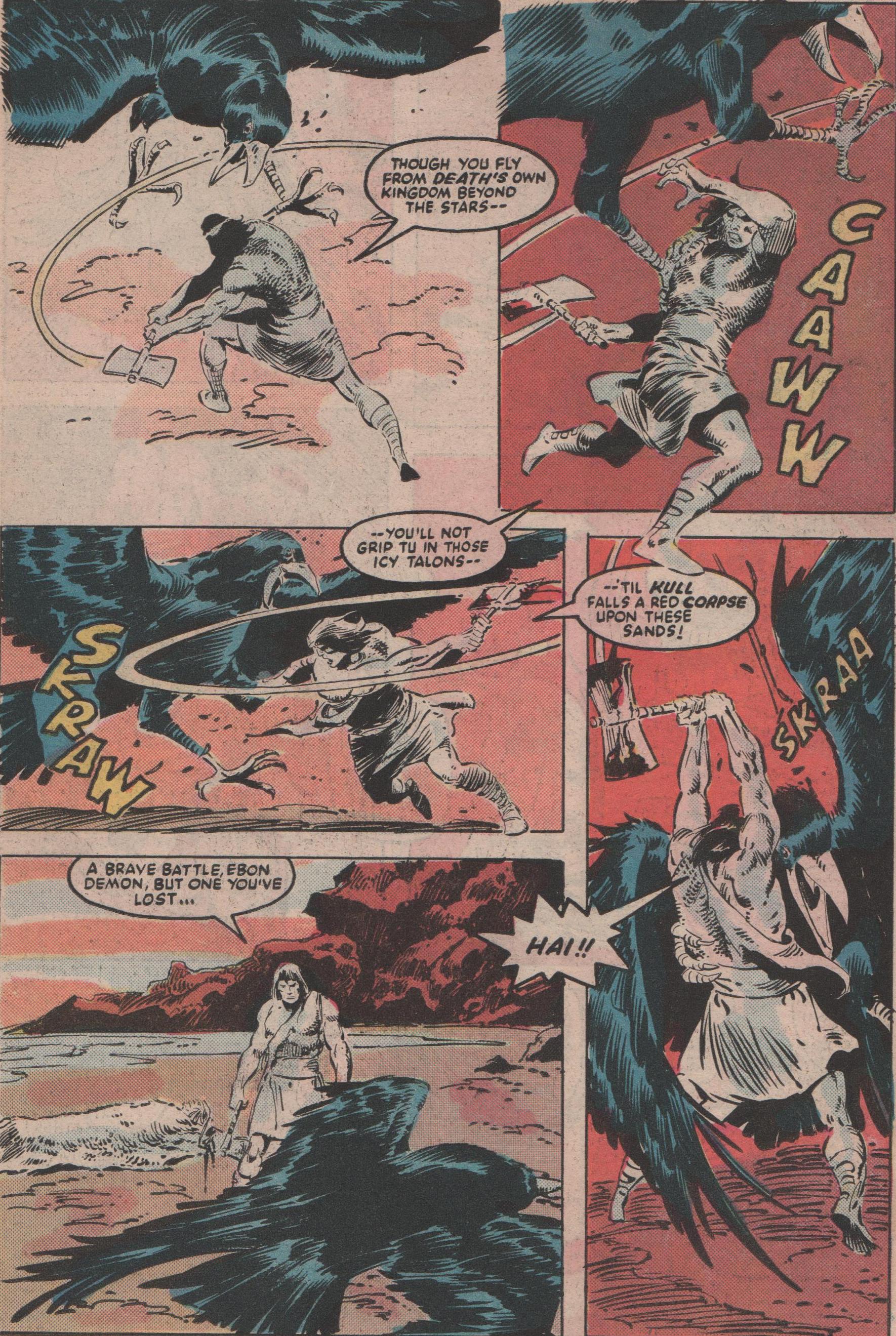
Billy: There was a good run where you and Doug Moench collaborated on Kull. What was that like working on a character that had been around since the pulp era, and also working with Doug?
Ed: Well, I always liked Doug. He wrote my first “real” Marvel story, a B&W Planet of the Apes tale called Evolution’s Nightmare, but Kull was kind of a pain. I never felt good about it and I don’t think I did that great of a job. I don’t think I ever got into the character. I enjoyed doing the big double-page spread in the first issue, but after that it became drudgery. Barbarians are just not my thing.
But Doug was very easy to work for. He ,mostly knew what he was going to put in the dialog, left lots of room. etc..Technical stuff. He was always very clear in describing what he wanted.I enjoyed his stories for the most part.
Over the years Doug and I did a number of things, like Catwoman.

Billy: The cover you did for Marvel Two-In-One Annual #6, was very different for its time. What was the impetus for that one?
Ed: Just stretching artistic muscles. You get a little tired of the hero charging out at the reader kind of “beauty shot” that’s been done ad nauseum. I wanted to come up with something fresh for Ron Wilson’s American Eagle character, something different from the usual pinup shot. The montage just kind of flowed, I think from noodling around with a cover sketch, and Simonson’s inks made it look like stained glass. One of my favorites.

Billy: Can you talk a little bit about your run on Spectacular Spider-Man with writer Bill Mantlo (also about working with him specifically- I’ve heard he is a great guy)?
Ed: I had been drawing Peter Parker for awhile with Roger Stern writing. When they put Mantlo on it he told me he wanted me to continue drawing it, which was fine by me. I had always liked him. He had a bunch of ideas that he told me about, including creating Cloak & Dagger, whom he thought could be developed for a book of their own. I was interested and Bill encouraged me to contribute to their look and attitudes in general.
Bill was quite a character. We were very similar, middle class hippy types. We liked a lot of the same books, music, etc, but politically we were opposites. Bill was very leftwing. He had even gone to Cuba at one time to do farm work and one assumes, receive indoctrination. Even back then, I was a libertarian. So we used to argue politics all the time, but it never became acrimonious. I tolerated his views and he tolerated mine for the most part.
We were never close pals, but we got along pretty well. The only time our differences caused a problem was when Bill wanted to do a gun control story in Spectacular Spider-Man. I was dead set against it. I thought it was bound to turn into a propaganda piece for a certain viewpoint I opposed. I flatly refused to be involved. He said it would be fair and even-handed, but I didn’t think it was appropriate for the audience and I didn’t think Bill could handle it “fairly.” He bought into all the liberal cliches about guns. So I just didn’t draw the book for those couple of issues. Sucked because it broke a string and affected royalty payments, but not a huge deal. I needed a breather to catch up anyway, I was always fighting the deadlines because I worked too slowly.
Bill and I worked on other things, cover designs and such. We also did Sword in the Star, a space opera thing that eventually debuted Rocket Raccoon, I believe, though I didn’t have anything to do with that character.
When Cloak & Dagger finally did get the okay as a title I laid out the entire first issue, based on Bill’s plot. I even penciled a few pages, but something about it didn’t seem right and I asked to be taken off the assignment. I’m not even sure why, exactly, just burnt out I guess. Jim Salicrup eventually published my layouts in Marvel Fanfare. Rick Leonardi picked it up and did an excellent job, I thought.
We sort of lost touch with each other after a while and I didn’t find out about his car accident until months after it happened. We’re still connected in a way. Disney recently bought out all rights to Cloak & Dagger and I worked with Bill’s brother, Michael on the negotiations for the sale.
Billy: Switching to DC for a moment- What was it like going over to the other side of the street (how did it happen)?
Ed: I had been getting impatient and bored with Marvel, Shooter and everything for a while and was not very happy. I had gone through writing Power Man/Iron Fist and Defenders, but i felt like I was spinning my wheels. Dick Giordano was interested in luring me over to DC to do some fresher covers, which they needed, and to do other art and maybe some writing. He kept taking me out to lunch and pretty much wooing me to go over there. I was not exclusively contracted to Marvel so I agreed to do some covers.
This didn’t go over too well with Marvel and I found myself more and more comfortable with DC, and less so with Marvel. Finally I cut the cord and was hired to be DC’s first Cover Editor, in addition to designing and drawing a number of covers and stories.
I also continued to do Merchandising/Special Projects type work, this time for DC. I did Style Guide sketches and cover designs for Mayfair’s line of DC games. Just as at Marvel would just troll the various offices and see if anybody needed an artist. I remember one Christmas Party at the Automat where Dick asked me to design the new Brainiac, which I thought turned out quite good. Unfortunately, I sold that design to them lock, stock and barrel for what seemed a good sum at the time, but really was not much dough. If Brainiac ever gets a big movie role I’ll be kicking myself and calling my lawyer.
DC was very different from Marvel. They seemed more serious and corporate, with had regular Editorial Meetings and such. I found myself handling scheduling and overseeing all the covers, which was a lot of work and became quite stressful. Eventually I had to get out of the offices and work at home.But, it was fun and I stuck with DC for years until the “meltdown.”
I wanted a regular gig and Mike Grell asked me to draw the new Green Arrow book, following his Longbow Hunters, which had been very successful. And with Dick Giordano and Frank Mc Laughlin and of course, Grell writing. It sold quite well at first, becoming one of DC’s top sellers. I managed to squeeze in a couple of other stories and a lot of covers, both drawing and designing for other artists.
My wife, Heidi and I were living on the Upper West Side, way up by Columbia University. We were quite comfortable, but things were changing. The building we lived in was converted to co-ops by a new owner and we were enticed into “buying” our apartment, which was rather large by NYC standards. But the city was getting dirtier, more dangerous and too expensive. We had started talking about moving out and having kids. The old biological clock thing.
For a couple of summers had rented a small house in the Berkshires with some friends that we would use on the weekends in the summer. It was close to Stockbridge, MA and the Tanglewood Festival. We loved buying a picnic dinner, some wine and listening to the Boston Symphony on the lawn under the stars. It was lots nicer than the hot, stinky city and we started thinking of moving there.
I had grown up in Massachusetts and my wife had gone to college in Vermont, so New England was attractive to us. Unfortunately we couldn’t find anything near affordable in Connecticut or Massachusetts. So we looked further north.
At about the same time I had been approached to do the new Batman Series, Legends of the Dark Knight, and we decided to make a move for real. We “sold” the co-op in the bizarre New York real estate fashion, for a nice profit and started looking in earnest for a place in the country. My wife was pregnant, so it became a matter of urgency. We rented a miserable apartment in Brattleboro, VT, temporarily as our base of operations. I was waiting and waiting for Denny O’Neil to produce the Batman script. I ended up Drawing a Green Arrow/Question Annual in the meantime. The thing is, I had a contract guaranteeing me a certain amount of work, so I always had a source of income, but I wanted to get on with the Batman stuff.
We finally got disgusted looking for a house in Vermont and started looking in New Hampshire. Not too much room left in New England. We finally did find a house we really liked and made an offer, lined up finances, yadda yadda, but the owner insisted on too much money and the deal finally fell through (He ended up selling the I have to do something. for substantially less than our offer.) Very discouraging. I was still waiting for Batman and Heidi was more pregnant than ever.
Just when it looked like we would never find a place. My wife found this house and brought me out to see it. At first, viewed from the street I hated it. It looked tiny, but she said, it goes back a lot and the upstairs has three bedrooms. Upstairs? It looked from the front to be a one story Cape, but it had a shed dormer in the back making it much larger than it had looked. And it had five acres, mostly woods. Excellent. So we bought it.
Finally the LOTDK script materialized. So I worked on that in my new studio, my daughter, Jeannie was born and the rest is history! The first winter we had zero furniture. The house had electric heat that we never used except in he baby’s room, and there was a big ugly wood stove in the living room that you had to watch like a hawk because the chimney pipe would get so hot it would glow.
But I labored away and by the following summer the first royalty check arrived. I was stunned– it was much more than I had anticipated. We were able to buy furniture and have the electric heat ripped out and a new oil heat system put in.
After the success of LOTDK I figured I was a star and it would be smooth sailing from now on. After a long vacation spent watching my baby daughter grow, I pitched my own project, SKULL. & BONES to DC. the premise was a Batman/Zorro type hero operating in the Soviet Union, fighting the government. I wrote, penciled and inked it all myself and almost had a nervous breakdown as a result. Suffice to say, it bombed.
I was still under contract to DC, so I was still owed work, though times were getting tough both for us and the comics biz. I pitched another idea, League of Justice, an Elseworld series that I was hoping to get 12 issues out of. They only let me do three deluxe sized issued, so I had to shoehorn it into the two books and it’s barely coherent. After that I did an Aquaman Annual, but things were looking grim. When my contract was up, blam!
When things went south I wasn’t worried until I made some calls to see about renewing the contract. To my amazement they were not going to renew. My contract had guaranteed me a certain amount of work but now that was kaput!
So I was unemployed. DC wouldn’t even take my calls and Marvel was on the skids. A lot of comics pros were out of work. We had had our second child, Ryan by then. It was rough. I was eating into my IRA. I got a tiny amount of work from Jim Salicrup at Topps doing covers for Mars Attacks. My wife took a couple of horrible jobs, one a night job doing phone sales. Eventually she landed a job at PC Connection in Keene selling computers and peripherals/ Finally at a Parents’ Day thing at the school my daughter’s teacher introduced me to the father of one of the other students. It was a Brit named Ray Guest who worked as an artist at a company just over the border in Massachusetts, Channing L. Bete. They publish informational booklets and things covering a huge variety of topics, medical, safety, educational, etc. I actually had already sent them an application, but Ray convinced me to come in and apply in person. I did, showed samples, took a drawing test, had a couple of interviews and was hired! My first assignment:”About Genital Warts!”
It was a great second career. They trained me on the Macintosh in Quark, Macromedia Freehand and Photoshop and tons of professional procedures, press checks and the like. In a lot of ways it was like comics all over. Talented people. Everyone was a fan. My boss even turned out to be a guy from Marvel Comics, Marcus McLaurin! That lasted a good nine years, during which time I was diagnosed with Multiple Sclerosis. Bete was very successful for a while, then not so much. They had a RIF (reduction in force) which I survived, then a couple years later another RIF and along with 20% of the company I was laid off. The MS was getting bad so I applied for Disability (early Social Security) and here I am today.

Billy: I’d love for you to expound on your work there on Batman and Green Arrow (the people you worked with, writers, editors, and also the characters themselves as far as what you wanted to do with them)?
I already touched on Batman and Green Arrow a little. I really enjoyed working on GA. Grell’s scripts were very straightforward and uncluttered. He pretty much let me do what I wanted. He had a lot of action in his stories and unlike many writers, he didn’t pack in tons of nonsensical prose and melodrama.
Legends of he Dark Knight was a followup to Miller and Mazzuchelli’s Batman Year One, and I tried to be consistent artistically with Mazzuchelli’s work. That was probably a mistake. I would have been better off doing my own thing, maybe a bit like the old Peter Parkers. In retrospect I think I did a competent job, but it doesn’t dazzle. It looks rather ordinary to me, which is odd considering that it sold far more than anything else I’ve ever done!
The story itself was also a bit too much on the ordinary side, in my opinion. No big dramatic moment, no paradigm shift or huge revelation. It’s easy to criticize, as I know well from writing myself, but I think it could have used more pizzazz. I am not a big fan of Native American mysticism, either, which strikes me as hokey. But what can you do? Somebody probably considers it the best story ever.
Billy: You’ve done a ton of covers in your career. That being said, do you have some favorites or more specifically issues that you still have till this day?
Ed: I still love the first Cloak & Dagger Spectacular Spider-Man cover (#64) and their second appearance (#69) and the next one (#70) as well. I like most of the covers in that run. The Hawkeye/Ant Man Avengers cover is a fave, Captain America #235 with Daredevil flying the biplane is a good one too.
Batman #362, 370, 373 are pretty good. I like Micronauts #46, in fact I like all the Micronauts covers I drew. I also like Supergirl #13, which is an homage to the Superman TV show, some of the World’s Finest covers, Wonder Woman #300.
And there were those Handbook of the Marvel Universe cover, Mark Guenwald’s brainchild.
The thing is some of my favorites are covers by other artists that I did the sketch for, like Action #538 (Curt Swan), Wonder Woman #329 (Garcia Lopez). and many covers drawn by Gene Colan I don’t know, I could go on and on…
Billy: OK, now on to the Defenders…The book seemed tailor-made for most of its creators (Englehart, Gerber, Buscema, Wein, You, Perlin, Dematteis, etc.), as either a superhero book or a wacky ‘team out of place’, kind of book. What was the angle you wanted to hit on with that specific title?
Ed: I never liked superhero team comics, so I guess the idea of a non-team appealed to me. I had my own agenda for the Defenders that was not the standard kind of book. For instance, when Nighthawk got in trouble with the IRS and ended up in prison people were asking me how he was going to get out.
Thing is, I had no intention of ever getting him out. Fair or not, he was toast!
My secret plan was to get rid of all the male characters by one means or another and gradually turn the Defenders into an all female group. I wasn’t going to announce it or tell anyone, one day people would just say, “Hey, this has been an all girl group for the last ten issues!” And I succeeded for an issue and a half.
I was also interested in the relationship between Valkyrie and Hellcat. One thing Dave and I agreed on was that Hellcat was the star of the book in some ways. She put on a ditzy persona but more often than not she figured out how to defeat the villain or whatever. I think she was the most interesting character in the book.
The other thing I wanted to do was odd standalone stories that didn’t depend on the rest of the Marvel Universe or its messy continuity. Hence stories like the Quiet Riot, which was based on an old movie I don’t remember the name of or the Tunnelworld saga.
Billy: You wrote and penciled the book at the same time for a while, using crazy characters like Lunatik, and Mandrill. Why did you use them instead of other villains (not that they didn’t fit the book’s atmosphere, just wondering if it was a personal choice or editorially driven).
Ed: Lunatik was inherited from Dave Kraft and Keith Giffen and was really their baby. I never did understand him, so I was just flailing. Mandrill played into the all female aspect I was going for. He is a hideously ugly guy with power over women. A fanboy dream. I would use him again in a heartbeat! To answer your question, no one ever said, “Use Mandrill” it was more like, “These villains are taken, don’t use them!” So you look around and see who’s available.

Billy: Along the lines of crazy issues, can you talk about the issue where the Hulk is riding the whale (Hulk Prince of Whales)?
Ed: I love that issue. I have always liked stories about whales. Moby Dick is one of my favorites. Whales were in the news and I thought, they’re strong, they’re hunted and harassed just like the Hulk — bingo! It just seemed like a natural, and as I said before, we always had to find something for the Hulk to do because of the TV show. Came out pretty good I think.
Billy: Speaking on editors, as that’s still a hot button topic these days…Most of your Marvel work was either Al Milgrom or Jim Shooter. Can you talk about the relationship with those two guys. I’ve heard people either loved or hated Shooter.
Ed: Well, I always liked Al and still do. He had a quality I value greatly in editors — he let me do what I wanted without giving me a lot of grief. Here’s the thing about Defenders, no one cared that much about it, so it didn’t matter what the writers or artists were doing as long as they didn’t scare the horses and as the Hulk was on every cover!
Shooter was odd. Mostly I liked him. He could be your pal or a major pain in the butt. I used to hang out and go bar hopping with him. He did a lot of good for a lot of people. But he had a lot of opinions I thought were dumb and sometimes the controlling fascist showed his face. More than that I won’t say.
I did do work for other editors — Jim Salicrup, Archie Goodwin, Mark Gruenwald, Tom DeFalco and others, and I worked with all of them from time to time designing covers.
Billy: Going back to the Defenders- Can you talk about the very emotional issues you wrote concerning the death of Patsy Walker’s mother?
Ed: Honestly, my memory of that is practically non-existent. I remember Dorothy as an uber stage mom who controlled every aspect of Patsy’s life as a character but had very little to do with her as a real person. I’m sure I was going for something profound, but I’m damned if I can remember what. I’d have to read them again.
I will say that, like any writer I was cannibalizing real people I knew and basing my stories on their personalities and situations, real or imagined. Who Dorothy “was” I have no idea. I’m sure she was based on someone I knew in real life. Not you, Mom.
Billy: Switching gears- What were some of your favorite books to read back then?
Ed: Roy Thomas/John Buscema/Barry Smith Conan, Marv Wolfman/Gene Colan Dracula. Gerber’s stuff, especially Howard the Duck, Miller’s Daredevil and Batman stuff, the usual suspects, Alan Moore, Watchmen, whoever. Animal Man, Herbie, I would go through phases of following a certain artist or writer.
Billy: And finally- Do you still keep in touch with any of your collaborators from those days?
Ed: The ones that aren’t dead. I don’t go to conventions or things like that so I don’t run into anyone.
I keep in touch with some people in comics mostly on Facebook– Irene Vartanoff, Craig Russell, Dave Kraft when he’s not out of his mind, Jim Salicrup, Jerry Bingham, Don Perlin. Graham Nolan whom I didn’t know well back then. Allen Milgrom all the time because we’re still doing work together. I’m FB friends with a number of old comics folks. And there are some I avoid and some who avoid me, but the less said about that the better.
Farewell and Thanks






















 Magazines and Monsters!