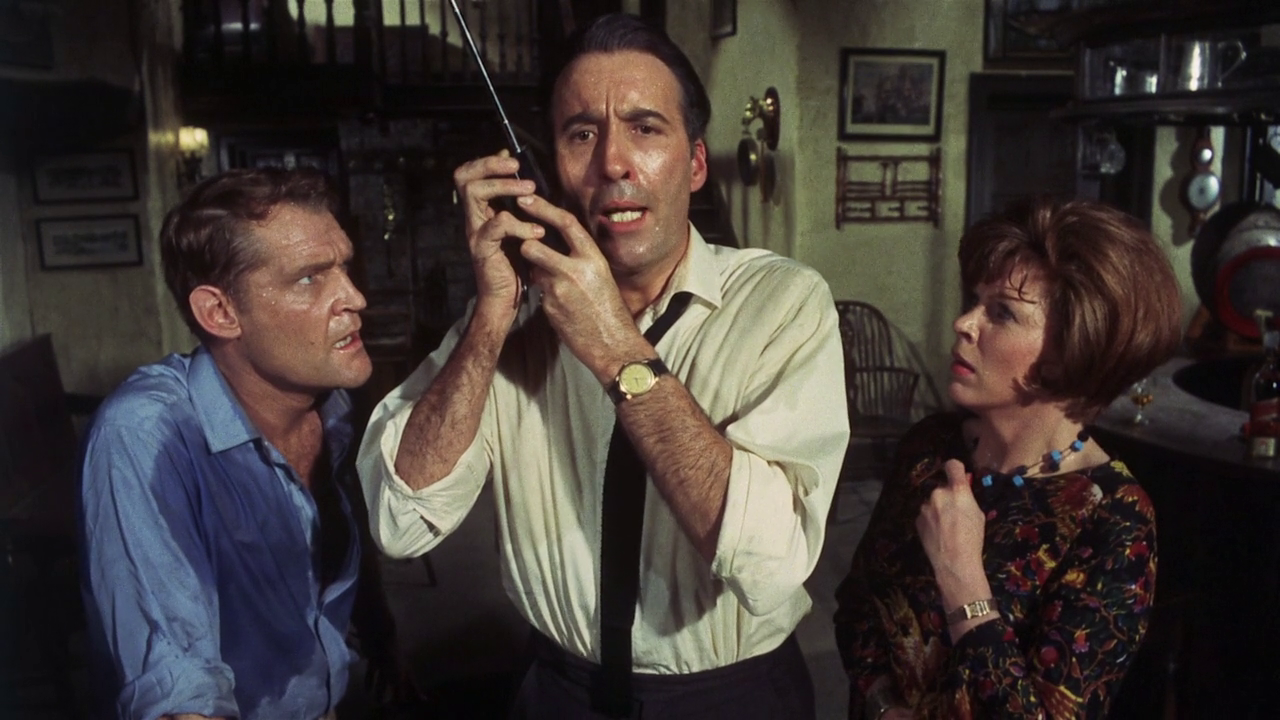
Cinema Sunday: The Night Stalker (Kolchak) 1972

nightstalker0

Title: The Night Stalker

Distributor: ABC Television

Writer: Richard Matheson (novel by Jeff Rice)

Director: John Llewellyn Moxey

Producer: Dan Curtis

Starring: Darren McGavin, Carol Lynley, Simon Oakland, Claude Akins, Elisha Cook Jr.

Released: January 1972

MPAA: NR (estimated PG)


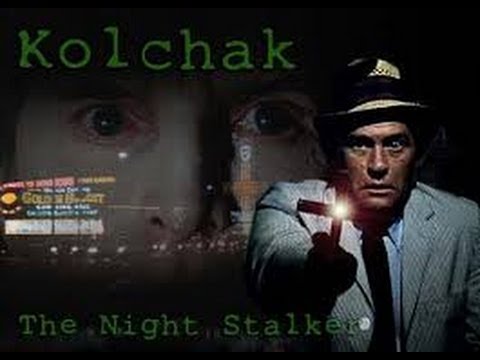
Alright, time for another made-for-TV movie! It has been a little while since I’d done one of these, but trust me, this one deserve the attention! Yeah, at first glance most people are going to be all like…”hey, there’s Ralphie ‘s dad from A Christmas Story!”  And although it is true, this character (Kolchak) is nothing like that portrayal. With one notable bad performance (which I’ll get to later), this film was one that garnered much attention at the time, and actually was rated extremely high. The horror genre was in full swing in other media by now as well (comic books, movies, etc.), so this was perfect timing by the studio. OK, enough of the small talk, here comes the vampire action!


kolchak3

The film begins with a woman, who works at a casino in Las Vegas, heading home after a long, evening shift. A voice narrating (Darren McGaven), tells us about her and the situation in that city. She heads down an alleyway, and gets jumped by someone with an extreme amount of strength. She’s found the following day by a garbage man. The scene then switches to a hospital operating room, where three surgeons are baffled at the blood loss of the victim.


kolchak1

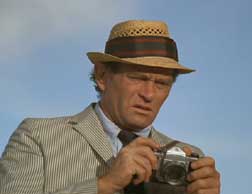
We next see reporter Karl Kolchak (Darren McGaven), as he heads toward Las Vegas. He comes back to work early from vacation at the behest of his boss. At the office, managing editor, Tony Vincenzo (Simon Oakland), barks at Kolchak, and tells him to head out and find something juicy about the murder. Kolchak heads to the hospital where a certain doctor gives him some tips every once in a while. The doctor tells him that there wasn’t anything about the murder that was suspicious except massive blood loss.


kolchak2

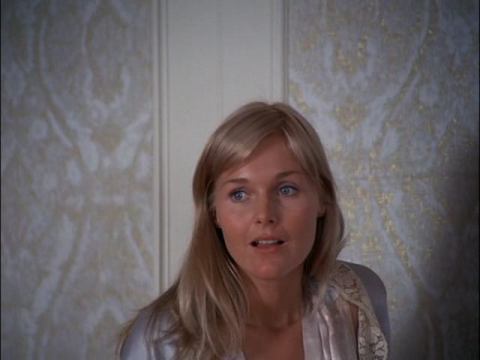
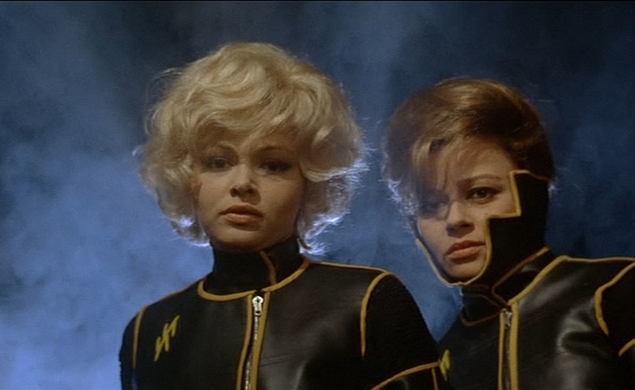
Kolchak then heads to the casino where the girl worked, and talks to one of her girlfriends, Gail Foster (Carol Lynley – image above), and she doesn’t really give anything he can use. We do however find out that Gail is Kolchak’s girlfriend. Just three days later, and we get another murder. This time, a girl is found in a desert area off of a freeway. The puzzling thing is that there are no footprints near the body, and that her throat has an injury to it. No blood is found by the victim. There are signs of a struggle nearby, but none near the corpse. The sheriff (Claude Akins) isn’t having any of Kolchak’s nonsense either.

Another couple of days, and another murder of a young woman. Same evidence or lack thereof is present, so Kolchak turns to a friend in the FBI, Bernie Jenks (Ralph Meeker). He asks him to use his resources to look into the murders. Kolchak gets a phone call and his friend at the hospital tells him that a different hospital was recently robbed of several containers of blood. Later that day, there’s a press conference held at city hall. The coroner tells the onlookers that the girls were bitten on the throat, and blood was pumped out of their bodies. He also tells them that human saliva was found on the wounds as well. The sheriff gets angry and yells at Kolchak when he asks the coroner about the possibility that a man tried to drink the girl’s blood for some unknown reason.


kolchak4

After the meeting, the sleazy mayor has a little meeting with Kolchak and basically warns him off of creating speculation about the crimes. Kolchak takes a story to Vincenzo, and he balls him out over it and threatens him as the mayor did earlier. As Kolchak is back at his place, he and Gail talk about the case. He gets a phone call about another murder, but this time there was a witness. The woman describes the killer and his car. Things quickly escalate after this, and Kolchak and the police are ready for action. He then gets one of his other contacts to do some digging for him, and the switchboard operator is more than happy to do it after he bribes her with chocolates (yes, really).


kolchak5

After a composite drawing of the killer, the police are ready to act on any kind of call. We next see the killer (not his face), stalk a young woman. He approaches her outside by her car, but suddenly, she opens the back door, and a huge dog jumps out of the car, and onto the killer. He easily thrashes the dog, and then the girl goes missing. Kolchak has it out with Vincenzo about the suppression of the news because of the police and politicians. Vincenzo tells him they don’t want to create a panic, so that’s why it’s being kept quiet. They eventually track down where the killer bought the car, but not much comes from that situation.

The next evening, Gail attempts to get Kolchak to buy into the killer being a real vampire. He isn’t having it, and before you know it, he’s out the door after hearing about another robbery at a hospital. We now get to see the killer, and what he can do. He manhandles two orderlies, and throws a third out of a two-story window. Before the killer can get away, the police arrive, and we see the killer absorb a multitude of shots from the police at close range…and he keeps going!


kolchak6

Is this killer just some kook wearing a bullet proof vest? Or is he the real deal? Can Kolchak survive a confrontation with this supernatural killer? You must see this one to find out!


OK, here are my thoughts:

For anyone that hasn’t seen this flick or the television show, you’re really missing out. There was another T.V. movie a couple of years later as well, but this one is really the best. Darren McGaven gives a fantastic performance, and really elevates this small screen production. Having guys like Richard Matheson (writer – screenplay) and Dan Curtis (producer) behind the scenes doesn’t hurt either, but he really sets the tone for this film. Even Carol Lynley (The Poseidon Adventure) was pretty convincing in her role as Kolchak’s girlfriend (except for the fact that he looks old enough to be her dad).

The soundtrack is pretty jazzy, and the overall production quality is solid. The special effects were few but definitely noteworthy, especially the scene where the dude was thrown out of the second-story window. The vampire wasn’t very menacing as far as the make-up, but he’s a pretty big dude, and that was enough to make him sort of scary. Plus they relied on atmosphere in most of his scenes, so there’s that too.

Definitely give this one a watch, as you’ll be impressed by McGaven’s work! The supporting cast also gives this one a helping hand (Carol Lynley is gorgeous!) for the most part (other than the overacting by the editor in the film).


carollynley-thenightstalker

Click here for the trailer!


Cinema Sunday: Night of the Big Heat (1967)

bigheat

Title: Night of the Big Heat

Distributor: Planet Film Productions

Writers: Jane Baker, Pip Baker, Ronald Liles

Director: Terence Fisher

Producers: Tom Blakeley, Ronald Liles

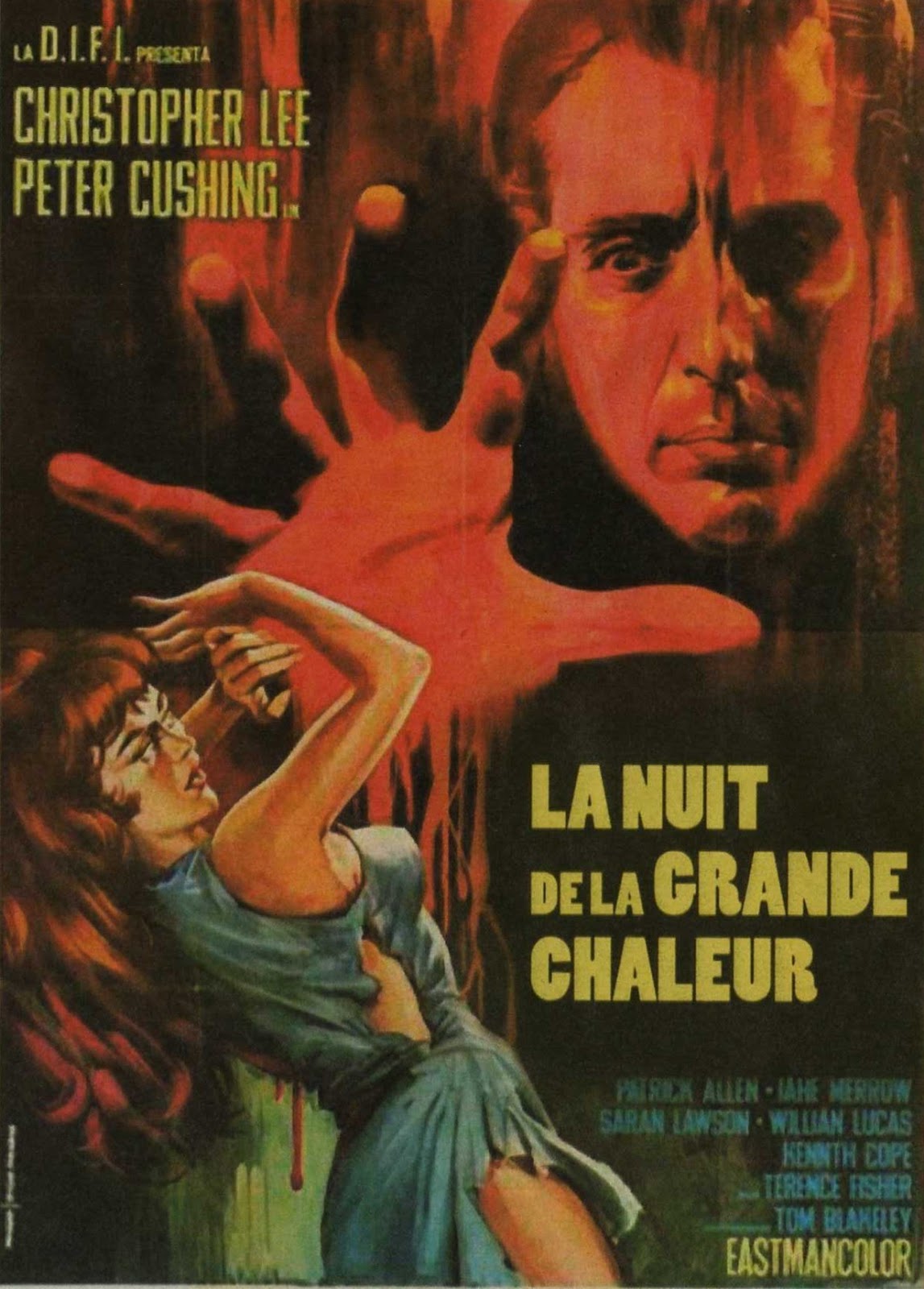
Starring: Christopher Lee, Patrick Allen, Peter Cushing, Sarah Lawson, Jane Merrow

Released: May 1967 (U.K.)

MPAA: PG


I had an itch to do a sci-fi film, so I picked a good one! Patrick Allen is one of those actors that is often overlooked. He did work with Peter Cushing on the great Hammer film, Captain Clegg, and did a marvelous job. The fact that you get those two actors plus Christopher Lee, is a pretty good indicator on how awesome this flick is for anyone of the genre. Toss in another Hammer stalwart in director, Terence Fisher, and we all know the success rate is even higher!

Planet Film Productions had a very short life span, but definitely left a mark on the industry with just a couple of their films. Alright, let us now take a journey into the realm of science fiction!


bigheat2

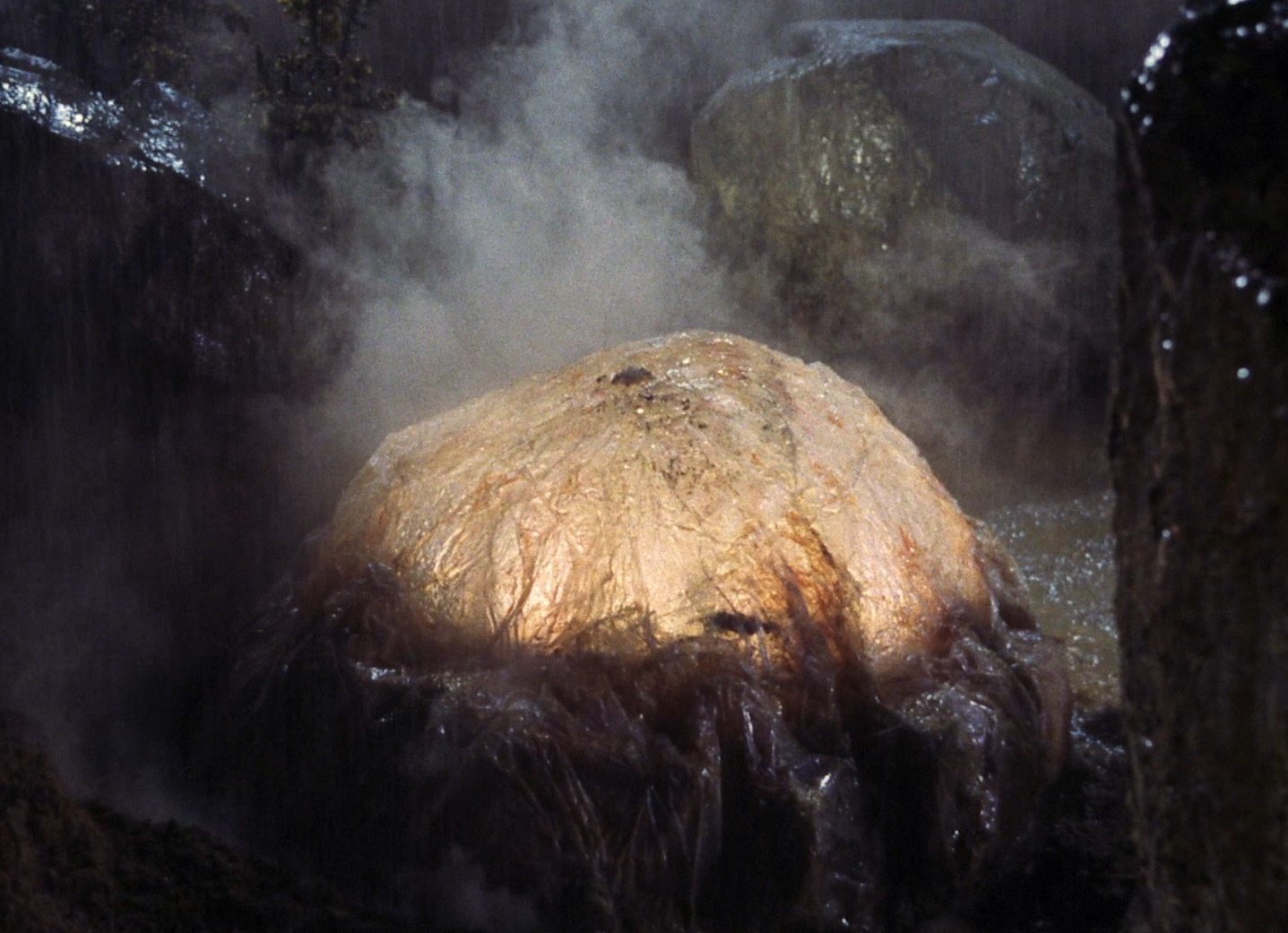
The film begins with a shot of a beautiful woman in a motorcar. Then we suddenly switch to a man, Dr. Godfrey Hanson (Christopher Lee), as he seems to be setting up camera equipment in a nearby wooded area. We then see a hobo (Sydney Bromley) snooping around the area after he leaves. Back on the roadway, the woman’s car breaks down, and a local stops to lend a hand. She stays with the car, and hears a weird noise. At about the same time, the hobo hears the noise, but is much closer to the source. He’s then stalked by the thing making the noise, and apparently killed.


bigheat4

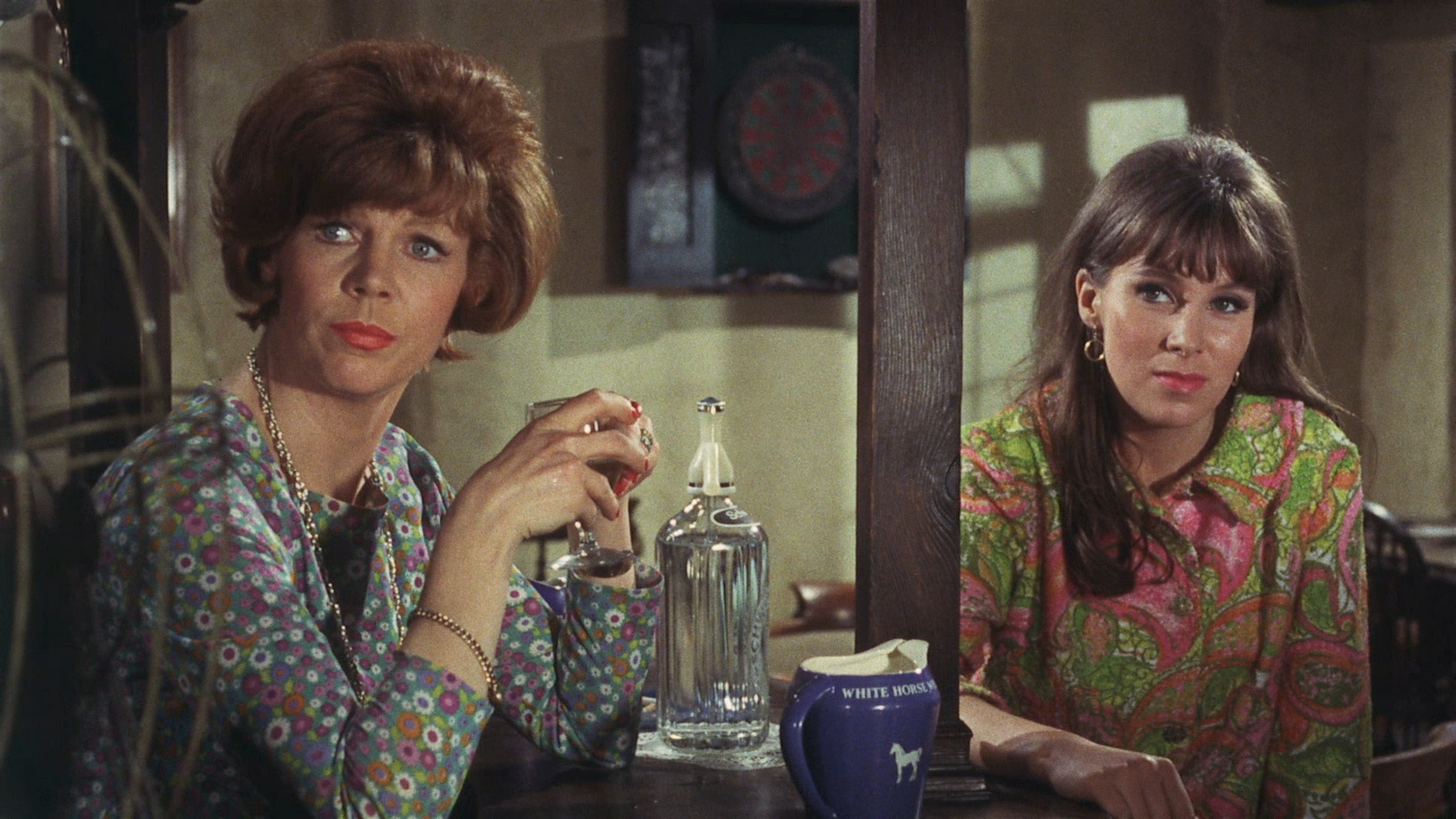
At a local pub, a man at the bar, Dr. Vernon Stone (Peter Cushing), is having a drink to keep cool. You see, it’s unseasonably hot at the moment on the island of Fara, and no one seems to know why. The woman serving him is Frankie Callum (Sarah Lawson), and both her and her husband own the inn. The young woman, Angela Roberts (Jane Merrow) from the motorcar finally arrives, and enters the establishment. She asks for Mr. Jeff Callum (Patrick Allen), who’s a writer that needs his own personal secretary apparently. Frankie tells her that he’s out now, and that they’ve been expecting her. Dr. Stone offers to buy her a drink, and she sits for a minute, then heads to her room with Frankie’s guidance.


bigheat3

Dr. Hanson appears in the doorway, and grumbles at Frankie about a parcel that should’ve arrived. She tells him that her husband isn’t back yet, and he quickly barks that he wants it brought to his room immediately upon his arrival. Frankie and Dr. Stone have a quick conversation about his antics. She tells Stone that he goes out once a day with his camera equipment, then stays locked into his room the rest of the time. Jeff is driving down the road in his pickup truck, and almost runs over one of the pub’s patrons. He’s furious initially, but then the man tells him about hearing a strange noise, and they both wonder what it could be.


bigheat5

Back at the pub, Jeff arrives and takes the parcel up to Dr. Hanson’s room. He brusquely snatches it out of Jeff’s hands and slams the door. Frankie then tells Jeff about his new secretary, and that she’s gone for a swim at the cove. One of the patrons gives him a ride, and when they arrive, both are stunned by her beauty. We find out right away that this meeting is no accident. The two apparently had an affair a while back on the mainland, and Jeff took his wife to the island to get away from the trouble. Angela asks Jeff what he’ll tell his wife, and he acts very odd. She then knows that he never told his wife about the affair, but before she can go any further, that same strange noise interrupts them, and they both get a bit apprehensive. They start to make-out, but then Jeff pushes her away.


bigheat6

The scene turns back to the pub, and an old man that’s being helped inside. Jeff asks what’s going on, and the old man tells him that someone’s killed all of his sheep (a farmer, apparently). Dr. Hanson appears out of nowhere and attempts to question the old man. Dr. Stone tells Hanson that the old man is in no shape to answer questions, and they let him lie down in the back. Hanson storms back to his room, and we see that he must be a scientist but why he’s in this specific area, no one knows. One of the pub regulars, Bob Hayward (Thomas Heathcote), is at home and his television begins to act up. It eventually explodes, and the commotion is accompanied by that sinister noise once again. He heads over to see Jeff about this weirdness, but before he can get there, he hears that noise again, and it begins to drive him mad. He swerves the car, and ends up going over a cliff, and the car explodes.


bigheat1

Later that night, we see Hanson setting up more equipment nearby. Angela then makes another play for Jeff, but it’s interrupted by the strange noise. Frankie then runs in and tells Jeff she saw something land in a nearby field. As the three head out to investigate, they see Hanson creeping around. They attempt to check things out, but the girls are too frightened. They head back, and Jeff confronts Hanson about his creepy actions. The two argue, but eventually Jeff comes to understand that something is going on, and Hanson is a scientist trying to solve the puzzle. He tells him that aliens are using this tiny island as a launching point for an invasion. At first, Jeff dismisses his theories, but eventually comes to believe him. The two then set out to find the origin of the noise and come upon the car that crashed with Bob Hayward in it. There’s nothing left but ashes.

Can they find a way to stop the invasion, or is the Earth doomed by these sinister forces? If not, it’s only the end of the world!


bigheat8

OK, here are my thoughts:

Without spoiling some of the good stuff, I’ll just say that you’ll be a bit shocked at who does and does not make it to the end of this flick. Not that it hurts the film in any way, it actually helps it climb a bit higher due to the unexpected nature. Christopher Lee is awesome, and does a great job playing the scientist, a role that you don’t typically see him in, I might add. Cushing’s scenes are few and far between, but as always, he adds a flavor to the film that would be missed if it was not present.

The sets were good, but the music score was average at best. As far as special effects go, this film was more about the unseen and not the seen. So, special effects weren’t really anything to talk about really. The tension building up throughout the movie between Frankie, Angela(Merrow was a tramp in this film, but gorgeous nonetheless – image below), and Jeff was an interesting angle. The movie would’ve easily moved forward without it, but it was a different angle for this type of film. I definitely rank this one up there pretty high on my all-time favorite sci-fi films, as the performances by the cast are excellent.


Click here for the trailer!


bigheat7

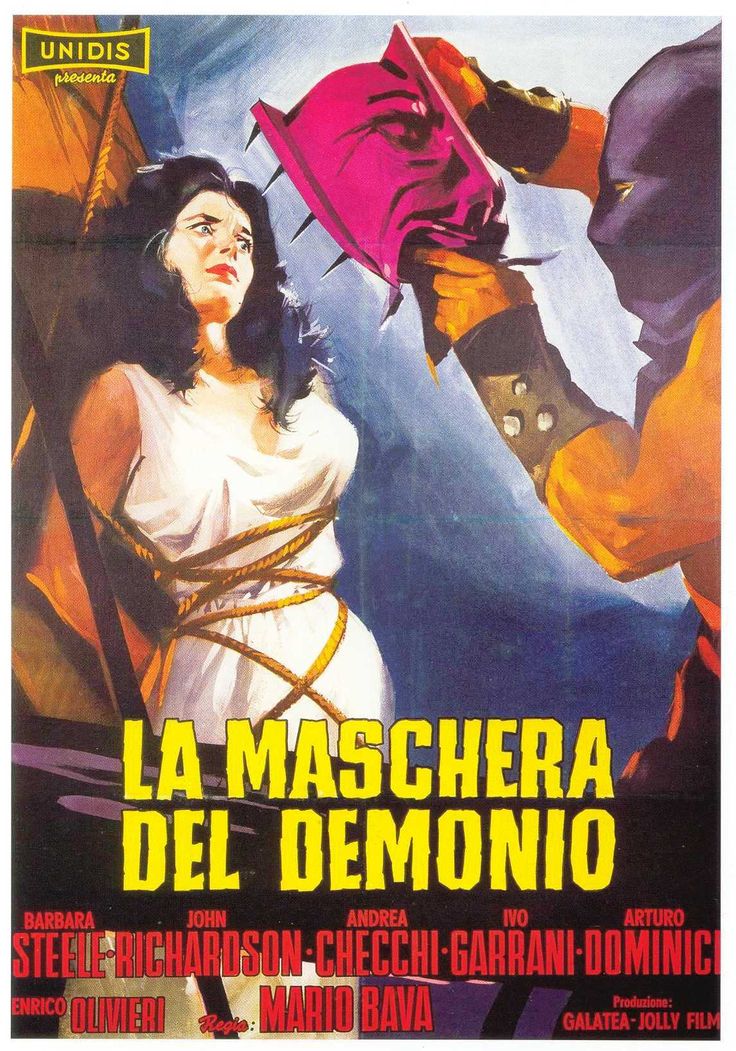
Cinema Sunday: Black Sunday (1960)

blacksunday

Title: Black Sunday (A.K.A. The Mask of Satan)

Distributor: American International Pictures

Writer: Mario Bava (screenplay)

Director: Mario Bava

Producer: Massimo de Rita, Samuel Z. Arkoff

Starring: Barbara Steele, John Richardson, Andrea Checchi, Ivo Garrani

Released: August 1960

MPAA: UR


I always try my best to keep my promises, so here we go with another film by the great, Mario Bava! After reviewing Planet of the Vampires a few weeks ago, I slowly began searching through his catalog for more films that I knew would be gems. It didn’t take long for me to settle on this one. This being Bava’s first credited film as director (he had apparently done a couple of others uncredited), and the film that put Barbara Steele on the map (she’d done a couple of films, but small roles before this)!

The film caused quite a stir when it was released in 1960, as it was a bit over-the-top for the times. Bava took chances, and really amped up the shock value in this film. The opening scene is one of legend, and really sets the tone for the entire film. Now, let us traverse back in time to the year 1630…


blacksunday5

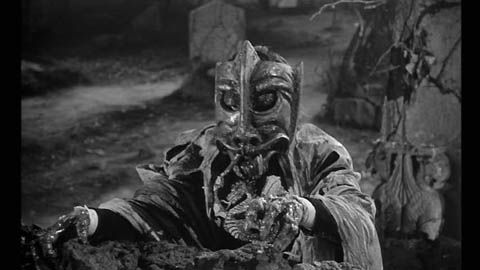
The film opens with a duo, Asa Vajda (Barbara Steele) and Javuto (Arturo Dominici), being put to death for witchcraft. The man leading the charge is Asa’s own brother! He puts his feelings aside and condemns the two to die for their crimes. The first thing he does is brand them with an “S” so that they are marked as Satan’s worshipers.  One of his minions places a mask with metal spikes on the inside over Asa’s face, while another man (wearing an executioners hood) uses a large hammer to pound in into her face! Just before this though, Asa puts a curse o her brother, and all that will follow in his bloodline. She is then burned at the stake, as a violent storm rages on. However, the storm puts out the flames before their bodies are burned.


blacksunday1

Fast-forward two centuries, and we see a carriage heading through the same woods where the  two were executed back in 1630. The two men inside, Dr. Thomas Kruvajan (Andrea Checchi), and Dr. Andre Gorobec (John Richardson), are on their way to a medical conference. The carriage breaks down, and the two doctors explore the area because they hear a strange sound emanating from an old cathedral. They find a tomb, and Kruvajan tells Gorobec that it is the tomb of the witch. Suddenly, the coachman asks for help repairing the carriage, so Gorobec leaves to help while Kruvajan continues searching the cathedral (a family crypt, actually). Kruvajan is attacked by a huge bat, but manages to kill the beast with his pistol.


blacksunday2

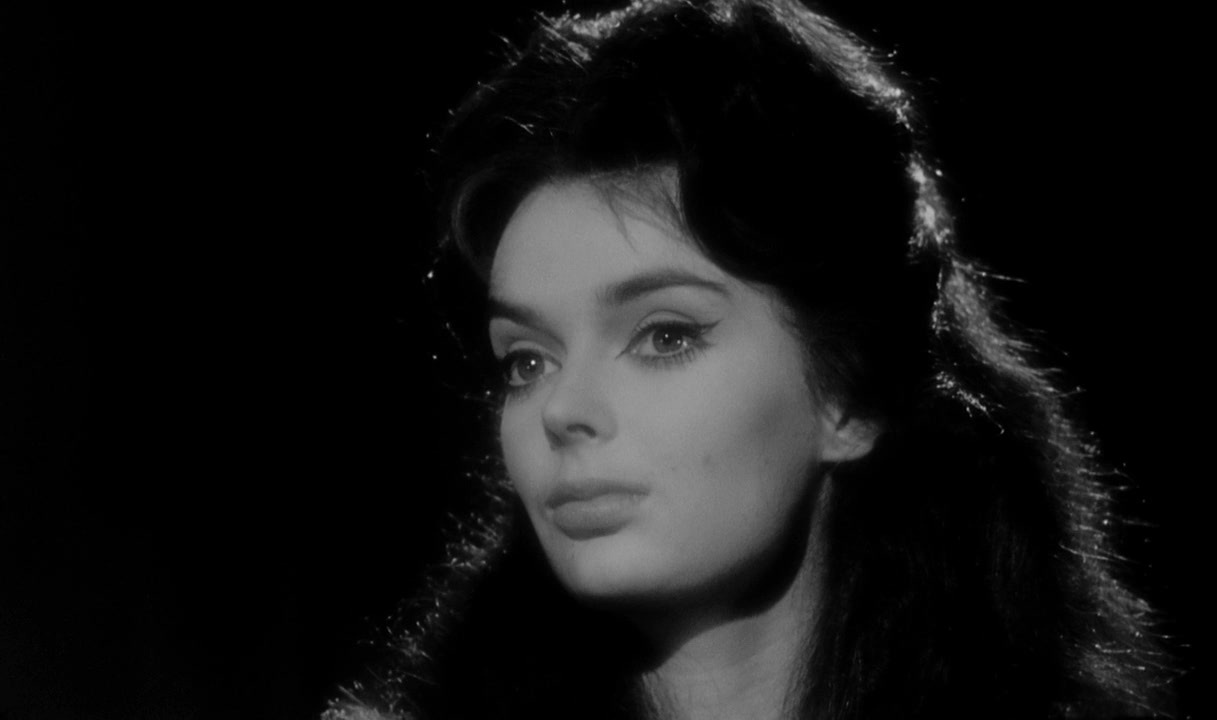
As the men are leaving, they are approached by a strange young woman who asks what they are doing there. Princess Katia (Barbara Steele), and Gorobec have an enchanted moment, then the good doctors leave, as the carriage is fixed. While Kruvajan was fighting the bat though, he was cut on some glass, and his blood seeped into the tomb of the witch. We see it seems to have an effect on her that might resuscitate her. Over at the castle of the Prince Vajda (Ivo Garrani), he and his two children, Katia, and her brother, Constantine (Enrico Olivieri), are on edge on this very eerie night. The Prince is staring at a painting of Asa (their ancestor), and then believes it moves! The servant, Ivan (Tino Bianchi), is then told about the curse of Asa. Ivan tells him to cling to the cross, as it will protect him against evil.


blacksunday3

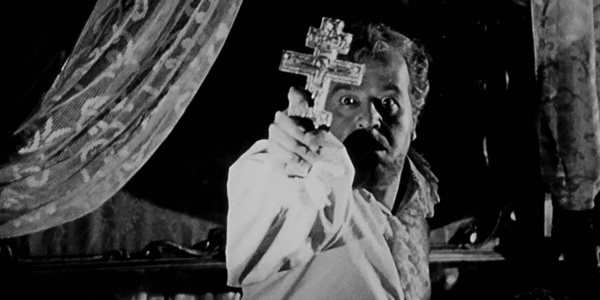
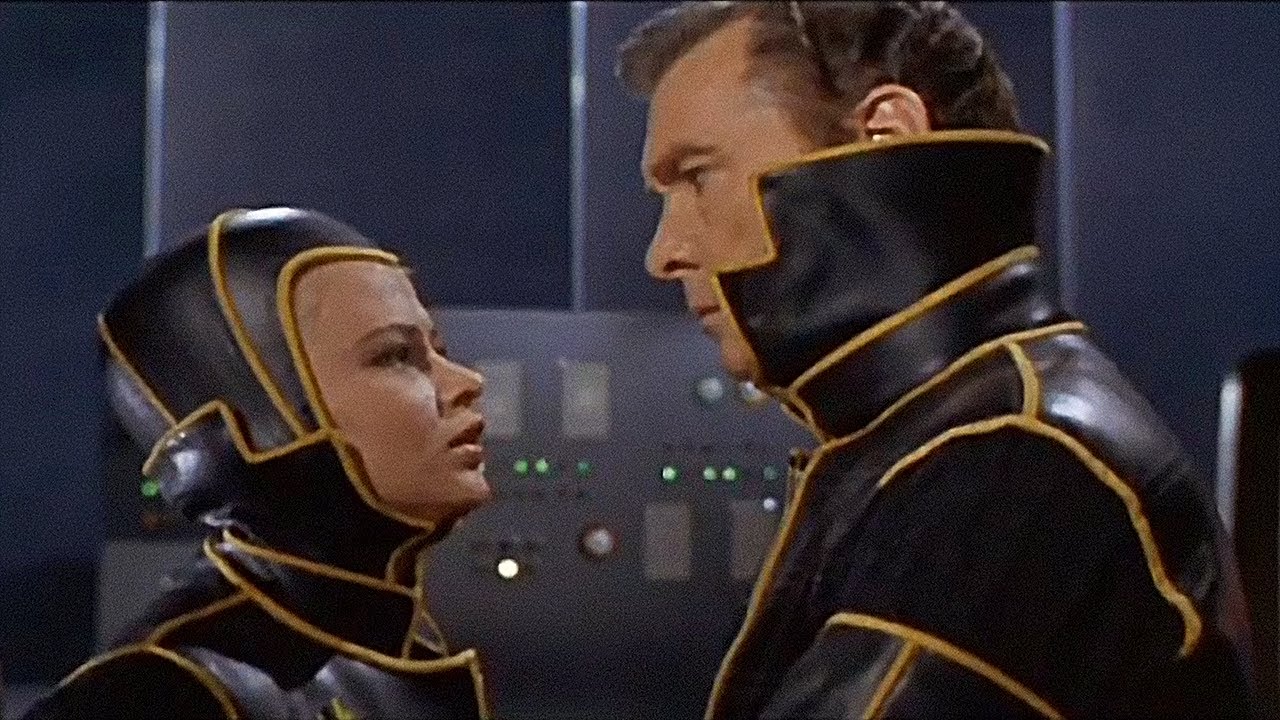
As the evening wears on, we see the body of Asa, as it begins to transform from the blood of Kruvajan. She then telepathically summons her former accomplice, Javuto, and sends him on a mission to attack Prince Vajda. Javuto rises from the grave, and does indeed come upon the Prince in the castle, but Vajda has enough wherewithal to grab his crucifix, and it frightens off the ghoul. The conflict leaves him mentally unstable though, and very vulnerable. They send a servant to get Dr. Kruvajan, but he’s intercepted by Javuto. Javuto then tricks Kruvajan into thinking he’s the servant, and takes him instead to the crypt, where he’s bitten by Asa!


blacksunday4

Now that Asa has a servant to carry out her devious deeds, things get very interesting. She also has plans for Princess Katia, as well. She believes that her blood will revitalize her completely, and then she’ll make everyone pay!

Can Gorbec and a few others stop Asa and Javuto before they can turn all the villagers into their slaves? Tune in to find out!


blacksunday7


OK, here are my thoughts:

I’ve been aware of this film for quite some time now, but put off viewing it for some unknown reason. Now that I’ve seen it a few times, I really love it, and anyone that’s a fan of horror films from this era will as well. The only thing that was off was the voices that were dubbed. It bothered me for the first few minutes, but wore off after that time. The film (for its day) has a couple of violent scenes that moviegoers must have shrieked at. Bava really sets a creepy tone from the on-set of this film, both visually and mentally. For his first directorial credited film, it’s no wonder why studios were willing to give him some money to make films.

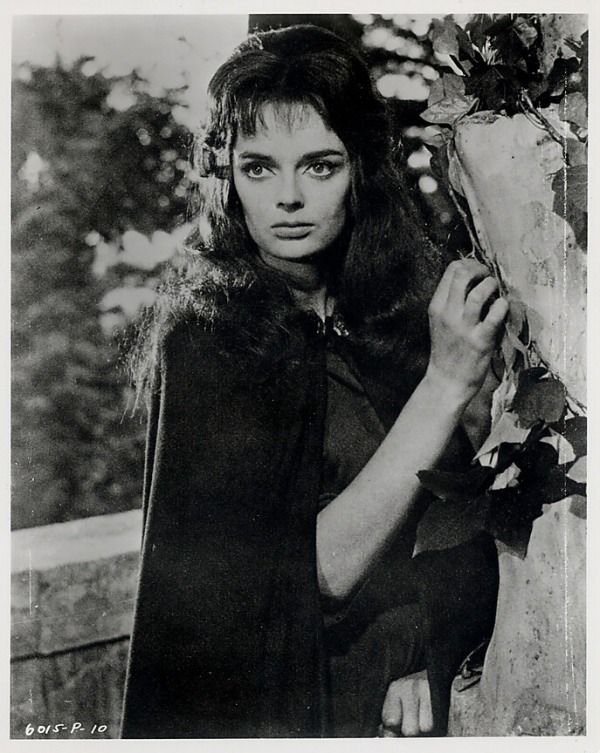
The musical score was very good too, and although the name Roberto Nicolosi is unfamiliar to me, he did a great job. Bava is also credited as the cinematographer, which makes perfect sense knowing his reputation for wanting to be in total control over that aspect of his films. And let’s be honest, it was probably for the best because he quite good at it. Barbara Steele is nothing short of gorgeous in this film, and you will want to see more of her films after you’ve seen this one, I guarantee it!


Click here for the trailer!


black-sunday-1960-102

blacksunday6


Cinema Sunday: Dr Terror’s House of Horrors (1965)

drterror1

Title: Dr. Terror’s House of Horrors

Distributor: Amicus Productions/Regal Film Distributors

Writer: Milton Subotsky

Director: Freddie Francis

Producers: Milton Subotsky, Max Rosenberg

Starring: Peter Cushing, Christopher Lee, Donald Sutherland, Michael Gough, Ann Bell

Released: February 1965

MPAA: UR


As I promised recently, I wanted to take a look at another Amicus film, to give them their due! In this anthology film, we get a cast that rivals just about anything else in the genre at this period in time. And not just well established guys either, you get a few fresh faces that ascend to rather steep heights.

Although Amicus didn’t have the sheer volume of films as say, Hammer Studios, but their impact certainly made them the main rival to Hammer, especially for the simple fact that they were able to steal most of their actors and actresses (not really steal; the actors weren’t under exclusive contracts and didn’t make a ton of money and simply had to make a living). Seeing the faces of the perennial favorites will easily get you in the mood as soon as they appear on-screen. Well, let’s get down to business!


drterror

As the scene unfolds, we see a busy train yard in England. One man is already aboard, and looking at a doll that he’s purchased for his daughter. Just then, another man enters the car, followed by four more. The last man, who introduces himself as Dr. Schreck (Peter Cushing), is a bit odd but friendly nonetheless. One of the men to enter the car, is renowned musical critic, Franklyn Marsh (Christopher Lee). He seems very uptight, and quite like a curmudgeon. Dr. Schreck falls asleep, and his carry-on bag falls over. The contents fall all over the floor, and the men help him gather his things. One man notices his a deck of cards, and Marsh identifies them as Tarot cards. He tells the other men that the cards can tell the future, and that he’s willing to use his talents to show them theirs!


drterror2

The first one to volunteer, Jim Dawson  (Neil McCallum), is shown how he’ll  be trying to buy back an ancestral home that has fallen out of the family. There are a couple of mysterious figures about the house (a couple of familiar faces in Katy Wild – The Evil of Frankenstein, and Peter Madden- Frankenstein Created Woman, Kiss of the Vampire), and they act very suspiciously. Jim eventually wants to see the basement and after procuring the key from the old man of the house, he heads downstairs. He bangs on the walls with a crowbar (yeah, that is weird), and accidentally bashes in some plaster. He finds a coffin and the old man tells him that it’s the coffin of Count Cosmo Valdemar, a nobleman that owned the house previous to Jim’s family, and swore vengeance against them if he was ever revived!


drterror3

The second tale is about Bill Rogers (Alan Freeman), and his family. He and his family are living the mundane life until one day, while doing yard work, they attempt to cut down a mysterious vine that’s begun growing along the house. The vine seems to “fight back,” and Bill is flabbergasted. He takes his story to a couple of scientist friends of his who initially seem skeptical. Eventually though, one of them comes to the house after not only a dog, but a friend is seemingly murdered by the vines.

The third story involves Biff Bailey (Roy Castle), who’s a musician that gets a gig in the West Indies. He’s doing his thing one night, and a local who sings at the same club tells him of the voodoo ceremonies that go on at night. Biff is intrigued, and sets out to watch. He does just that and attempts to write the music to use for his own personal gain. The voodoo priest stops him, but Biff remembers the tune. When he goes back to London, strange things that cannot be explained begin to plague his life.


drterror4

The fourth installment features Franklyn Marsh (Christopher Lee) who has shown great disdain for the good Doctor and the notion that any of this is plausible. We watch as Mr. Marsh, who’s pretty much a self-centered jackass, rips apart an artist, Eric Landor (Michael Gough). Landor gives it right back to Marsh and gets some slight revenge by showing Marsh for the conceited jerk he really is and making a monkey out of him. Marsh gets so angry, that when he sees Landor in the streets, he runs him over with his motorcar! Landor’s one hand gets severed, but lets just say that it isn’t the last we or Marsh see of it!


drterror6

The penultimate act (but the last “story” in the film) is about Dr. Bob Carroll (Donald Sutherland) and his new bride, Nicolle (Jenifer Jayne – The Trollenberg Terror). The area that they live is being terrorized by a vampire, and it’s up to Dr. Carroll and his friend, Dr. Blake (Max Adrian), to find the culprit and put an end to its reign of terror! That might prove to be quite a problem though when Dr. Carroll finds out who the vampire is!

The last scene in the film is a very good twist, so I’ll stop here, but needless to say, it involves Dr. Schreck and the men in the train car.


drterror-katywild

OK, here are my thoughts:

Listen, I’ve stated many times that anthologies really aren’t my cup of tea. That said, this is one that is so good, I’d recommend it to anyone. The beginning and ending sequences in the train car is very solid with dialogue and mood. As for the stories, I’ve already gone into enough detail about them individually, so I’ll just say that the voodoo story and the disembodied hand are the better of the lot. Not to dismiss the others (Donald Sutherland is also very good), but those are tops.

Cushing doesn’t have a ton of screen time, but his ability to creep people out is on full display in this flick. The make-up is kind of cheesy, and unnecessary in my humble opinion, but whatever. The music score is moderate, the sets are very mediocre, but the film is about atmosphere, mood, and pacing, which are all top-notch as far as they can be on a limited budget as was the case with Amicus Productions.

Any horror fan needs to cross this one (sorry, can’t help it with the puns now and again) off their list. Even if you’re like me and don’t love anthologies, the film certainly deserves a viewing or two.


drterror7

Click here for the trailer!

Cinema Sunday: Night of The Eagle (1962)

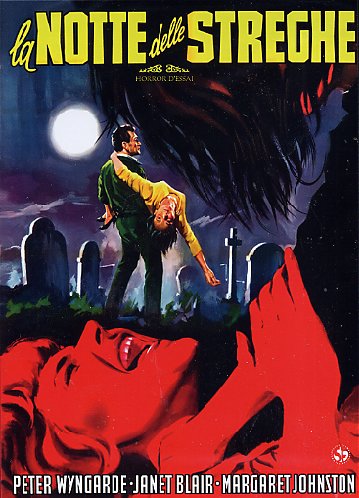
night eagle it


Title: Night of the Eagle (A.K.A. Burn, Witch, Burn!)

Distributor: AIP (U.S.)

Writers: Richard Matheson, Charles Beaumont, George Baxt (screenplay)- Fritz Lieber (novel- Conjure Wife)

Director: Sidney Hayers

Producers: Julian Wintle, Leslie Parkyn

Starring: Peter Wyngarde, Janet Blair, Margaret Johnston, Anthony Nicholls, Colin Gordon

Released: May 1962

MPAA: Pg-13 (est.)


This week’s film will be a quick dip back in the pool of American International Pictures (AIP) library (by way of the U.K.’s Anglo Amalgamated)! I don’t recall how I found out about this film, but I’m glad I did! The pluses outweigh the minuses by a long shot in this one, and for a budget of $200k, they did an admirable job! The cast was relatively new to me and that can sometimes but slightly off-putting to me, but not this time around. I’ll grant you that the name of the film doesn’t sound very scary, and this might be a case of the Americanized name being better, but who knows. Alright, now that the intro is over, let’s hit the pavement, or eagles nest, I guess…


eagle1

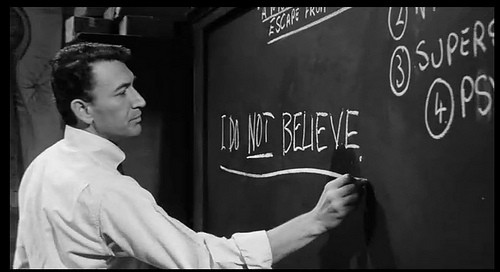
At the ritzy medical college of Hempnell, we see an instructor, Norman Taylor (Peter Wyngarde), telling his students that superstitions are nothing but a bunch of poppycock. One student in particular, Margaret Abbott (Judith Stott), seems to be quite smitten with him, and asks about personal superstitions, like walking under a ladder, and the like.  He dismisses them as well, and tells the students not to believe any of it. Class ends, and then that same female student stays after class for a moment. Another student, Fred Jennings (Bill Mitchell), doesn’t hand in his paper, and Taylor threatens to have him thrown out of the class. Later, out in the hallway, Jennings threatens Margaret, because of jealousy.


eagle2

Norman arrives home and his wife, Tansy (Janet Blair), greets him after she’s just returned home from spending some time at their cottage. She complains about having to spend the evening with the others. but Norman convinces her it will be fine. Later that night, as the game of bridge is underway, as a couple of others have joined. One person in particular seems to be very interested in the new couple (Norman and Tansy are new to the school), and why everything seems to go their way. Norman remarks that Tansy is his good luck charm, and again, Flora Carr (Margaret Johnston) gets a peculiar look on her face.


eagle6

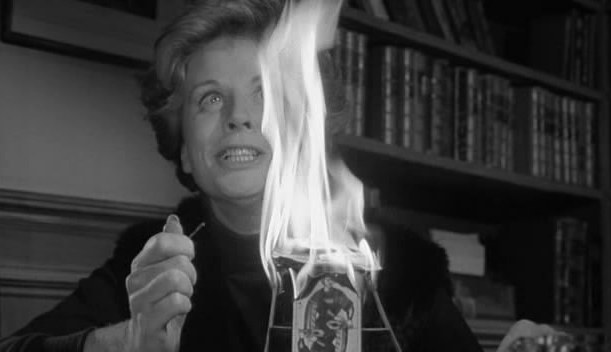
The evening ends, everyone leaves, but Tansy seems troubled. She begins to rummage through the home as if she’s lost something. When Norman asks her about it, she claims she’s looking for the grocery list, but it’s obviously a lie. Norman heads upstairs for bed and Tansy promises to be up soon. She stays to keep looking for something though. As Norman opens a drawer he discovers something in the corner. A small box he doesn’t recognize is in it, and when he opens it, a dead spider falls out. Tansy bursts in the room, and Norman wants an explanation. She tells him that last year when they were on holiday in Jamaica, a local gave it to her for a souvenir. He accepts her story, then they go to sleep. Tansy awakens though, and you can tell that something is bothering her. She finds a type of voodoo doll tied to a lampshade, and immediately takes it down, pulls it apart, then burns it, in some type of ceremonial act.


eagle4

The following day, Norman is typing away, and the dry cleaner comes a knocking. He lets him in and grabs a few articles of clothing. He pricks his hand on something inside a shirt, and after searching, he finds a small envelope of some substance. He immediately heads upstairs to search the rest of the bedroom. The entire house is then searched and he finds dozens of relics, charms and all sorts of the things he teaches against in his classroom. It finally hits him, his wife is a mystic.


eagle3

Tansy then returns home, and sees that one of her charms by the front door is missing. Upon entering the home, she sees that all of her things have been laid out on the table. The couple argues, as they’re both on opposite sides of the fence on the subject. She explains that she did it for him, and it was for protection. He can’t believe it, and tries to force her to destroy the items. She warns him that the reason she got into all of this was because when they were on holiday in Jamaica, he almost died from an accident, but a local shaman showed her how to revive him. Norman refuses to believe such rubbish, and then tells her she must give it up. She watches in disbelief, as Norman throws all of her charms, protections, etc. into the fireplace. He asks her one last time if that’s everything, and she then pulls out a locket, that has his picture, along with a charm of some sort. He even tosses that in, including his own picture! Tansy freaks out, and then after she calms down, a bit, she goes upstairs to bed. Norman then receives a phone call, and initially the caller says nothing, but then he hears someone breathing and then the female voice begins to talk dirty to him. He demands to know who it is, but the woman just keeps on going. He slams the phone down, and then heads up to bed.


eagle5

Almost immediately, things begin to go awry for Norman (like almost getting run over by a truck, being accused of raping a student). Was Tansy and her magic protecting them from sinister forces that lurk around everyone? Or is someone behind the events that are just beginning to plague the happy couple? Watch to find out!


OK, here are my thoughts:

This one flew under my radar, as I’m sure it has for most, but let me tell you something. Get it on your radar now! The two leads (and the villain), are absolutely fantastic! Not a lot of bells and whistles with this film, and the “special effects” are just moderate at best (there are only a couple). The sets are average as well, but again, that’s not the driving force behind this one. The cinematography (Reginald Wyer), did an outstanding job, and should be praised. The music score (William Alwyn) was also very good, bringing the viewer up and down like a roller-coaster.

The screenplay has three credits, but when you see the name Richard Matheson (Last Man on Earth, The Night Stalker),  you should know it is one of legend. His written work along with his TV and film work is also full of solid stuff. The usual gang from AIP was involved as well, and those guys, even with their cheesy reputation, always manage to get it done. Definitely look this one up around the web, because you’ll enjoy it!


Click here for the trailer!


Cinema Sunday: The Tingler (1959)

Tingler-Lobby-Card1

Title: The Tingler

Distributor: Columbia Pictures

Writer: Robb White

Director: William Castle

Producer: William Castle

Starring: Vincent Price, Judith Evelyn, Darryl Hickman, Patricia Cutts, Philip Coolidge

Released: July 1959

MPAA: Approved


After a double-dip of Amicus films, I thought it had been too long since I’d visited a film starring one of my all time favorite actors, Vincent Price! I still have quite a few films of his that I want to spotlight, and this one is right at the top of the list, so I figured, why not? By this time in his career, Price had been working diligently and built up a good reputation. He had also begun to do almost nothing aside from horror films, which was a big deal for him, and would’ve been for any actor of that time (the genre was very well-respected back then).

I’d like to think that the relationship between William Castle and Price was one that helped vault both of their careers into the stratosphere, and it definitely helped the genre tremendously, and the industry. Castle was known for his cheaply made films that used a gimmick to get the audience to squeal, and more often than not, he accomplished that feat and more. OK, without further interruption, here we go…


tingler1

The film begins with it’ Producer/Director, William Castle warning the viewers that he’s obligated to warn us that we (the viewers) will also be experiencing some of the sensations physically that the actors in the film did. He urges you to scream at the top of your lunges to help alleviate this sensation. The screen is then bombarded by floating heads that scream loudly, and the film begins.

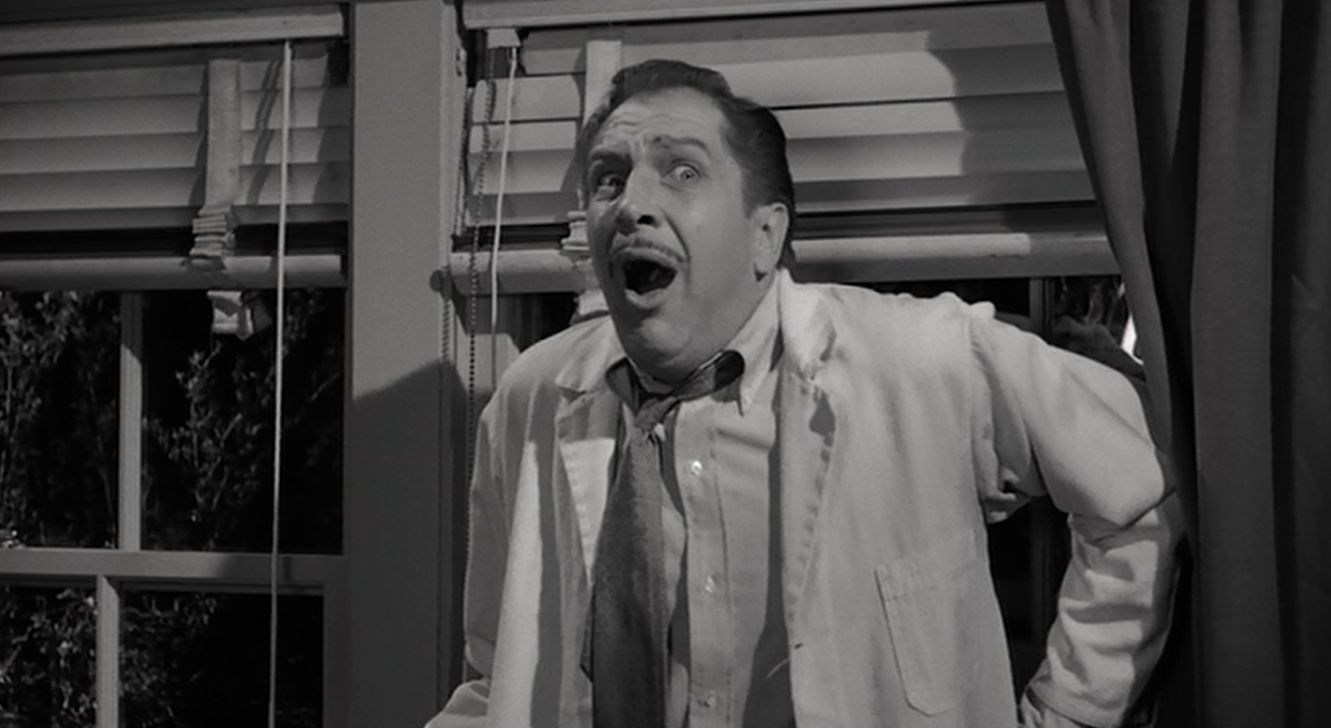
We see a man in a jail cell, and he looks as though he’s about to go mad. He’s led from his cell to a room (execution), and then the scene switches to a room marked “autopsy” and we see Dr. Warren Chapin (Vincent Price), as he’s readying the room for another customer. A few minutes alter, and a body is rolled out of the room, and towards the autopsy room. Once the body arrives, Chapin begins his work. He notices that the dead man’s back is broken in two different places, and he theorizes that something other than electrocution did this. The other man in the room, Oliver Higgins (Philip Coolidge), tells Chapin that this man is a serial killer that also happens to be his wife’s brother. Chapin discusses his fascination with fear, and experimenting on people to figure out the effects from it.


tingler2

After the autopsy is over, Chapin gives Higgins a ride into town. They walk by a movie theater that Higgins and his wife own. Higgins uses sign language to tell his wife that he’s going to have a cup of coffee with Chapin at their apartment across the street. Eventually, Mrs. Higgins (Judith Evelyn), comes in and Oliver explains that she cannot speak or hear, so she must read lips or use sign language. As they talk, Chapin gets cut, and the mere sight of blood causes Martha to faint. later, Chapin tells Oliver that the reason she faints when she sees blood, is because she cannot scream and release the fear inside of her. Chapin, after Oliver asks him about the tingling sensation, dubs this condition “the Tingler.” Chapin leaves and heads for home.


tingler3

Over at his house, Chapin enters and is greeted by Lucy (Pamela Lincoln), and then his partner, David (Darryl Hickman). He tells David about his interesting experience today with the deaf-mute woman, and the two theorize about the effects of fear. Lucy gets mad and wants to leave, so David eventually complies. Later that night, Isabel (Patricia Cutts), Lucy’s older sister (and guardian), and apparently Chapin’s rich, estranged/ex-wife. Chapin and Isabel exchange quips, and then after Isabel gets cranky, Chapin pulls out a gun, and threatens her with a pistol. He leads her down to the lab, and threatens her. He demands that she leaves Lucy and David alone, and that gives half of her father’s fortune to Lucy. She tells him she wont do it, and lunges for the phone to call the police. Chapin shoots her, and while the body is still warm, he begins to experiment on her.


tingler4

He quickly takes x-rays of her spine to see what causes it to break suddenly when someone is struck by a terrible fear. A moment later, she leaps up from the table and shrieks. He tells her it was only blanks in the gun, and that she passed out from the situation. Meanwhile, a cat that David procured for the experiment hops in the window and scares Isabel. He tells her that the cat was originally intended for the experiment but he thought she’d make a better volunteer. He also asks her is she’s seen this cat before in any of the local alleyways. She threatens him and gives him an ominous forecast for his future.


tingler4.5

The following day David comes over to the lab, and shows him the x-rays of Isabel just as she was scared stiff. David is astounded by this find as they both see that there is indeed something in the spine just as someone is frightened. Chapin wants to push forward, but David is worried. Chapin convinces him to follow along, and the two try concoct a plan to extract a “tingler.” Chapin gives David the night off, and he and Lucy get the impression something is amiss.  They’re right, and they peek in on Chapin as he injects himself with some drugs (LSD?) to induce a fear in himself.


Tingler5

Chapin starts to go on a trip, and is trying to record all of this, but is having trouble keeping up with things the longer he’s under the influence. He starts to hallucinate that the walls are closing in on him, and he begins to panic. He feels like he can’t breathe, and sees the skeleton in his lab come after him. He tries to stop himself, but cannot, so he screams out. After he wakes, he tells David and Lucy that there isn’t anyway possible for someone to stop themselves from screaming from fear. He then gets a sinister idea, and leaves. David is worried he might experiment on Oliver’s wife, since she cannot scream.

Will Dr. Chapin resort to experimenting on Martha? Will he prove his theory about the Tingler? Check out this classic to find out!


OK, here are my thoughts:

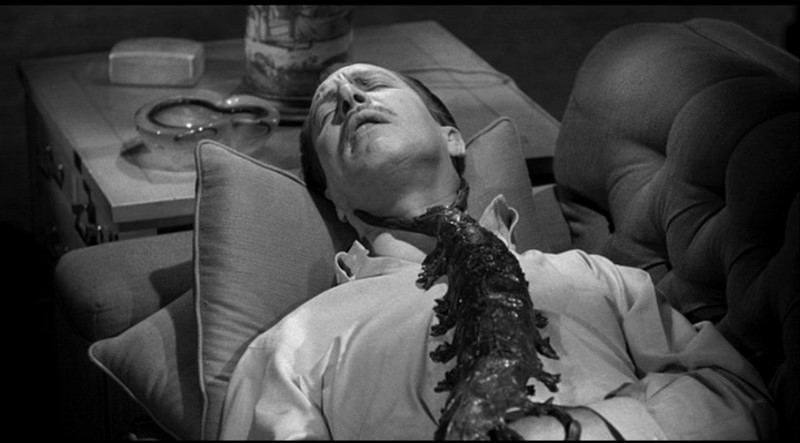
This film is another good one from Castle and Price. House on Haunted Hill is better, mostly because of the cast, but also in plot. You can’t dismiss this one though, and I’m sure the gimmicks helped this one be even better when it was in the theaters. The special effects were pretty cool, especially the scene with the blood. Of course the “Tingler” by today’s standards would be judged as cheesy, but in all honesty, it looks as good comparatively speaking to the face-hugger in Aliens (1986).

The film is a must see for any Price fan, but also for anyone that loves old school cinema, especially of the thriller/horror variety. You do get a cool twist late in the film, and if you love House on haunted Hill, this one has some of the same elements to it that made that one great. Lets be honest for a minute, Price could carry any film, and his reputation was built on performances like this one!


Click here for the trailer!


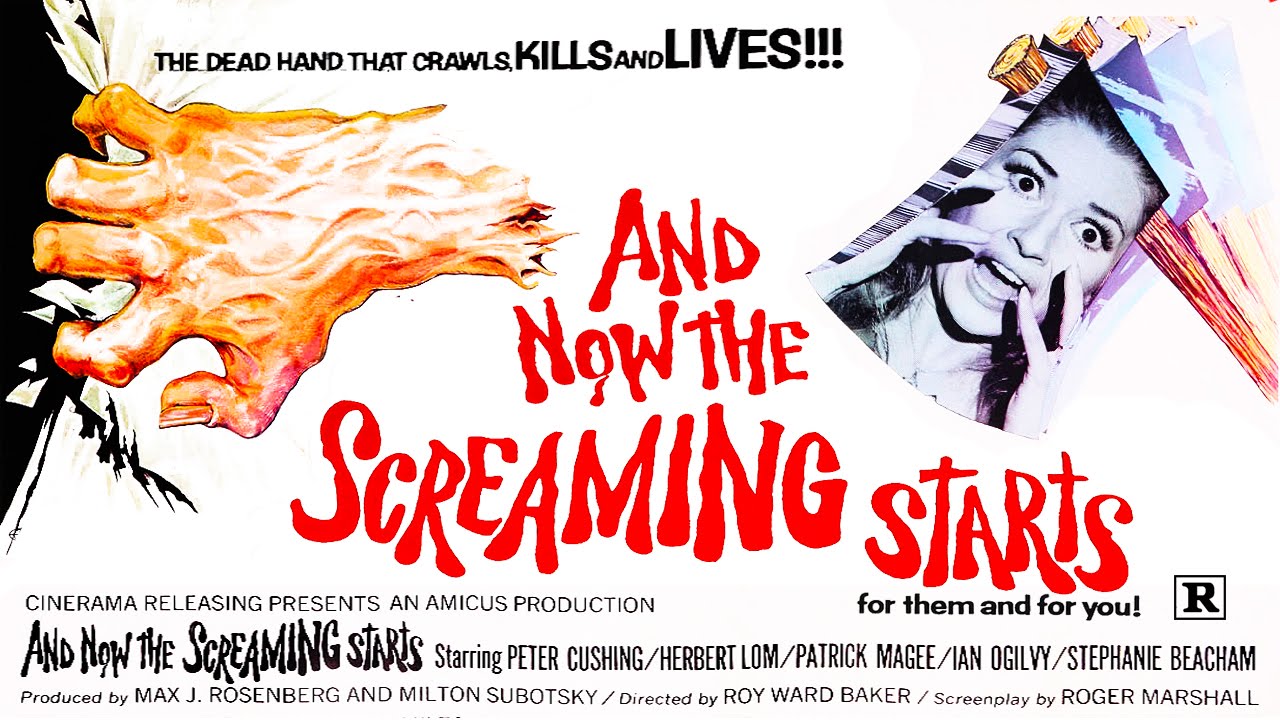
Cinema Sunday: And Now The Screaming Starts! (1973)

screamstarts

Title: And Now The Screaming Starts

Distributor: Cinerama/ Amicus productions

Writer: Roger Marshall

Director: Roy Ward Baker

Producers: Max Rosenberg, Milton Subotsky

Starring: Peter Cushing, Herbert Lom, Patrick Magee, Stephanie Beacham

Released: April 1973

MPAA: R


Another week and another movie from Amicus Productions! Forgive me, but this one is going to be quite shorter in length than most of my reviews for two reasons. First, the original film I was going to review was taken down from a popular website that houses tons of movies, cat videos, etc. The second reason  being it’s getting late, and I’m leaving for vacation tomorrow! I’ll be visiting the resting place of H.P. Lovecraft, and if all goes well, I’ll be commanding the armies of Cthulhu by mid-week, so wish me luck!

This week’s film is one that I’ve never viewed before now, but heard positive things about over the years. Most Amicus films have a solid reputation, but I was slightly skeptical about the premise for this one. The names Peter Cushing and Herbert Lom (Hammer’s version of Phantom of the Opera, 1962) put me at ease though, and they should do that for anyone! Alright, let’s get to the movie!


screaming1

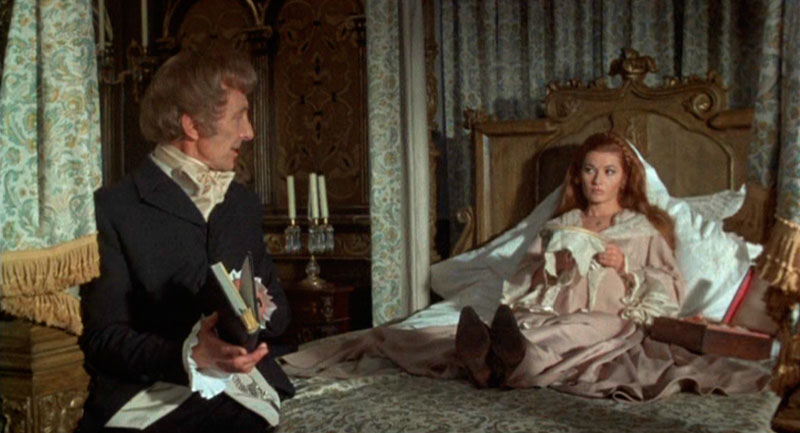
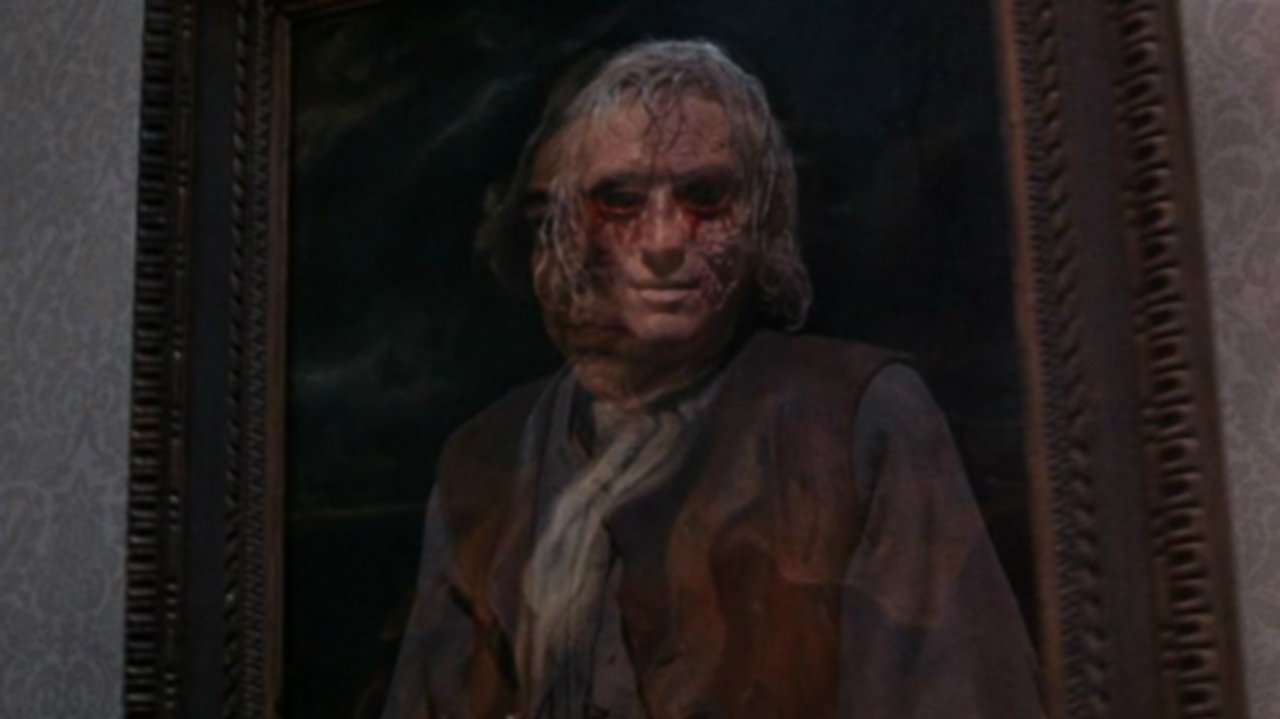
As the film begins, we see a couple (engaged to be married) on a carriage ride to their new home (1795). It’s the ancestral home of the groom, but his bride is about to find out it holds a dark secret! Charles (Ian Ogilvy), and Catherine (Stephanie Beacham), stroll around until they see a portrait of his grandfather (Herbert Lom). Catherine is all but hypnotized by it, and we get the impression his spirit may still dwell in the house. As she’s looking at the portrait, a hand comes bursting through it at her! As she dives away, screaming, Charles comes to her aid. Of course, the portrait is fine, and Catherine thinks she imagined the whole thing.


screamstarts1

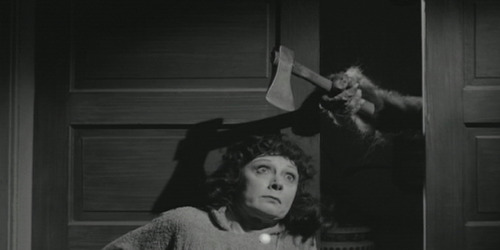
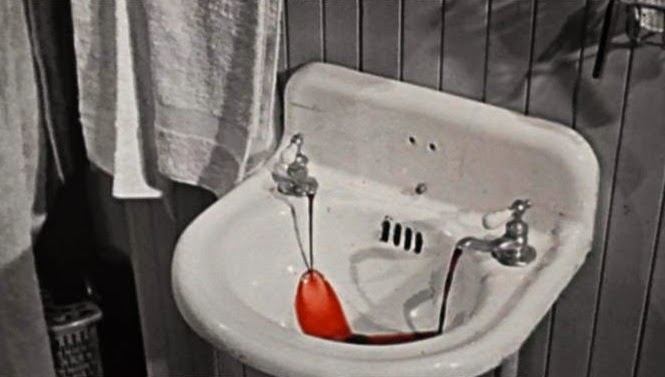
After the wedding, the two head for the bedroom. Outside in the hallway though, is a severed hand, crawling about the house! As Charles excuses himself for a minute, Catherine closes the drapes, and is startled by a howling wolf. She dismisses it and jumps into bed, awaiting her new groom’s arrival. As she waits, the door suddenly locks by itself, and the candles go out. Catherine is then attacked by the severed hand, and perhaps someone else! Charles races downstairs and grabs an axe from the mantle, then hurries back upstairs to the locked room. He chops his way into the room, but as before, the hand is gone. A maid comes into the room, closes a window, then leaves. Charles glares at her, but says nothing to her. Later, downstairs, he tells the maid that his wife imagined the scenario.


screamstarts2

The following day, Charles tells his lawyer that he wants to leave everything to his wife in the case of his demise. That evening, Charles and Catherine are about to get busy, when she sees the face of a man with no eyes in the window. She stops for a moment, and Charles asks what’s wrong. Afterward, she goes out into the hallway and is scared stiff at the portrait that scared her earlier. The next day, Catherine heads out to the burial area, and sees a man with scars on his face, staring at her. She runs away and asks Charles who he is. He’s very vague in his response, so Catherine asks one of the servants. She’s also not in the talking mood apparently, and Catherine gets angry.


screamstarts3

Catherine then sets out to the cabin nearby, where this man lives. She confronts this woodsman (Geoffrey Whitehead), Silas, and asks to see his hands, thinking maybe it’s his hand that is crawling around the home. He shows her both of his hands, then she asks a few more questions about him and his relatives. She finds out that Charles’s family gave land to this man’s father, and that’s why he lives on the grounds of the estate. Catherine then turns to the family lawyer for answers but he’ll not give them to her before speaking to Charles first. In the evening, Charles and Catherine are both giving each other the silent treatment. We also see someone outside with an axe, creeping around. Charles then heads out to find the town people who were to come over for dinner this evening, as they’re long overdue. He finds an abandoned horse, and then one of his friends (the family lawyer) with a huge gash in his forehead. as he topples over, and dies.


screamstarts4

Back at the house, a window flies open and as Catherine attempts to close it, that ghastly figure with no eyes surprises her, and smashes the window. She quickly runs into the next room, and is frightened by one of the maids. She screams about the window, but when the maid checks it out, there’s nothing wrong. As Charles returns he grabs her hand, and she sees that his hand is bloody, and she faints. The following morning, the family doctor informs them that they are going to have a baby. They seem less than thrilled, and then Charles and the good doctor have a private conversation. The doctor (Patrick Magee), threatens to tell Catherine about the secret everyone is hiding. After a look from Charles, he then informs Charles that he wont tell. That same day, the authorities are at the woodsman’s cabin, questioning him about the murder. He denies he did it, and then Charles shows up out of the blue. He tells them he wouldn’t do this, because something he deserves is going down soon.


screamstarts5

Back at the house, Catherine is being tortured again, and one maid offers to show her what the secret is about the house. As the maid attempts to bring something to her, the pictures begin to rattle, and a spectral image of the severed hand reaches out, and chokes her. She then falls backwards down the stairs. She’s apparently dead. Catherine goes to check on her and confirms this. She also finds a book that she was bringing to her, so she scoops it up before anyone can see. When she’s alone, she begins to read about the family history. Charles confronts Silas, and tells him that if he leaves, he’ll be compensated nicely, but he refuses. Shortly thereafter, another doctor is brought in, by the name of Dr. Pope (Peter Cushing). He seems to be the only one except for Catherine that wants to find answers to this haunting, before it kills anyone else!


screamstarts6


OK, here are my thoughts:

The film is a decent one overall but definitely does have some slow spots. Most films do mind you, but these were a bit more noticeable. Cushing doesn’t show up until 2/3 of the way through the film, and there was even less screen time for Lom (he was quite a scoundrel). Both played good parts, but definitely deserved more screen time.

The music score was definitely a low point for this one. The settings were a bright spot, as a few different locations were used. The special effects were just mediocre though, and that was something that should’ve been better for 1973. Yeah, the budget was low, it was Amicus after all, but there definitely should’ve been a better effort in that department.

If you get the chance, sit down one evening and give it a watch. Cushing and Lom’s performances are strong enough to carry you through the other slow spots and mindless nonsense.


Click here for the trailer!


Cinema Sunday: Torture Garden (1967)

torturegarden1

Title: Torture Garden

Distributor: Columbia Pictures, Amicus Studios Production

Writer: Robert Bloch

Director: Freddie Francis

Producers: Max Rosenberg, Milton Subotsky

Starring: Burgess Meredith, Peter Cushing, Jack Palance, Michael Ripper, Barbara Ewing, Beverly Adams

Released: November 1967

MPAA: Approved


As my regular readers know, I’m a humongous fan of the legendary British film company, Hammer Studios. They ruled the genre for quite some time, but definitely had rivals. The biggest, was probably Amicus Productions. This upstart company was a little different in one aspect though, as their movies weren’t period pieces, but rather in contemporary settings. This was about the only thing  that set them apart though, as they used the same actors, producers, and a lot of the same tropes in their films.

The cast is key in this one, and by the ending of the film, you’ll be surprised, no doubt about it! And let’s be honest, is there a creepier setting than a carnival? The bearded lady alone is enough to scare the pants off me! Alright, now, to the movie…


torture+garden

The film begins with a side-show carnival barker trying to entice people to see his “torture garden.” A sign shows that the host, Dr. Diablo (Burgess Meredith), will have you screaming at these disturbing images. A small crowd shuffles in, and Diablo shows them an electric chair with what appears to be a man strapped in it. He throws the switch, and the “man” is fried. It obviously looks like a  dummy though, and some in the crowd aren’t impressed. Diablo then encourages the crowd to join him in his secluded area, where the real thrills are to take place. He tells them it costs £5, and most are skeptical. Diablo then uses basic high school peer pressure to get a few to pay up and go inside.


torturegarden3

Five people (Michael Ripper, Jack Palance, Michael Bryant, Barbara Ewing, and Beverly Adams) go inside, and Diablo does something very strange after they leave the first room. Diablo takes the money that the people gave him, and he throws it into the fire pit in the middle of the room! Awfully sure of himself, isn’t he?  One man, Colin Williams (Michael Bryant), pulls a curtain away, and sees a wax figure that resembles a fortune-teller. They all seem let down, but then Diablo appears and tells that this is no ordinary fortune-teller, but one that will reveal something ghastly about your future if you peer into her eyes. As Diablo lulls him into a sense of safety, the adventure begins.


torturegarden4

We see a scene where Colin drives his motor car to see his uncle, who’s very rich, but also, very ill. The door opens, and a woman walks out, and looks like the fortune-teller. He shakes his head in disbelief, and when he looks again, it’s just a regular woman. She’s apparently been taking care of the old man. Colin goes inside and tries to pry some money from his uncle, but he’s very dodgy about where he gets his money. Colin tells his uncle that he’s been asking around town how his uncle pays for things since he hasn’t worked in thirty years.  He wont tell, but then begins to have a heart attack, and needs his medication. Colin wont get it for him, and the old guy keels over right there on the spot.


torturegarden5

The coroner comes to pick up the body, and this leaves Colin to loot the house. Eventually, he finds a door in the floor of his uncle’s bedroom. He heads down into the secret compartment (basement?), and gets more than he bargained for. He uses a shovel to dig around but initially finds nothing. After some time, he finds a casket of sorts, and opens it using the shovel. Inside, he finds a skeleton, and a cat! The cat scurries away, and he continues to dig around.


torturegarden6

We then see him awaking on the couch upstairs, and the cat  growls at him. He then seems to go into a bit of a trance, and we get the impression that the cat is somehow communicating with him (possessed?). It tells him that he needs to do some favors for it, and he’ll be rewarded. The door then opens and the cat runs away, with Colin following. It leads him to a hobo sleeping in the barn. The cat begins to assert control over Colin, and forces him to pick up a pitchfork and murder the man. Again, Colin wakes up on the couch and believes it all to have been a dream. He sees the basement opened up and heads down to see what was real and what might be fantasy. As he gets down in the room, the cat is waiting for him, and once again claims to be ready to reward him for helping with whatever it needs. He picks up a shovel and digs up a chest full of gold coins.

Next, he quickly runs out to the barn, and sees that indeed he did murder the hobo, as the cat willed him to do. He dashes back into the house and down the steps into the basement, horrified at what he’s done. He begins to bury the gold, but the cat once again forces him to stop, and then tells him to murder the hospice worker that’s about to enter the house. As she enters through the back entrance, Colin picks up a shovel, and murders the old woman. Later that night, Colin is putting his trunk of gold into his car, when a policeman happens by, to warn him about a man who the police are looking for in the area (the hobo?). He tells him he’s seen no one, and the officer offers to help with the trunk, only to realize there’s blood on the handle.


torturegarden8

In the next scene, Colin is being locked up in jail, and tries to explain what’s been going on to a lawyer. He tells of the demonic cat, and how it forced him to do these terrible things. The lawyer looks at him as if he’s loony, and then asks him what happened to the heads of the victims. Colin tells him that the cat feeds on them, and if he doesn’t get to feed, he’ll come for his head. The lawyer leaves, and of course, everyone thinks he’s insane. A few minutes later, the cat appears on the ledge by the window. Colin begins screaming and the guard comes in to see what’s going on. By then, the cat has disappeared, but Colin is still hysterical. The guard tells him to calm down, and leaves the room. As he does, the cat returns, and takes Colin’s head as recompense!

One by one, the others are led to the fortune-teller, and see atrocities that they may be a part of in the future or maybe have already! Watch to find out the gruesome fate of these seemingly ordinary people, and the secrets they bear!


torturegarden2


OK, here are my thoughts:

The film is one that houses an idea that’s been put on the screen and in books before, there’s no denying that, but when these actors and actresses put their personal spin on the characters, that’s when the magic happens. I honestly think this is the best performance I’ve ever seen by Burgess Meredith. Now, before anybody goes ballistic on me, I haven’t seen many of his films outside of Clash of the Titans, and the Rocky franchise. All good performances, no doubt, but by the end of this film, you’ll believe he’s the devil himself! Now, to the others. Jack Palance and Peter Cushing share the final “future sequence” together, and it’s one for the ages. Not only do they do the film justice, but the scene also is about Edgar Allen Poe and his fantastic works!

Each of the dream sequences are different but the same. Not in a monotonous way really, but nothing really sets them apart so that you can single one out over the others in terms of better or worse. All of them have a charm to them in one way or another, but obviously I’m partial to the Cushing scene! The ladies in this film are absolutely gorgeous (Beverly Adams- image below, Barbara Ewing- even though she has a terrible hairdo or wig, and Nicole Shelby in her skivvies), and this era of woman is not only beautiful, but very commanding as well.

The music score was by two veterans of the industry, in James Bernard and Don Banks. These two gentlemen were stalwarts in the biz back then and really know how to get the music to match the scene. The writer, Robert Bloch, is another man who really shouldn’t need any introduction, but if you’re not familiar with his work, definitely Google him (you should at least know him as the man who wrote the story Hitchcock used for Psycho in 1960).

Definitely give this one a viewing, you’ll not be disappointed, I guarantee it! It’s one of those hidden gems of the era that you never hear about outside of circles that are hardcore fans of the genre.


torturegarden7


Click here for the trailer!


Comic Book’s Unsung Heroes: An Interview with- Steven Grant! Part 1

For non-comic book readers that are just into movies or new comic book readers that haven’t yet traversed backwards in time to discover what laid the foundation for what is now, you might not know the name Steven Grant. The hardcore, old fuddy-duddy (you know, like the comic book guy from the Simpsons) types like myself know him for the fill-ins he was constantly asked to do on books like Marvel Team-Up, Marvel Two-in-One, The Avengers, and so on. Or quite possibly his work on The Punisher or a couple of titles at DC comics in the 1990’s. Either way, you need to know his name and his work, because he’s a good guy, and has taken on just about every genre in comics and got the job done!

I had the opportunity (quite frankly I had some dirt on Steven, so he had no choice…just kidding!) to talk with Steven about his career in comics, and beyond! Some of the great relationships he has with other creators, and even working for Jim Steranko! Yep, this guy has done it all, and is still producing work to this day! Get ready, because this one is awesome!


grant-1_t1000


   Billy: Can you talk about your early days as a writer, and if the comic book medium was even a thought? Also, if you were a reader in your youth, can you talk about what titles you were hooked on?


Steven: Until my late teens comics were always on my mind. The first one I ever remember seeing was a Dell Lone Ranger – Tom Gill must’ve been the artist – at the barber shop my dad took me too. I was tremendously unimpressed. I was four or five. A couple of years later I was laid out with one of the childhood diseases that put you down for a week – measles, mumps or chicken pox, I forget which one. This was still back when TVs were too big to move from room to room, so my dad decided I could use some entertainment & bought me an All-Star Western, from DC Comics. I think it was #116 Image below, cover by Gil Kane), whichever one had the first adventure of Super-Chief. The book had a lot more long-range influence on me than I knew at the time. It was my first exposure to my all-time favorite comics artist, Gil Kane, who I was much later fortunate enough to work with & become good friends with. Which was really kind of weird, considering I was 7 when I first saw his work.


asw116


But what really influenced me was a full-page house ad for Justice League Of America 5, “When Gravity Went Wild.” It screamed in huge letters JUST IMAGINE! The mightiest heroes of our time, then listed Superman! Batman! Flash! Green Lantern! etc. etc. have banded together… I had never heard of any of them, the whole thing was completely outside any frame of reference I had, but I saw that ad and I HAD to get that book. I remember being on tenterhooks for the remainder of the week, and the instant I was able I got down to the local Rennebohm’s (drugstore), where they sold comics out of a slot machine that was sort of a glass-enclosed spinner rack – this was when comics were still a dime – and the next issue was already out. I bought that instead. It was years before I finally read #5.


It was intriguing. The next comic I bought was maybe the most famous DC Silver Age comic there is, The Flash 123, the one that brought back the Golden Age Flash and introduced the parallel Earth concept that has tortured the DC Universe ever since. But it was cool. Had a brief bought with Superman & Batman after that, in Worlds Finest 130 & an old-school Detective Comics whose number I don’t remember, but found the Julie Schwarz books more interesting. Comics distribution was really iffy, so you could go ages without running across two consecutive issues of a comic then. I got JLA #7 then didn’t see another issue until #12, I think, whichever one introduced Dr. Light (image below). It was all very new & strange. Then I found Green Lantern #9, which introduced the Green Lanterns Of The Universe & maybe the Guardians – it was the first time Hal Jordan goes to Oa – & it was like someone switched the volume up to 11. After that, I pretty much read every Julie Schwartz comic I could get my hands on, and a lot of other DC Comics besides. Oddly, I was particularly fond of Sugar & Spike. Anything Gil or Carmine drew I wanted. JLA, of course. For a superhero fan that was the motherlode.


jla12


I didn’t read Marvel at first. I remember seeing Fantastic Four #10 at a Red Owl supermarket while waiting for my mother to finish shopping. I thought it was ugly as sin (sorry, Kirby fans) & immediately considered Marvel comics second-rate. Until I ran into Amazing Spider-Man with #9, introducing Electro. Besides Ditko’s art being fascinatingly weird in a way I couldn’t get out of my head, Electro starts out as a telephone company lineman. My dad was a telephone company lineman, & even though Electro was the villain there was something oddly vindicating about the confluence. DC Comics were fully of things completely outside my experience but this was like something colliding with my actual life in a way I’d never thought about. I instantly became a huge Ditko fan, but, again, read all the Marvels I could get my hands on.


I read most comics, really. Notable exceptions were Dell Comics, which generally struck me as drab, and Harvey Comics. I didn’t like the Saturday morning cartoons, I didn’t like the comics. I know I read a few romance comics here & there, but not a lot of them. Classics Illustrated generally bored the hell out of me, it was like they went out of their way to avoid being exciting. I was Catholic, so saw a lot of Treasure Chest comics but I don’t remember a damn thing about any of them. Another company desperate to keep your temperature down.


This continued for most of my youth. I read a lot, collected a lot of comics. Green Lantern & Amazing Spider-Man were always the biggest ones for me, but I went through a lot of phases. But from 6 or 7 on, I was reading everything. I’d started reading novels and fairly lengthy non-fiction, stuff not aimed at kids, when I was 6. Comics were just part of the mix. By my early teens I’d fallen into coming up with characters & plots of my own, I was always interested in story mechanics & such even when I didn’t know it, & I did think about writing comics then. By the time I got done with college I wasn’t all that interested anymore. Of course, that’s when I ended up in comics.


The other huge influence was in the late ‘60s, early ‘70s, when underground comix hit. People largely dismiss them as a failure these days, but they forget that prior to the Supreme Court obscenity decision that pretty much shut them down, they were phenomenally successful. Sales on Those Fabulous Furry Freak Brothers by 1970 left Amazing Spider-Man sales in the dust. They were an enormous breath of fresh air: sex, drugs, politics, surrealism, all kinds of material straight comics wouldn’t go near. They forced tons of changes. The Comics Code would never have started crumbling had it not been for the underground books forcing straight comics to try to keep up in the feeble ways open to them. Had the political climate not become extremely hostile to their survival, I believe they’d have put straight comics out of business by the late ‘70s. Prior to them there was already an air of rebellion brewing in comics, a shift from the repetition of corporate comics formula by things like Wally Wood’s Witzend, Gil Kane’s His Name Is… Savage, Ditko’s Mr. A stuff. Material that was near & dear to creators’ hearts. Much more irreverence, in keeping with the rising tide of discontent with many things we were previously expected to just accept about life in America. Around the same time, a number of fanzines like Graphic Story Magazine & Spa Fon shifted from the superhero worship that epitomized ‘60s fandom to a much more critical aesthetic approach I found really bracing. Undergrounds took it all up a few notches. I never lost my interest in corporate comics, but my interests in them shifted from generalities to specifics, to the work of certain writers & artists, & especially to newer concepts & styles that were clearly closer to the talents’ hearts. Once the undergrounds were buried under, the stress on corporate comics was somewhat lifted & they quickly backtracked to things they were more comfortable with, mostly soft superhero comics. By the mid-70s, comics were screamingly bland & programmatic, with a few exceptions. But even then the effects of undergrounds lingered. They spawned the “ground-level” comics like Mike Friedrich’s Star*Reach, & several self-publishing efforts. By the end of the ‘70s, you have things like Eclipse Comics & Dave Sim’s Cerebus eating at the edges of straight comics, & though no one in New York saw them as any kind of threat, their influence was strongly felt on the ‘80s. But the late ‘60s/early ‘70s was an extremely interesting time for comics that’s very hard to explain now. Things were going on very little since has come anywhere near approaching.


Billy: I’d love for you to talk about some of your relationships/influences in the industry throughout the years, specifically guys like Roger Stern, Jim Steranko, Gil Kane, Greg Laroque, Mike Zeck, Warren Ellis, etc.?


Steven: (Roger Stern): Roger & I go back to the mid-‘70s, in Chicago. I grew up in Madison, WI. He grew up in Noblesville IN, near Indianapolis. He’d met Bob Layton, who was publishing a fanzine called CPL at the time. Contemporary Pictorial Literature. C. 1972, a Madison friend named Bruce Ayres (who later founded Capital City Comics, one of the first comics-only shops in the Midwest, which ended up having a big effect on the Midwestern comics scene) & I published a couple of issues of a fanzine called The Vault Of Mindless Fellowship, a line stolen from the Firesign Theater. Basically forgettable & with very little circulation, it somehow got known. Meanwhile, I’d connected with Denis Kitchen & had prepared an underground comic right at the moment the Supreme Court issued the 1973 obscenity ruling that pretty much killed underground commix, because it meant they’d have to fight obscenity lawsuits in every single jurisdiction, an economically prohibitive prospect. In fact, I was in Denis’ Milwaukee office when the ruling came down. Anyway, at the downtown YMCA in Chicago every month, there was a one day Sunday comics convention/swap meet. I went down there with Bruce, who was by then starting up a back issue business, & Roger came up from Indianapolis with Bob. The lynchpin was a Chicago guy named George Breo who was trying to start a publishing company called Windy City Comics. I approached him with the dead Kitchen Sink book. George was getting art from some guy up in the Canadian wilderness named John Byrne, so, in hopes of getting us to create something for him, he hooked me up with John & I corresponded with him for several years. John, as it happened, also contributed to CPL, & told me I should look up Roger at the next show I went to. I did. We hit it off pretty much right away. Bob too. Corresponded with Roger after that too, & started writing for CPL & it’s eventual short-lived sister magazine Charlton Bullseye.


Other CPL contributors like Tony Isabella, Roger Slifer & Duffy Vohland had already made the shift to pro. I think Bob was next, moving to Connecticut as art assistant for both Wally Wood & Dick Giordano. I know he was trying to keep the fanzines going, but realistically one just can’t, short of massive doses of amphetamines. Roger then got hired to be an assistant editor at Marvel & moved to New York. I found this intriguing, not because I especially wanted to write comics at that point – Roger & I mutually agreed I probably did not have the right mindset by that point to write Marvel comics in particular – but because I wanted to get the hell out of Madison. I started going to New York two or three times a year for a week or so, & Roger was kind enough to let me crash on his couch when I did. That’s what you did in those days, because nobody had any money. In April 1978, my then-girlfriend was going to New York over Easter to apply for a job, so I took the opportunity to go with. Fortunately by then Roger, who’d been promoted to editor under the newly born Shooter regime, had moved from Brooklyn to Manhattan, making the prospect a lot more fun. I called Roger to ask if his couch with free. He said, “When do you get here?” I said, “Late Sunday night.” He said, “Be ready to write a Marvel Two-In-One (#52, 1979, image below- cover by Pérez and Sinnott) on Monday morning.” He’d been assigned the book, which was so late he was willing to get stories from anywhere available. Had I at that point been dreaming of writing for Marvel Comics, Marvel Two-In-One wouldn’t have been what I’d been dreaming of. But I thought it would be an interesting experience, so of course I did it. Because – by total coincidence – I shared a named with Moon Knight, I decided to use him (someone else I had NO interest in, name aside) & wanted to narrate it first person. The oddness of it appealed to me. It was passable but that’s the best I’m willing to say about it – my part, not the art – & thought not a lot about it after I did it. Until I got the check. It occurred to me that, even though I got the basest base rate available, it was still more money than I was making otherwise. So I decided maybe I shouldn’t look a gift horse in the mouth.


grantmti152


After moving to New York, though, I ended up crashing on Roger’s couch for eight straight months until I could finally find an apartment. It was a very bad rental market, I couldn’t even get really bad apartments. Eventually it strained our relationship, but Roger was always very gracious about it & there were a lot of ideas we chatted out there that eventually ended up in Marvel Comics. Forgive me if I decline to name any for political reasons. But Roger was always great. I probably owe my career to him more than anyone else, but anyone who hates my work, please don’t hold it against him. Everyone makes mistakes.


Jim Steranko: I wouldn’t really say I have a relationship with Jim. I doubt he knows who I am. I met him exactly twice, once in 1971 at the first con I ever attended, a Seuling July 4th Con. He ran an all-night seminar on writing comics that I eagerly paid $25 for; I think I still have the syllabus from the seminar somewhere. It was very good, but he spoke to me once during it & unfortunately I’d developed raging laryngitis and breathing felt like a flame thrower was burning through my throat, so I couldn’t really answer him & he moved on. He probably thought I was a shy little starstruck fanboy, which probably wasn’t far from the truth anyway. The second time we didn’t speak. It was at some other convention around 4:30AM. I was on my way to my room, the elevator door opened, and Steranko barreled out past me. He didn’t look at me, but he seemed bushed. Does that count as a meeting? But in 1980 he needed someone to take over writing the comics news section in Mediascene (or was it still Comicscene then?) & someone, I never knew who, recommended he contact me. So the phantom phone call came in, & there’s Steranko asking me to work for him. It was like getting a phone call from the President. You just say yes, sir, whatever you need, sir. Of course, as usual, I needed the money too. I did that for half a year or so. He decided to eliminate comics coverage sometime in ’81, but that was okay with me. Writing comics news gets pretty damn boring pretty quickly, & at that point there wasn’t a lot different going on. A couple of years later, things started exploding. I did talk to him on the phone fairly regularly; I ended up being who told him John Lennon had been murdered, & that hit him very hard. But I haven’t spoken to him since. He was always very nice to me, but it was employer-employee. I do regret I couldn’t finesse it into some other gig, but I can honestly say there was a time when Jim Steranko took my calls.


Mike Zeck: I’d say Mike’s probably one of my best friends in comics, but we really didn’t know each other before The Punisher. I’d first pitched that story to Marvel in 1976. It was another convention, over Christmas-New Year’s Week in New York City. Bob Layton found out I was going, & said I should stay with CPL alumnus Duffy Vohland, though I had never met him. Bob set it up. Duffy was immediately welcoming, more than happy to let me stay. He was great. But it came with a condition. He worked in production at Marvel, & he wanted me to pitch comics to Marvel. My interest was low at the time, but he insisted so I said okay. On his advice, I looked for characters I liked that they weren’t doing any specific with at the time, so one day while he was at work I sat in his kitchen typing up proposals for The Punisher, The Black Knight & I forget what the third one was. Marv Wolfman was editor-in-chief at the time – he doesn’t remember this at all, but why should he? – & since it was the dead week where very few people came in, I ended up in his office, again from Duffy’s machinations, the next day. Marv pretty much read them over, then told me they weren’t looking for anything then. It didn’t break my heart. Not sure what I’d have done had he accepted them. Duffy was disappointed, of course. I had a good time at the con & went home.


But I liked the Punisher & Black Knight stories, & when I started working for Marvel a couple of years later I tried pitching them again. The Black Knight, set at the time of the Crusades, I sold to Al Milgrom’s office almost instantly, though it ultimately didn’t see print until Marvel Fanfare #52-54 sometime in the ‘90s, & the intended conclusion to the whole long series pitch saw print in rather masticated form in Avengers 225-6. But the Punisher I couldn’t sell to anyone. No one wanted anything to do with it. I don’t recall whether I’d met Mike or not, but we’d previously worked together on Marvel Team-Up 94 & I really liked his work. It just felt like a good match. He was in demand, being the main artist on Secret Wars. Someone told me he’d finished that & hadn’t taken on any assignments yet, so, since I wasn’t completely unknown to him, I called to ask if he’d be willing to do a Punisher mini-series with me. As it happened, he & inker John Beatty were right at that moment in his TV room discussing what they should do next, & The Punisher had come up just before I called. We talked it over at considerable length & realized that we both pretty much wanted to go in the same direction with the character. At that time editorial policy was pitting the Marvel editorial offices against each other, with the concept they should be rivals with their own talent stables, & having Top Talent in your stable increased your stature with the company. Mike, coming off the company’s biggest book, was one of the Toppest Talents they had at that moment. I know Carl Potts, the editor we took it to, was interested in building an adventure line & had a fondness for the character, but I believe the prospect of Mike in his stable was the irresistible one. Carl still had to champion the series to get it accepted. I know he was told okay, but it was on his head. No one at Marvel besides Carl had any faith in the project.


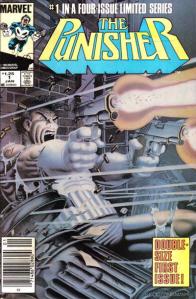
But Mike & I hit it off. We’ve been good friends ever since, though, since we live on opposite sides of the country we don’t see each other much. We stay in touch, though. I’d like to have done a lot more work with him, but that’s comics. I’m glad for as much as we did. He’s semi-retired now but I’d work with him on anything (cover below by Zeck and Beatty).
 

grantzeck


Gil Kane: Let me start by saying I grew up idolizing Gil Kane. Everything about his work appealed to me from jump. He was one of the first artists whose name I knew & the first whose work I collected. His famous Alter Ego interview really started me thinking about comics aesthetically, really for the first time. His Name Is… Savage was a huge influence on my approach to The Punisher. When I became friends with Howard Chaykin, it fascinated me that he had been Gil’s assistant & knew him well. But I never met him. Several times Al Milgrom asked me to do stories specifically for Gil to draw, but they always ended up being drawn by someone else. At one point, when I first moved to Los Angeles, I discovered I lived half a block from Gil’s apartment. Several times when I walked past I thought about ringing his doorbell & introducing myself, but I just couldn’t picture how to pull that off without seeming like a stalker. I know I’m not fond of people ringing my doorbell & introducing themselves.


By ’93 it turned out he & I shared a lawyer, Harris Miller, in the days when comics sold well enough that talent could afford a lawyer. Harris put together a deal with Malibu Comics for a creator-owned/creator-controlled (supposedly; it didn’t work out that way) line, Bravura Comics, & Harris, knowing my fondness for Gil’s work, suggested we do a superhero comic together. So I finally met Gil Kane. He was reluctant, at first, until he realized I was not only very conversant with his art but with his commentary. That’s when I stopped being just another pretty face as far as he was concerned. And we very quickly became very good friends. After that we spoke at least once a week for the rest of his life. Again, I’d have liked to have worked with him a lot more, but it was an era where it was very hard to sell anything, when the market was spasming through severe contractions. I still got a lot of stuff I love out of it. He was a fabulous font of behind the scenes stories throughout comics history, & I learned tons from him. I wish I’d kept records of all the stories he told me, but Howard has assured me he did, so maybe there’s a book on the horizon someday. But Gil was wonderful; he was like getting a second father.


Greg LaRocque: I don’t know Greg at all. I never met him that I remember. He’s a guy who ended up drawing a lot of the stories I wrote for Marvel in the early ‘80s, but I almost never knew who’d be drawing stories when I wrote them. It almost never worked that way if you weren’t on a regular book, &, as above, often when you were told someone would be drawing a story someone else ended up drawing it. It was out of my control. The only times I specifically remember being told an artist would be drawing a story & they drew it were two Shroud stories I wrote for Steve Ditko (another dream come true) & a 4 page Moon Knight story for Kevin Nowlan to draw. Other than that… it could’ve been Greg, it could’ve been Sal Buscema, it could’ve been any artist off the street they wanted to try out. Most of the artists I wrote for I never met. Most of the artists I met I never wrote for.


Warren Ellis: I don’t quite remember how I met Warren. I know it was online, probably through Compuserve, which was a big comics community gathering place in the ‘90s, but however it happened one of us dropped an email to the other & we just got along. Warren, of course, was Mr. Online in the ‘90s & a decent chunk of C21D1. I don’t think any comics talent has ever more effectively mobilized the Internet to his advantage, & he did a huge service to comics doing it. He doesn’t get anywhere near enough credit for it.  It has become popular in a lot of circles to crab about him, but Warren’s such a brilliant writer. What appealed to me a lot about his work was how disinterested he was, still is, in creating traditional comics, even while he gleefully & often cold-bloodedly milks comics traditions. Around ’96, we tried to get a line of crime comics off the ground, it was something both of us were very interested in though we had somewhat different approaches, which was fine. The idea was both of us would do two books each. Again, it was during the big contraction, no one wanted to take a risk on crime comics. I only met him in person once, at a San Diego Con, but we stayed in pretty close touch for a long time. Not so much anymore, but we still talk now & then. I still look forward to whatever he produces. He’s one of the very few people whose  work I’ll go out of my way for. He puts on a good show of being a surly bastard, but he’s quite a lovely, generous man. He’ll threaten to have me killed now for saying that.


Howard Chaykin: I met Howard in ’73, I think it was, I believe at a convention in Toronto. He’d recently broken pro with things like Fafhrd & The Grey Mouser & Ironwolf, & was, I thought, the most interesting talent among a large crop flooding in at that time. I was very young, much too ambitious & naïve enough to think all I really needed was big dreams so I approached him out of the blue with the idea of adapting Dashiell Hammett stories into comics. Howard was very enthusiastic about that, had a notion of doing them in the “illustrated story” style pioneered by EC in their dying days, but, of course, I was never able to get permission from the Hammett estate so it was a DOA notion. But he was very friendly, & went on with his career. To his credit, I didn’t see him again for at least a couple of years but when I did he remembered me, & I think the next time I saw him after that was at San Diego in 1978, shortly after I’d made my first Marvel sale but before I moved to NYC, & he treated me like we’d been good pals all our lives. Once I moved to NYC later that year, we started going out for lunch fairly regularly. I will never say a bad word about Howard. He’s great, very quirky sense of humor, & a much more serious guy than he often comes off. No idea, really, why we got along, though I vaguely recall him saying something smart-assed to me & I smart-assed him back & he liked that, but that may be self-aggrandization substituting for memory. I do believe he’s arguably the most underrated influence on comics in the last 35 years; he blazed a LOT of trails. I certainly owe him a lot professionally. First Comics kept me alive for years, & it was Howard’s American Flagg! that really established them; losing him later was a loss, both in public relations & creatively, the company never recovered from. His Black Kiss at Vortex Comics led directly to Badlands, & Badlands became my entry to Dark Horse. There were other things in my career that sort of spun off from Howard’s; how things ended up for me would’ve been a lot different had he not been there. I don’t regret much but one of my professional regrets was that I couldn’t do better with American Flagg! when it descended to me, & while we’re still friendly I regret we haven’t kept in very close touch over the last couple decades, but it was a lot easier when we lived in Manhattan & Los Angeles at the same times. When he’s your friend he’s a great friend, & a challenge to keep up with intellectually. VERY smart guy. From my perspective, Howard’s work deserves all the praise in the world. What I’d really love to see is someone with money giving him carte blanche to produce whatever he wants instead of forcing him to tie into existing stuff the way he has in recent times. Pretty sure he still harbors ideas that can knock our socks off.


Archie Goodwin: Archie was great. I was never all that close to Archie – we didn’t hang out after hours or anything like that – but he was another generous guy, always very happy to let me hang around the Epic offices & kibitz. Had a series I was going to do for Epic but I couldn’t get an artist for it. I knew him a little but started working with him when he decided to introduce various columns into Epic magazine. Someone, I’ve no idea who, suggested me for a column on games. I was woefully ill-equipped & uninspired for it, but, as was frequently the case in those days, I did it because I needed the money. I haven’t read those columns in years but I’m sure they’re mostly gibberish. But I got along with Archie fine. Archie was very funny, very friendly. I wish I could say I was an exception but there were very few people Archie didn’t get along with. Of course I was familiar with his work, from the Warren magazines & his ‘70s DC work, especially Manhunter & the war books. Really, anyone who wants to write comics should study his work; it’s right up there alongside Harvey Kurtzman’s for mastery & precision. I wish my work was half as good as Archie’s. Again, he always liked me & I’ve no idea why but when he went over to DC in the ‘90s he started courting me to write for his books. I’ll say one thing about Archie: I only saw him get mad once. Know how in cartoons a character will get really angry & the sky will suddenly fill with thick black thunderclouds & lightning flashes all around as big booms roar? That’s what it was like. It made you very eager to make sure it was never you he was mad at. In that regard he might have been the single most terrifying person I’ve ever met. Thankfully I never experienced it directly.


Al Milgrom: Al kept me going in the early years. He needed someone who could fill in on any book. I wasn’t the only one but he ended up using me a lot. Again, we didn’t hang out outside the office. Al had a very down-to-earth workingman’s view of the comics process, & I think working for him was very instrumental in me getting it through my head what almost no fan ever wants to believe: corporate comics are about getting the work done. He wasn’t against creativity by any means – he encouraged it where possible – but the job was the job first & a creative outlet where possible. I ended up doing peculiar & interesting things due to him. The Omega thing in The Defenders; I was given that because regular writer Ed Hannigan didn’t want to touch it with a ten foot pole. I’d already done a passable Defenders fill-in that ended up being published years & years later so Al might’ve had more confidence in me than I deserved, or I might’ve just been more disposable. Doesn’t really matter. Marvel had lost the Tarzan license, leaving the last issue, already written by Bill Mantlo & drawn by Sal Buscema, unpublished; Al was told to use it, & had me change it into an issue of Battlestar Galactica that I managed to prod into two issues, the other drawn by then regular artist Walt Simonson, the only time I worked with him. (I have a page from that story framed on my wall.) He brought me in to write a Hulk story for a guy named Joe Barney, a really good artist who worked for Continuity who could’ve been a major player had he done more, to draw for an early issue of Marvel Fanfare. Despite my personal disinterest in the Hulk, that ended up being one of my favorite stories. I have to say that while Al was always very encouraging, he really encouraged me by continuing to give me work. Eventually Marvel weeded out the fill-in issue concept (I used to joke Jim Shooter realized I was writing too many of them) & expanded the editorial staff so Al had far fewer books, all with pretty stable teams, so that professional relationship tapered off, but I’ll always view Al very fondly & I wish him nothing but good. He was the editor who used me when I really needed it.


    Billy: Speaking of the Punisher/Mike Zeck time period, and specifically the angle of the mob and really no established characters save the Kingpin and Jigsaw being in the book. Can you speak of that and the idea of the “Trust?”
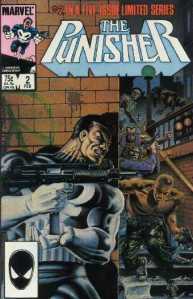
 

grantzeckbeatty


Steven: That all came from my original concept of The Punisher (image above is issue #2 from the 1986 limited series- cover by Zeck and Beatty), from the ’76 pitch. The Punisher is a “real world” character, he just doesn’t fit well into the Marvel Universe. Mike agreed with me, that was one of the points we synced on when we began talking about the character. When it comes down to it, he’s an ordinary guy with a few exceptional skills, he’s not a superhero. So we wanted in the mini to strip him of his corny accoutrements as much as possible. No more war wagon, no more rubber bullets. We felt the reader should feel The Punisher plays for keeps – if he isn’t playing for keeps, he’s just a joke, & the character only works if you don’t perceive him as a joke. (That was the last bit in Return To Big Nothing: “They laugh at the law. But they don’t laugh at me.” At least not for long.) We felt it upped the ante on him if he didn’t have lots of resources; it made him have to be more resourceful. The Trust was a matter of contrast. You see The Punisher going around assassinating figures he tags as detrimental to the workings of society, if you’re in one of those groups that wants to reorganize society to your own preferences & you’re not averse to a little .45 caliber surgery to achieve your ends, you’re likely to start thinking The Punisher’s on your wavelength. Thing is, though, he isn’t. So I introduced The Trust to demonstrate that. Ultimately all organizations are, for good or bad, pursuing political agendas. The Punisher isn’t. He’s fighting a war, & he’s not someone who’s interested in explaining himself or asking permission. He’s not interested in power. He’s not going to take someone’s orders on who to kill or to spare. The way The Punisher stays alive is to trust no one but himself. When he finds corruption he’s going to cut it out, if possible. Anyone else is subject to corruption; anyone else won’t see the world the way he does, they’re just interpreting it, considerably upping the chances they’re getting it wrong. The Trust, in fact, views him as little more than a useful tool to destabilize something they believe they can turn to their advantage. So they were there mainly to reinforce the idea of The Punisher as a solo act, not subject to what would theoretically be very attractive seduction, especially when they can provide him with absolutely everything he’d ever need to prosecute his “war”… except autonomy.


Of course, the instant Marvel “takes back” The Punisher they give him back the War Wagon, and give him a support team…


Funny bit about The Trust. That name was a last minute replacement. They were originally The Order, a bald-faced name to firmly establish what they were all about. Right before I handed in the script, news reports came out about the Feds raiding the… was it Arkansas?… compound of a violent neo-Nazis white supremacist group called… The Order. So I thought it best not to use the name.


As for the Kingpin & Jigsaw. In the prison story, we wanted him to face a character he had an established history with. Problem was… there wasn’t anyone but Jigsaw. Neither Mike nor I had any love for Jigsaw but he was all there was. Once he got out of prison, we couldn’t really ignore the Kingpin, since he was the Marvel Universe epitome of everything he was against, & we had to pay at least lip service to the Greater Marvel World. So, as with the “origin story” in the first issue, we got past that as quickly as possible. Made for a good bit, I thought.


    Billy: You were also a part of Marvel’s first limited series, Contest of Champions! How did that come to pass?


grantcoc


Steven: Marvel had decided to do specials that tied in with the 1980 Olympics, a couple of giant format books ala Superman Vs. Spider-Man. The first was for a Hulk/Spider-Man story for the Winter Olympics. Bill Mantlo was the main writer on that but he had so much work he tapped me to co-write it with him. Al may have been behind that too, I forget. The Summer Olympics book was to be a “competition” between all sorts of international Marvel heroes. Bill was tapped to write that too, & again he tapped me, along with Mark Gruenwald, to help him with it. One problem he faced was that the international hero base in Marvel was not that broad. He needed a bunch of new characters created. I came up with the Frenchman Le Peregrine & the Aussie Talisman. I know Mark’s girlfriend came up with Sabra, Mark did Shamrock & the Arabian Knight. I forget what other characters there were. We all sat around Bill’s place for a night concocting Defensor because we had no South Americans, but that character’s conquistador motif always made me cringe; I’m not a South America expert but I doubt that’s an aspect of their history they celebrate overmuch. (Comics have always had something of a blind spot for that sort of cultural nuance.) Mark & I concocted a plot for the story, naïvely deciding it would be great to come up with new combinations rather than the really obvious battles that everyone would expect. That elicited a dull thud from Marvel editorial, & Bill replotted the entire thing & dialogued it all himself. So my real contribution to it, aside from input in the very loose structure of the story, was those two characters, plus finding the name for Defensor. I didn’t really have a lot to do with it, nor did Mark. They brought in John Romita Jr. to draw it, that might’ve been his first major job.


Then Moscow sent troops into Afghanistan. In response Jimmy Carter pulled us out of the Summer Olympics in Moscow. Marvel had to bury the book. A couple of years later Marvel finally decided to dip its toe into mini-series. This was something I’d been lobbying for since I started there, as independent companies had been publishing them & I thought the format was the future of comics, not that anybody listened to me. As Marvel Super-Heroes At The 1980 Summer Olympics or whatever it was called was collecting dust in a drawer, pretty sure it was Jim Shooter who decided to split it into three issues & try out the format with what was ultimately titled Contest Of Champions. Not really to anyone’s surprise – if you saw Marvel mail much of it consisted of people just asking for every character to team with every other character, so CoC must’ve been like dying & going to heaven for a lot of people – it was very successful. Marvel kicked open the mini-series floodgates after that, & it changed the subsequent face of the business. Pretty sure CoC’s success also started Jim thinking toward Secret Wars. I’d love to take credit for it all, but I wasn’t much more than a functionary on the project.


And with that response, part one of the interview will end! Look for part two very soon, as we’ll discuss more Marvel, Steven’s work with DC Comics, Dark Horse Comics, and his boyhood idol, Gil Kane!
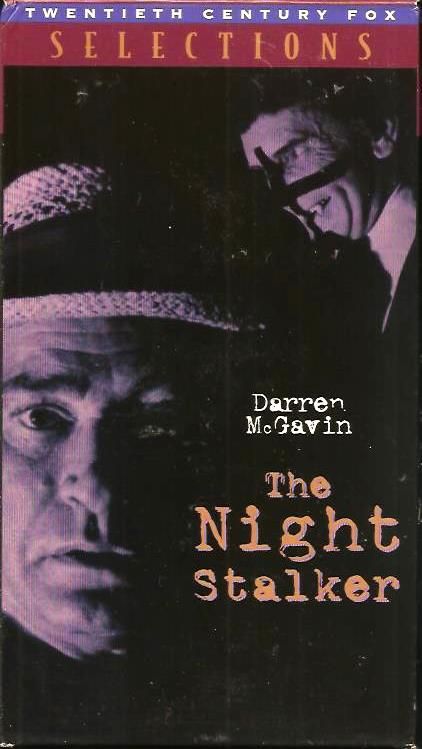
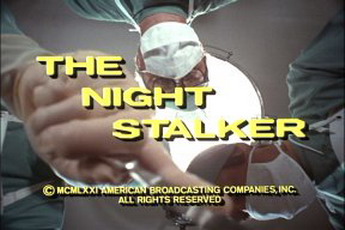


Cinema Sunday: Planet of The Vampires (1965)

PlanetVampires2

Title: Planet of the Vampires

Distributor: American International Pictures

Writers: Mario Bava, Alberto Bevilacqua, Antonio Roman, Callisto Cosulich, Rafael J. Salvia,

Director: Mario Bava

Producer: Fulvio Lucisano

Starring: Barry Sullivan, Norma Bengell, Àngel Aranda, Evi Marandi

Released: September 1965

MPAA: UR


It just recently hit me that I’ve never reviewed a film by legendary Italian horror master, Mario Bava! This man created the horror scene in Italy overnight. His contributions to the genre are undeniable, and he has the catalog to back it up. A quick Google search will net you dozens of films he made, and quite a few you should not only recognize, but have seen. One of these films is Planet of the Vampires.
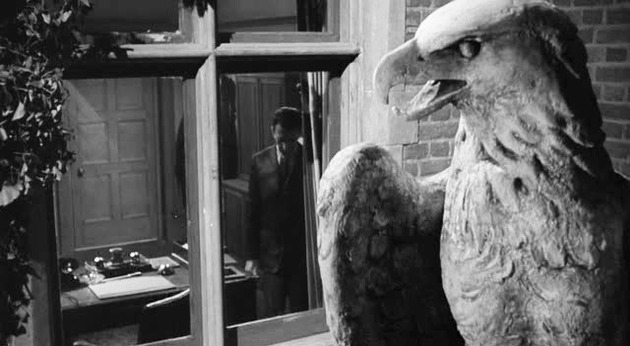
Definitely look up some of his films (a few are on Netflix as of right now, I believe), they don’t have high production values typically, but the atmosphere is pretty cool. Well, that’s enough for now, let’s get to the film…


Planet-of-the-Vampires-title-screen

The movie begins with two spaceships heading to a planet that’s emitting a distress signal. As they communicate with each other, suddenly the view screen goes dark, and communications are lost. The crew has no idea what’s going on, and before they know it, the ship is pulled down to the planet by force. The Captain, Mark Markary (Barry Sullivan), is very concerned because his brother is on the other ship. As the occupants begin to wake up from the crash, they go crazy, and attack each other. The only one that seems to be able to keep his wits about him is the captain. He eventually gets the crew under control, and they’re visibly shaken, especially Sanya (Norma Bengell).


vampires1

The first thing they do is set out to find the other ship and see if they’re alive. The planet seems to be a barren wasteland and nothing but a mysterious fog rolling around seems to be even remotely recognizable. After a quick distress call from the other ship, but the batteries that run the ship are dead, so they have to hot-foot it to the other ship. As they make their way across the rugged terrain, they realize that although it looks rocky, there is also lava in certain spots. Once the reach the other ship, they find two dead crew members outside. A victim of a fight from the same madness, no doubt.


vampires2

As they enter the ship, they find a few more crew members dead from the same affliction or something worse. They do notice that there are three crew members unaccounted for, and that definitely raises an eyebrow. They bury the dead, and then attempt to get into the bridge of the ship. They can’t gain access, and realize they need a cutting torch from their ship. They leave one crew member behind to stand guard (yeah, he’s basically a “red shirt”). When the others return from the ship, he’s gone. They then go inside the ship to search for the missing crew member, and now, the bridge is open. Not only that, there were four bodies they couldn’t bury that they left in there, and they’re gone.


vampires3

Back outside the ship, the one crew member standing guard sees something that makes her cry out, and then weep. The others rush outside, but she’s basically having a nervous breakdown. As they run back to their ship, the dead that were buried rise up from their graves and look like they’ve been to hell and back. The crew decides that tomorrow they’ll begin to try to fix the ship to try to escape this planet. As they sleep, there are two guards posted. They hear noises, but only see illuminated globes floating around. As the Captain heads outside to check on the guards, one of them shrieks, and when the captain and the other guard investigates, they find the guy torn up real bad, and as he’s in his death throes, he insists that the captain of the other ship did this to him.


vampires6

As night goes on, more and more crew members get slaughtered, and eventually, we find out that not only are the dead rising, but that they are possessed by an alien life form that wants nothing more than to get off of this planet. And they do it by any means necessary! The engineer, Wes, believes that he can reignite the batteries, and get the ship going. He’d better, because if he can’t, they might not make it through another night!


vampires4


OK, here are my thoughts:

Along with another film I recently reviewed (It! The Terror from Beyond Space), this one is frequently credited with partially inspiring Ridley Scott’s 1979 classic, Alien. Both of these films definitely gave him some ideas, no doubt. I think the budget was $50 for his movie. I’m not kidding, and if you doubt me, read up on the production of this one, you’ll be blown away by the way this movie looks compared to the budget. Very moody, and atmospheric, and the fog machines coupled with the multicolored lights really make the set look cool. The pulsing sound also reminds me of another classic horror flick. “John Carpenter’s The Thing,” has that ominous pulsating music to it as well, that sounds like the heartbeat of the devil himself!

The actors did a decent job, but nothing Oscar worthy. Sullivan and Bengell are pretty good, and carry most of the scenes. The space ships are a little disappointing, but again, when you look at the budget, you can understand why. The dark corridors of the ship were frightening, but the technology was very sub-par.  Bava certainly knows how to make something out of nothing, sort of like Carpenter did with his first few films (and Hammer, Amicus, AIP, etc.).


vampires5

Grab some popcorn, turn down the lights, and sit down and watch this classic sci-fi/horror flick. Then look up more of Bava’s films from his heyday, you wont be sorry!


Click here for the trailer!