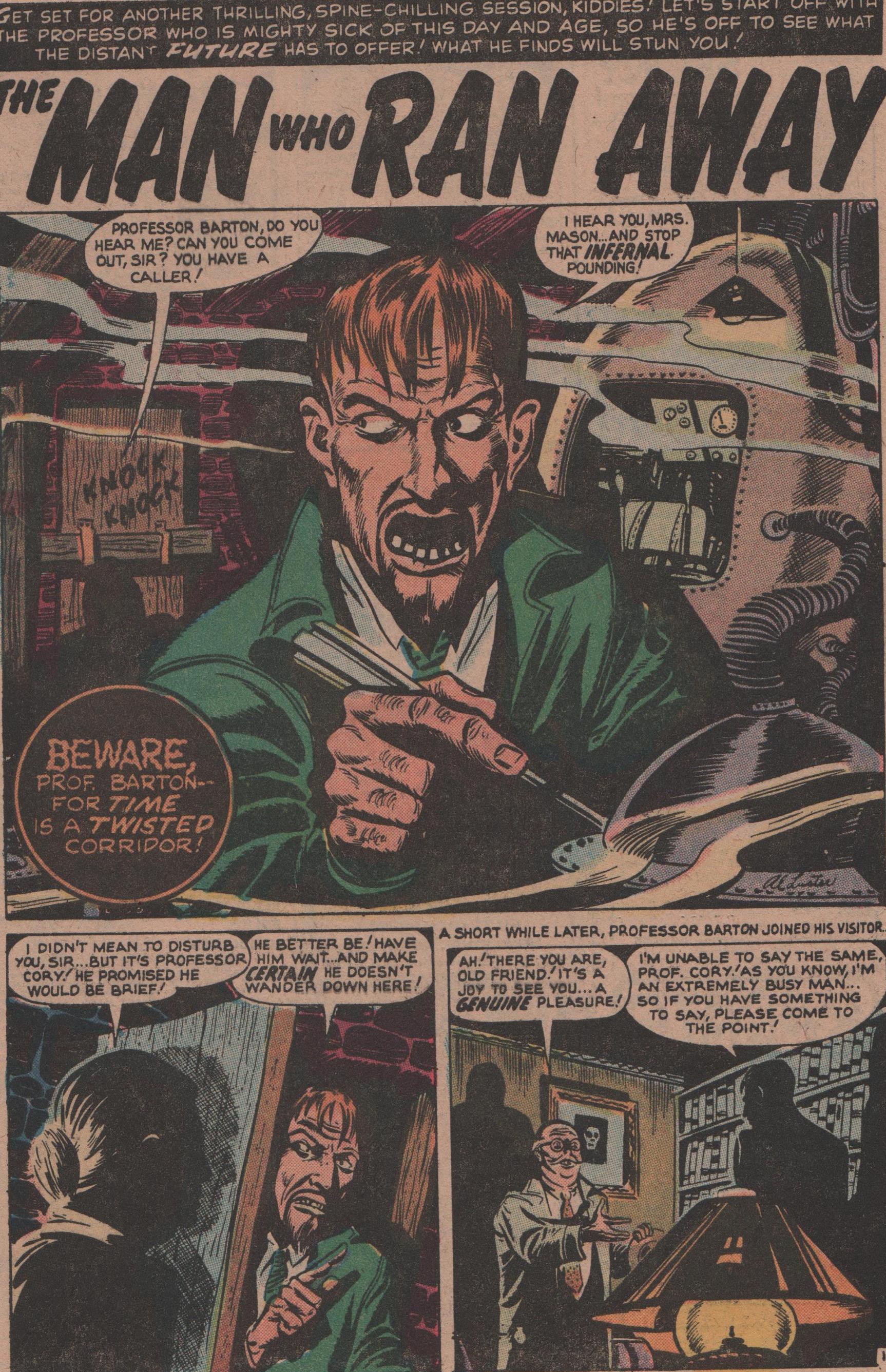
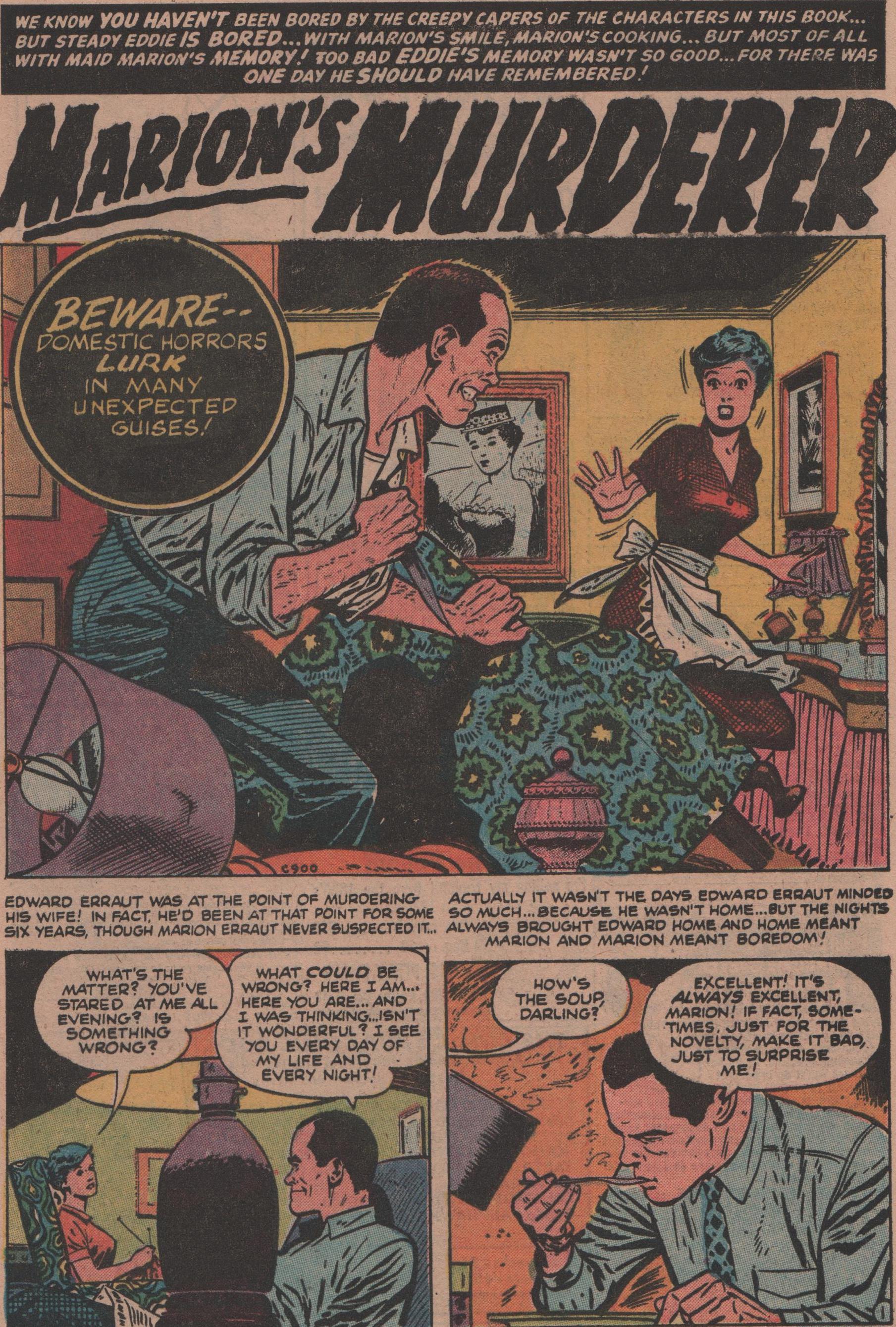
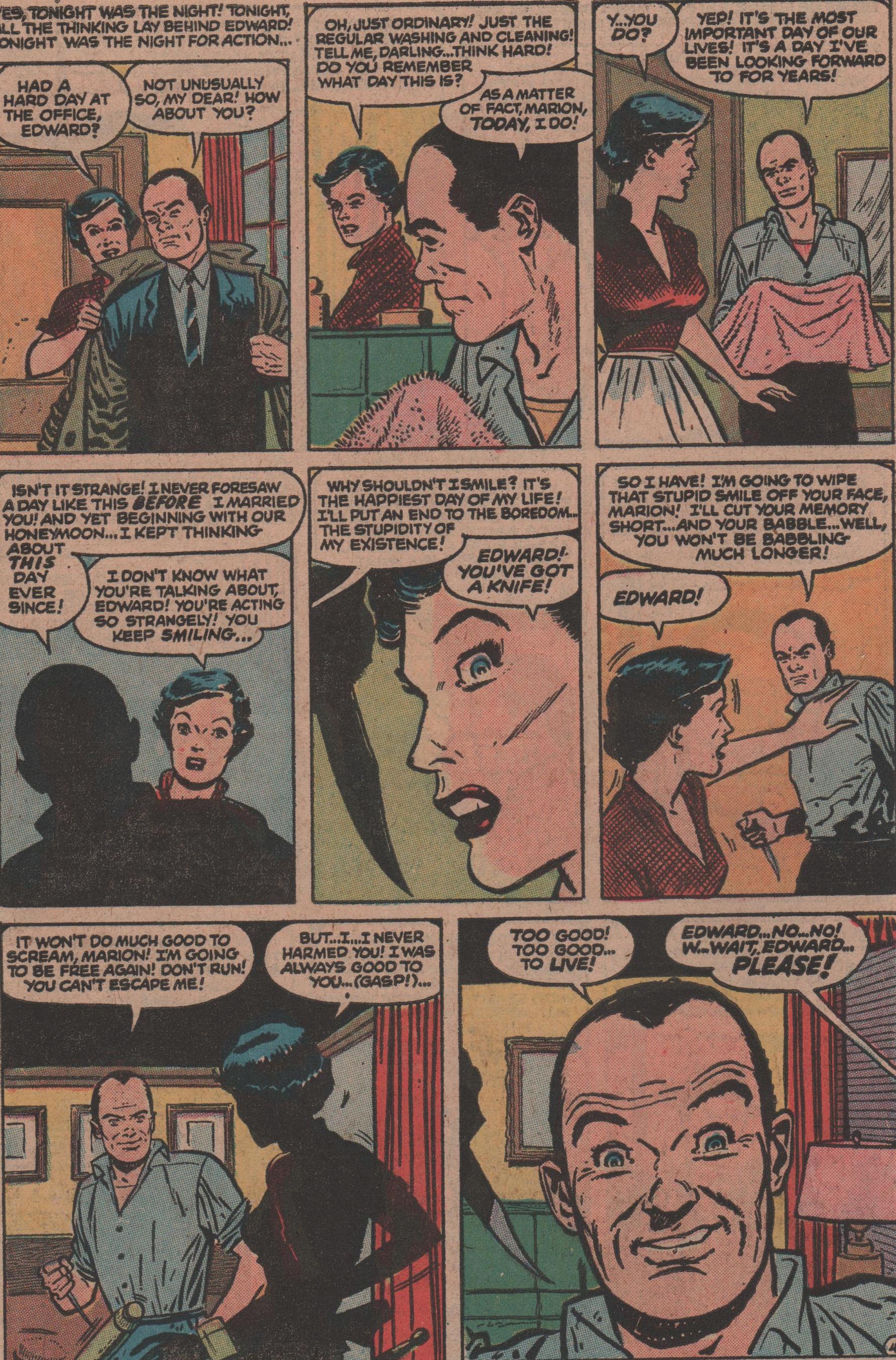
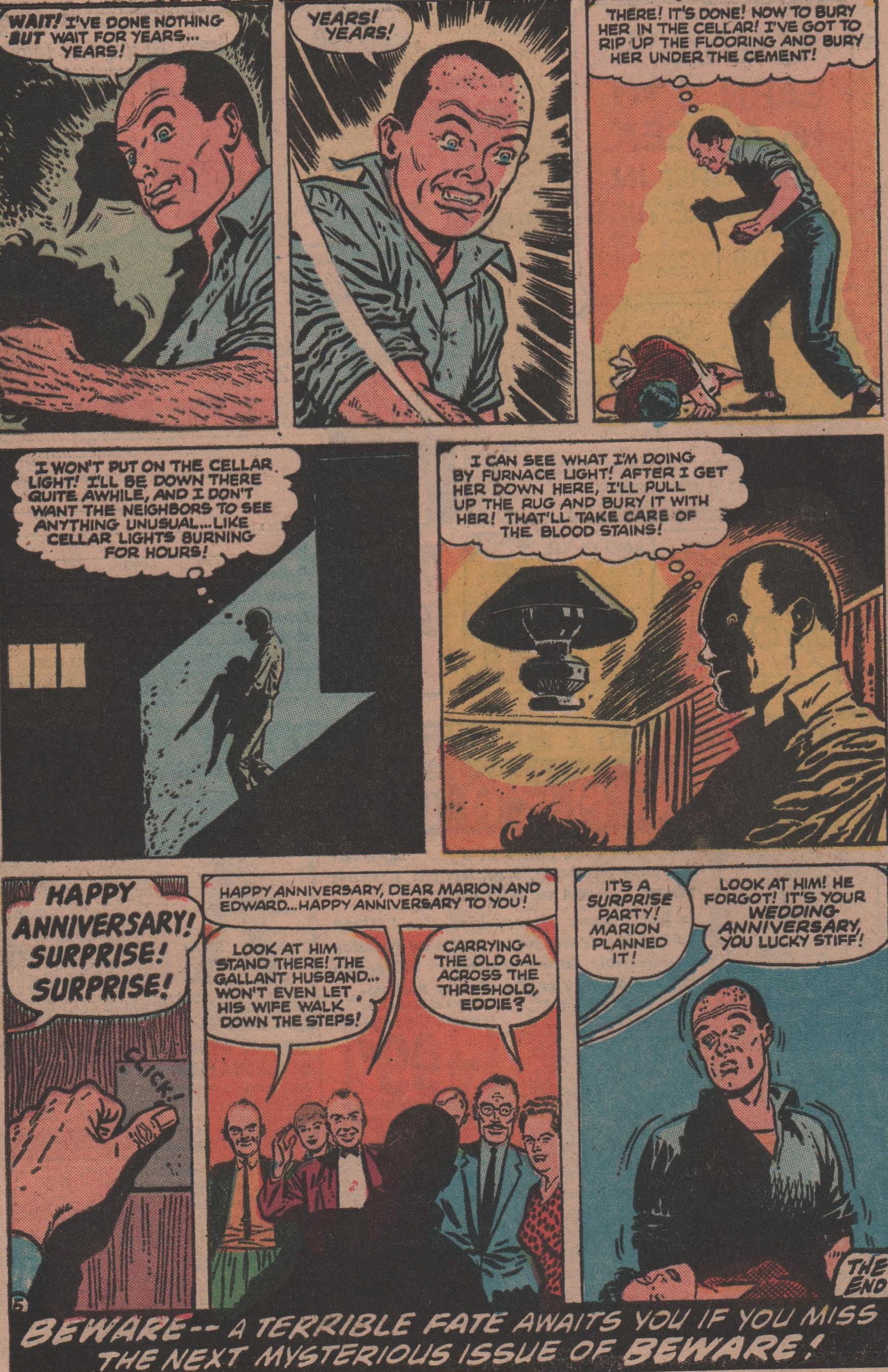
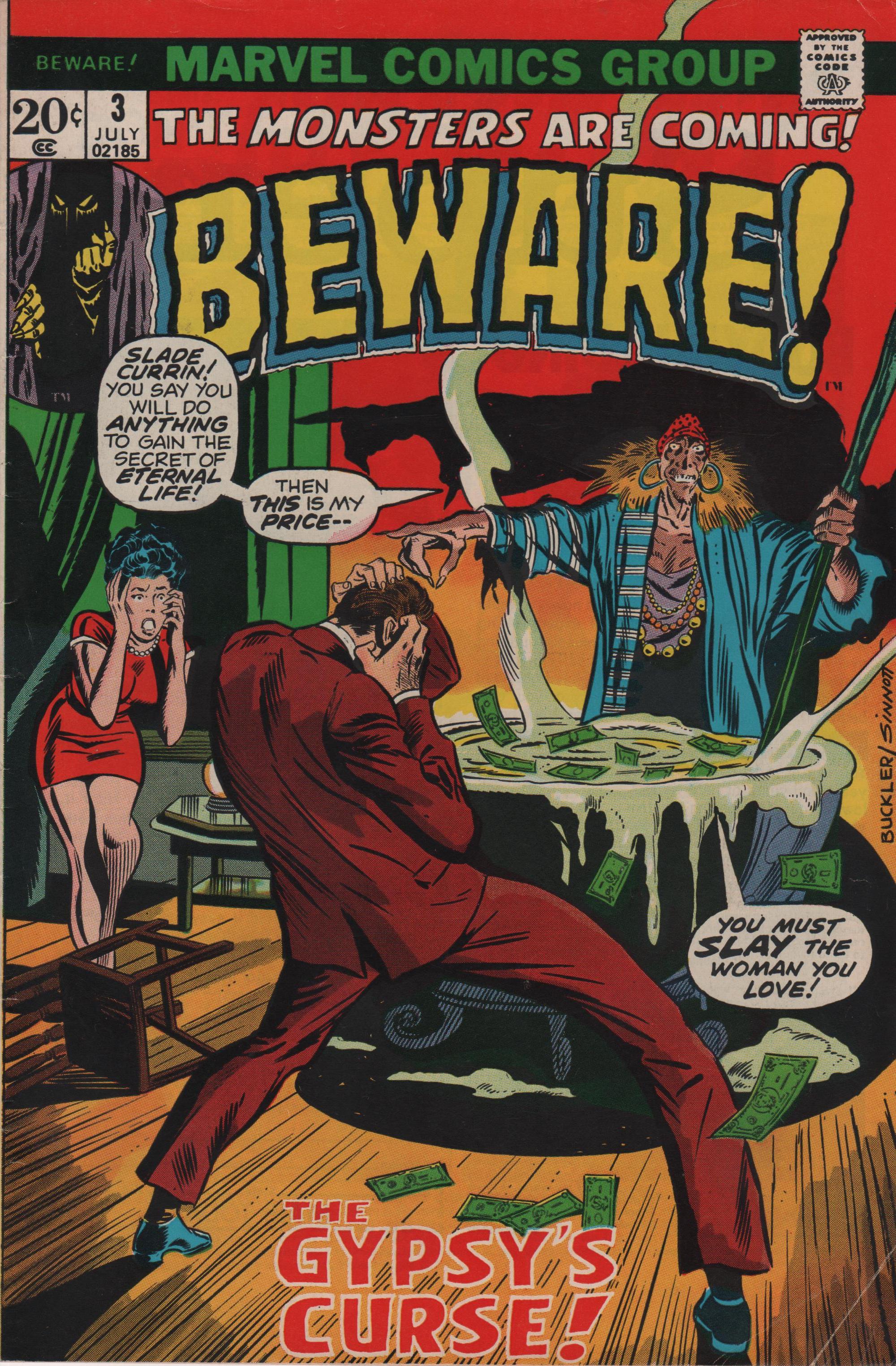
BEWARE! #3, 1973 “The Monsters are Coming”

At a recent con (Boston Comic Con – 2014), I grabbed a few comics at a bargain, and one of them happened to be an issue of the reprint series, Beware! This particular issue reprints some Golden Age material from Atlas Comics (Marvel). Some pre-code stories by greats like George Tuska, Joe Maneely, and Al Luster! The cover by Rich Buckler and Joe Sinnott really sets the tone for the book!

Each story contained within has a different angle, but it doesn’t interrupt the flow from front cover to back. I really enjoy these types of books, and another good one is from Yoe Books (IDW distributing), called “Haunted Horror“. It’s a great reprint series showcasing some of the early horror work from some of the best talent of that period, and quite frankly, of all time. Give it a look if you can spare the time. In the meantime, take a peek at some of the awesome work in this fantastic book!


Image (58)

Image (59)

Image (60)

Image (61)

Image (62)

Image (63)

Image (64)

Image (65)

Super-Villain Team-Up #8, 1976 “Escape!”

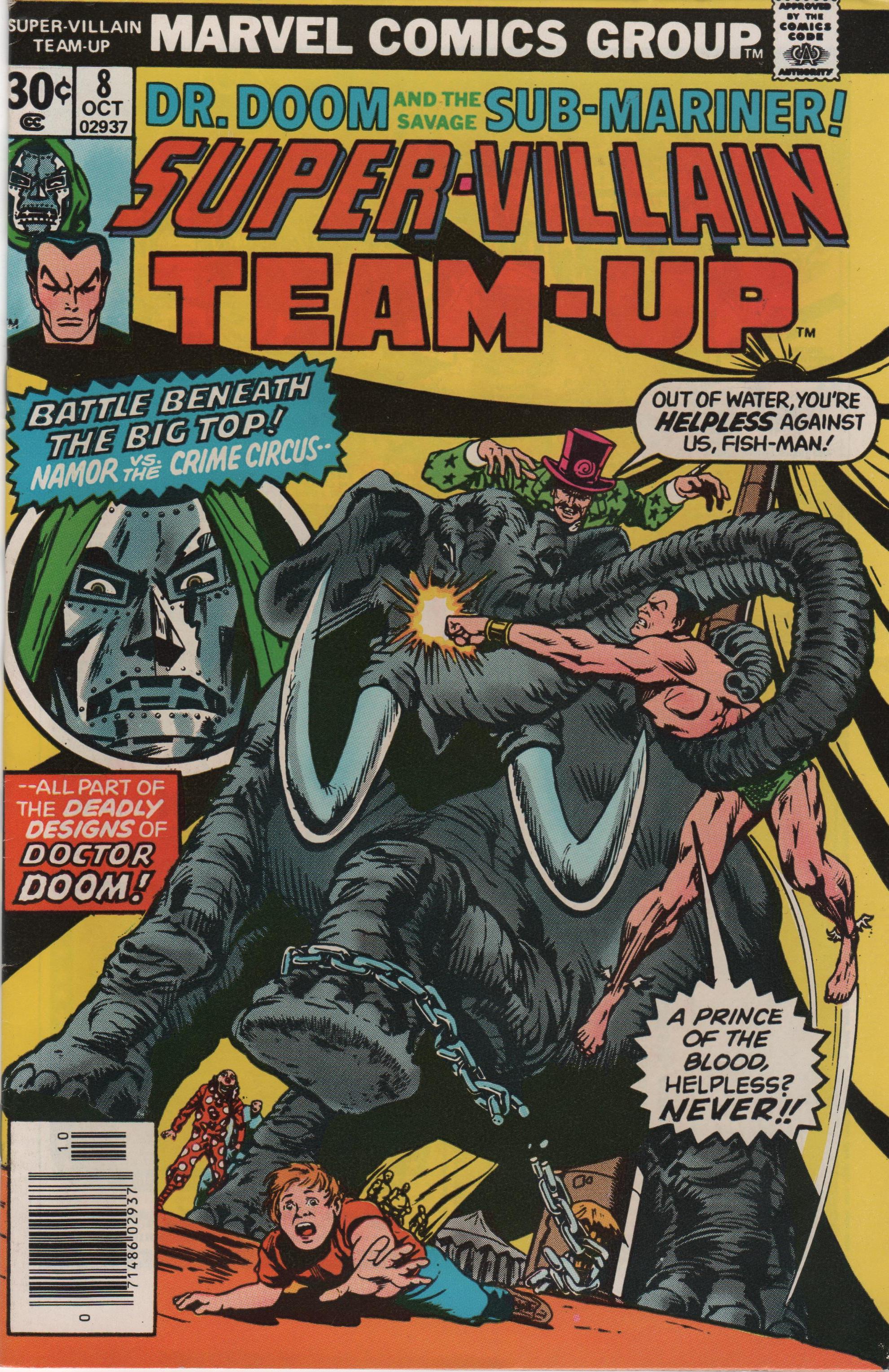
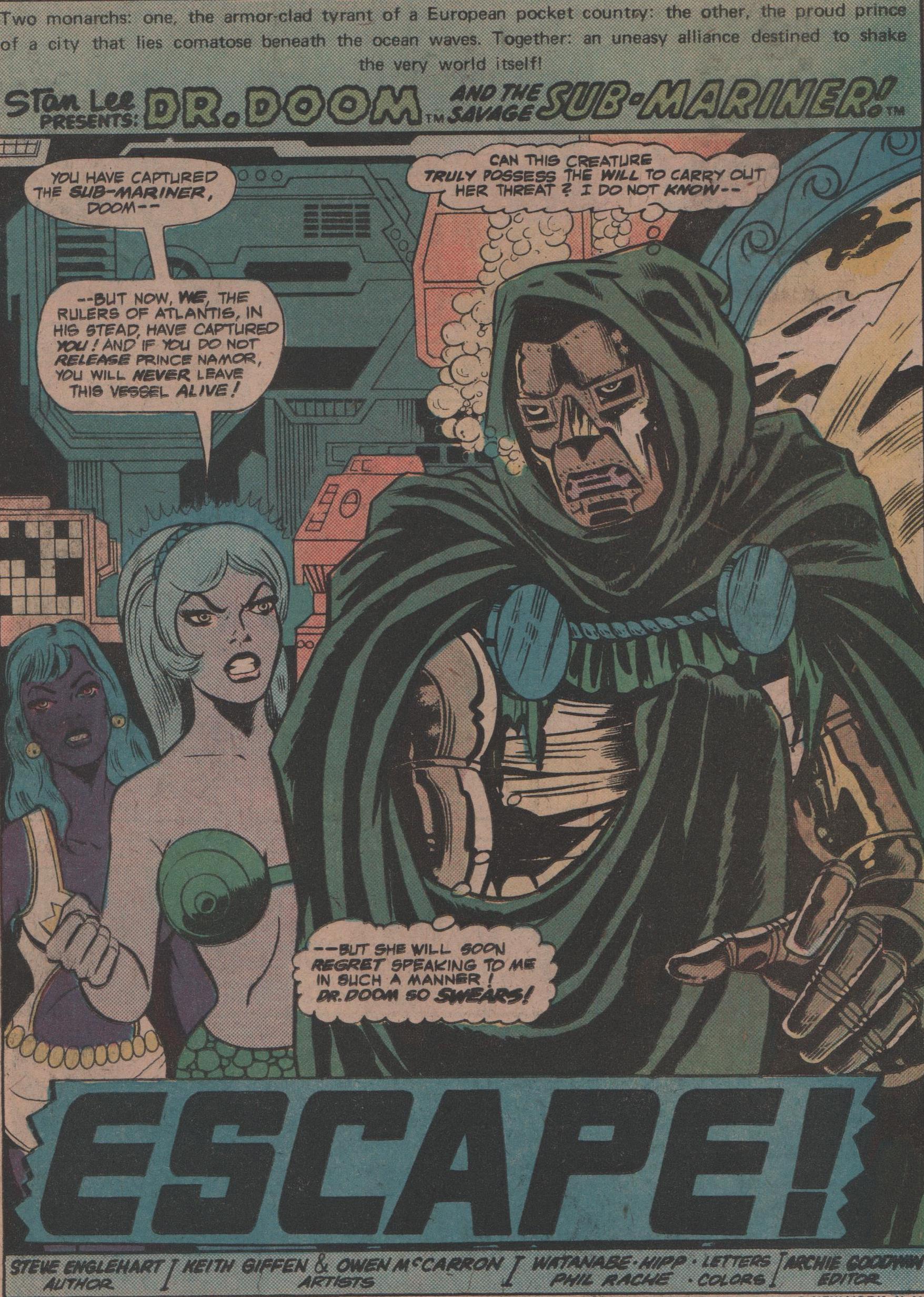
In my first ever purchase of this title, I’ve found that not only do I love it because of its hilarious action, but also that it has Dr. Doom, and who doesn’t love Doom? I mean, he’s the quintessential villain in the Marvel Universe. Everyone must face him at one time or another, even Squirrel Girl and Power Man had  bouts with him! Doom also had another run in a certain anthology style book from Marvel in the 1970’s, and I’ll get to that in a couple of posts or so.

For now though, marvel at the work of Steve Englehart, Keith Giffen, Owen McCarron, Irv Watanabe, and others! You’ll see the quality of work this team did, and it will leave you wanting more! Some brilliant colors in this one as well, and we have Phil Rache to thank for that. Don’t miss my favorite page, where Namor beats up an elephant! Enjoy!


Image (38)

Image (39)

Image (40)

Image (41)

Image (42)

Cinema Sunday: Nightmare (1964)

Nightmare-1964-2

Title: Nightmare

Distributor: Hammer/Universal Studios

Writer: Jimmy Sangster

Director: Freddie Francis

Producer: Jimmy Sangster

Starring: David Knight, Moira Redmond, Jennie Linden, Brenda Bruce

Released: April 19th, 1964

MPAA: UR


Here we are with another Cinema Sunday, and of course, another fantastic movie! This week, we’ll take a look at another one of Hammer Studios psychological thrillers in – Nightmare! This film is much more intense than last week’s offering, but in a slightly different way. You still get a good mystery, but in this film, you also get some vicious murder scenes, as well. The cast was very small, but I think after you’ve seen the film for yourself, you’ll realize it isn’t a bad thing. Okay, let’s disperse with the clouds and get right down to this one!


The film begins with a girl wandering around a sanitarium. She hears a voice calling out to her, and is frightened. The voice calls for help, and then Janet (Jennie Linden), hears the voice tell her that she knows where to find her. Janet then proceeds down a hallway and enters a padded room. Standing in the corner, is a woman, begging for help. The door swiftly slams behind Janet, and the woman laughs insanely. Janet begins to scream, and then we see this is only a dream, and Janet awakens in bed, at her prep school. One of her teachers, Mary Lewis (Brenda Bruce) comes in and settles her down, and she goes back to sleep.


NIGHTMARE1

The next day, Janet is approached by the same teacher from the previous night, and she tells her that the faculty wants Janet to see a doctor. Janet tells her that she’ll refuse any appointment. She also tells her teacher that she wants her guardian, Henry Baxter (David Knight), to come and get her from school. She gets her wish, and John the butler/driver (George A. Cooper), picks her up, along with Mary Lewis, as the school believes Janet could use some guidance on the journey home. Once they reach home, Mrs. Gibbs (Irene Richmond), greets Janet, and she seems elated. They enter the home, and Mary is going to stay the evening, and go back to the school tomorrow. Janet is surprised to see a woman, Grace Maddox (Moira Redmond), in the house. Mrs. Gibbs tells Janet that her guardian, Henry, thought that Janet might like someone to spend time with at the house, instead of being alone.


nightmare2

Janet goes to bed after dinner, and Mary and Grace talk. Mary asks Grace why Henry asked her to stay with Janet, and she tells her that it’s because Henry is worried about her, and she’s a nurse, so he believes she can help out. Grace then heads to bed for the evening, and Mrs. Gibbs and Mary have a talk. Mrs. Gibbs tells Mary that the reason Janet seems mentally imbalanced is because she saw her mother murder her father when she was eleven years old. She had a nervous breakdown after that, and has always worried that she might have inherited some of her mothers wickedness. Mrs. Gibbs tells Mary that even if didn’t inherit any of those traits, that even the persistent thought could drive a person insane. Mary goes to bed, and Mrs. Gibbs is tidying up, when she hears a sound near the library. She’s surprised by Mary, who claims to have come downstairs to get a book.

On her way back to her room, Mary notices that Janet’s bedroom door is open. She investigates, and finds Janet missing. She creeps down the hallway to looks for her, and then she’s surprised by Janet, who silently turns the corner right in front of her. Janet seems like she’s in a daze or perhaps sleep-walking. Mary talks to her, but gets little answers other than the fact that Janet seems to think she either saw someone or dreamed that she saw someone. Mary shows her back to her room, and then goes to sleep, pondering what might be happening. As Janet walks slowly into her room, she notices someone on the bed. It’s her mother (or so she thinks), and there’s a knife sticking out of her chest, and the birthday cake from Janet’s eleventh birthday (the same day her father was killed) on the table. She freaks out, and runs off, but is then stopped by Grace, who slaps her a few times to get her to snap back into reality.


nightmare3

The next morning, Janet has been sedated by the local physician, and he recommends to Henry that she be institutionalized. Henry then checks in on Janet, who, upon seeing him, pulls him in, and kisses him passionately. He pulls back, and then apologizes for not being able to meet her at school. Janet asks if the reason is his wife, and he tells her that she (his wife) doesn’t like being alone. He makes his apologies, and tells Janet he must travel to London, and then leaves. As day turns into night, Janet’s mind begins to unravel. She thinks she sees someone trying to open her bedroom door, so she calls out and asks who’s there. She gets no answer, and then gets up to investigate. She looks down the hallway but sees no one at first, but after a moment, she does witness a shadow down at the end of the hall. She walks down slowly, and keeps following where the shadow leads. Eventually, she comes upon a bedroom, and she hears the voices of herself and Mrs. Gibbs from the day she saw her father killed. She runs off to her bedroom, and sees the corpse of her father, lying in her bed. She goes berserk, and falls down a staircase, and George and Grace find her there unconscious.


Nightmare4

Another day, and Grace is feeding Janet her pills, supposedly from the doctor. Grace asks her what happened, and Janet tells her that some woman is plaguing her dreams. Grace tells her to get some sleep, because it’s her birthday tomorrow. A new day comes, and Janet finds herself being confused after the last few night’s activities. She then heads out to see who is around, but only finds a strange woman in a hospital gown creeping around the house. The woman vaguely resembles her mother, but we know that she’s locked up in a sanitarium, right? Janet then returns to her room, looking completely unhinged. She then smashes her mirror, and uses a shard to slit her wrist. Henry, and Grace are speaking with the doctor in the next scene, and wondering what to do about Janet. As Janet comes out from her bedroom to see Henry, she sees the back of a woman, who is introduced to her by Henry, as his wife. As the woman turns around, Janet recognizes her face as the woman who has tortured her. She then snaps mentally, picks up a knife, and brutally stabs Henry’s wife to death!


nightmare5

I’m not going to go any further because I’d have to go into crazy spoiler territory, and because things get slightly convoluted as well! Suffice to say that the killing doesn’t end here, and by the end of the film, there’s more than one person that’s gone off the deep end!

OK here are my thoughts:

This flick is a good one, but definitely inferior to Paranoiac. It is more grisly, and that’s pretty cool, but the twists and suspense aren’t as powerful as the aforementioned film. As I said above, it does also get a bit wacky at the end as well. This being my first viewing might have something to do with that, but I honestly don’t think so. There is another scene towards the end of the film, where Henry and Grace slap each other. It’s quite a shock to see especially for 1964.

The actors/actresses are quite good in the roles that they play. Janet’s character was played by Jennie Linden, and was a late replacement. She did a god job for someone stepping in at the last-minute. David Knight, and Moira Redmond also were very good. Both gave convincing performances. The music score was by Don Banks, and definitely worth noting. He did a good job setting a good tone, and a couple of thunderous interludes when it was right. The set was absolutely gorgeous, and up to the Hammer standard for sure. Check this one out if you haven’t yet, because it’s worth the watch!


Watch the trailer here!

Captain America #203, 1976 “Alamo II”

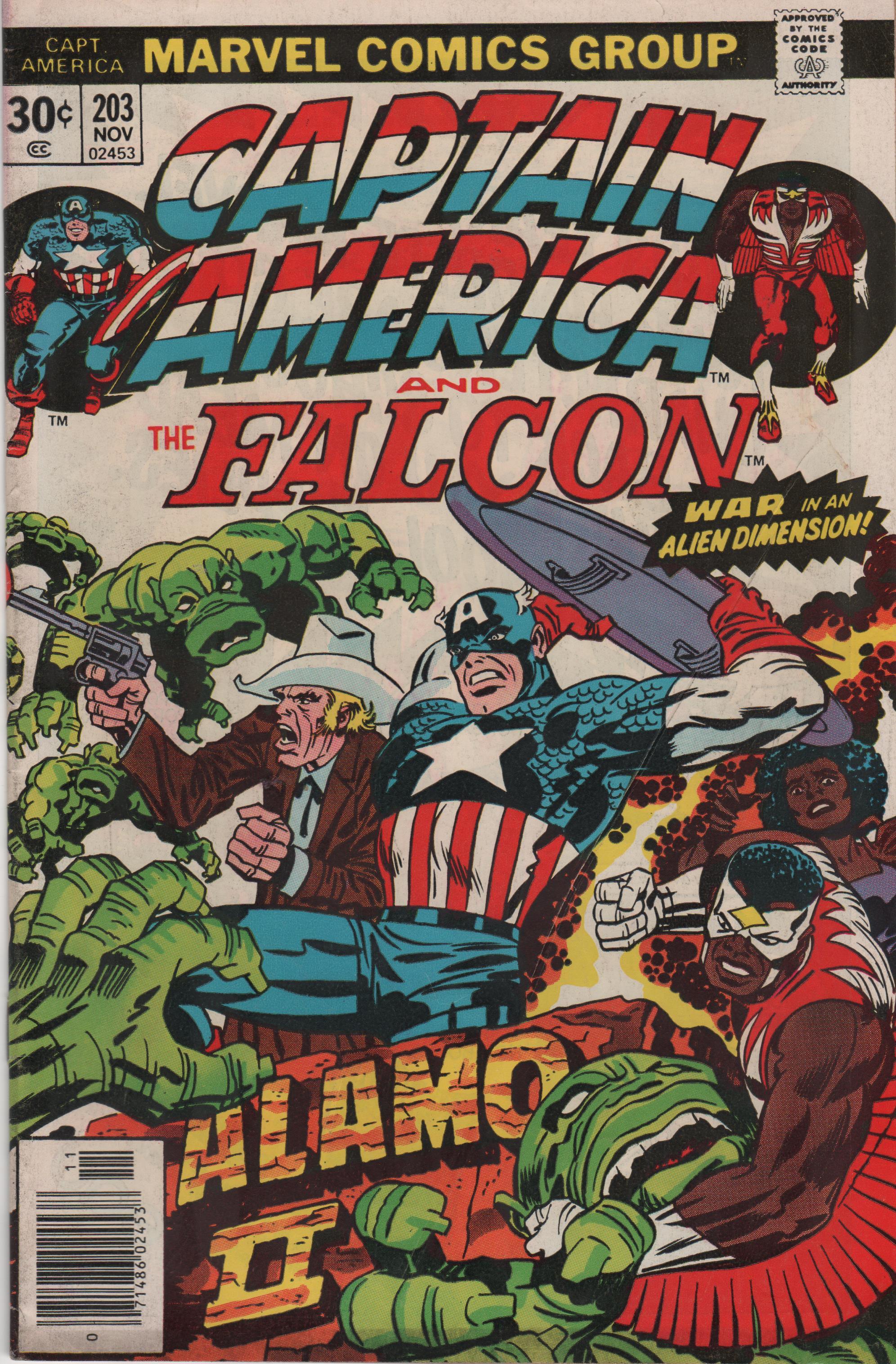
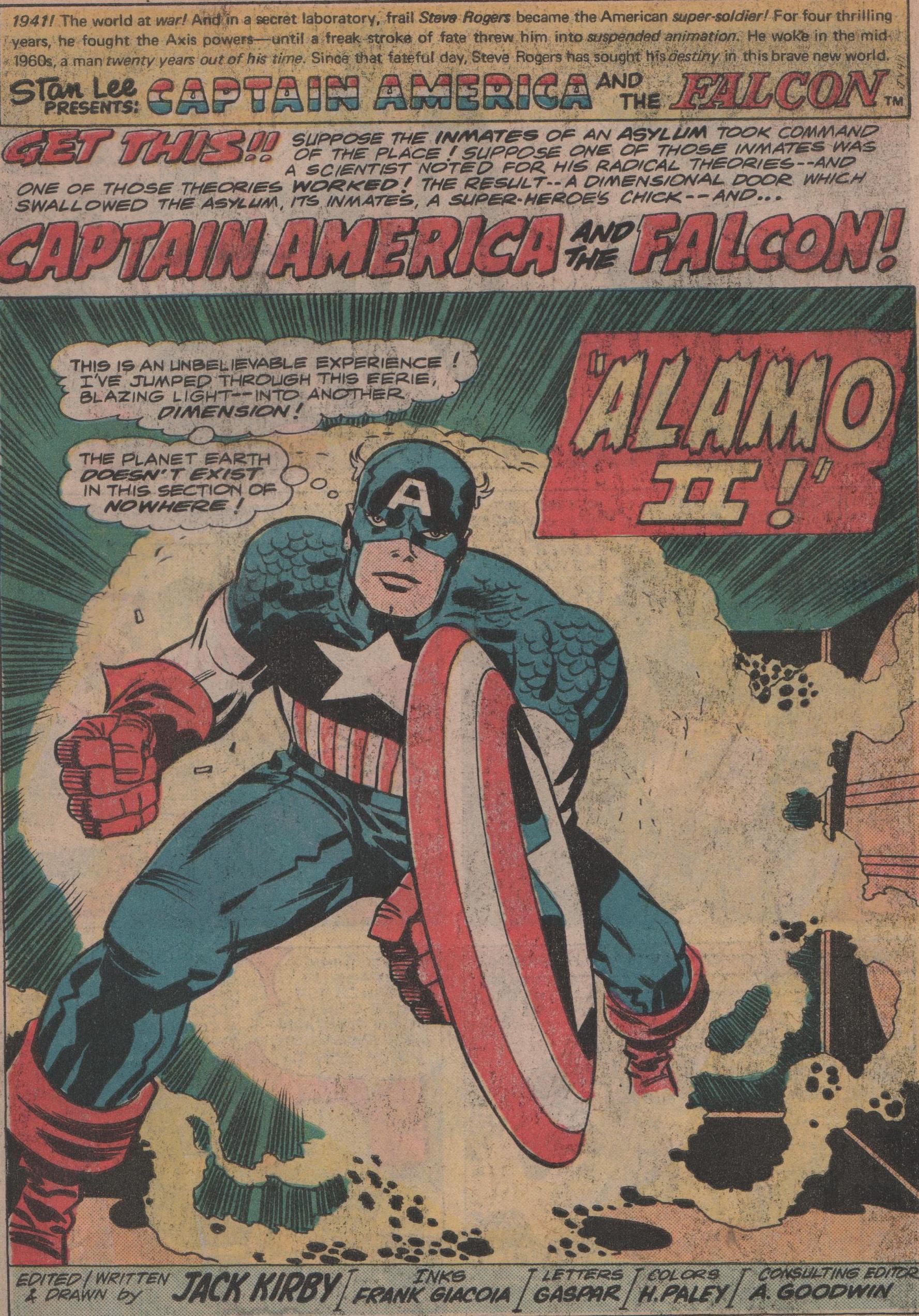
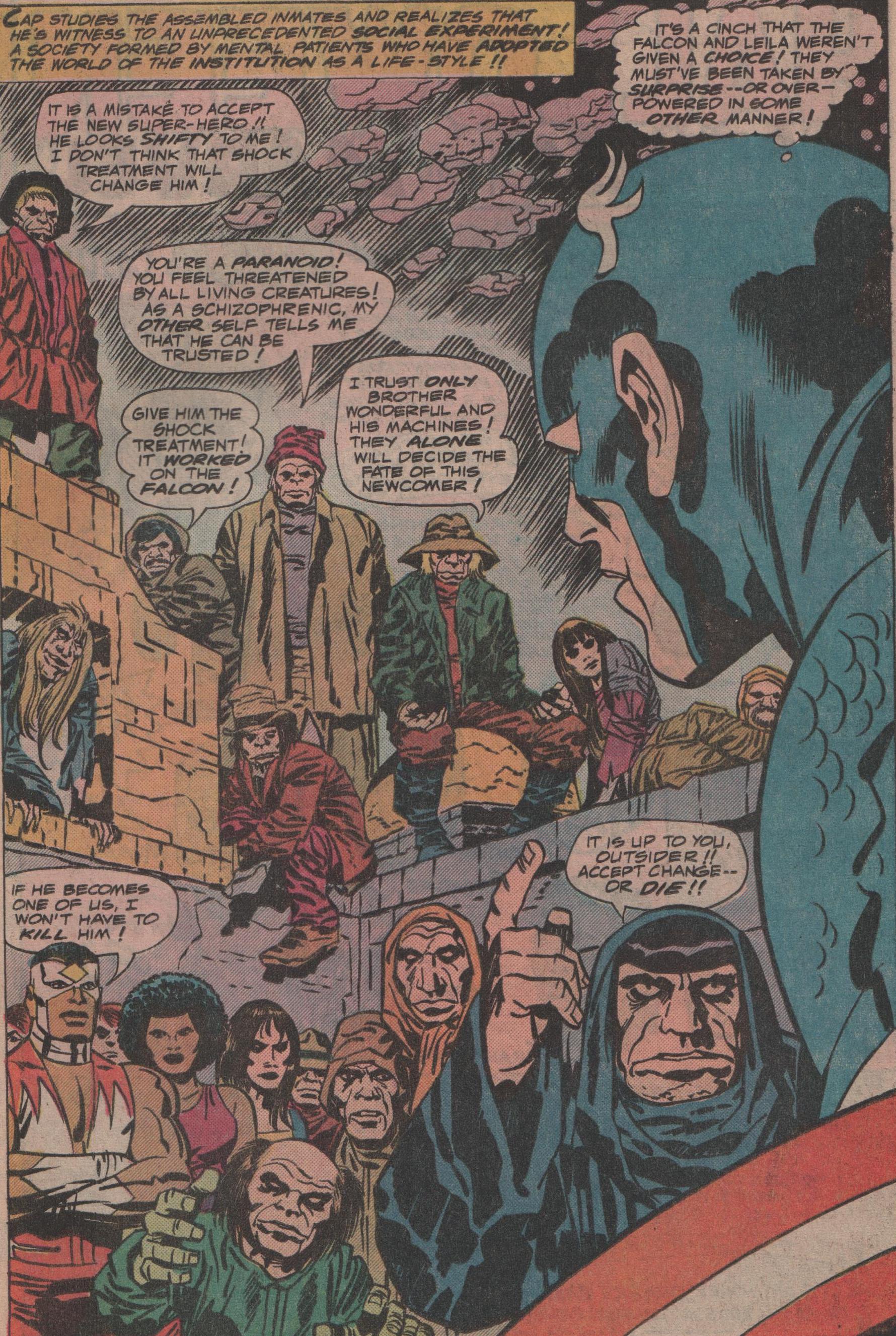
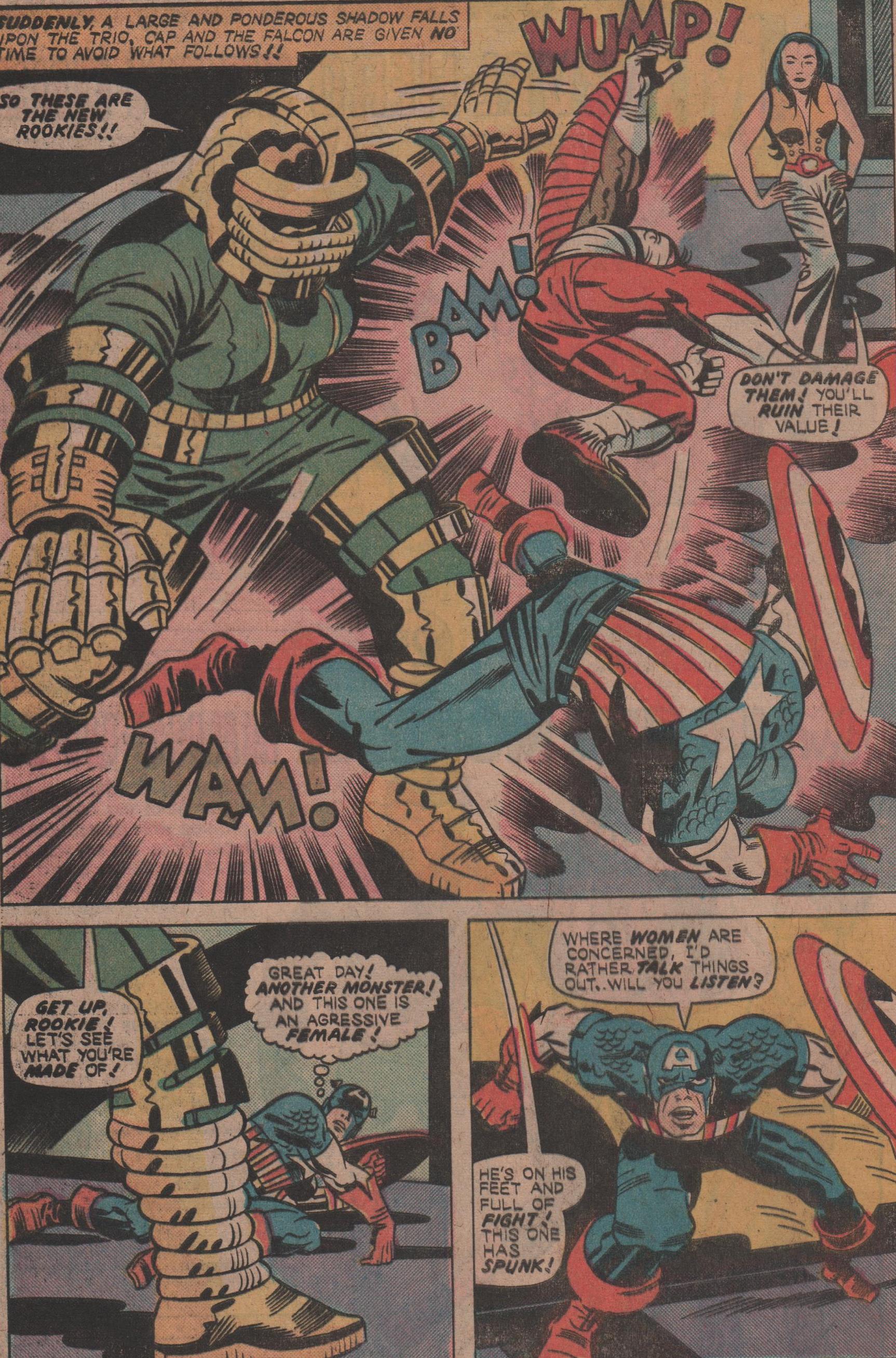
Another day, another post! And another great one from the ‘King’! No matter how many times I see an image of Captain America drawn by Jack Kirby, it still gets me pumped up about the star-spangled Avenger! It’s true, and in this adventure, Cap is searching for Falcon and Leila Taylor. He finds them, but they don’t recognize him. We then get a brawl between Cap and Falcon, and the following pages are some more Kirby magic! One splash page in particular sticks in my head, never to leave! It shows a scene of enthralled people (including Leila and Falcon), some of them sitting on a stone wall. Just the atmosphere alone is incredible!

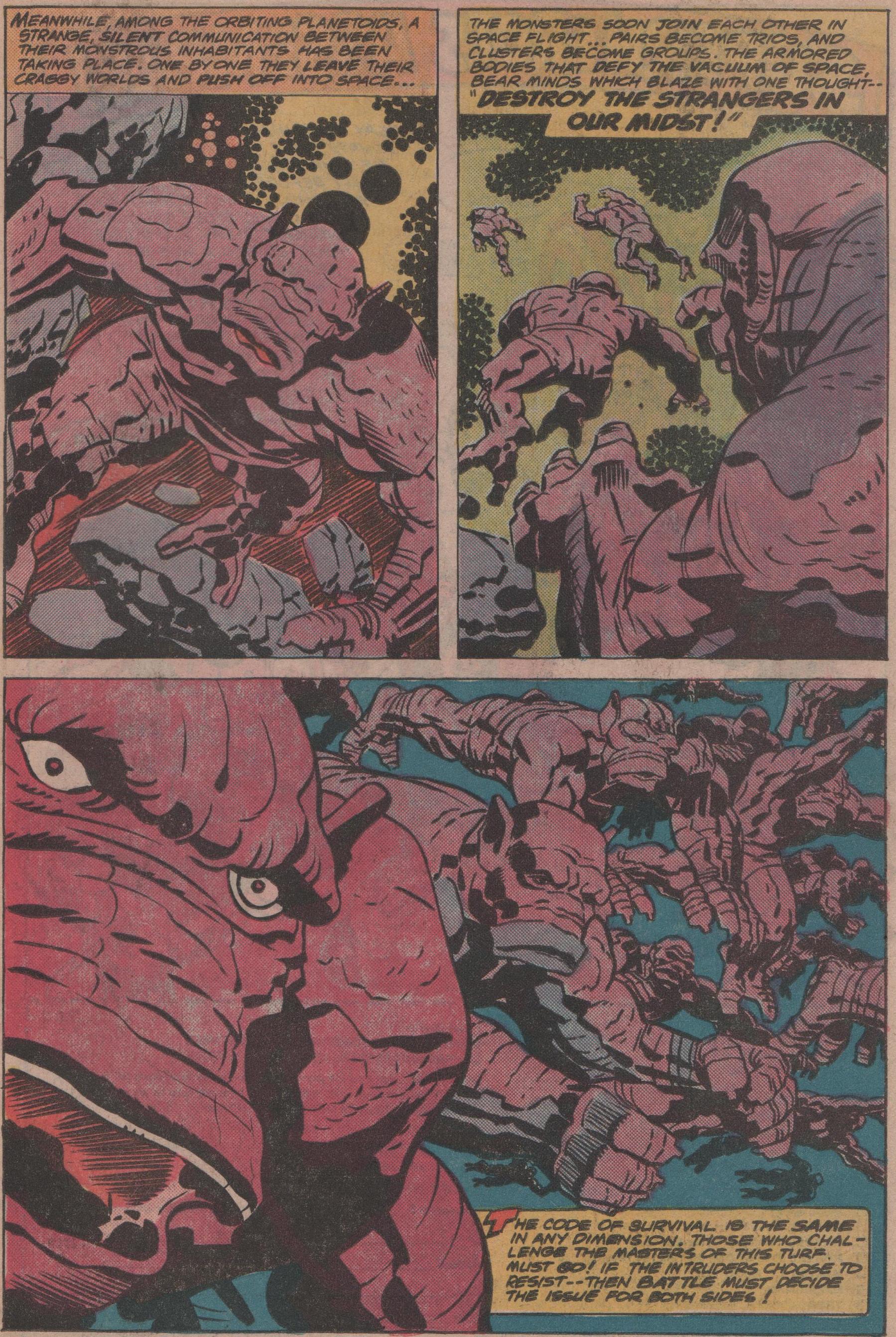
Throw in a cowboy (Texas Jack), a fire-breathing rock monster, and the machinations of the Inquisitor, top it all off with some Kirby crackle,  and you get more awesomeness from Kirby! This second coming for him on this title was quite refreshing, and it seems as though Kirby was really letting his creative freedoms flow right out on to the pages. Just look at these pages/panels, and I doubt you’ll disagree!


Image (33)

Image (32)

Image (34)

Image (35)

Image (36)

Image (37)

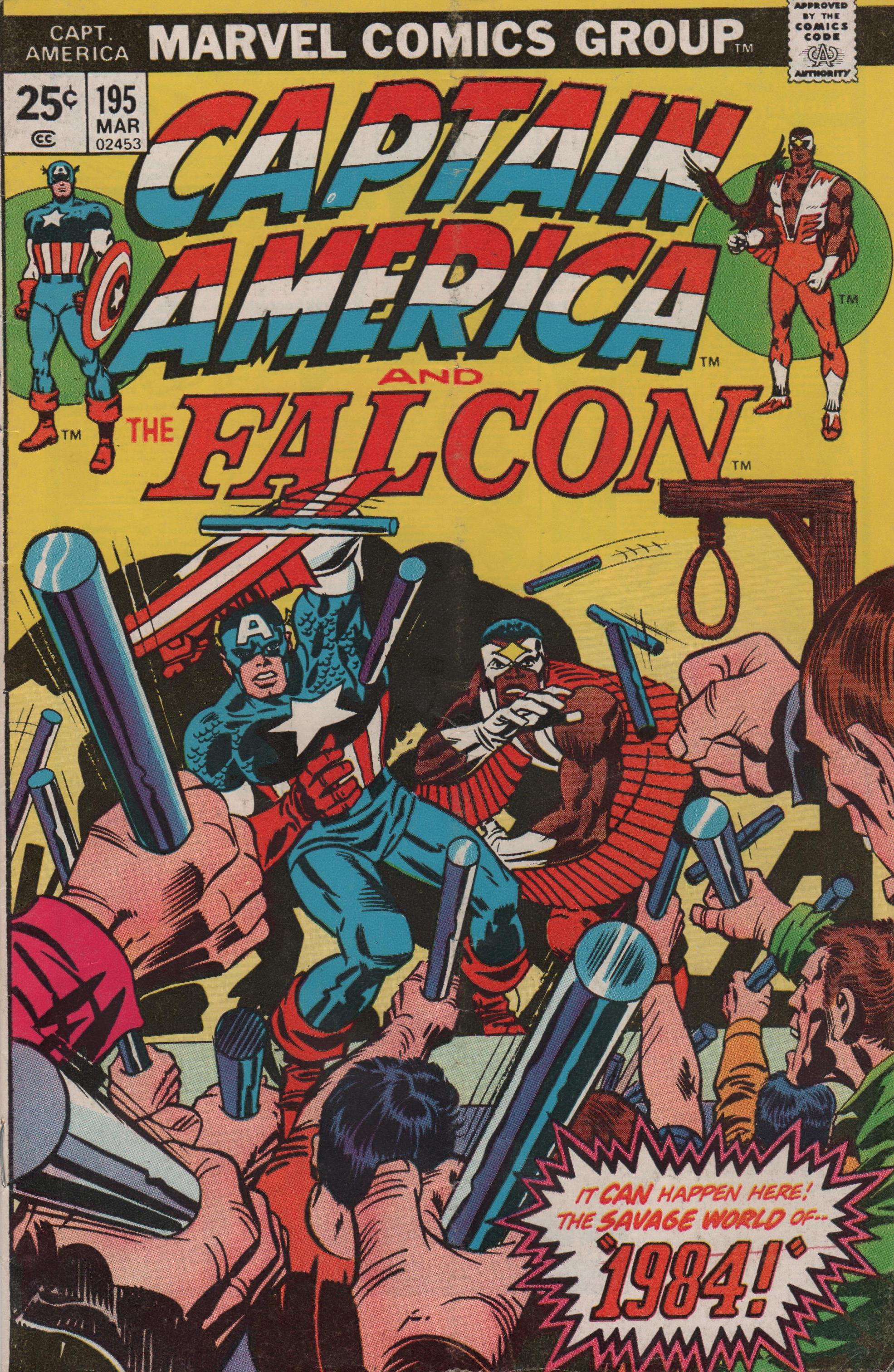
Captain America #195, 1975 “It’s 1984”

Any time I get the chance to grab some of the work of Jack ‘King’ Kirby at a discount, I do not hesitate. After his departure from DC, Kirby returned to Marvel, and did some great work. He wrote and drew Captain America, Black Panther, The Celestials, and more. I recently bought two issues of his Captain America run from this era (1975-1977), and can honestly say that this is trippy, but great work. It’s not that the story is something never written before (it’s basically a social commentary on racism), but the way Kirby writes and draws it, is absolutely endearing.

Of all the qualities I believe Kirby had as not only an artist, but as a man, this is why I love his work so much. A man who took himself from very little and used his God-given talents to become a giant of the industry (maybe only second to Will Eisner?), and through comic book art/stories gives someone like me hope that maybe someday, I can meet such apotheosis. Thank you, ‘King’ Kirby, for being an inspiration to me and scores across this planet!


Image

Image (28)

Image (29)

Image (30)

Image (31)

Cinema Sunday: Taste of Fear (1961) (A.K.A. Scream of Fear)

taste-of-fear1961

Title: Taste of Fear (Scream of Fear – U.S.)

Distributor: Hammer/ Columbia

Writer: Jimmy Sangster

Director: Seth Holt

Producers: Jimmy Sangster, Michael Carreras

Starring: Susan Strasberg, Ronald Lewis, Ann Todd, Christopher Lee

Released: Jan. 1961

MPAA: PG


If you thought Hammer Studios was only about horror flicks, think again! They made films in many genres (even comedies!), and some that are absolutely amazing in the psychological thriller category, like Taste of Fear! This one is a testament to the writing ability of Jimmy Sangster (and Michael Carreras), and definitely let people know that Hammer Studios was here to stay. The performances were great, and this movie being in black and white gives it an old school look to it that is perfect.

In 1961, Hammer was already starting to build up its horror library with hits like Horror of Dracula and Curse of Frankenstein, and more psychological thrillers would follow (Paranoiac, Nightmare, etc.). Some of the content in these films really pushed the envelope, just like Hammer horror did when it got rolling, and that wasn’t just schlock to get people in the seats. Hammer knew they had commodities with Cushing and Lee, so it was only a matter of adding some good character actors (Michael Ripper) most of the time, and they had a winning formula. OK, enough talk, let’s get down to business!

screamoffear01

The film opens up as a boat with two men aboard, search for something in the water. A policeman and another man in plain clothes fish out the body of a girl, as more policemen watch from the shoreline. After the credits roll, we see a beautiful young woman, Penny Appleby (Susan Strasberg) getting off of an airplane, and a chauffeur pick her up. The young lady is in a wheelchair, and apparently a paraplegic.  The chauffeur (Ronald Lewis) drives the girl to her ancestral home, and tells her that her father is away on business. He then arrives at the house where we see her step-mother, Jane Appleby (Ann Todd), and they have a rather interesting first meeting. You see, Penny has lived abroad, and never net her father’s new wife (she’s been away for ten years). She settles in, and then has a look around.

screamoffear02


Later, at dinner, Penny tells Jane that she didn’t come around because her parents got divorced, and her mother and her moved to Italy. Her mother passed away a few years ago, and she came back because her father wrote to her, asking her to come home for a visit. They have some small talk, but then Penny excuses herself, and goes to bed. Later that night, Penny awakens to a slamming noise outside of her bedroom. She gets into her wheelchair to investigate, and sees that it’s just a loose door. She also sees a light on in the window of the summer-house. As she scans the room, she sees her father, sitting in a chair, motionless. He appears to be dead, so she shrieks in horror, then flees the summer-house. On her way out, in a panic, she falls into the pool and begins to drown. She wakes up to realize that she was saved by Bob, the chauffeur, and is being cared for by the family doctor, Dr. Gerrard (Christopher Lee). She demands to be taken back to the summer-house, and Bob carries her there, but nothing is out-of-place, and her father is not there either.

screamoffear03

The next day, Jane leaves for a while, and Bob looks after Penny. They go to the beach for a bit, and they talk about many things, and especially about her disability. She tells Bob it was a horse riding accident. Bob then tells her that some funny things have gone on lately. He tells Penny that her father left in the middle of the night, and took the small car, one that he didn’t care for at all. They head back to the house, but Penny wants to inspect the summer-house again. Before she can search around, Jane interrupts her, and tells her that she has a surprise for he in the house. Her father is on the telephone, and asks her how she’s doing. The look on her face is one of suspicion, and she speaks for only a minute, then Jane takes the phone and talks. Dr. Gerrard tells Penny that she should calm down and not stress herself out, or she might have a nervous breakdown.

screamoffear04

As the creepiness continues, Penny then checks out the garage, and sees that the small car her father supposedly was driving on a business trip, was back in the garage. Jane tells her that it couldn’t be, because her father hasn’t returned yet. She also hears someone playing the piano, but when she investigates, she sees no one in the room. Once again she notices a light in the summer-house, and heads over to check it out. The chair that her father was sitting in is empty this time, but then she goes over to her room, and sees her father sitting by her bedside. He slumps over, and Penny screams. Bob comes running, and then Jane as well. She gets the feeling she’s being set-up, so clams up about what she saw, and tells them she’s OK.

screamoffear05

At dinner, Dr. Gerrard suggests that maybe Penny is mentally stopping herself from walking again. She gets very defensive, and tells them she doesn’t want to talk about it anymore. As everyone heads to bed, Bob agrees to help Penny with her sleuthing, and they theorize that maybe her father was murdered, and she might be next. They think the body might be being stored in a freezer in the kitchen (one of those large industrial type freezers). They investigate, but find nothing. The following morning, Bob and Penny head to the beach to plan more of their investigation. As Bob picks her up to take her back to the car, the two share a kiss, and watching from the cliff above, very creepily, is Jane. Back at the house, Jane attempts to hook Penny up with a few local gentlemen, but she refuses.

screamoffear06

That afternoon, Penny looks out her window and realizes there is one more place they can look for the corpse. The swimming pool would be the perfect hiding place, so Penny asks Bob to check it out. Bob jumps into his speedo (seriously), and jumps into the pool. Within minutes, he comes to the surface and tells Penny that the body is down below at the bottom. Penny and Bob believe that Jane has something to do with this foul play, because she can’t get her hands on the fortune that Penny’s father has amassed. Bob takes Penny in the car to get the police, but they see Jane broken down on the side of the road. Bob pulls over, and gets out to see what’s going on. Before you know it, the car begins to creep forward, and it seems Bob forgot to set the parking brake. Penny tries to reach for the steering wheel, and sees her father’s corpse lying in the front seat! She can’t get to the wheel fast enough, and the car plunges over the cliff towards the icy waters. I’ll stop here because to go further would give too much away!


OK, here are my thoughts:

This film has a certain charm to it that very few non-horror Hammer films have. Maybe it’s the mystery, maybe it’s that it’s in black and white, or just the memorable performances by the cast. Either way, the ending is shocking, and the twists and turns are quite phenomenal. You really think you know what’s going on, and then the rug gets pulled out from under you. Christopher Lee is outstanding in the few scenes he has in the film. Don’t let that foo you though, as Lee gives an incredible performance. Susan Strasberg is also fantastic, and really deserves a lot of credit.

The sets are on par with the normal Hammer goodness, and so is the script. The music score isn’t really anything grande but hits the spots it needed to. The production of the entire film is very high for 1961 (Bernard Robinson – production design), and looks like a higher budget film that what it actually was (allegedly $50,000). Hammer has had many beautiful ladies in their films over the decades (Susan Denberg, Ingrid Pitt, Veronica Carlson, etc.), but I have to admit, Susan Strasberg is absolutely gorgeous in this film (Carlson and Denberg are my usual favorites!). It’s rare to have a leading lady that is this stunning and a high-grade actress as well. Typically Hammer just wanted beautiful women to get the male demographic in the seats with their ladies, but in this case you get it all!


Watch the trailer here!

Comic Book’s Unsung Heroes: An Interview with – David Michelinie!

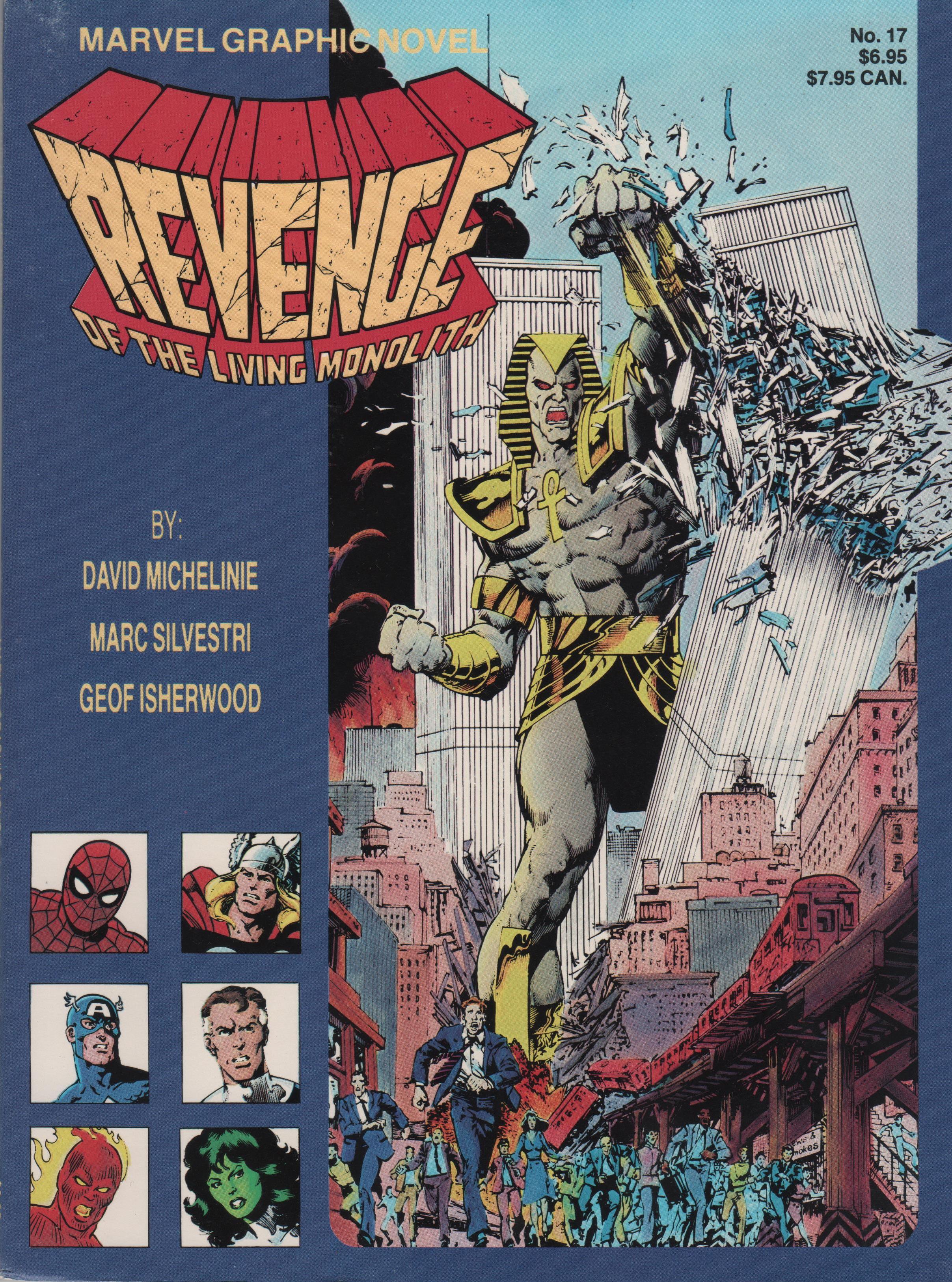
If someone asked you who wrote the Iron Man story “Demon in a Bottle” or the first appearance of Venom in Amazing Spider-Man, would you know? OK, how about the Avengers story “The Yesterday Quest/Nights of Wundagore” or the Marvel Graphic Novel’s “Emperor Doom” and “Revenge of The Living Monolith“? Are you getting the point? Some creators, for one reason or another, get their share of credit or even more than they deserve, and some seem to get very little. David Michelinie is one of those guys that I feel gets nowhere near the credit he deserves. Just look at that list of stories above, and tell me I’m lying.

Michelinie also had a creative hand in the weddings of Superman and Lois Lane and Peter Parker and Mary Jane Watson! So again, I ask, why not give this guy more credit? A quick look at any number of websites shows he has the “street cred”, so let’s stop overlooking a guy that wrote over one hundred Spider-Man stories, Action Comics, Daredevil, Jonah Hex, Swamp Thing, and so on!

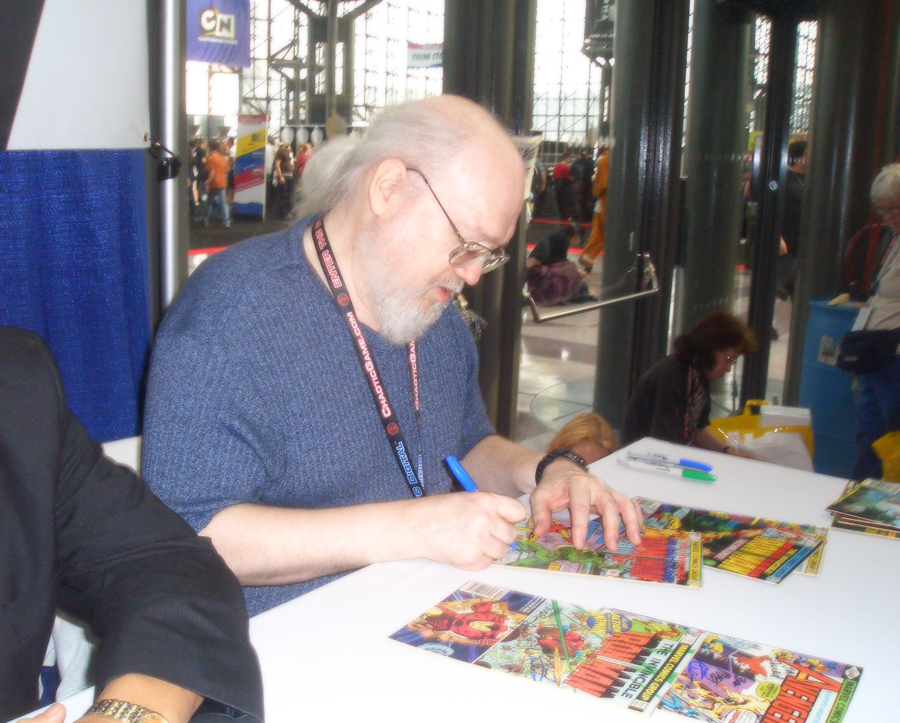
I had the awesome opportunity to ask David a few question about his work over the years, and here’s what he had to say!
david_michelinie_pic

       Billy: It seems that you really enjoyed developing the brotherly relationship between Wonder Man and the Beast. Was that something you wanted to stress/drive home with the readers?

David: There’s tremendous pressure, peril, and grief, in the life of a superhero. And this was especially true with Simon Williams, who at the time was uncomfortable and insecure in his role as Wonder Man. So I wanted to lighten things up a bit, and teaming him with the upbeat Beast seemed like a good thing for both of them. Everyone needs a friend.

beast24

     Billy: The revelation of Wanda and Pietro’s lineage was a long time coming, no doubt. Did you guys (You, Gruenwald, Shooter, & Grant) script/write the story as if Django Maximoff was going to be revealed as their father or was it a ruse from the get-go?

David: I really don’t remember much regarding how all that came about. I do know that Mark Gruenwald was a big factor in generating that story line, since he knew a lot more about the Avengers’ background and history than I did.

    Billy: The Avengers title was in a bit of a flux when you came on board, as Jim Shooter had  written the book  for a while, but I think he was transitioning to EIC, correct? Was that why the book was kind of bounced around for a spell before you were the regular writer?

David: I think Jim was reluctant to give up the Avengers- he really cared about that book and enjoyed writing it. But the reality of running a major company while trying to be a full-time writer on the side finally got to him. I scripted several issues using Jim’s plots, and I think that convinced him that I would make an acceptable replacement, so I got the job.

    Billy: Transitioning to your Marvel Graphic Novels (#17 & 27); First, in the forward to MGN #17 “Revenge of the Living Monolith”, you credit Jim Owsley (Christopher Priest) for the concept of the story. It’s obvious that the two of you wanted to move that character (the Monolith) away from being just another cookie-cutter villain, and by the books end, most readers probably feel sorry for him, as opposed to thinking he’s the cold-blooded killer type. Do you feel that as a team, you guys hit the mark as fa r as making it believable? And if there’s anything you could go back and change, would you?

David: Anytime I’m assigned to write a character I try to do something new with them, something that shows a different aspect of their personality or perhaps some event in their past that has factored into their development, but of which the reader is not yet aware. And while it’s true that there are some purely evil people in this world (I’ve worked for some of them!), villains seem much more interesting if there’s something in their history that makes them sympathetic. I think what was presented as Ahmet’s (The Living Monolith) background was believable, but the final judges of that would be the readers. Second answer: Since I don’t have a time machine, I rarely think about going back and changing things.

Image (18)

    Billy: The concept of MGN #27 “Emperor Doom” gives us a tale of a time when Doom was more of a manipulator than he is now. Was that something you thought Doom was more about as a character?

David: I loved writing Dr. Doom. He was brilliant, focused, and determined and thoroughly convinced that he was justified in his deeds and viewpoints. If manipulation was what it took to achieve his goal, then manipulation would be his tool. And he was very, very good at it.

Image (21)


Billy: There’s a very powerful scene in this book (still speaking on Emperor Doom), where Doom proves to the Purple Man that his will can resist his powers of persuasion, and that moment solidified Doom as one of Marvel’s greatest characters. Was that something that was part of the initial script or added later ( I guess what I mean is, was that something you always wanted to do with Doom)?

David: I love that scene (image below); very powerful, very character-defining. And it was indeed part of the original plot. And as much as I’d like to take full credit for it, I honestly don’t remember if it was my idea or something suggested by Jim Shooter in our plot conferences.

Image (22)

   Billy: Speaking on both of those graphic novels, were the artistic teams already in place when you signed on, or was it a process?

David: The plots were completed, and then the art teams were determined. And I have to say that Bob Hall, Marc Silvestri, and Geof Isherwood all did wonderful jobs.

   Billy: Moving on to Spider-Man now; Can you talk about the move to that title as the regular writer, and what it meant to you?

David: I assume you’re talking about “Amazing”, yes? Spider-Man was my favorite superhero of all time, so when Jim Owsley picked me to write Web of Spider-Man it was a genuine thrill. Getting to play with ones favorite character is probably every writers dream, but how often does that dream come true? So when I was switched over to Amazing Spider-Man, the original Spidey title and the book that got me back into reading comics when I was in college, it was very sweet icing on an already delicious cake.

    Billy: You took the symbiote from being a vehicle for Spider-Man, and turned it (basically) into his mortal enemy. Was that decision an editorial thing, or a plan concocted by the creative team (You, Mcfarlane, etc.)?

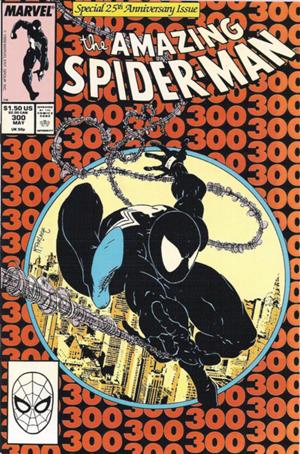
David: It was actually something that I came up with on my own. Whenever I got a chance to write a new (for me) character, I tried to figure out what makes that character unique and then I exploit it. In Peter Parker’s case, his early warning Spider-sense stood out as something unmatched in the Marvel Universe. It has saved his life countless times by warning him of danger before he could be harmed. So I wondered…what would happen if there was a villain that didn’t trigger that Spider-sense? It had already been established, in the Secret Wars story line, that the alien symbiote which had been Spider-Man’s living costume for a while didn’t activate his Spider-sense. And since Spider-Man had cast the symbiote aside, the creature was likely feeling hurt and angry about that rejection. So attaching the symbiote to a host who shared a similar hatred for the wall-crawler seemed like it would make for an interesting-and very dangerous-spider-foe. My initial origin featured a woman as the host, and I started setting the character up in a couple of teaser scenes in Web of Spider-Man, where both Peter Parker and Spider-Man had been thrown into danger by some mysterious entity that didn’t trigger the spider-sense. Then when I was switched over to Amazing Spider-Man, editor Jim Salicrup suggested introducing a new character in issue #300. He liked my symbiote idea but wanted the host to be a man. So since that really didn’t negate what I wanted to explore – I altered the origin for the plot of Amazing Spider-Man #300, and Venom was born.

    Billy: You basically wrote one hundred issues of Spidey, yet most people seem to never give you the credit you deserve. Does that bother you now or did it then? And if so, how can you turn a blind eye to it and just keep pushing forward?

David: I had the honor- or curse – of working with some very popular artists on that book: Todd McFarlane, Erik Larsen, Mark Bagley. And I think that’s what most people remember about those issues. What they don’t often realize is that while sales rose during Todd’s run, they continued to rise with Erik and got even higher with Mark. And I have to believe that part of that was due to the fact that the characters and stories maintained a consistency: people who bought the books to read them got characters that acted and spoke the same way issue after issue, and the stories maintained a certain level of quality that readers could count on every month. People may not think of that in hindsight, and my work may be less remembered than the art, but those are stories I was very happy with, and I’m proud to have my name on them.

ASM300

    Billy: In issue #298, Todd McFarlane was brought in to pencil on Spidey. Was he someone you knew previously and asked for or did he lobby for the assignment?

David: I had seen some of Todd’s work for DC, but I didn’t know him or anything about him. The editor suggested Todd, I said OK, and magic happened.

    Billy: Can you talk for a bit about working with editor Jim Salicrup? I’ve heard he is one of the nicest guys around the biz.

David: My definition of a good editor is one who pays attention but keeps a loose rein, one who doesn’t try to put his/her own personal stamp on everything that crosses their desk. And Jim was like that. I would give him a synopsis of what I wanted to do over the next 3-4 issues, he’d read it and make suggestions and requests, then he’d pretty much leave me alone to write the plots and scripts. I like to think that was because he trusted me as a writer. But what whatever the reason, it gave me a great deal of freedom and that allowed me to retain my enthusiasm and, I believe, made my work better.

    Billy: With McFarlane’s departure in issue #324, Erik Larsen was brought in for the pencils. It was a seamless move from an artistic standpoint, but was it from a collaborative angle?

David: Not really. Erik hates me and my work, though I have absolutely no idea why. When Jim Salicrup suggested Erik and showed me some of his work, I thought it was a bit cartoony but was distinctive, and a distinctive look was something our readers had become accustomed to with Todd. So I said OK. Then during our run together, Erik wrote a letter to Wizard Magazine in which he called me a “clown” and called my work “stupid”. I later heard from more than one person that he was going around at conventions saying that Marvel didn’t have any good writers – when at the time the only Marvel writer he was working with was me. Like I said, I haven’t a clue as to why Erik has this seething dislike for me, but even if I felt the same way about him or his work I’d never say so in print or in public. But perhaps my idea of professional behavior has become outdated.

     Billy: You had a hand in the two biggest weddings in comic book history (Spider-Man & Superman). Can you talk about what that was like?

David: When asked to write the Spider-Man wedding, I didn’t want to do the usual super-villains-crash-the-ceremony-and-fight-the-super-hero-guests bit. So I came up with a different angle that focused more on the human side of the situation, that dealt with Peter Parker’s worries and self-doubts about whether he was doing the right thing: if he was going to be putting Mary Jane in danger, if he could still be a good husband while running off to fight bad guys all the time, etc. Jim Shooter read it, said he understood what I was trying to do but that this was going to be read by a lot of people who didn’t normally read comics, and he thought Marvel needed a simpler, more standard story that “civilians” could relate to. So I turned the plotting over to him and just scripted over his story. Many years later Jim was quoted in an interview as saying that my original plot was “inappropriate” and “lame”, a quite different-and much harsher-assessment than he’d used when talking to me personally. It was very disappointing, since in the past Jim had been someone who took the high road, who treated individuals with courtesy and respect. But I guess people change. As for the Superman wedding, I was delighted to be a part of it in a small way. I was actually given some pages of a story Curt Swan had drawn many years previously for a story that was never published. I modified that story to fit the wedding continuity and wrote dialogue to match. I’d loved Curt’s Superman stories when I was a kid, and it was a genuine honor to script over his artwork, even if it was a posthumous collaboration.

Spideywedding

Superman_The_Wedding_Album

    Billy: To wrap up, can you give some insight on your early years at DC writing horror stories?

David: In 1973 DC started something they called an apprenticeship program, where they’d hire would-be writers or artists to work at the DC offices while they learned their trade. It didn’t go far (I think the only person they actually hired through that program was Martin Pasko), but I sent in a sample script that, for some reason, ended up on editor Joe Orlando’s slush pile (unsolicited manuscripts). Joe’s assistant at the time, writer Michael Fleisher, read the script and sent me a note saying that I showed promise but they couldn’t work with anyone outside of the immediate New York City area. Two weeks later I had closed out my commercial writing obligations in Kentucky and had moved to New York, where I knocked on DC’s door and said “well, here I am!” I think Joe and Michael were a bit stunned, but they pretty much had to give me a chance. I worked with Michael on my first four scripts for “House of Mystery” and its kindred. Michael was not a subtle critic and actually called some of my work ” a piece of crap” while I sat on the other side of his desk. Severe, yes, but very motivating. Through massive rewriting, and by heeding Michael’s editorial advice, I was ready to work directly with Joe when Michael left his staff position to write the Little Orphan Annie newspaper strip. Michael and I ended up being good friends for many years, and I credit his uncompromising criticism with my eventual ability to write professional comic book stories.

I’d like to thank David for agreeing to be interviewed and for being very candid. Definitely take a look at the body of work that this man has put forth. I think you’ll have a new (or hopefully renewed) appreciation for his contributions to the industry! Once again, thank you David!

Be on the look out for more interviews with other creators from the best comic books in the history of the medium in the near future!
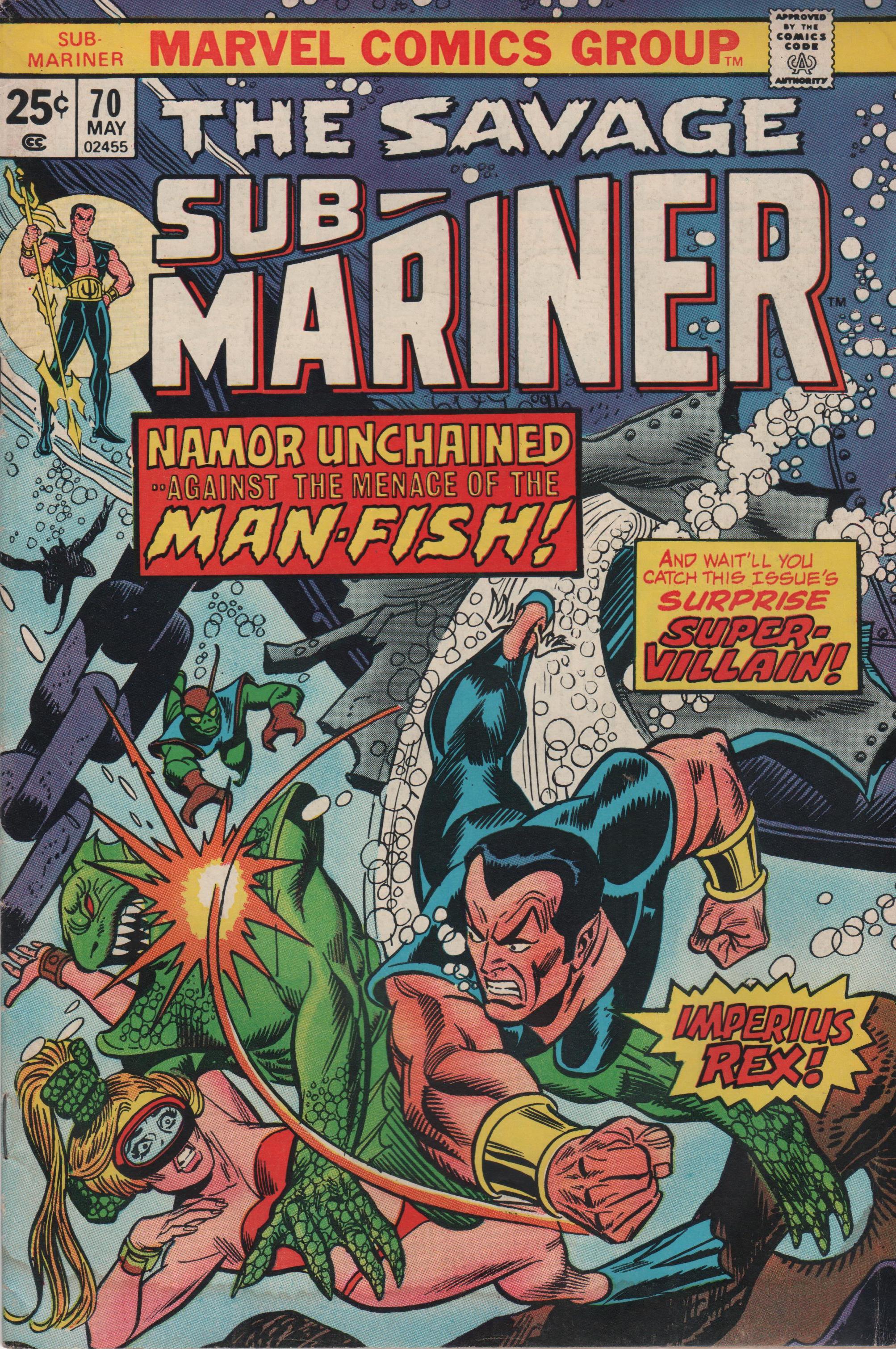
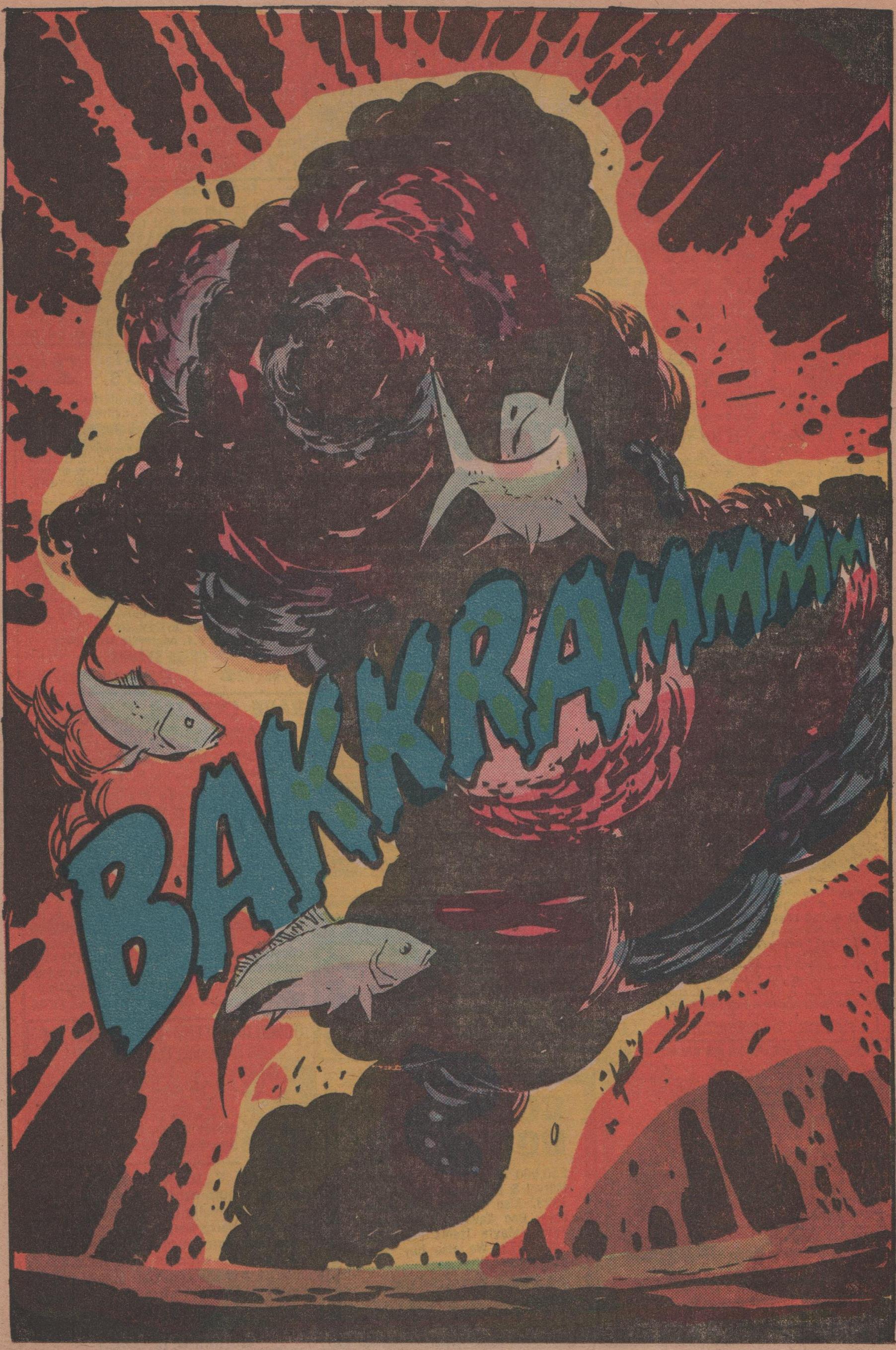
Sub-Mariner #70, 1974 “Namor Unchained”

Imperius Rex! The Savage Sub-Mariner is punching Man-Fish in the face! What a great cover by Mr. Gil Kane (RIP)! And to make matters worse, Man-Fish is pulling on some poor bikini-clad girl’s ponytail! Man, I miss the 1970’s. Everything nowadays is so grim and gritty, with no real fun to any of the stories. When Marvel was just beginning to scratch the surface of greatness back in the 1960’s, greats like Kirby, Romita, Heck, and Ditko, were paving incredible roads for later talents to follow. What did ensue was the Bronze Age of comics books, which gave us not only more relevant stories from a social angle, but also the weird and wonderful imaginations of a new list of incredibly gifted writers and artists that took what came before and built upon it substantially.

In this specific issue, we get a script from Marv Wolfman, pencils from George Tuska, inks by Vince Colletta, Colors by Stan Goldberg, and letters by John Costanza! Don’t forget the cover by the incomparable Gil Kane and Frank Giacoia either! This book is a great example of the awesome comics coming out at the time. There would only be two more issues of Subby after this until his revival in the Thomas & Buckler series in 1988 (another good series). Subby was a mainstay in FF and the Avengers as well though for some time. In closing, remember kids, when all else fails, if you’re being attacked by sharks, just punch them in the face!


Image (8)

Image (9)

Image (10)

Image (11)

Image (12)

Image (15)

Sub-Mariner #64, 1973 “Voyage into Chaos”

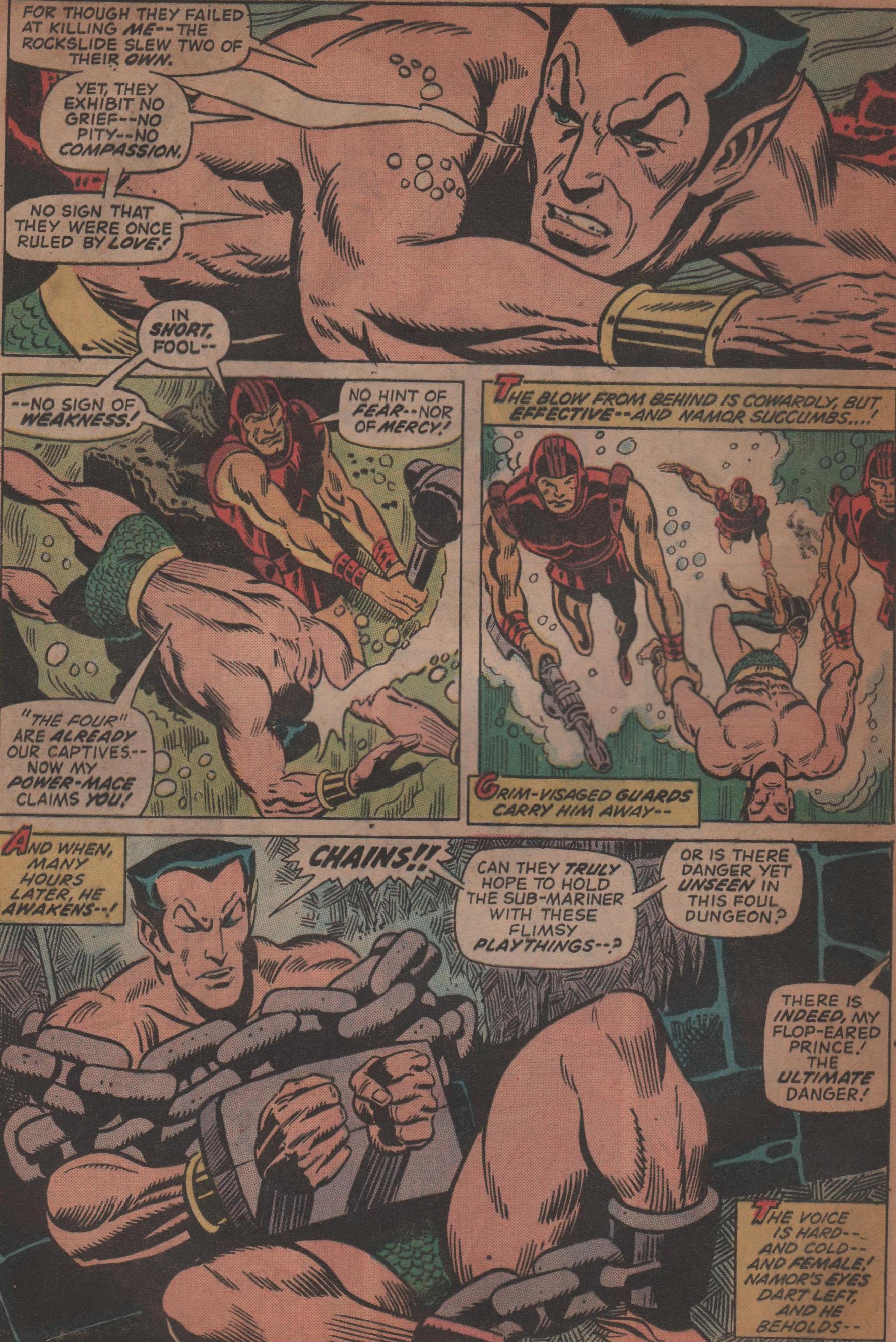
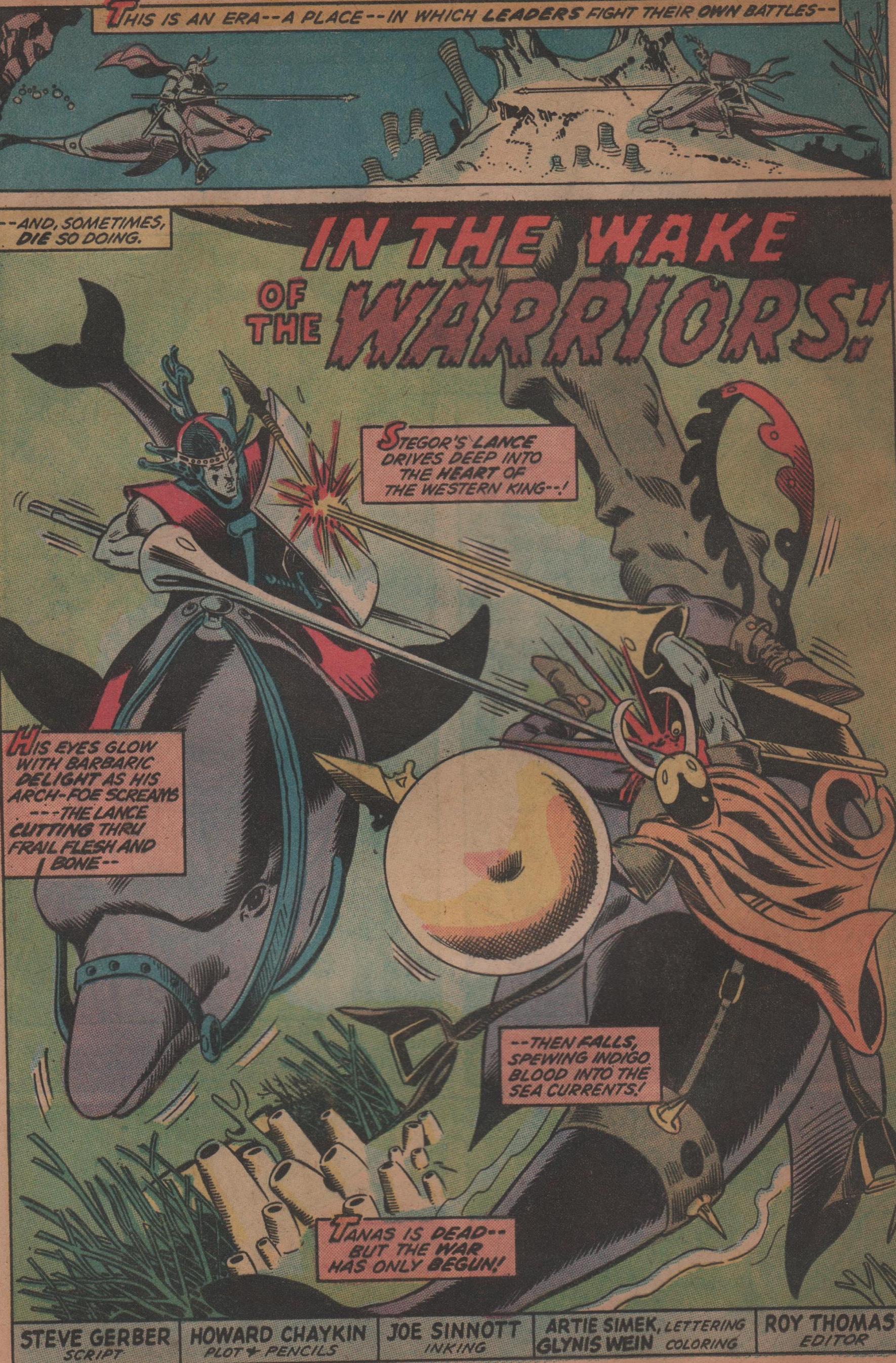
Prince Namor of Atlantis was never a character that was one of my favorites. Oh, I like the character more than I dislike him, but he just never impressed me unless he was part of a team (like the Avengers). I recently grabbed a couple of back issues of Subby, and really enjoyed them. Now, granted, the writer is the awesome Steve Gerber (RIP), with art by Don Heck (RIP) (pencils), and Don Perlin (inks), so that really raised the level of the content in my opinion. You also get perennial favorites Glynis Wein on colors, and Artie Simek providing letters (and Roy Thomas editing). Again, characters are great, but the creative force behind them is what really matters.

A story involving Subby fighting racial inequality (basically), is the plot, with undersea friends and foes galore. Heck and Perlin make a great team, and you’ll agree when you see the pages below. Namor is his royal, condescending self, while the ocean backgrounds look fabulous. A quick cameo by Namorita, Namor in chains, and at the mercy of a WOMAN, nonetheless! There is also a back-up story from Gerber featuring artwork by Howard Chaykin and Joe Sinnott! And what a fantastic cover by the team of Rich Buckler and Bill Everett (RIP)!


Image (2)

Image (13)

Image (3)

Image (4)

Image (5)

Image (6)

Cinema Sunday: The Gorgon (1964)

THE GORGON

Title: The Gorgon

Distributor: Hammer/Columbia

Writer: John Gilling

Director: Terence Fisher

Producer: Anthony Nelson Keys

Starring: Peter Cushing, Christopher Lee, Barbara Shelley, Richard Pasco, Michael Goodliffe

Released: August 24th, 1964

MPAA: PG


Another Sunday, and another movie review! Huzzah! Peter Cushing and Christopher Lee are the best acting tandem in horror movies ever assembled. Yeah, I just said that. Come at me with whoever else you have, but it won’t change my opinion. The sheer number of movies they did together helps that fact, and I’m not denying that, but seriously look at their body of work as a tandem, and you’ll be impressed!

This is one of Hammer Studios lesser known films (by the mainstream media types), but still has some redeeming qualities about it that cannot be denied. A tale that has some roots in Greek mythology, and add a splash of Hammer Gothic horror, and voila, you get The Gorgon! Let’s get down to the meat and potatoes of this one now!

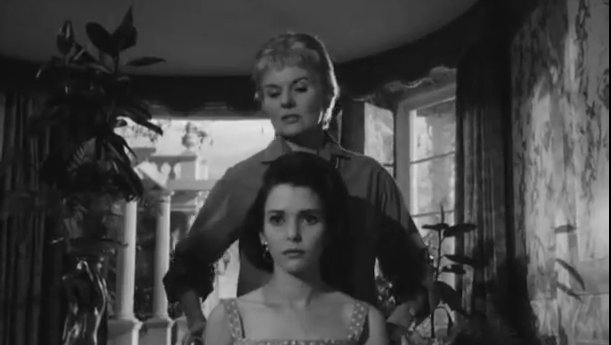
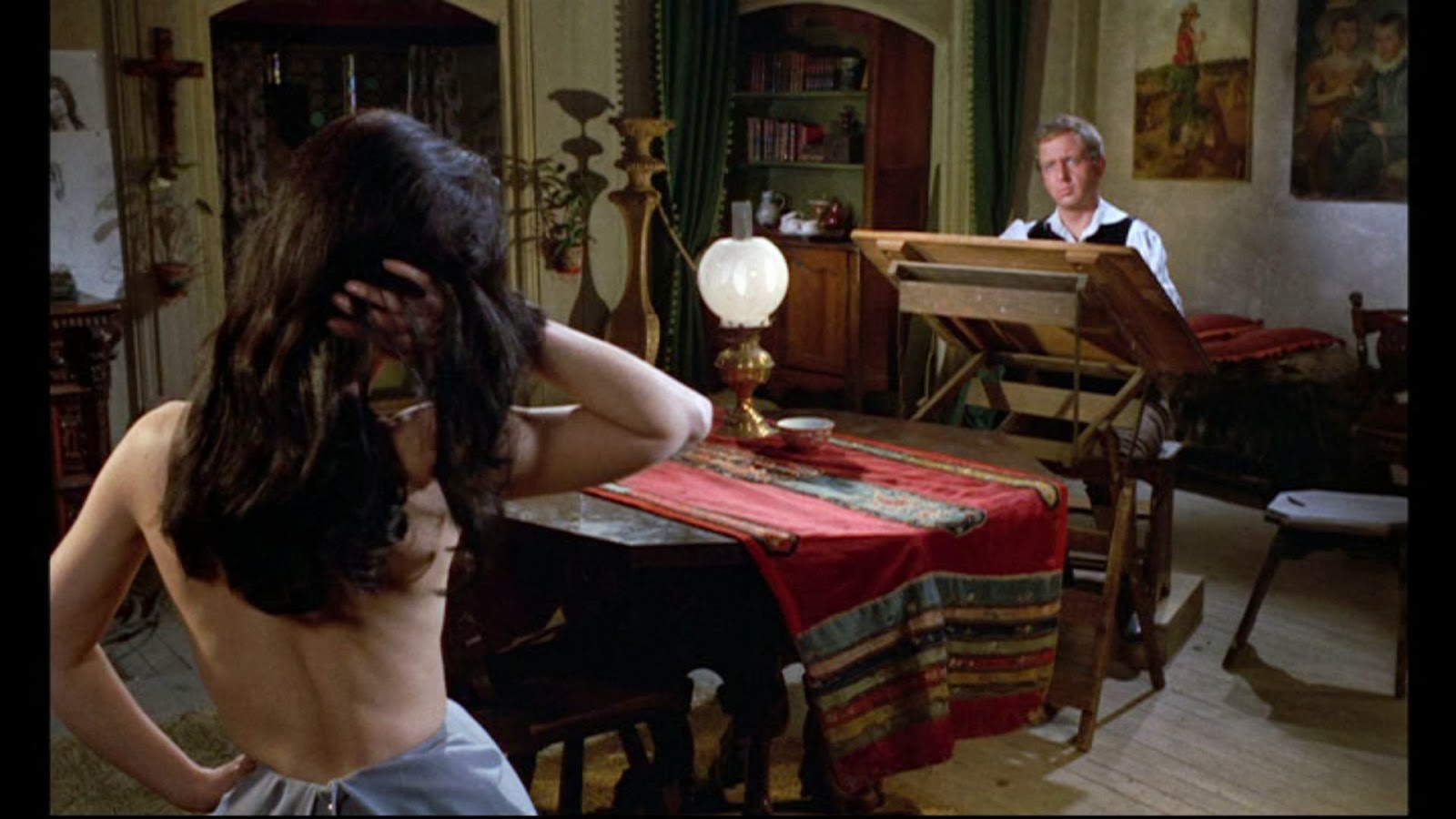
The story begins with a young artist, Bruno Heitz (Jeremy Longhurst), as he’s drawing a portrait of his (topless) girlfriend. She informs him that she’s pregnant, and he storms off to tell her father that…”he isn’t going to avoid his obligations.'” As he heads into the forest, his girlfriend runs after him, but suddenly runs into some unseen killer that takes her out. The next day, we see that the girl has been found dead, and a search for Bruno is in effect. It doesn’t take long to find him, and when the police do, they’re shocked to see that he’s hanged himself from a tree…or did he?

gorgon0

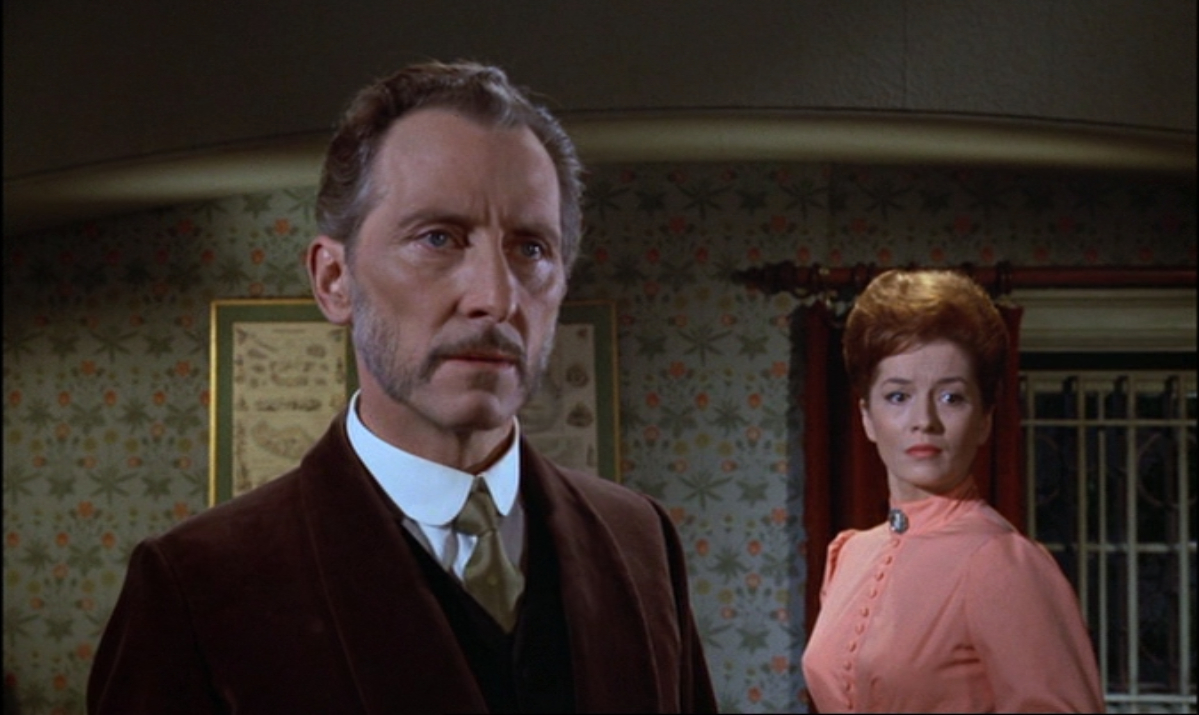
At the trial for this affair, it is clear that the local government wants to silence this case before it gets any more widespread. The father of the deceased, Professor Jules Heitz (Michael Goodliffe), is there, and has his say about what he theorizes happened. He tells the court that he will not rest until his son’s name is cleared. The court rules that Bruno murdered his girlfriend, then committed suicide. Professor Heitz and the local medical authority, Dr. Namaroff (Peter Cushing), are old colleagues, so after the hearing, Professor Heitz pays him a visit. Namaroff tells him nothing, and that he cannot help him. Heitz leaves, and is noticeably upset, but also realizes that he’s on to something fishy going on in Vandorf.

gorgon1

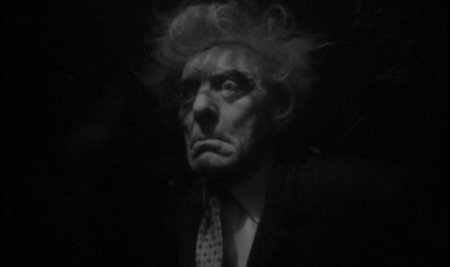
The next day, Professor Heitz and his butler are at the home that his son was occupying at the time of his death, when all of a sudden, a few locals break in and threaten him if he doesn’t leave. A struggle ensues, but then the police show up. Everyone leaves, and Professor Heitz is even more aroused to find answers to this mystery. Later that evening, Professor Heitz hears some singing and heads over to the property nearby. As he creeps around the old castle, he can feel someone is there, watching him. We see a shadowy figure step out and Heitz screams in agony, and flees for his home. He reaches the home, but is badly hurt (image above). He’s turning to stone, but manages to write a few pages to tell his other son, Paul (Richard Pasco), of what has transpired.

Gorgon3

The following scene is Namaroff and Paul Heitz arguing over what killed his father. Namaroff stone-walls him, so he leaves. As he gets to the home, he sees someone in the house. It’s Dr. Namaroff’s assistant, Carla Hoffman (Barbara Shelley). She tells him that he’s in danger, and he should leave, but Paul refuses. Later on, Carla is talking with Namaroff about the gorgon theory that Paul had written back at the house. Speaking of Paul, as he’s sitting down at the home, a terrible wind blows the doors open, and he then hears that same siren song nearby. As he investigates, he sees a hideous face in water, reflecting at him. It drives him temporarily mad, and he passes out. He wakes up days later in the hospital, and sees Carla watching over him. He’s unaware that he’s been unconscious for days, and gets crazy when he finds out that the court hearing for his father is over. Namaroff has a brief discussion with him, but nothing gets resolved.

Gorgon2

After leaving the hospital, Paul decides to exhume the body of his father, and he then sees that he was turned to stone. He’s surprised from behind by Carla, and the two talk about what’s going on in Vandorf. Paul then realizes he’s in over his head, so he summons his former teacher, Professor Karl Meister (Christopher Lee), to help with the investigation. Once he arrives, the stuff really hits the fan, because of his no-nonsense approach to everything! The two discuss the problems in Vandorf, but Paul has fallen in love with Carla, and is letting it cloud his judgement.

Gorgon4

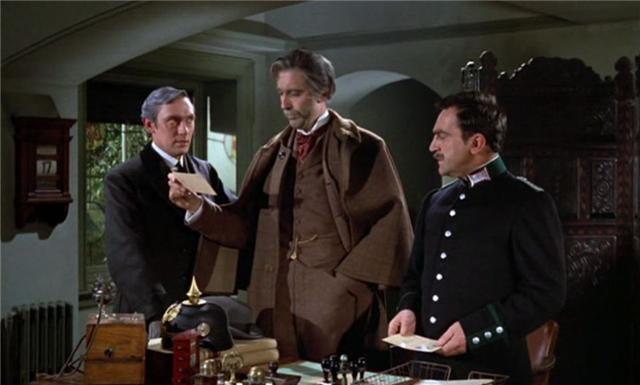
Meanwhile, Namaroff sends his goon, Ratoff (Jack Watson), to assassinate Paul, but old Professor Meister has a trick or two up his sleeve, and saves Paul. He then confronts the police, Namaroff, and anyone else that he thinks needs to answer some questions. He gets shown the door just like Paul and everyone else before him. Meister and Heitz then try to form a plan, but first visit the police for some information. They figure out that there were only a handful of women that have recently moved to Vandorf, thus giving them the lead that they need to solve this mystery!

Gorgon5

OK, here are my thoughts:

While this isn’t the best of Hammer’s offerings, it still pretty cool. Cushing and Lee both give very solid performances, as does Richard Pasco. Even Jack Watson (the doctor’s goon, Ratoff), is quite convincing with his menacing attitude. Barbara Shelley isn’t anything to write home about in this film (even though she’s had a few other great roles). The film is a little inconsistent with pacing until Christopher Lee’s character show up, and gets the ball rolling.

The sets, and atmosphere are typical for Hammer, meaning that they really drive the mood home. Although the “monster” isn’t very scary, the build-up, acting (for the most part), sets, atmosphere, and music score, make this film certainly worth a watch now and again. I won it on a four disc set that has three other classics on it that I’ll definitely be reviewing in the future (one of which I’ve already reviewed). Listen, give this one a look, if for no other reason than Cushing and Lee giving solid performances!


Check out the trailer here!