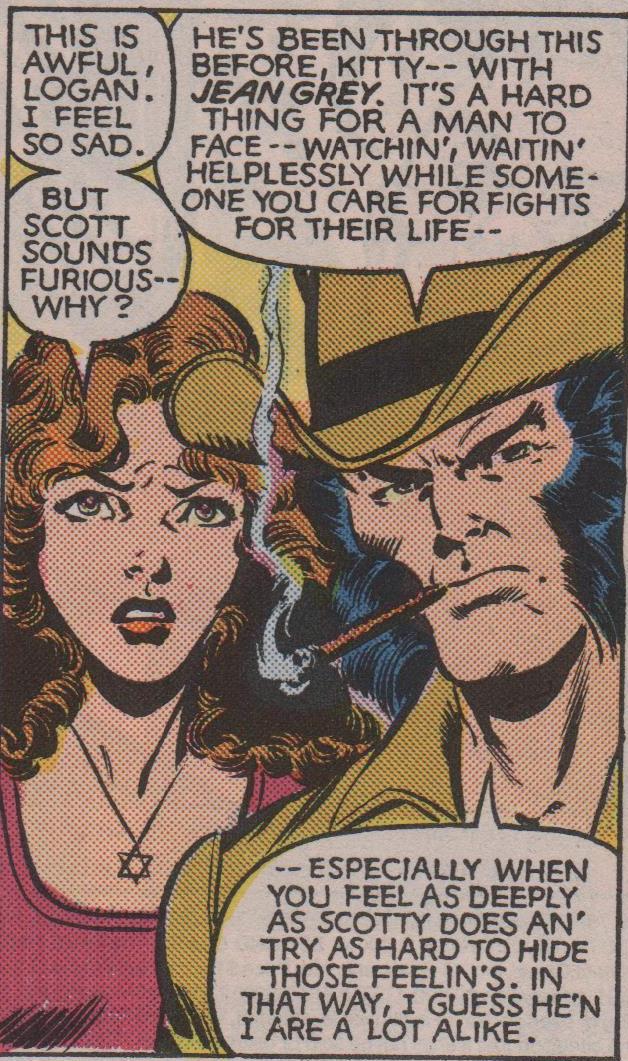
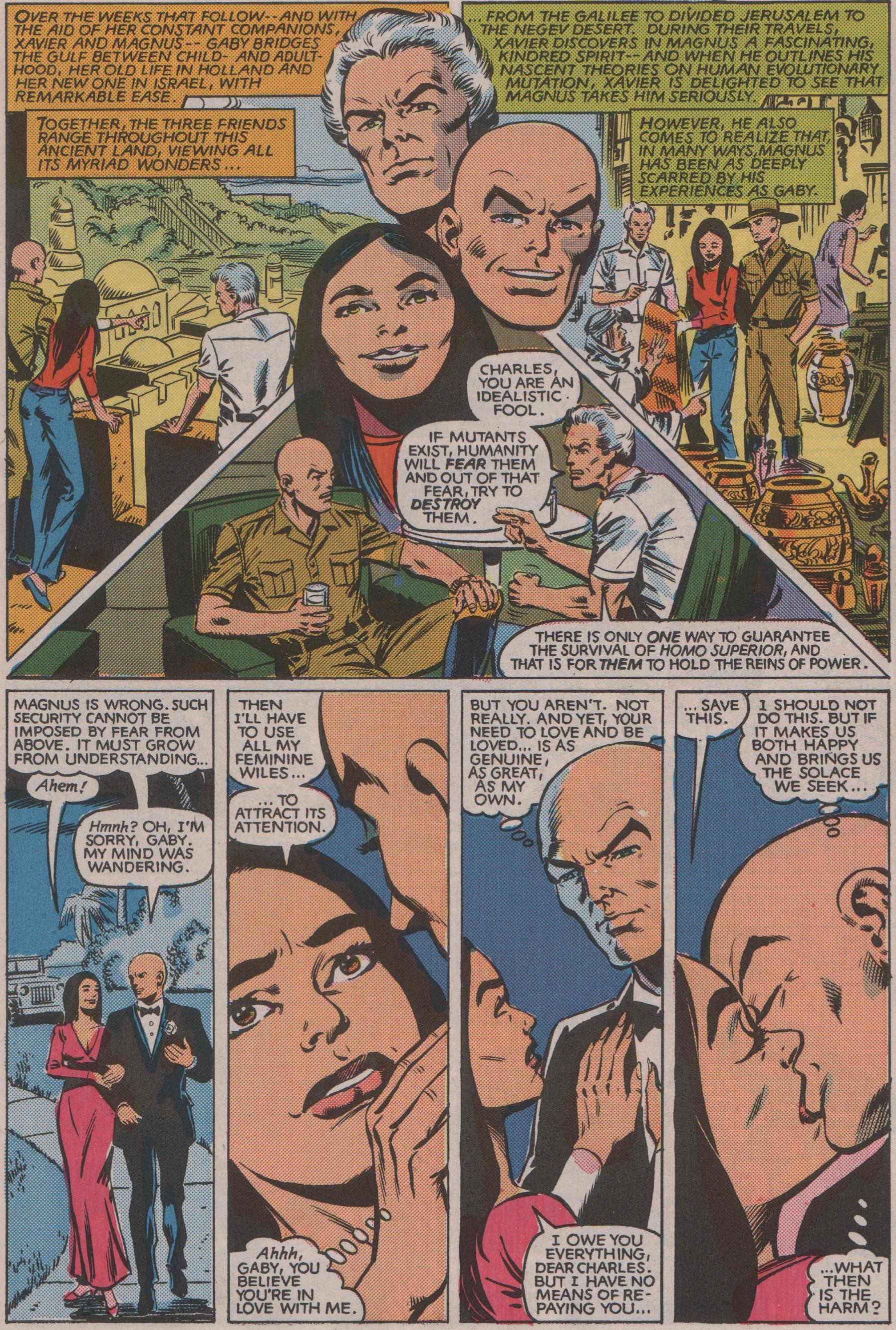
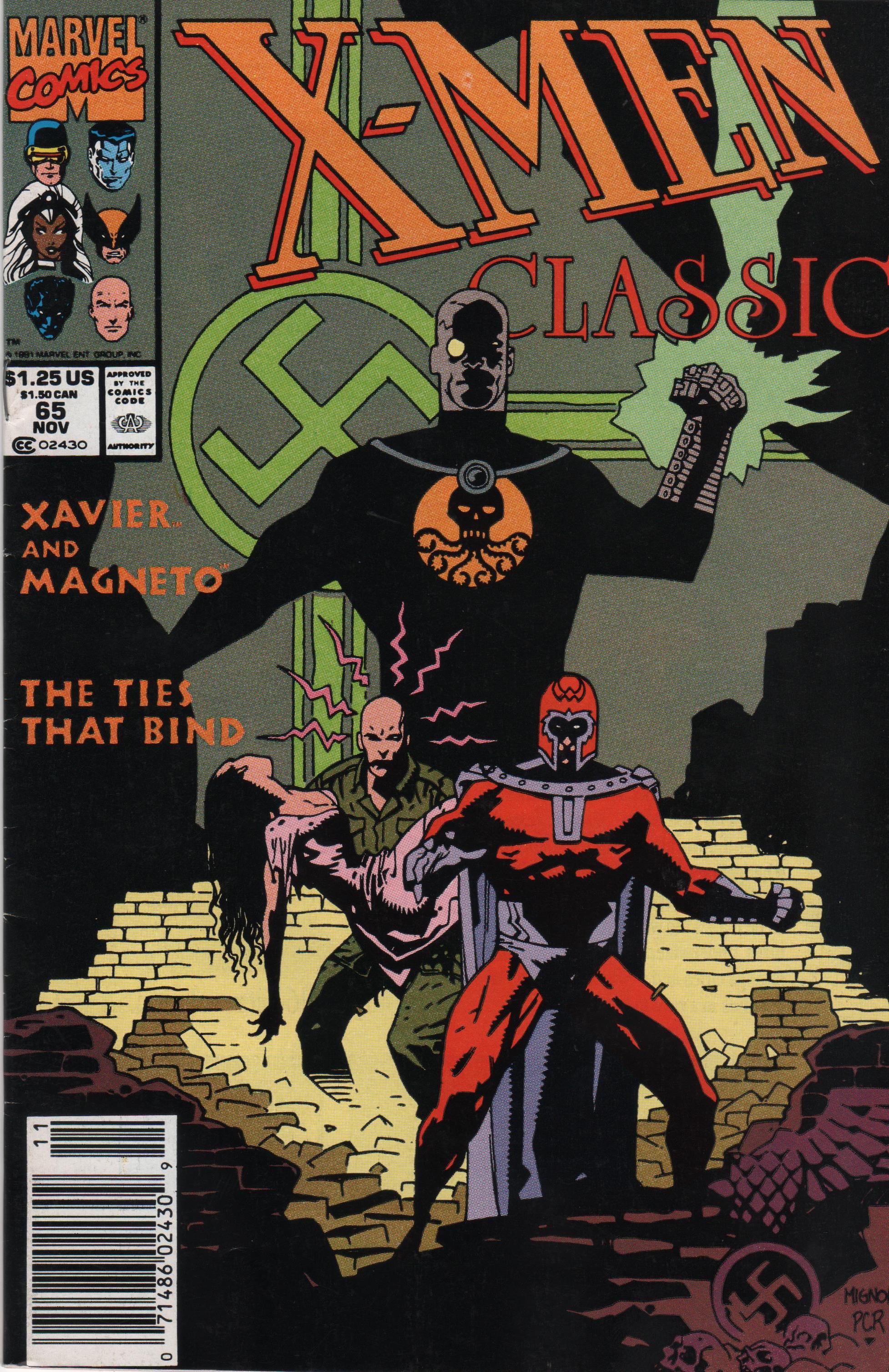
X-Men Classic #65 (Uncanny X-Men #161, 1982)

I just started to grab some of these X-Men reprints, and wow, are they something! I love the X-Men, and wanted to find a way to get my hands on some of their older material without breaking the bank, and this title was just the way to go. Typically, with reprint titles, Marvel stays pretty close on the cover artwork to the original work. For some reason they really went in the opposite direction with some of these books. Not that I’m complaining mind you, because I’m a big fan of the work of Mike Mignola and P. Craig Russell. He really stands out with his style, but also “gets it”, when it comes to being faithful to the source material. Check out the awesome work by Chris Claremont, Dave Cockrum, Bob Wiacek, Tom Orzechowski, Glynis Wein (Oliver), and Louise Jones (Simonson)!

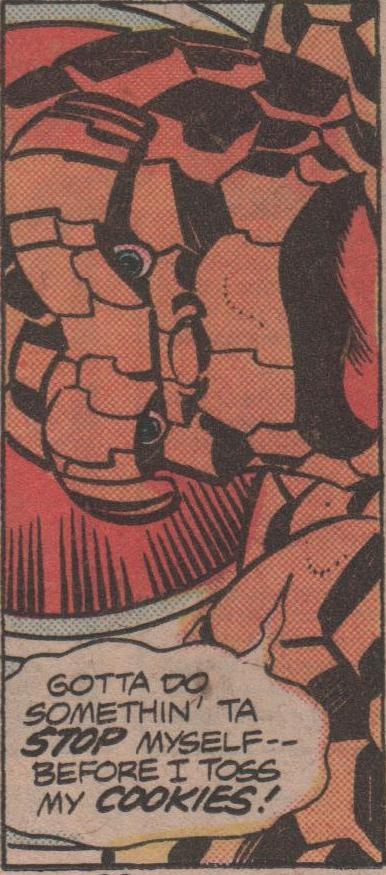
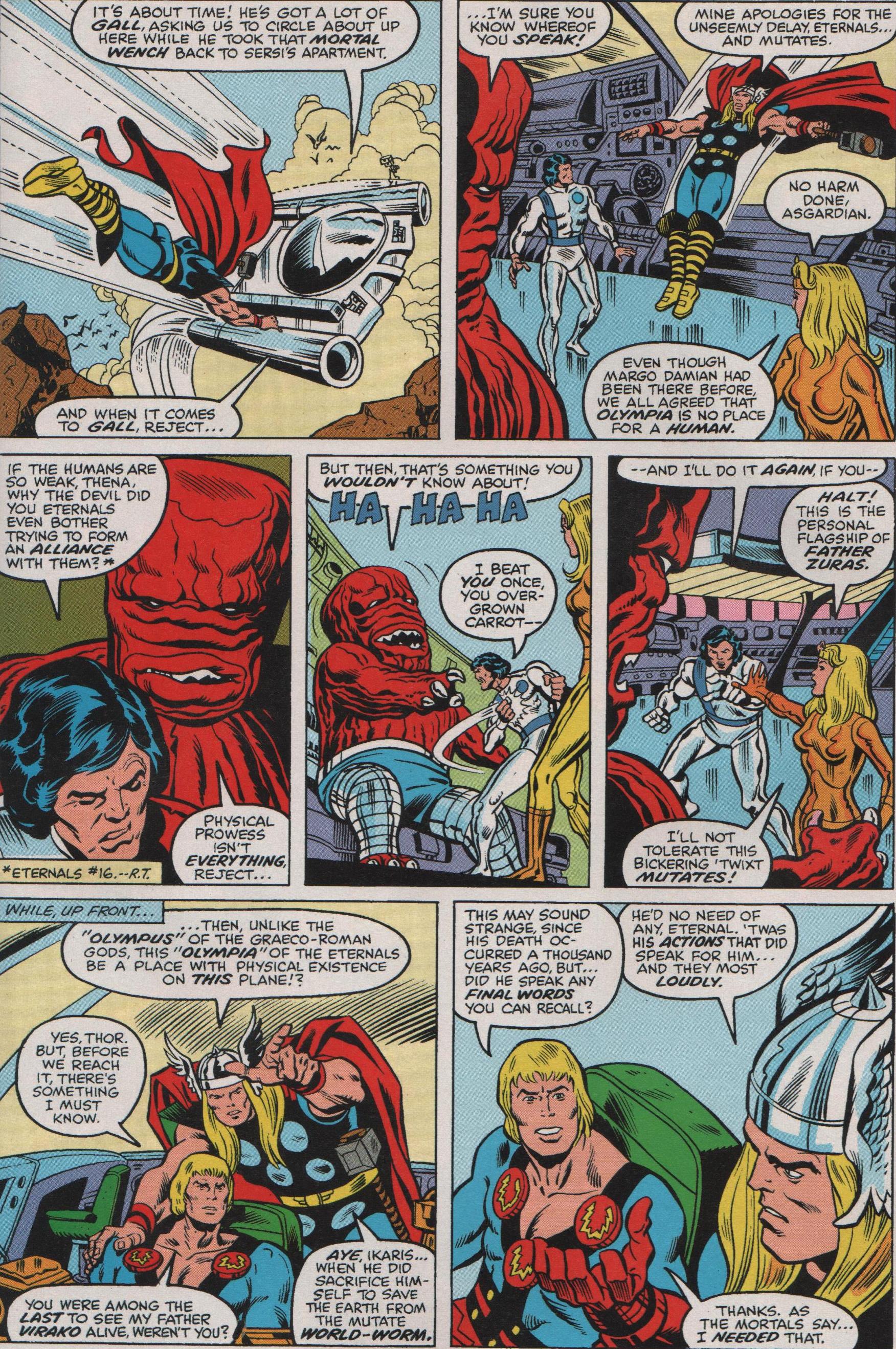
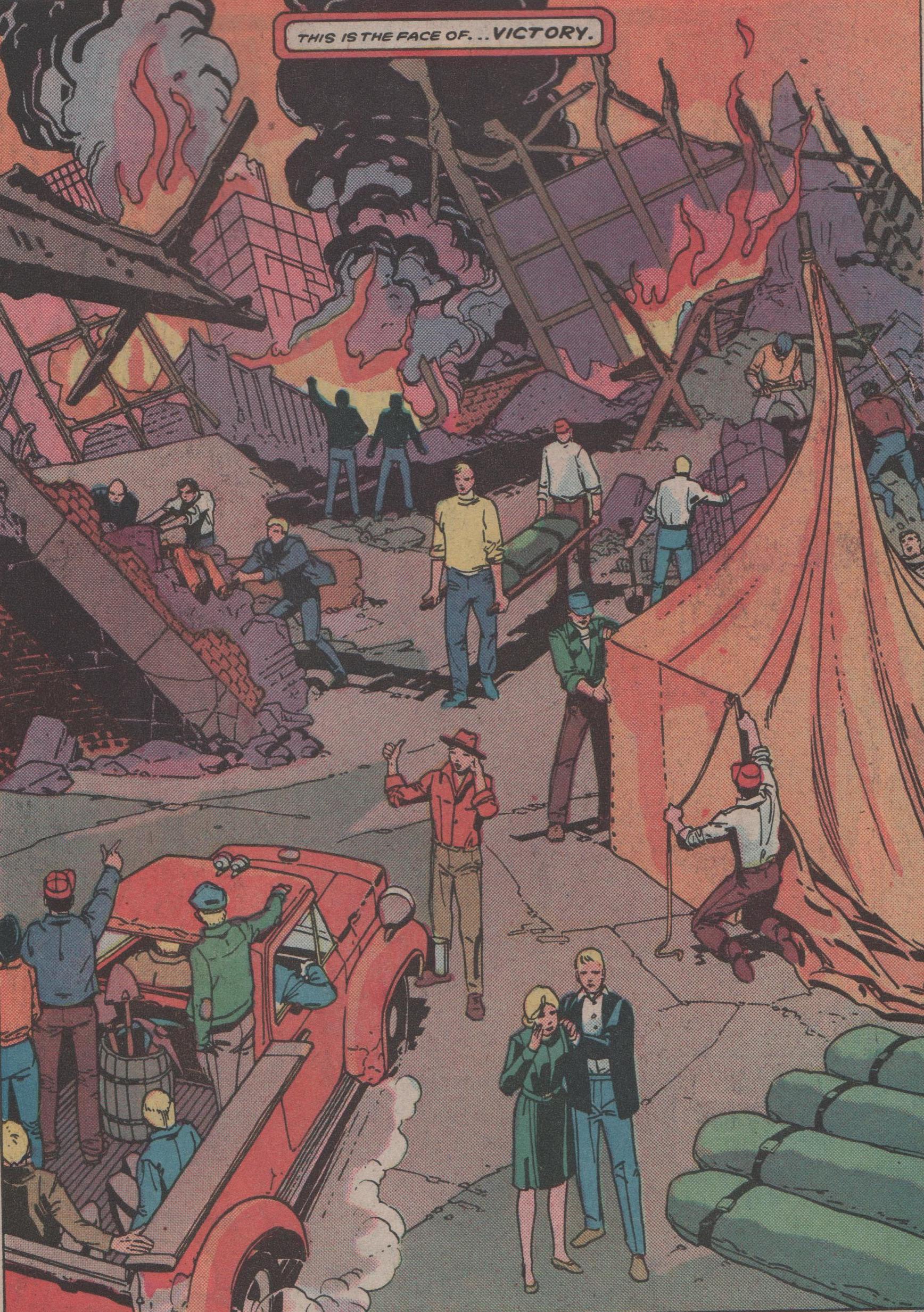
In this issue we see the first meeting (via flashback) between Xavier and Magneto from way back in the day! Also, we see the Brood, Gabrielle Haller, Cyclops and Storm having a power struggle, albeit a brief one, and then a battle with Xavier and Magneto on one side, and Baron Strucker and Hydra on the other!


Image (68)

Image (71)

Image (72)

Image (73)

Image (74)

Image (75)

Image (76)

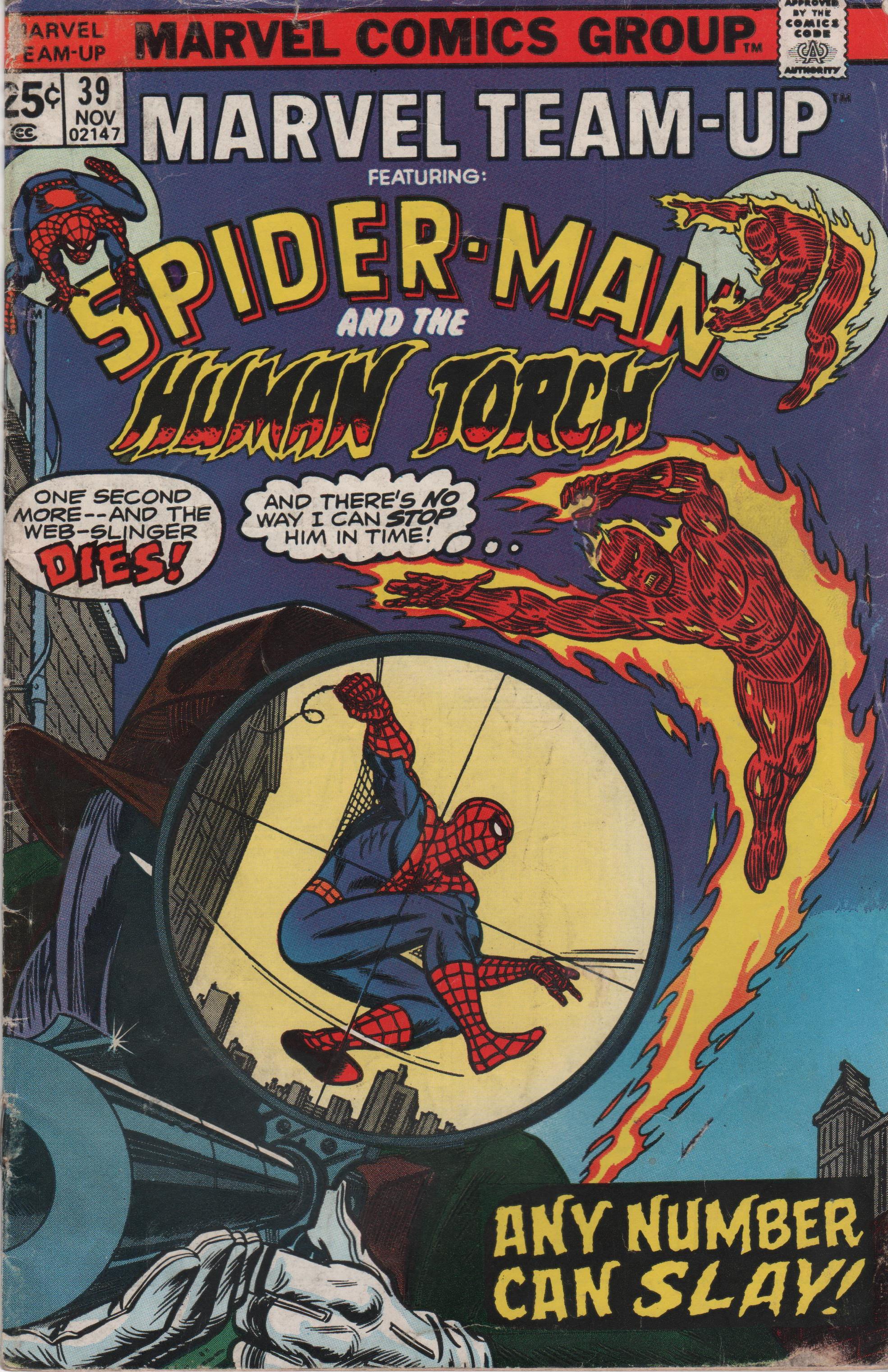
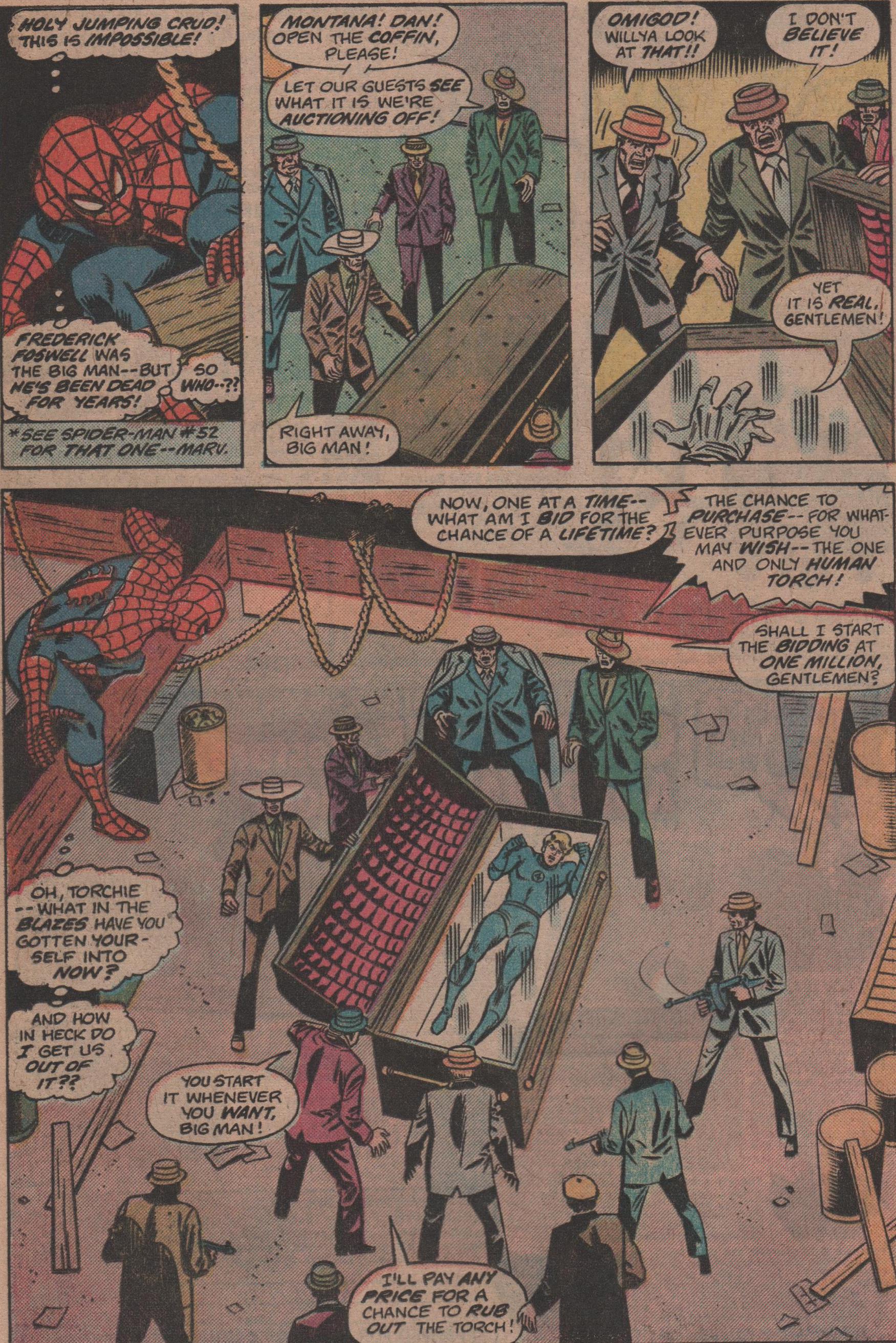
Marvel Team-Up #39, 1975 – “Any Number Can Slay!”

During the 1970’s, Marvel was bursting at the seams with creative talent. The wide array of creator ideas, titles, and characters, pushed them far above DC in the opinion of many a comic book aficionado. They leaped forward due to the fact that their characters were much more unique, the settings were in the real world, and the creative teams were newer, younger, and had fresh ideas. Just one example of all that was Marvel Team-Up.

This title was basically a book for Spider-Man to gain even more presence in the Marvel Universe, and spotlight some more minor characters as well. Whether they were heroes or villains, the book always had a different perspective that helped the characters leap off of the pages and into the reader’s minds.

This team up with Spidey and the Human Torch is no different. We see the two heroes battle alone and then together, with the threat of a multitude of villains ranging from Montana, to the Big Man, to the Sandman! Story by Bill Mantlo, art by Sal Buscema and Mike Esposito (cover by John Romita Sr.), colors by Don Warfield, letters by Karen Mantlo, and edited by Marv Wolfman! Enjoy!


Image (60)

Image (61)

Image (62)

Image (63)

Image (64)

Image (65)


Fantastic Four #186, 1977 – “Enter: Salem’s Seven”

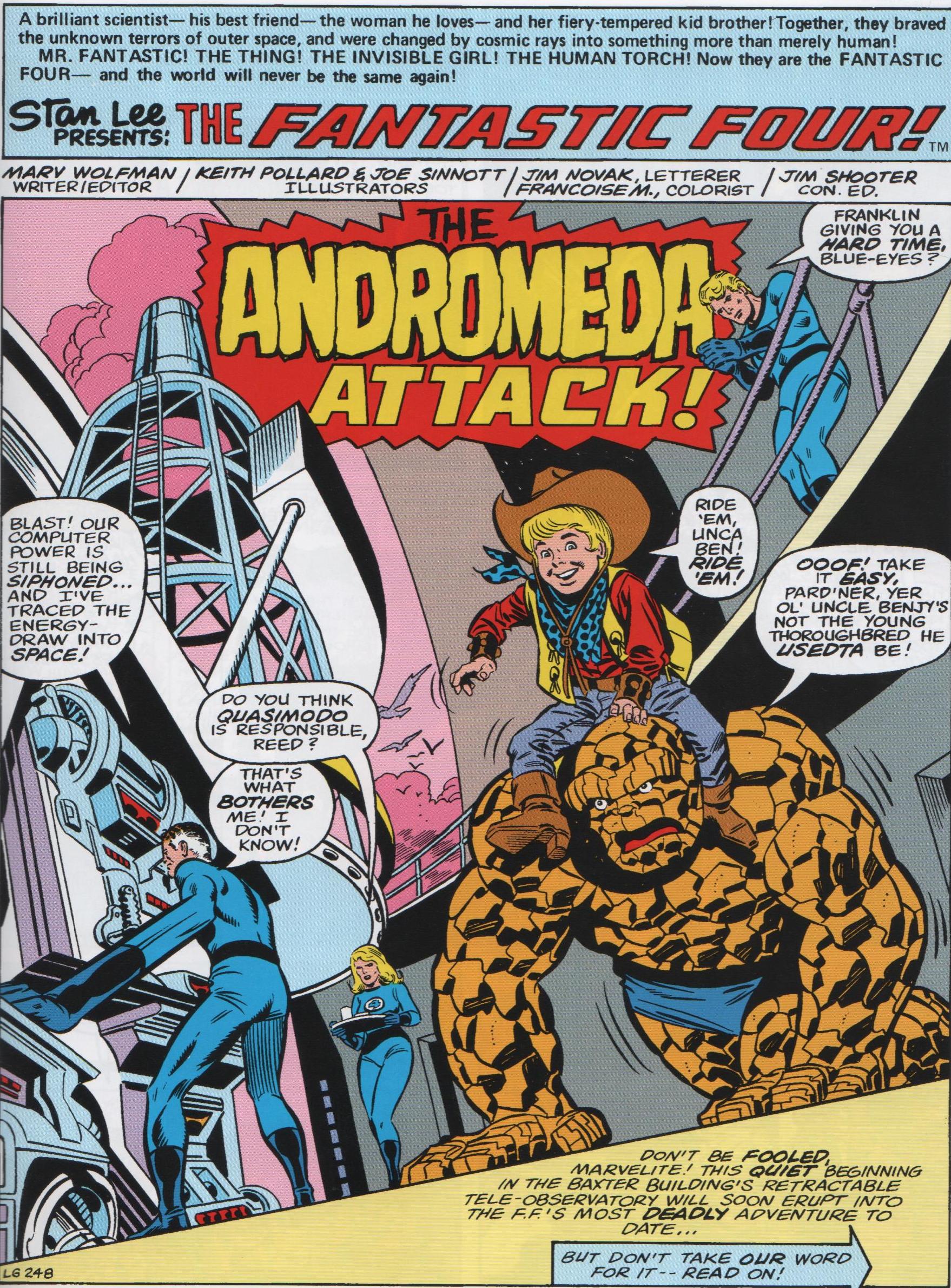
I’ve been on a Fantastic Four kick lately with my buying/reading habits. Either through “Marvel’s Greatest Comics” or the volume one series itself, Marvel’s First Family has me hooked! Unlike a lot of FF fans, I love the post-Kirby/ pre-Byrne era of the team (even more so than the Byrne run…I know, heresy!). Yeah, you didn’t get much in the overarching plot department, but you did get some very cool and quirky stories from people like Marv Wolfman, or in this case, Len Wein (writer), George Perez (pencils), and Joe Sinnott (inks).

Speaking of the latter of those gentlemen, after looking at several different artist’s work, I think I’m convinced that Sinnott is my favorite inker of all time. His inks are very consistent, and concise, and have worked great with some of the best artists in the industry. Well, without too much prattling, this story gives a look at some of the back-matter of the newly installed and mysterious nanny of Franklin Richards, Agatha Harkness! Her origins were very ambiguous but this issue introduced the Salem Seven, and we were able to pull back the veil and see some of her beginnings!


Image (45)

Image (46)

Image (51)

Image (52)

Image (53)

Comic Book Legends: An Interview with – Steve Englehart!

I think it’s safe to say, that in the 1970’s, you’d be hard-pressed to find a more diverse, determined, and dominant writer. From The Avengers, to Batman, and Captain America, Steve Englehart wrote stories that were interesting, thought-provoking, humorous, and socially significant. Among these treasures was his work on Dr. Strange.

Along with collaborator Frank Brunner (and later artwork by Gene ‘the Dean’ Colan and others), Steve spun a web involving just about every major villain the Doc had up until that point in the characters history. He also molded Clea, (apprentice/ lover of the Doc) to be more important, and not just a wallflower. The original run began in the pages of Marvel Premiere, and continued on in the Doc’s solo series. I spotlighted that run not too long ago (click here for that one), showing the mind-blowing artwork of Frank Brunner.

Alright, now that the pleasantries are done with, let’s get on with the interview!

AE49 Trial Cover.qxd

Billy: Did you read and/or draw any motivation from the Lee & Ditko work for your Doc Strange run?

Steve: Very definitely. Ditko’s Doc was legendary, and everyone thereafter tried to emulate him to some degree. Ditko’s Spidey got completely overwhelmed when Romita took it over, because Johnny was much better at the people and world that Spidey inhabited – but Ditko’s Doc remained a touchstone of “Strangeness” for everyone who followed on that strip. I had read all of it, just as I’d read all of Marvel, being a fan. I took my own approach to what I did with it, of course, but Ditko’s Doc was always the one I was fleshing out.


Billy: What was the impetus for your Dr. Strange stories? And did you approach editorial with the ideas or did they ask you (what was the process)?

Steve: Frank (Brunner) was taking over the strip full-time and did the then-unusual thing of asking for a specific writer. We knew each other only casually, socially, but he liked what I’d done on other books, so he asked that I be assigned. I had written Doc in DEFENDERS, but figured I’d need to get more mystical for his own book, so I started reading up on magick, which turned out to be interesting on its own, and my reading increasingly shaped my understanding of a sorcerer supreme. I could do this because editorial left each writer to do his job and figure out how to approach it on his own.


Billy: How tough is it juggling multiple titles on a monthly basis?

Steve: I enjoyed it. I loved all the characters, I loved working with artists…there was no real downside to it. I could do a book a week so I did four books a month, and there was always something new going on. Fun!


Billy: Did you guys use the “Marvel Method” or fully flesh out scripts together?

Steve: We did them together. Every two months we’d have dinner at his place or mine, and then talk late into the night putting the issue together. I always had concepts I wanted to explore and he had concepts he wanted to draw, and we’d make something that was more than the sum of those parts, until I, as the writer, was satisfied we had a solid issue. That was the most collaborative of any relationship I ever had with an artist.


Billy: Was killing the Ancient One something you felt fit the story (did it feel organic) or was it something you wanted to do from the get-go?

Steve: That evolved in our first late-night session. I thought Doc had been a disciple for quite a while now – and we’d inherited Shuma-Gorath and knew we had to resolve that at some point, preferably ASAP – and by the time we were done, it all came together (image below- the death of the Ancient One- Marvel Premiere #10, 1973).

Image (36)


Billy: Can you speak about the whole atmosphere/work environment at Marvel at the time (other creators you enjoyed working with, etc. in the 1970’s)?

Steve: It was just a time of complete freedom. Everyone working there was assumed to be competent to handle his own titles and was not held back in any way. If you proved yourself _unable_ to handle your titles, they became someone else’s titles, but there was no micromanaging from editorial. Thus, if you _could_ handle your titles, you could be, and were encouraged to be, as creative as possible. And this was all taking place with everyone living in the New York metro area, so pretty much everyone else in comics, at every company, was someone you knew personally. When I moved to New York, as you had to do in those days, I felt from day one like I had three hundred new friends to work and party with. Both of which we did.


Billy: When did you and Frank find out about Dr. Strange becoming an ongoing or was that known from the beginning?

Steve: The book took off with us on it, and we knew what that would lead to, but we didn’t know when. The problem, as it turned out, was that Frank couldn’t do more than a bimonthly book, so when it became an ongoing series that was monthly, he struggled and then dropped off.


Billy: You inserted many of the best villains from Dr. Strange’s rogues gallery into your stories (Shuma Gorath, Mordo, Silver Dagger, Dormammu, etc.), what was the process like for combing thru them to choose which one you’d use?

Steve: I’d always think of character concepts, then go looking for a villain to cause the story I wanted to do. With Doc, Frank and I started, and then I continued, the idea of several-issue arcs exploring a particular concept, so then it was just a question of looking back through my collection. I took every character as real within the Marvel Universe, so I knew them personally you might say, and when I wanted somebody to a certain thing, I could usually go straight to him.


Billy: I’ve read that Frank’s (Brunner) style really wasn’t conducive to the rigors of a monthly title. Is that the reason he left the book?

Steve: Yes. Even on the books he did do, you’ll occasionally see a page or two by another artist. Art was not a slap-dash thing for him.


Billy: Obviously, transitioning to a legendary artist like Gene Colan, who had previously worked on Dr. Strange, wasn’t too bad of a draw, but was it intimidating at all?

Steve: Not really, because I knew Gene’s approach intimately, from having been a fan and then having worked in the same environment. Nobody intimidated me by then; I just saw the possibilities his more photographic approach would open up, after the more designy work by Frank. I consider them equally great at what they did, and Frank’s Doc is legitimately legendary in its own right, but Gene offered new worlds to explore. (And Gene didn’t want to be involved in the stories, so I was also taking that on completely – and that was fun, too.)


Billy: Gene is my favorite artist of all time, but I never got the chance to speak with him. Could you talk about him not only from a professional stand point, but also the man himself?

Steve: As a pro, he drew what you asked him to draw, exceptionally well, without any complaint – what a writer hopes for, and usually gets from pro artists, but not always. There was nothing that stood out in the work process, which is a good thing. (The only caveat was, he wasn’t great at pacing his stories, so writers generally broke their plots down page by page for him – a minor flaw, easily corrected.) As a person, he was just a sweet guy. He knew he was good but he never acted like it, and in fact, he told me that after many years of freelancing, he never assumed that he’d get another job once he turned the current one in.


Billy: Lastly, could you speak about having Roy Thomas as an editor, and what he brought to the table?

Steve: Roy brought the gift of freedom. It was his decision to let us be as creative as possible, without his interference, and I’m forever thankful for that.

Well, that’s it for today, but before I go, I want to send out a huge thank you to Steve for doing the interview, and allowing this fan to ask one of his favorite creators of all time some questions! Below is a link to Steve’s webpage, so click and take a look!
Marvel’s Unsung Heroes! – Keith Pollard!

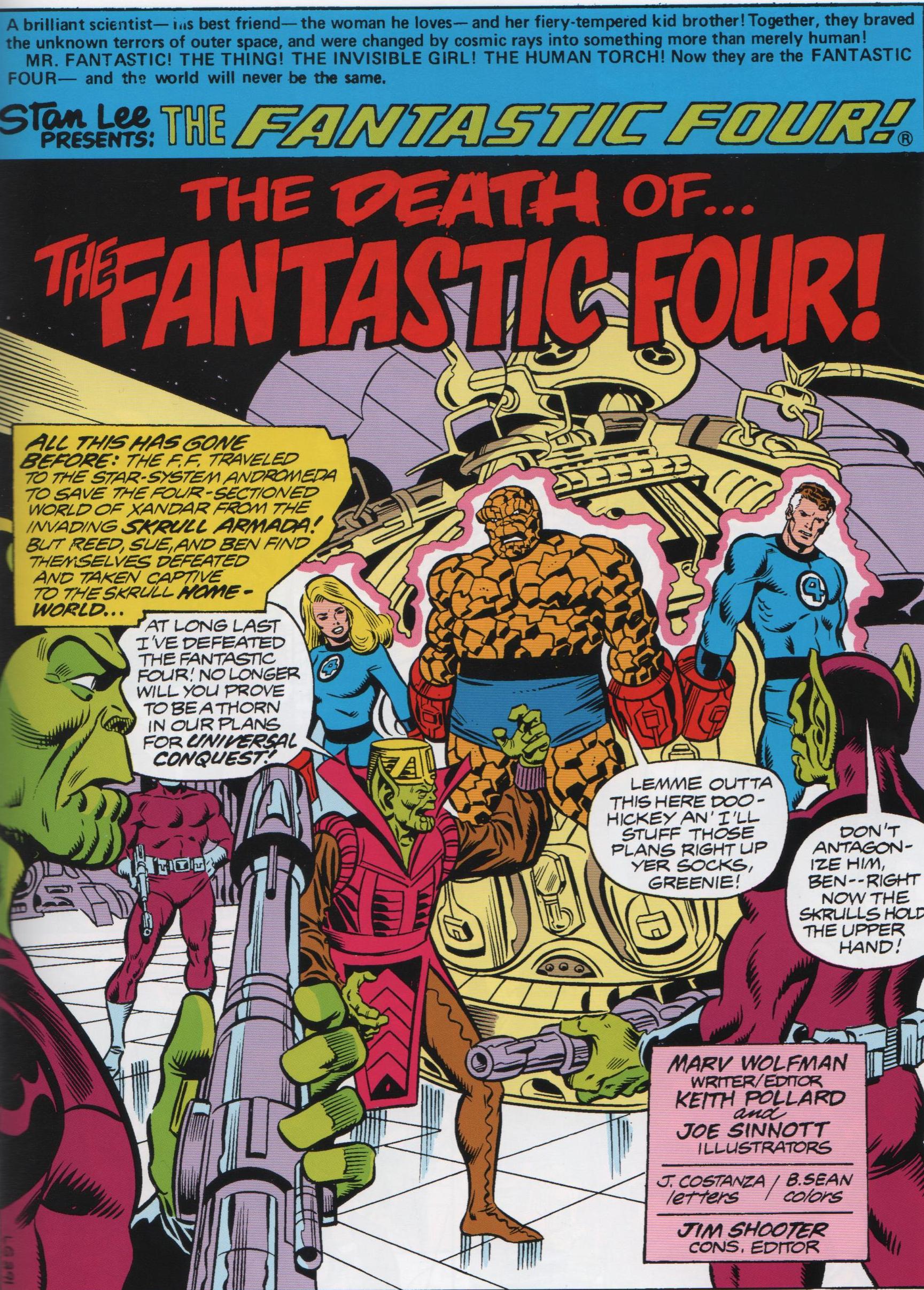
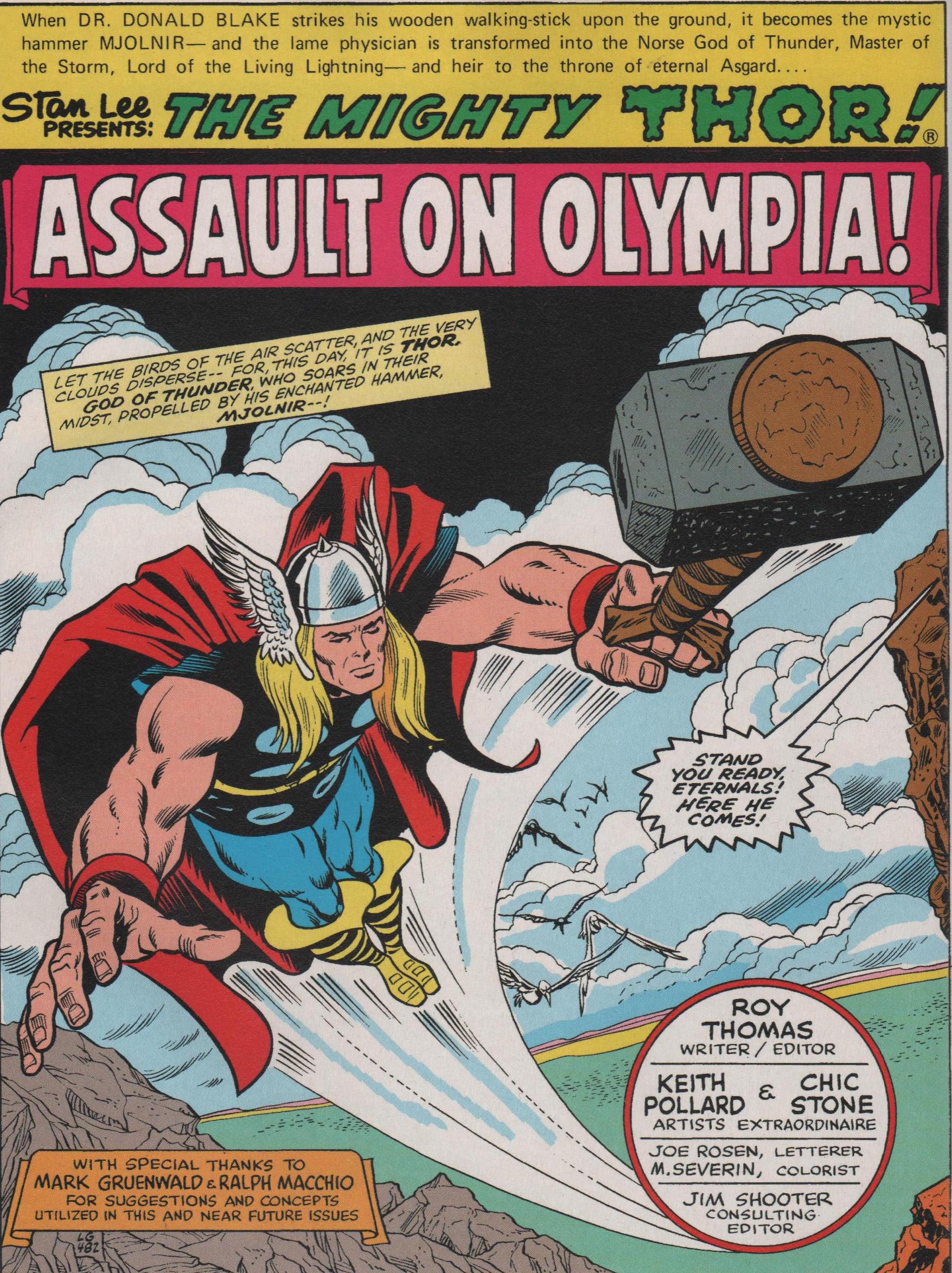
Why the name Keith Pollard isn’t mentioned among Marvel’s elite, is beyond my comprehension. Sure, you have the likes of Jack Kirby, John Romita, and so on, but for me, Pollard belongs right in the next tier alongside Perez, Byrne, Simonson, and the rest. His work is really great, and he actually drew most of my favorite Thor story as well. I think that’s actually the first time I saw his work, and I was blown away.

Whether it was in the pages of Thor, The Fantastic Four, or any other, you’ll soon realize that he’s one of the most underrated artists of all time! I’ll actually throw in a few covers he did as well, just to show the great range he had too. With incredible inkers like Joe Sinnott, and Chic Stone, Keith’s work really stands out. His list of credits may not be as lengthy as some others, but you cannot deny his talents. So, here’s to you, Keith Pollard, thanks for your contributions to the comic book industry!


Image (161)

Image (162)

Image (164)

Image (165)

Image (166)

Image (167)

Image (168)

Image (169)

Image (170)

Image (172)

Image (171)

Image (173)

Image (174)

Image (175)

Image (176)

Marvel’s Greatest Comics #49, 1974

You know, the early days of the Fantastic Four, showed that readers were yearning for a comic book with a familial aspect to it, as opposed to the regular superhero books. The great reprint series, “Marvel’s Greatest Comics“, is an incredible way to check out these classic stories individually, and not in trade. This specific issue, is a build up of sorts for the wackiness to really get into high gear in #50.

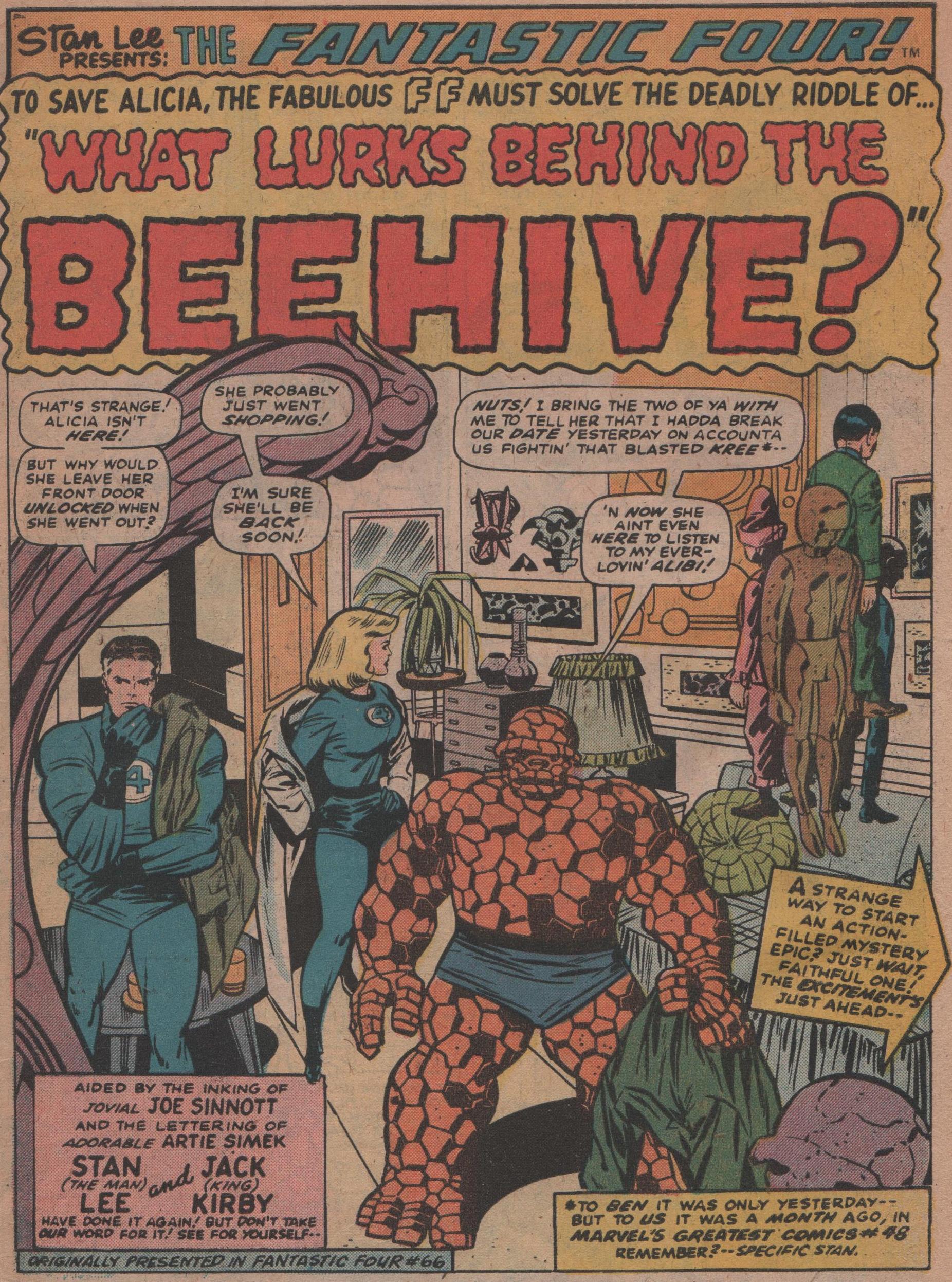
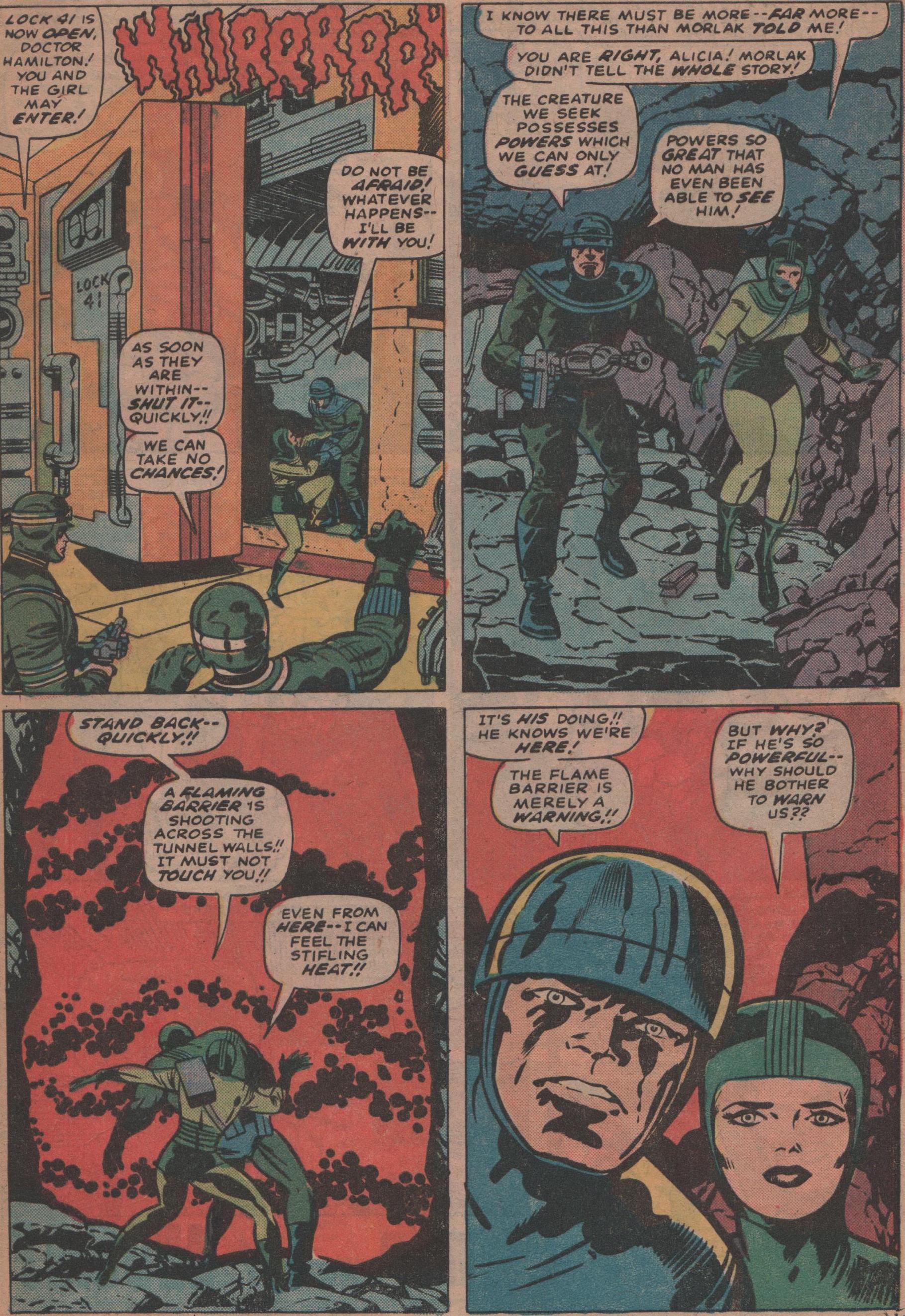
In this issue (#49, but originally presented in FF #66)) we get to see the cabal of scientists known as “The Enclave’, and we find out that they’ve kidnapped (sort of), Alicia Masters. The conversation between the characters in this issue is outrageous to say the least. Ben “clobbering” Reed, and knocking him unconscious over basically nothing other than Ben’s wallowing in self-pity…again. Sue still being treated like a second class citizen, and so on, is really crazy, and makes this book a funny read.

The artwork of course, was from Jack Kirby. And along for the ride was his trusted confidant, Joe Sinnott, the artwork just absolutely pops off of the pages. That’s why they call him the ‘King’ of comics! OK, let’s get down to business and enjoy some comic panels. Enjoy!


Image (148)

Image (149)

Image (150)

Image (151)

Image (152)

Image (153)

Image (154)


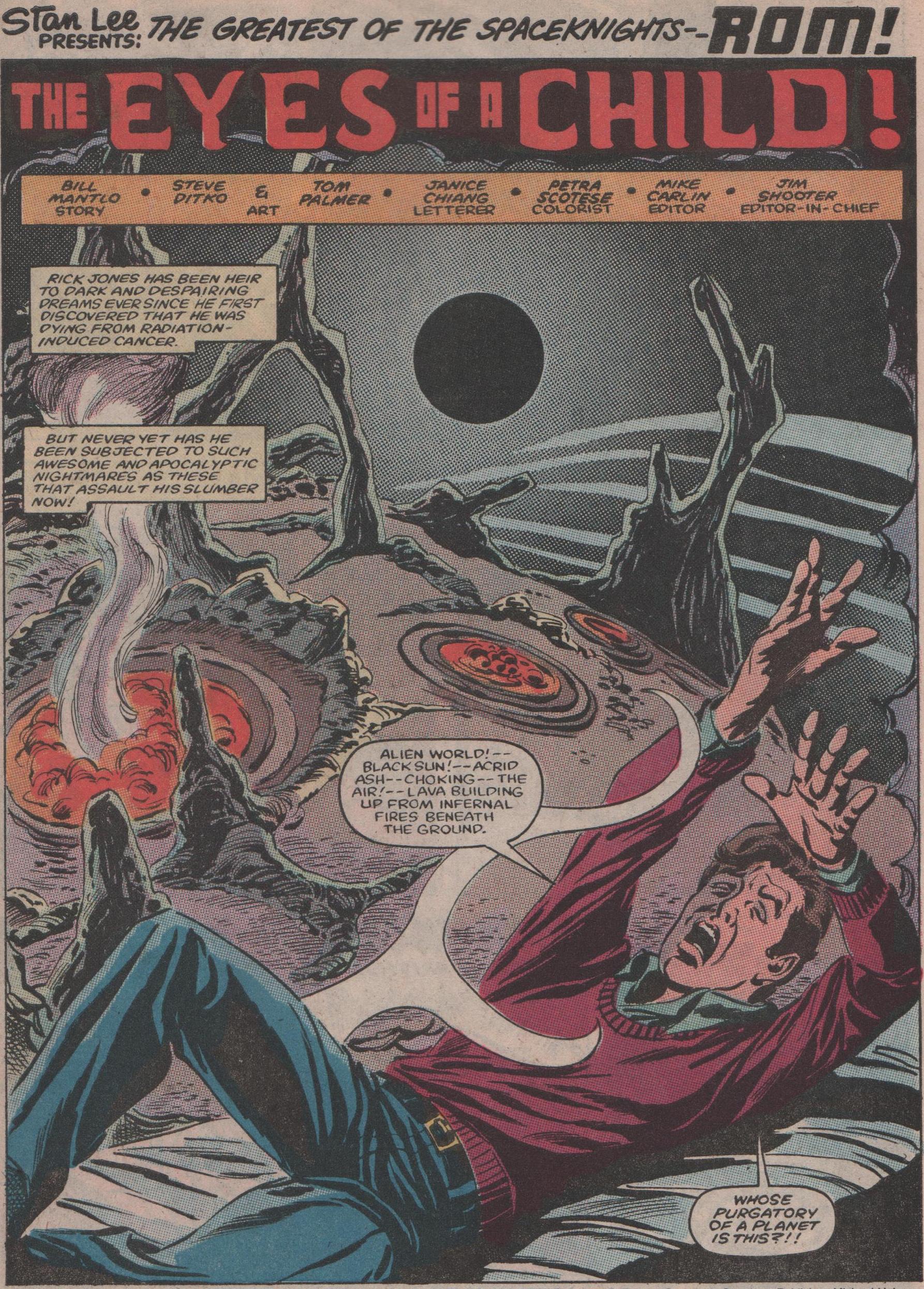
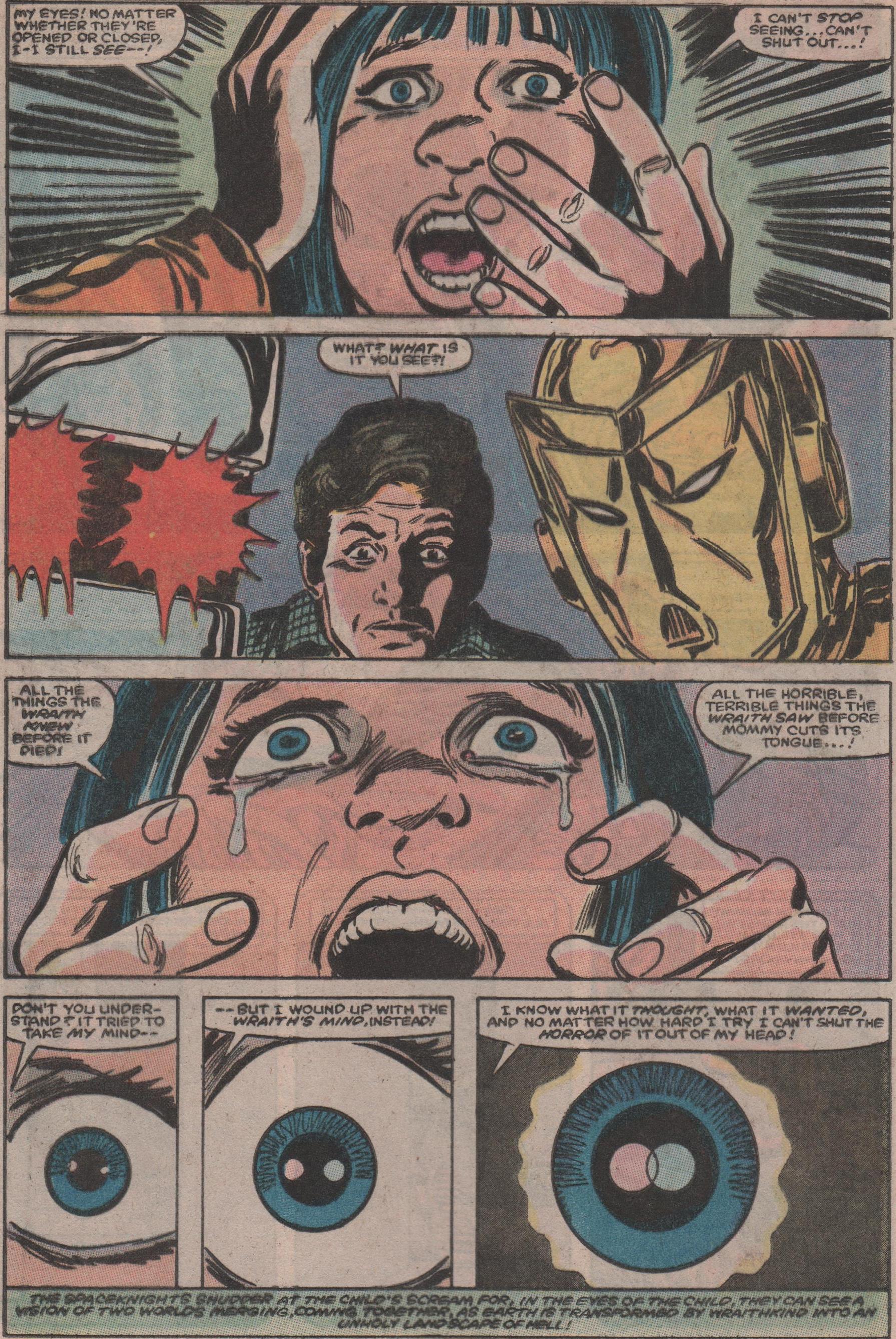
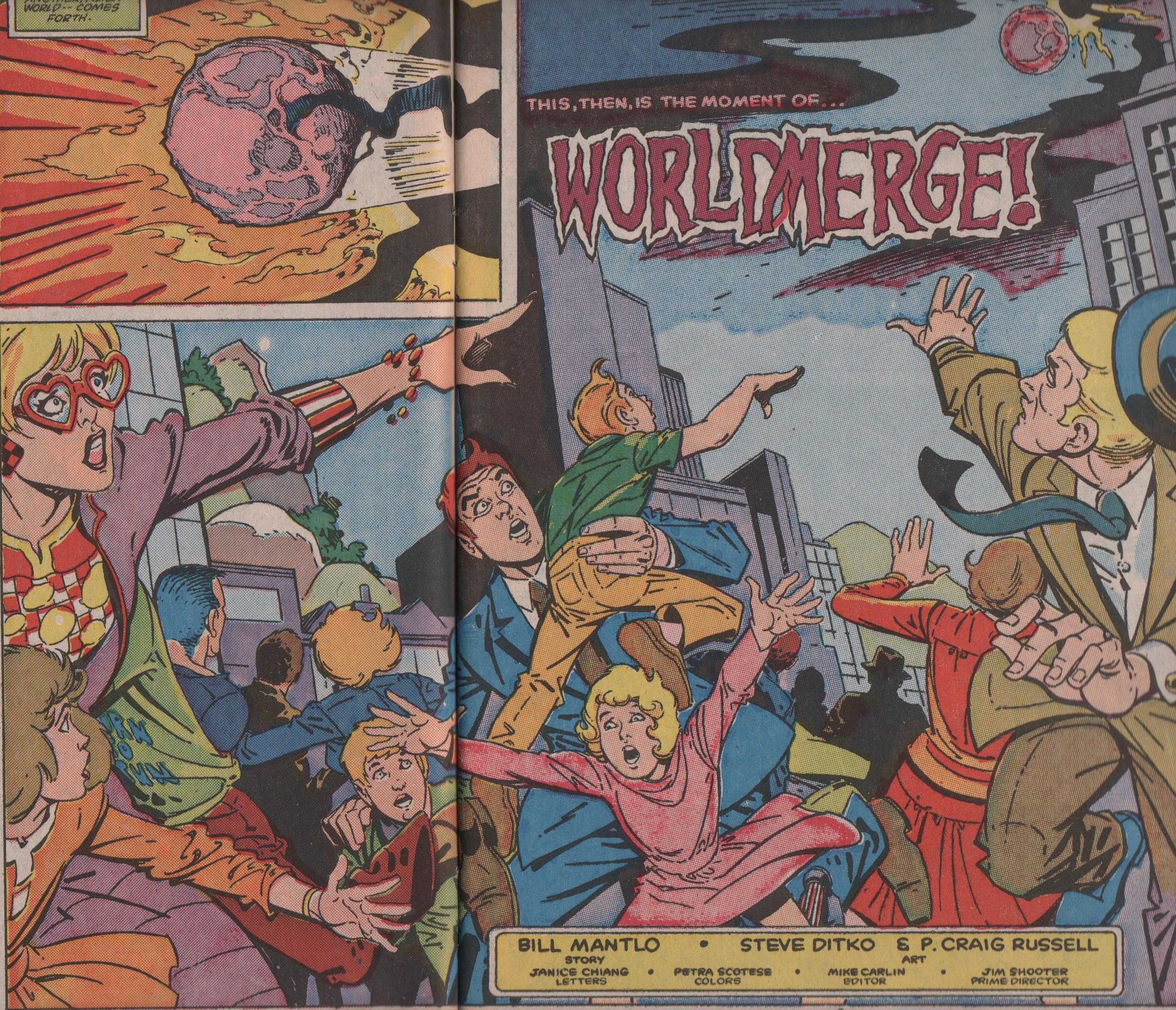
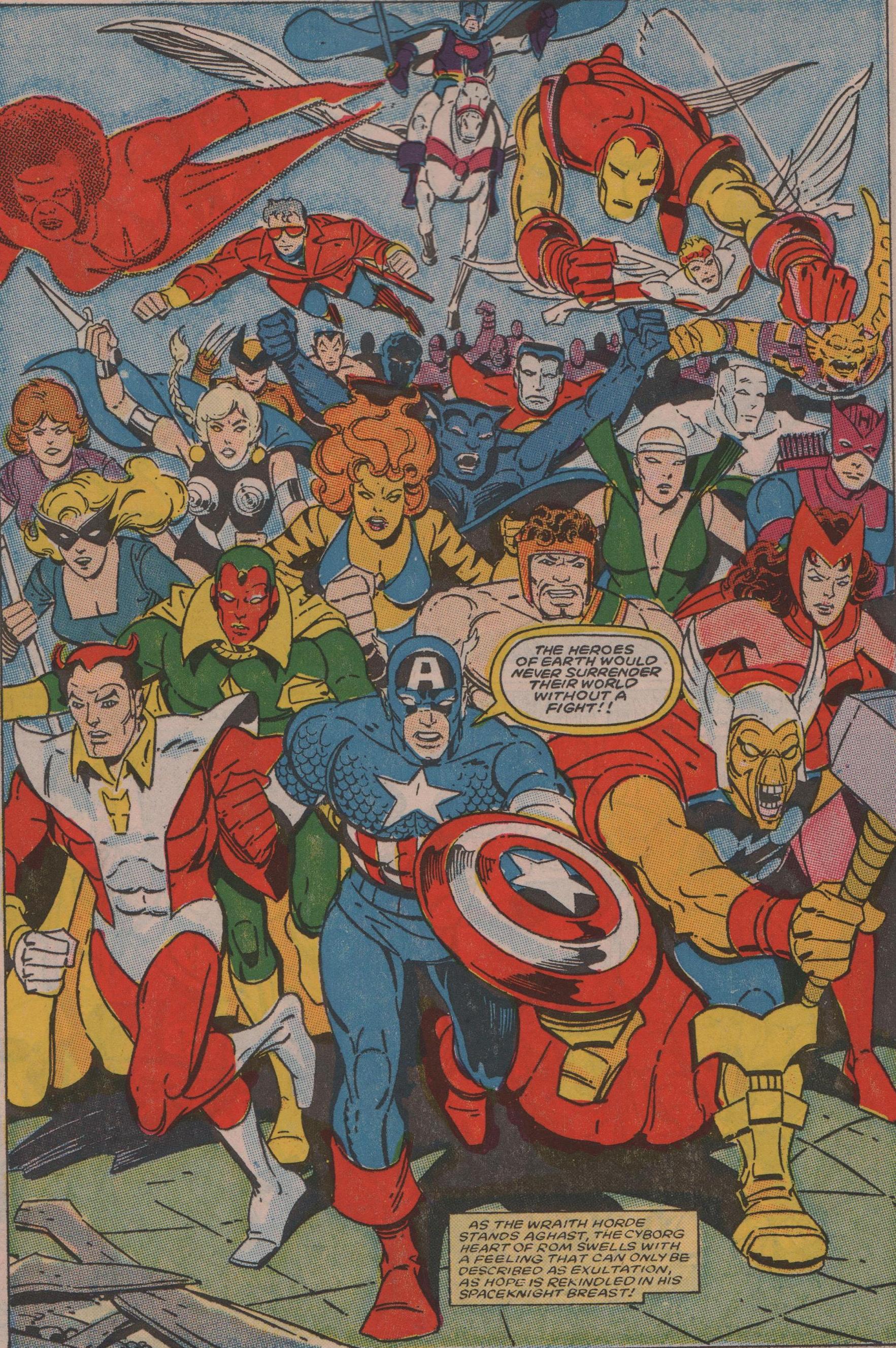
ROM SpaceKnight! The Bill Mantlo/Steve Ditko Run!

Unbeknownst to me until recently, the incomparable Steve Ditko had a nice run on ROM! His rendering of the shiny superhero from Galador is quite awesome, and with other artists the caliber of Bob Layton, Jackson Guice, P. Craig Russell,  and Tom Palmer inking his pencils, you were privileged to see  a great comic book! In the mid-1980’s, Marvel was in high gear, but also competing with DC, who was churning out epic stories like Crisis on Infinite Earths, and Legends. Marvel had Secret Wars, but also had some little gems like I’m about to show you now! So, without further delay, let’s get right to the visual show!


Image (127)

Image (128)

Image (129)

Image (130)

Image (131)

Image (132)

Image (133)

Image (134)

Image (135)

Image (137)

Image (138)

Image (139)

Image (140)

Image (142)

Image (143)

Marvel’s Unsung Heroes! – Rich Buckler!

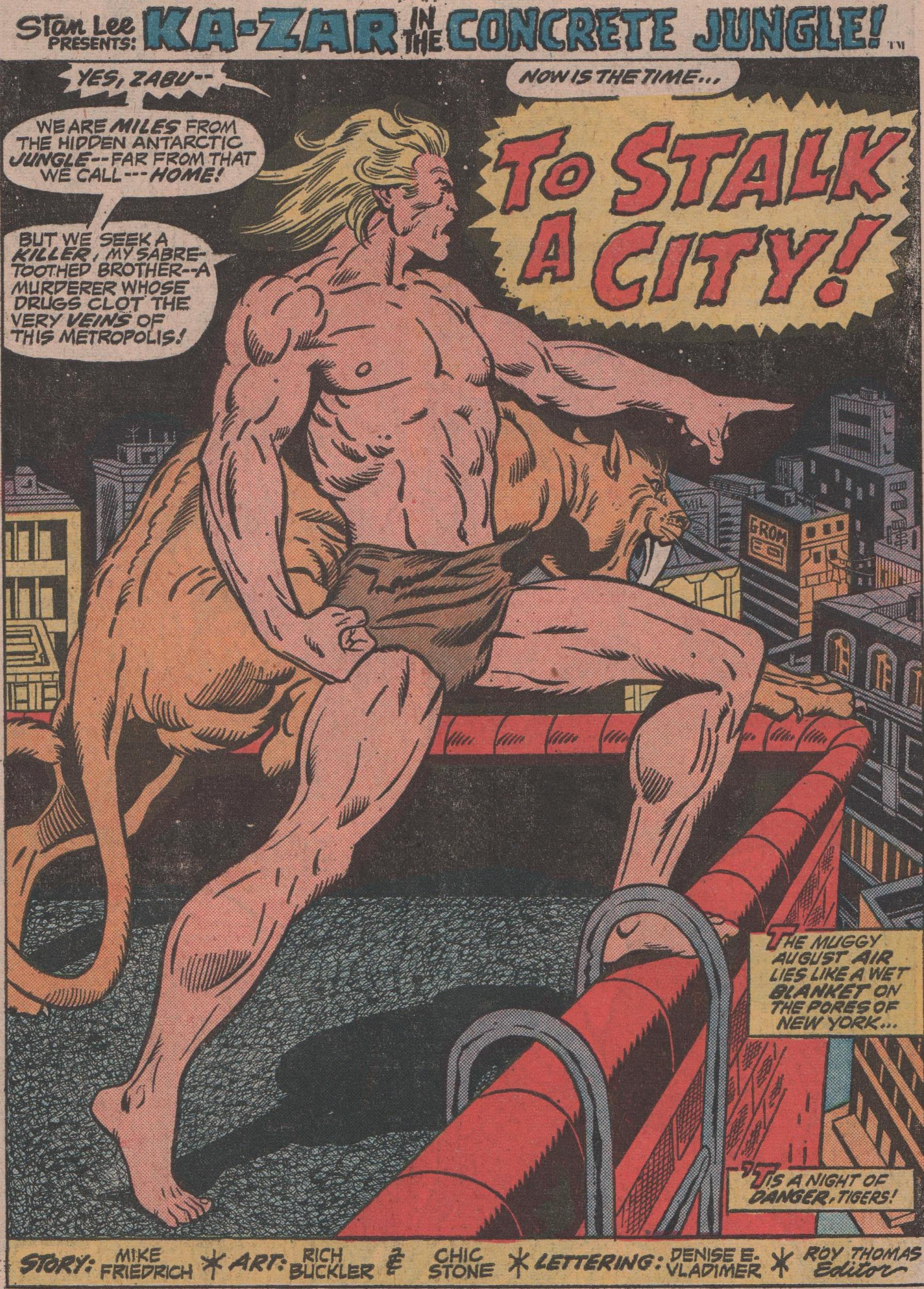
You know, just like in my last Unsung Heroes spotlight, some creators just never seem to get their due! I think anyone that knows the work of Rich Buckler, would agree he fits into that category! The man has worked in comics since the Silver Age, and is one of the most consistent artists in the industry. He and Doug Moench created the character “Deathlok“, and if you’ve been watching television lately (Marvel’s Agents of SHIELD), you’d know that that character has been a huge part of the series! That character specifically, was used brilliantly by Buckler to push the envelope about certain social issues, as well as just entertain with lots of action over the years!

I had the pleasure of meeting Rich for a few short seconds as he sketched away at New York Comic Con in 2013. He signed a book for me (FF #157- image below), so I was on cloud nine! Well, rather than me telling you how awesome Rich is, let me just show you by featuring his covers and some interior pages as well! So, here’s to you, Rich Buckler, thanks for all the great memories from years gone by!


Image (103)

Image (104)

Image (105)

Image (106)

Image (107)

Image (101)

Image (108)

Image (109)

Image (102)

Image (110)

Image (111)

Image (112)

Image (113)

Marvel Comics: The 1970’s: Great Mash-Ups- Dr. Strange and Dracula!

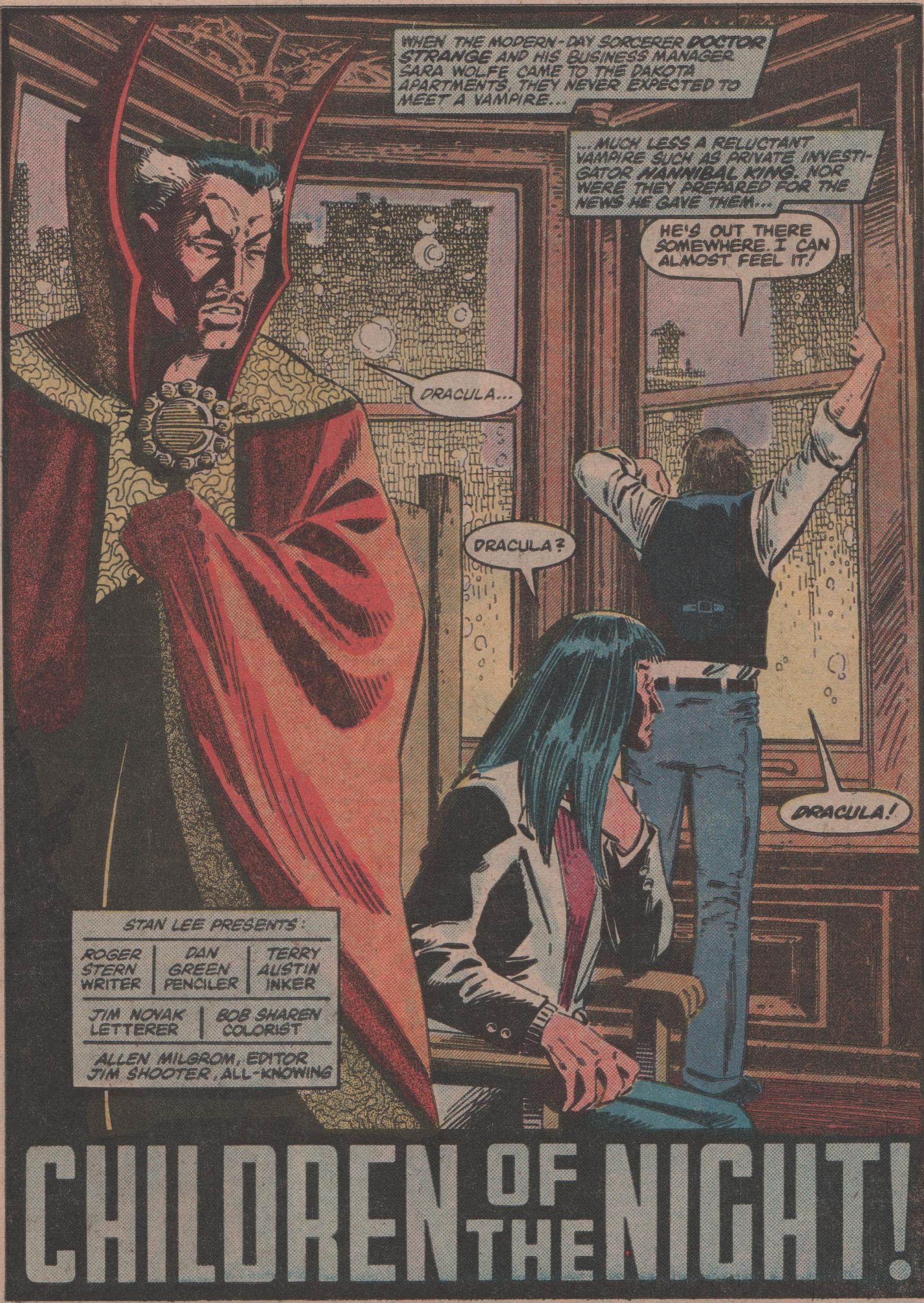
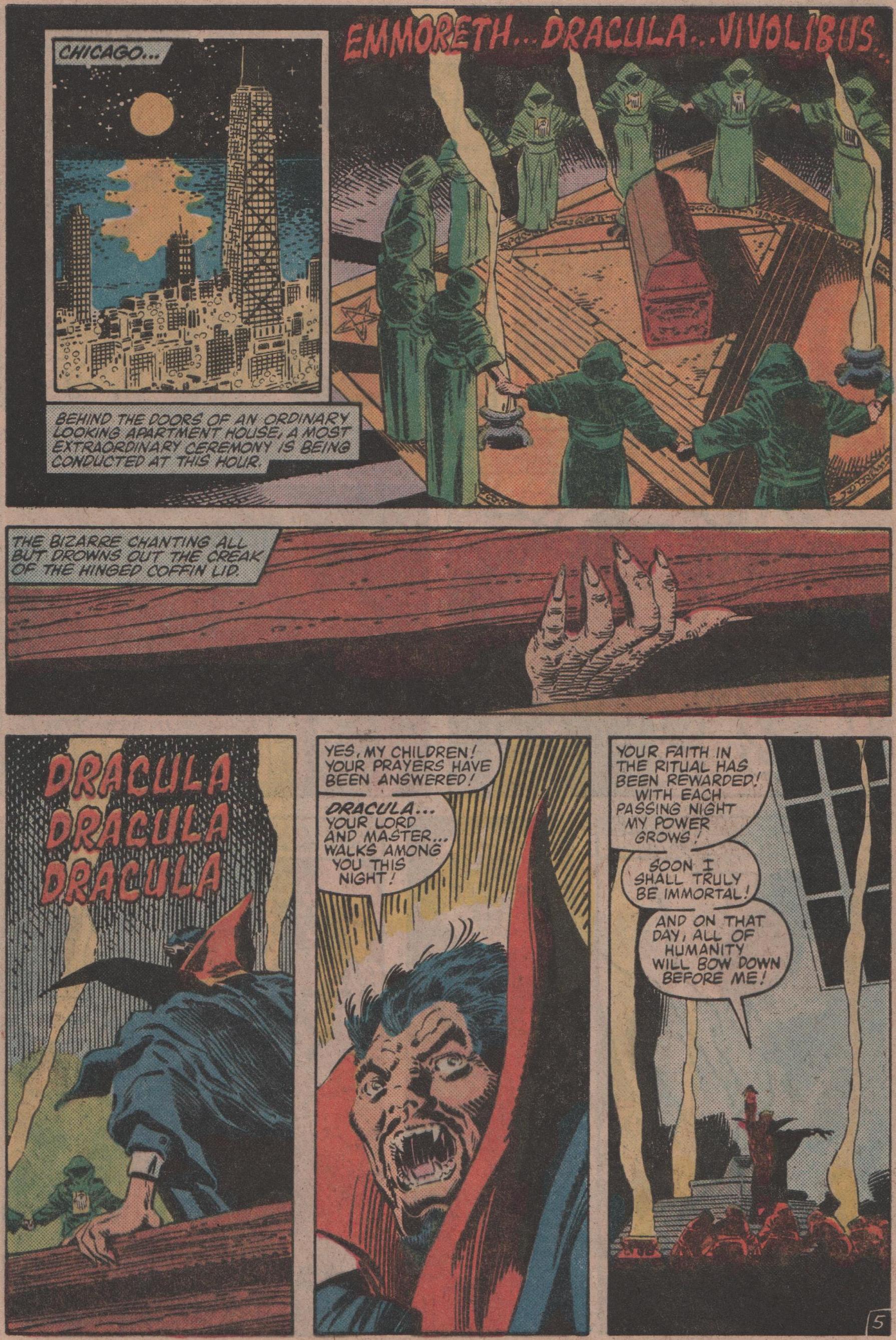
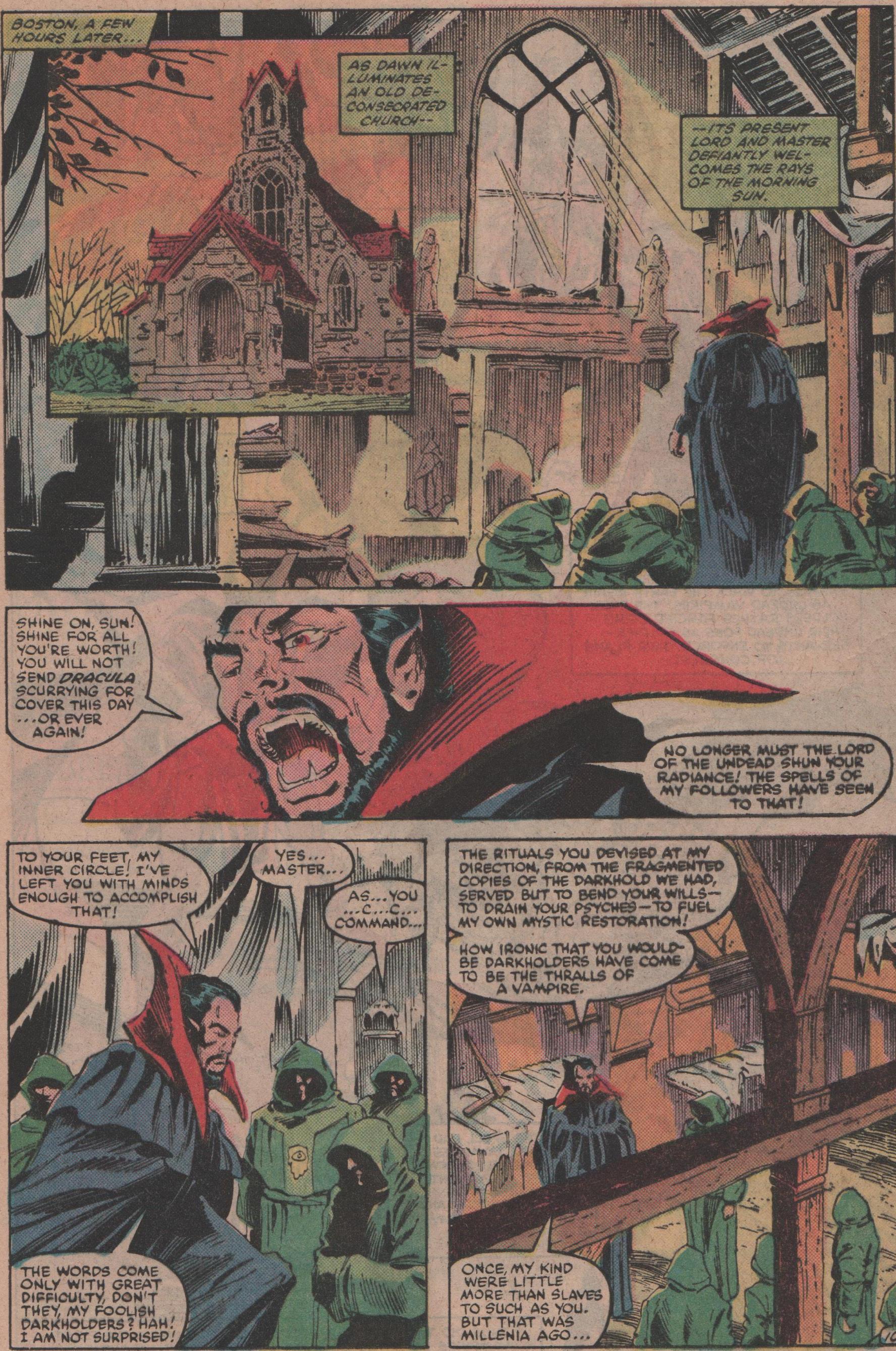
Thanks for all the cheers, high fives, fist bumps, etc., I know you missed me while I was on vacation! Now that I’m back, I want to get back in the groove with one of my all time favorite mash-ups! In the 1970’s, the horror scene went wild, and so did the psychedelic books like Warlock, Man-Thing,  and Dr. Strange (Strange had been that way since the Ditko years, but it continued)! Two awesome things that dominated the 1970’s (and early 1980’s) were horror and sorcery. This is the subject of today’s “Mash-up”! The year was 1976, and it was time that Dracula, lord of all vampires, and this dimension’s (616) Sorcerer Supreme, Dr. Strange had to meet!

Both books were selling well at the time (of their fist meeting), and a conflict seemed inevitable. Marvel had the incredible team of Marv Wolfman, Gene Colan, and Tom Palmer on The Tomb of Dracula, but not to be outdone, Marvel super-scribe, Steve Englehart (and later, Roger Stern) was writing Dr. Strange at the time (along with Colan and Palmer on art duties – later Green, Leialoha, and others)! So, not only did this story make sense from a buyer’s perspective (most readers probably read both books), but also from an editorial angle as well. Now, without further interruption, here are a few of the great pages/panels from some of those early meetings between Dracula and Dr. Strange! Enjoy! For these stories check out Dr. Strange #14 & Tomb of Dracula #44 (their first meeting), & Dr. Strange #58-62 (The Montesi Formula).


Image (89)

Image (90)

Image (91)

Image (92)

Image (93)

Image (94)

Image (95)

Image (96)

Image (97)

Image (98)

Image (99)

Image (100)

Comics: The 1970’s Horror Explosion! -Finale

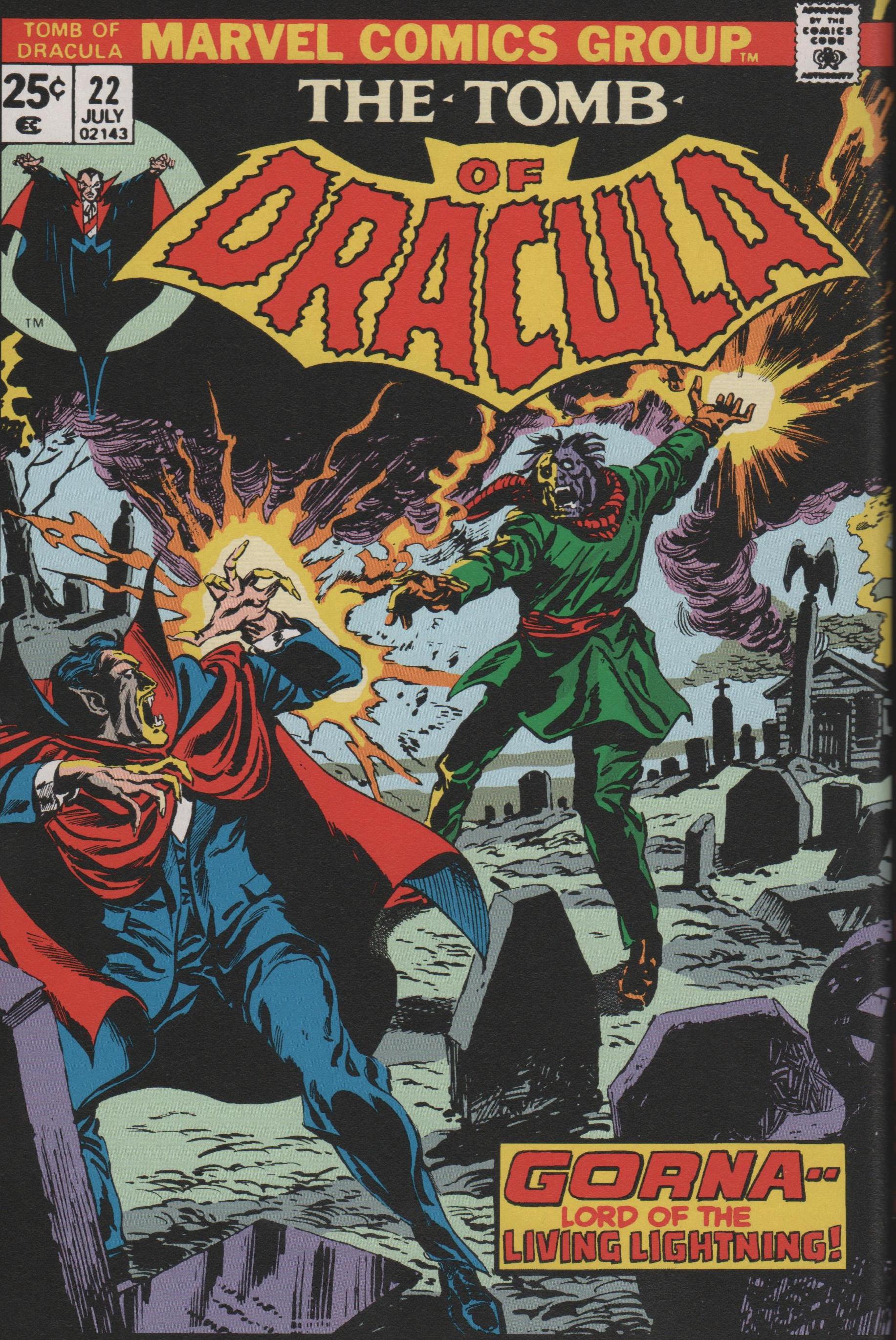
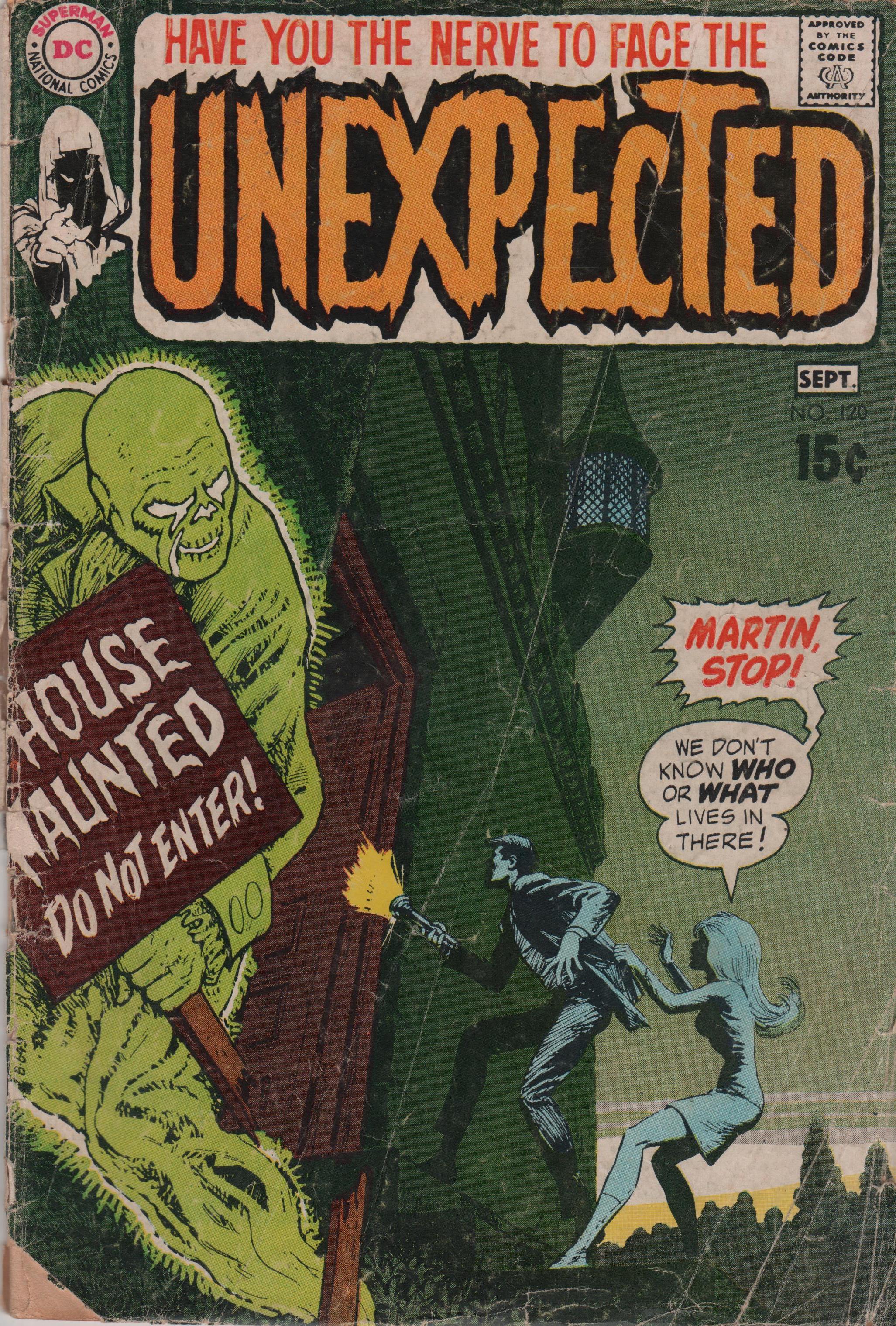
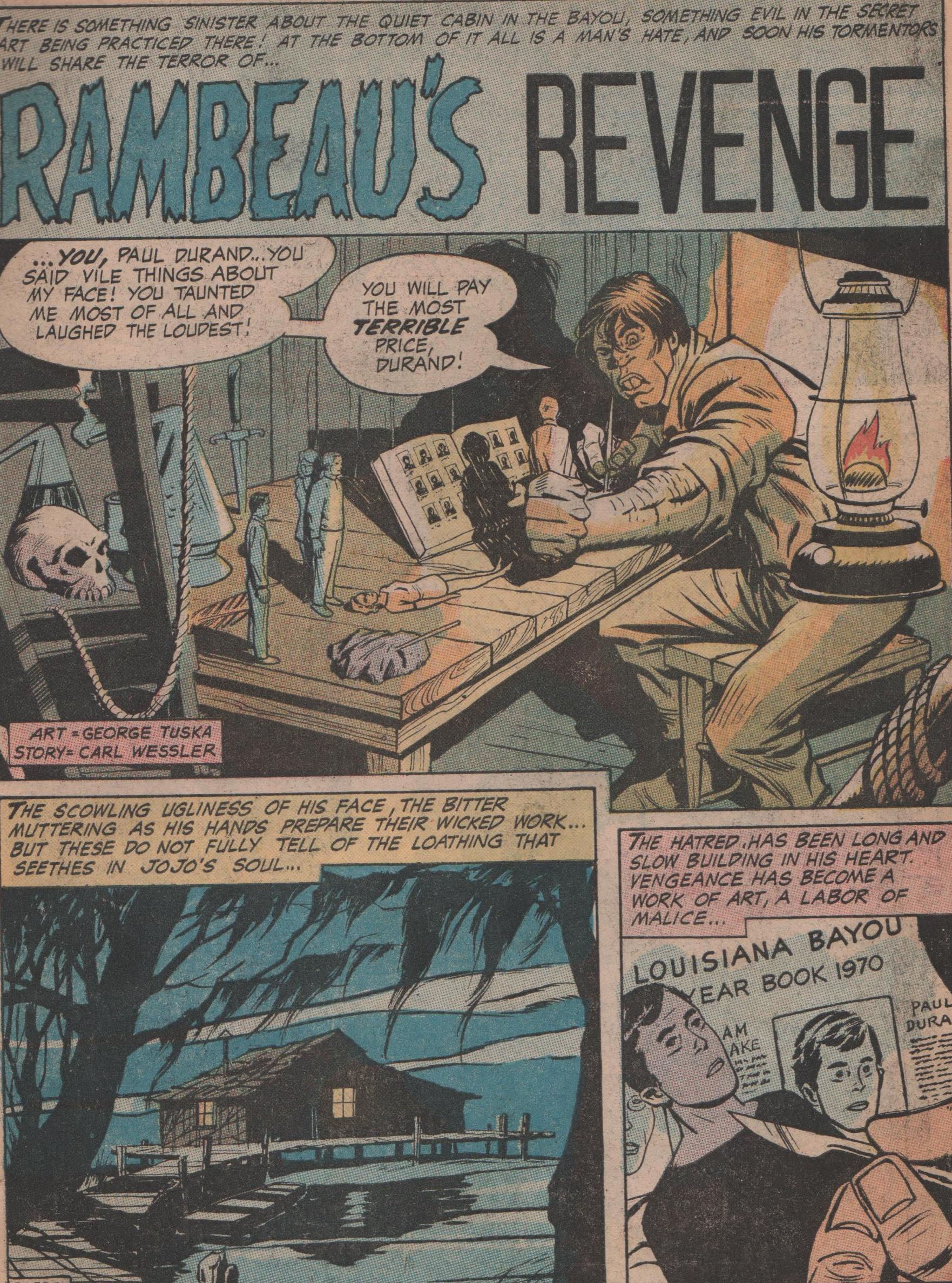
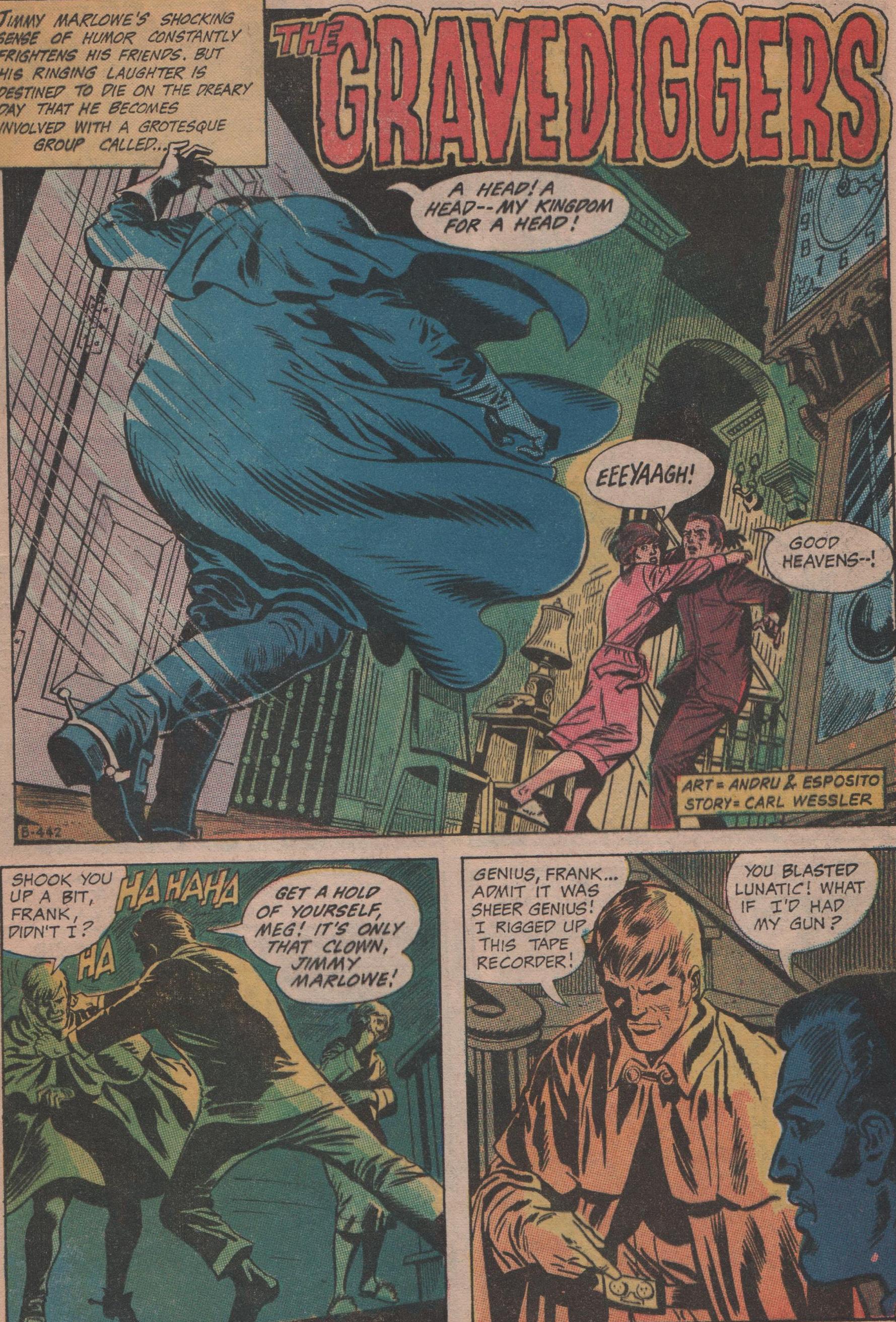
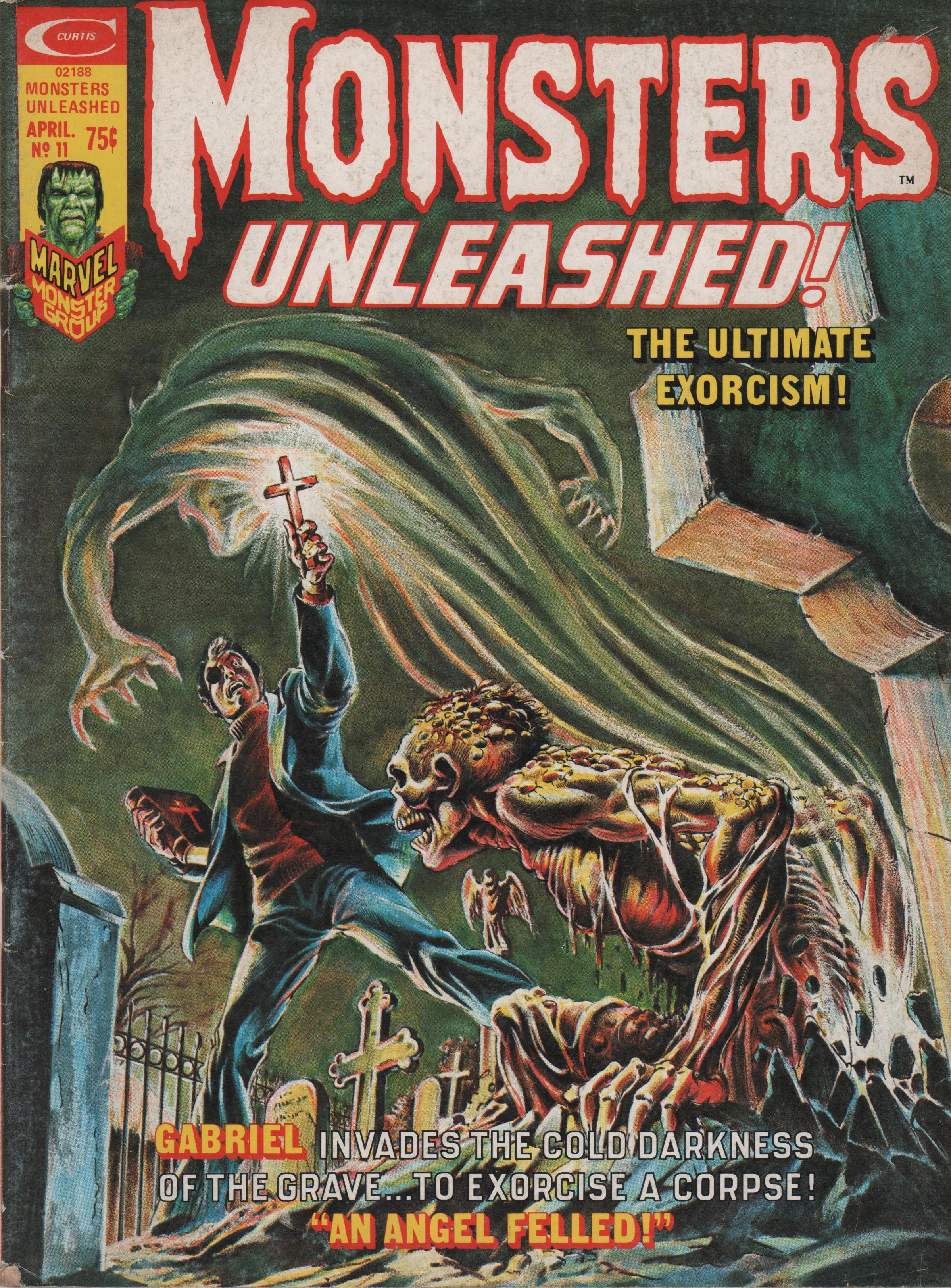
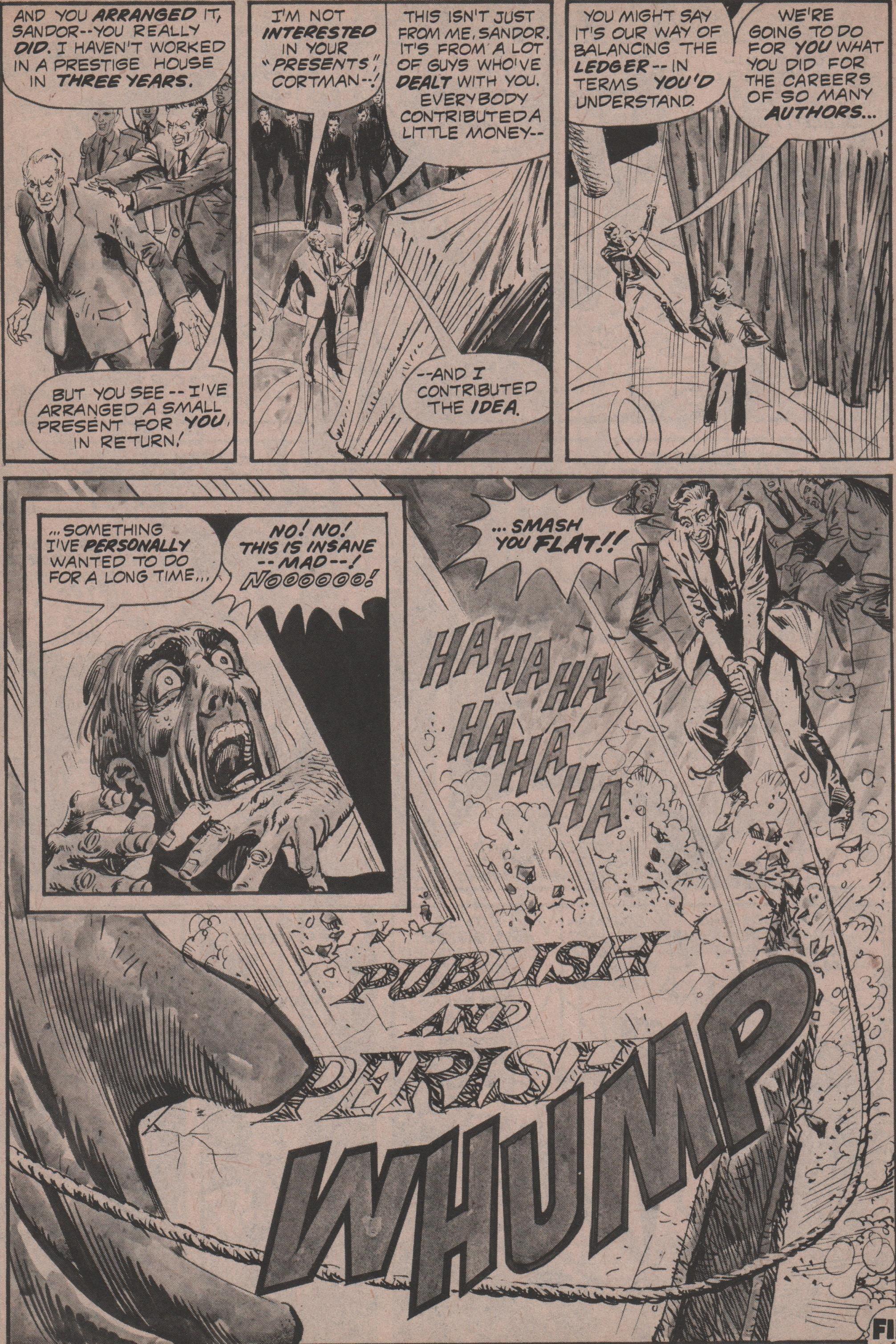
As I wind down this look at some of the great horror titles in comics from the best decade of comic books (stop arguing, it is!), I wanted to give a wider variety than what I’ve posted so far in the previous three installments. There definitely must be contributions from Werewolf by Night, Monster of Frankenstein, Son of Satan, and a nod to the great black and white magazines, as well! Let us send this tribute out with a bang, and see books starring the likes of -Steve Gerber (RIP), Mike Ploog, Gil Kane (RIP), Sonny Trinidad (RIP), Billy Graham (RIP), Rico Rival, Don Perlin, Doug Moench, Gerry Conway, Gary Friedrich, Jim Steranko, Don McGregor, Tony Isabella, Jim Aparo (RIP), Carmine Infantino (RIP), Nick Cardy (RIP), Ross Andru (RIP), George Tuska (RIP), and more! Enjoy!


Image

Image (2)

Image (3)

Image (4)

Image (5)

Image (6)

Image (7)

Image (9)

Image (10)

Image (11)

Image (12)

Image (13)

Image (14)

Image (15)

Image (16)

Image (17)